America's Sweethearts: Dallas Cowboys Cheerleaders Season 3 Episode 1 Review: "Yes/No/Maybe - Part 1" - The tour becomes an audition, and nobody gets to feel safe
What happens — the short version (spoilers)
- Reece steps into a brighter spotlight as the team admits the old privacy around DCC is gone.
- The Texas tour turns DCC into the main event and makes the stage show a stress test.
- Journi, Presley, and Amaya win finals spots while live auditions become part of the entertainment.
- Veterans revisit the pay fight, and Kleine pushes for a team that can talk openly.
- Hundreds of post-Netflix applications force the staff to score a bigger and wider field.
- Savanna, Faith, Dayton, and Jenna arrive carrying different versions of the dream before the judges explain Yes, No, and Maybe.
Season 3 begins by widening the room before it starts cutting anyone out of it. "Yes/No/Maybe - Part 1" moves from stage-show spectacle to live auditions to finals, tracking how a polished institution handles sudden fandom. Ambition and branding sit beside exhaustion here: the new opportunity is real, and so is the cost of being watched.
Reece steps into a brighter spotlight, and the team admits the old privacy is gone
The premiere starts with the image the whole hour keeps returning to: Reece waiting under adjusted lighting while the room figures out how to frame her. She talks about wanting to be a Dallas Cowboys Cheerleader, then having the team’s exposure turn that dream into something harder to hold. The language around her is admiration, concern, and production logistics all at once. Someone wants the light fixed. Someone says she needs a spotlight. The episode lets that hang there.
From there, the hour pulls back to the new DCC reality. People know the cheerleaders by name now. Fans have favorites. Reddit and TikTok sit close to rehearsal-room correction. A team once able to make mistakes in private now operates with millions of eyes on the smallest details, from kicks to posts to whether someone is using the platform for the right reasons. The show is not shy about the trade: visibility opens doors, but it also turns insecurity into public material.
The Texas tour turns DCC into the main event and makes the stage show a stress test
The first big set piece is the Texas tour, where DCC is no longer appearing inside someone else’s event. The cheerleaders are the ticket. The staff holds the show for five minutes because people are still getting merch. Backstage, the squeals are loud enough to tell the team what the camera already has: the fandom has changed size.
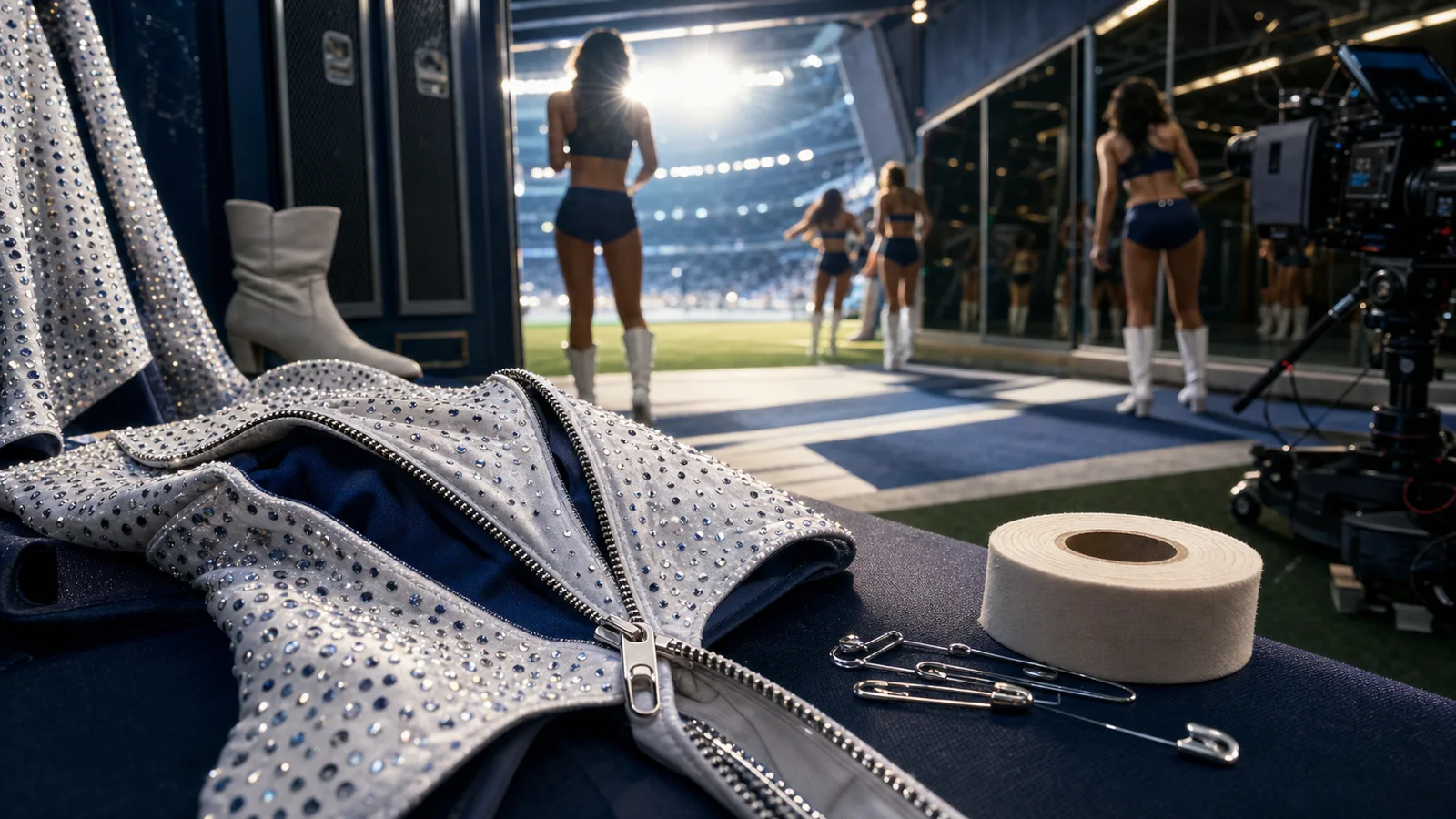
The stage show is framed as a long-held dream, a full production with planning, money, and creative risk behind it. The details are more interesting than the victory lap. The show needs to be about a hundred minutes. It has hip-hop, lyrical, contemporary pieces, solos, and Kelly and Charly’s duet to “Beautiful Things.” A zipper cannot stop the show. A live performance that looks clean from the crowd is built out of counts, spacing, line corrections, and quick decisions made while the audience is already in the building.
Journi, Presley, and Amaya win finals spots while live auditions become part of the entertainment
The tour also becomes a recruitment device. The staff fold live auditions into the show, splitting eight candidates into groups and asking them to perform round-two choreography and kick lines in front of Kelli, Judy, and a thousand fans. It is a smart piece of brand expansion, and also a brutal audition environment: the room is not a studio anymore, and the audience is part of the scoring atmosphere.
Journi becomes the clearest win. The judges’ read is immediate: one of them says she could see Journi across the room and knew, “That’s my pick.” The audience vote sends Journi to finals, with the judges agreeing, and Presley and Amaya are announced too. The experiment works well enough that ten candidates from the live shows make final auditions. Then the episode adds the catch: stronger rookies do not create more roster spots. They put pressure on veterans.
The veterans revisit the pay fight, and Kleine pushes for a team that talks out loud
Back in veteran space, the hour shifts from spectacle to repair. There are an unusually high number of fifth-year veterans, and last season’s stress is still present in the way the group talks about work. One veteran lays out how the pay fight pulled them into roles that had nothing to do with dancing: lawyer, therapist, HR specialist. The old hourly number, $15, lands plainly. So does the relief that the group’s efforts were heard.
Kleine becomes the episode’s liveliest veteran lens because she refuses the room’s habit of treating approval as oxygen. She jokes hard, calls ugly choreography ugly, and knows that her bluntness has gotten her in trouble before. The flashbacks are useful because they do not flatten her into a rebel. One correction catches her asking about a Christmas ornament before thanking Michelle; another exchange over a card for James shows Kleine owning her mistake while still naming the pressure of full-time work. Her point now is not chaos. It is communication, and a veteran group solid enough to handle the noise outside.
Hundreds of post-Netflix applications force the staff to score a bigger, wider field
The episode’s cleanest institutional scene is the application review. The staff edit rejection language, reject “honing your skills” as too cold, and explain that this is the first audition cycle shaped by the Netflix audience. Applications were open for ten days, averaged about 25 a day, and then hundreds arrived in the final two days.
The pool reflects the new reach. There are dancers from powerhouse college programs, studio dancers from New York and Los Angeles, and international applicants from Australia and New Zealand. Parker, Brenley, Savanna, Faith, Jenna, and Dayton all move through the conversation as the staff sorts scores and potential. The math tightens the scene: if all 30 veterans return and the final roster is 36, only six spots are open. The show’s public success has made the room better and more crowded at the same time.
Savanna, Faith, Dayton, and Jenna arrive carrying four different versions of the dream
The back half works because the candidates do not all want the same thing in the same way. Savanna has been preparing for this for years, from a DCC prep class at 15 to choosing TCU because it kept her close enough to drive to prep classes. Her story is all long runway: online classes, campus choice, weekly drives, and the conviction that she will keep trying until she makes it happen.
Faith is the opposite kind of arrival, an Australian dancer whose “Flexy Faith” online presence becomes a bridge into DCC’s orbit. Her flexibility is startling enough that the staff compare her hip rotation to a toy leg turning in its socket, but the better detail is the speed of her leap. Round one, semifinals, a 20-minute routine, then Texas. She is funny about American cars and groceries, but the practical risk is clear: if she makes it, her life starts in Texas.
Dayton and Jenna bring older pain into the same finals room. Dayton has made training camp twice before and been cut twice, with the added weight of a long DCC connection through Shelly. Jenna was cut after training camp, with no goodbye to the team and a celebration happening within an hour. Her return is the episode’s most grounded look at mental reset: sport psychology, therapy, and a shift from counting six spots to trying to be one of the best 36 dancers in the room.
The judges explain Yes, No, and Maybe as 81 candidates step into finals
Finals begin with 81 candidates, solos in the morning, field combinations later, and three choices for the judges: yes, no, or maybe. The title finally becomes procedure. “Maybe” is positive, but “no” has to mean someone is not ready this year.
The structure is clean, but the choices are not. Veterans are hungry to keep their spots, rookies are trying to prove they are teammates rather than self-promoters, and the staff does not want to start the year by threatening the veterans. The closing truth is still blunt: with these numbers, it is not safe to feel safe.
Tiny details worth clocking
- The tour holding five minutes because the merch line is still moving tells you exactly how much the audience relationship has changed.
- “We can’t stop the show for a zipper” is the stage version of the whole DCC machine: fix it fast, keep smiling, keep moving.
- The rejection-email edit from “honing your skills” to softer language is small, but it shows how carefully the brand manages disappointment.
- Faith’s first Texas observations, from self-driving cars to crossing the road, keep her from becoming only a flexibility highlight.
- The hotel snack spread before finals is funny because it is so unglamorous: beef bars, sparkling water, and fruit strips from Germany.
Final verdict
“Yes/No/Maybe - Part 1” works because the franchise’s new problem is not lack of interest. It is too much interest, arriving from too many directions at once. The episode gives the institution its due: the tour is ambitious, the audition pool is stronger, and the live-show experiment feels genuinely clever. It also keeps returning to the people who have to absorb that growth in their bodies, schedules, confidence, and friendships.
The last act gets crowded as it jumps quickly between candidates; a few introductions feel like setup cards for a longer finals story rather than complete arcs. But as a Part 1, it does its job. It puts the old DCC promise - tradition, excellence, sisterhood, polish - under the new lighting of fandom, social media, and limited spots. The closing line carries the hour’s plain warning: nobody in this room gets to feel safe, because the brand’s success has made every yes harder to earn.
Rating: 8.4/10 - A focused, observant premiere that turns fame, auditions, and veteran pressure into one clean roster-crunch story.
More episodes from America's Sweethearts: Dallas Cowboys Cheerleaders S3 — DCC pressure and polish, episode by episode. Jump to any episode in the season:
Where to go next
Reviewed by Mira Vance · QuizFandom Editor & Lead Reviewer. Every rating is an honest per-watch assessment from the desk that also writes the quizzes — not a press release rehash.
← All America's Sweethearts: Dallas Cowboys Cheerleaders S3 reviews