Crash Landing on You Episode 02 Recap: Jeong-hyeok Calls Se-ri His Fiancée During Inspection
Crash Landing on You, Season 1, Episode 02 tvN / Netflix · Written by Park Ji-eun · 2019-2020
Se-ri survives by bargaining, but Jeong-hyeok’s smallest acts of care become the danger neither of them can name yet.
In Crash Landing on You Episode 02, Yoon Se-ri wakes up to the worst possible confirmation: the wrong turn she made through the DMZ has left her inside a North Korean military village, and Ri Jeong-hyeok is the only person close enough to help her. She tries bribery, folklore, class confidence, and panic before accepting a boat-to-boat escape plan that will take three more days. Jeong-hyeok hides her from his soldiers, buys her basic comforts, leaves for Pyongyang to pursue the truck-crash case, and returns at the exact second a house inspection pulls Se-ri out of his kimchi cellar. His solution is outrageous, public, and very hard to walk back: he calls her his fiancée.
Se-ri bargains with Jeong-hyeok and the Company Five
The first smart move in Episode 02 is the childhood prologue. Little Se-ri chooses her father’s hand instead of money or strings, then adult Se-ri frames herself as someone who has always trusted her own choices. That confidence matters because the choice that brought her here was wrong. The woman who built her life on instinct now has no map, no phone, no internet, and one stern soldier deciding whether she is a security risk.
Yoon Se-ri (Son Ye-jin) understands danger as a negotiation. Hungry and filthy in Ri Jeong-hyeok’s house, she tries to turn his suspicion into a deal. She offers him the first bite of food because she worries about poison, then pivots into self-branding: she is famous in the South, rich enough to matter, listed on KOSDAQ, and able to repay any favor handsomely. It is ridiculous and completely in character. Se-ri has no army, so she uses the language that has always protected her.
Ri Jeong-hyeok (Hyun Bin) does not bend, at least not out loud. He calls her arrival too convenient: she crash-landed at the DMZ, crossed the ceasefire line when the electric wires were down, and ended up in military housing. He is not wrong to suspect her. That is part of the tension here. Se-ri is innocent, but every fact around her looks suspicious from his side of the border.
The mood changes when Pyo Chi-su bursts in with news that the unidentified woman from Mount Suseok has died. Se-ri walks out alive, and the room breaks into panic. Chi-su wants shovels and places to bury her; Se-ri clocks every weakness he has accidentally revealed. Eun-dong might face dishonorable discharge, Ju-meok left his post to watch Stairway to Heaven, Chi-su drank during work hours, and Jeong-hyeok could be sent for forced labor.
That leverage gives the Company Five their first real shape. Eun-dong is young enough for Se-ri to read his fear immediately. Ju-meok lights up at South Korean drama gossip and asks about Choi Ji-woo and Kwon Sang-woo. Chi-su treats every sentence like a threat and still keeps losing ground. Park Kwang-beom says less, but the group already feels like a pocket society with rules, gossip, shame, pride, and a weakness for melodrama.
The boat-to-boat plan comes from Ju-meok, through his uncle. A small boat can meet a bigger vessel in international waters, but it will not leave for three days. Se-ri hears that as an eternity because she has a shareholder meeting waiting in Seoul. Jeong-hyeok hears it as the first option that might keep everyone alive.
His terms are strict: stay inside, do not talk, do not spread South Korean beliefs, and forget everything once she returns. Se-ri promises amnesia, which Ju-meok treats as medical realism because, in his South Korean drama education, nine out of ten people seem to have it. Nobody in that room understands the other side very well, but pop culture keeps poking holes in the wall.
Jeong-hyeok buys Se-ri a candle before Pyongyang
The middle stretch makes the village feel lived-in. The ajummas prepare kimchi and talk about Jeong-hyeok returning from two months at the outpost line. They have stocked his firewood, salt, soybean paste, red pepper paste, and meat. Their admiration is funny, especially when his face is treated like a national treasure, but it also makes clear that he belongs here in ways Se-ri cannot yet grasp.
Se-ri’s culture shock stays sharp because it is built from objects: the kimchi cellar, the salt crock, the briquettes, the bath bag, the house phone, and the missing body wash. Her jokes about organic living and gas boilers could sound spoiled in a flatter scene. Here, they also show a woman trying not to admit she is scared.
Jeong-hyeok’s care arrives through instructions. He tells her how to use the phone, then regrets it when she calls about soap, shampoo, a scented candle, and hot water. He explains the bath bag anyway. His improvised one-person warm bath gives her a small miracle. The romance is not in a confession. It is in the fact that he answers the calls, even when he says he would appreciate it if she did not make them.
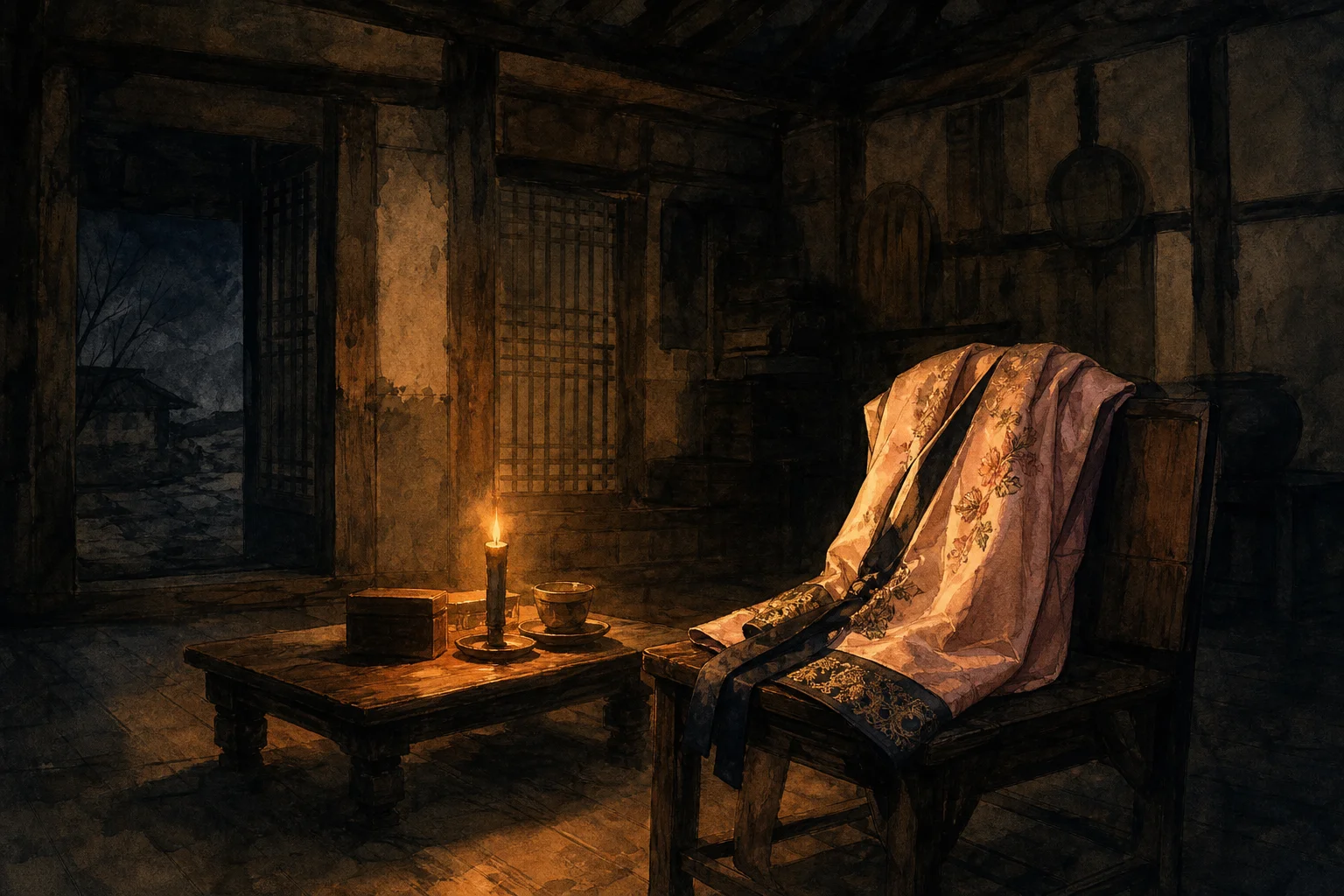
The candle scene is the first time Se-ri’s performance cracks in front of him. The power goes out. She thinks the village may be coming to bury her. Jeong-hyeok appears with a plain candle because she had asked for one, and she corrects him through tears: what she wanted was scented. It is a funny line until it is not. She apologizes, admits she feels flustered, and says she cannot believe what is happening to her.
He gives her the gentlest possible cover: “Don’t worry. I can’t see you now.” That is the kind of line this drama can build a relationship around. He does not demand gratitude. He does not ask for her story. He lets the dark protect her pride.
Before he leaves for Pyongyang, he brings her South Korean goods from the market: toner, cleansing cream, day cream, night cream, underwear, and disinfectant. He still denies doing her a favor, but the bag says otherwise. Se-ri notices the contradiction. He pretends to be indifferent, and she calls him kind of sweet in private.
Seung-jun buys safety while Jeong-hyeok follows the trucks
The Seoul scenes are colder than the village scenes. Se-ri imagines the whole country panicking over her disappearance. Back home, her family is already managing secrecy, reporters, employees, stock prices, succession, and prayer with a level of calculation that makes the North Korean village feel strangely warmer.
Se-ri’s employees give the Seoul side a small, cruel comic mirror. Su-chan thought Se-ri’s contract had changed his life at work, only for Chang-sik to tell him she may be dead. His panic over provoking a manager is silly, but it also says something clear about Se-ri’s power in Seoul.
Gu Seung-jun (Kim Jung-hyun) enters through money, aliases, and escape logistics. In Shenyang, he negotiates a route into North Korea as a fugitive hiding from a one-billion-won scheme. The luxury package includes a two-story house, sauna, pool, bodyguards, staff, golf, hunting, and casinos. He doubles the price because he wants control as much as shelter.
That plotline is still separate from Se-ri’s immediate danger, but it widens the map. North Korea is not presented as one flat idea. It has military villages, market stalls selling South Korean cosmetics, officials trading favors, hidden routes for people with money, and a security apparatus that can ruin lives with a fabricated charge. Seung-jun is not stumbling through a border by accident. He is buying one.
Jeong-hyeok’s Pyongyang trip pulls the thriller thread tighter. The tomb raiders who were being transported after the first episode’s confrontation have died in a crash at Mount Suseok. Jeong-hyeok suspects a pattern: several fatal crashes over the years, Russian Kamaz trucks, rumors of a secret truck unit, and no serious investigation from the State Security Department. Cho Cheol-gang is close enough to the case to be dangerous.
The interrogation reveals why Jeong-hyeok can afford to push back and why that protection has limits. The Trial Bureau tries to pin suspicion on him without evidence, and one interrogator says crimes can be made up if they need them. Then a general storms in and everyone learns Jeong-hyeok is the only surviving son of the Director of the General Political Bureau. His family name saves him for now. It also places a target on him.
A house inspection traps Se-ri in the kimchi cellar
The final movement runs on absence. Jeong-hyeok is in Pyongyang. Se-ri is with the Company Five, listening to Ju-meok mourn a drama character from ten years ago and watching Chi-su weaponize every insult he knows. The men claim to be fixing underground water as an excuse to keep her out of sight, but the plan falls apart when Cho Cheol-gang announces random house inspections.
The inspection sequence works because the village is not treated as clean or simple. One woman hides a South Korean talking rice cooker that betrays her by announcing the rice is ready. Another household exposes a naked man where he should not be. Wol-suk and the ajummas police rules, gossip, favors, electricity theft, and embarrassment all at once.
Se-ri hides in Jeong-hyeok’s kimchi cellar. Before she is found, she studies his books and piano sheets, including Mozart, and recognizes something about him she cannot place. That quiet discovery matters. Jeong-hyeok has been all uniform and orders to her. The sheet music says there was another self there before duty took over, and Se-ri catches a glimpse of it at the worst possible time.
Then the door opens. A gun points at her. Cheol-gang is ready to take her to State Security, where silence will not protect her. The village watches, confused and hungry for explanation. Jeong-hyeok arrives in a 729 car, the kind only the highest-ranking officials use, and makes one lie public.
“What are you doing to my fiancée?” he asks.
It is a rescue, but it is also a trap he sets around himself. Se-ri is safer for the next minute. Jeong-hyeok is now tied to a South Korean woman in front of soldiers, wives, and the man already looking for a way to destroy him. The line is romantic because it saves her. It is dangerous because everyone hears it.
What works
- Se-ri’s survival comedy is specific. She becomes a chaebol CEO with no office, trying to close a deal with folklore, cash, KOSDAQ credentials, and blackmail.
- The Company Five arrive with immediate comic rhythm. Ju-meok’s South Korean drama obsession gives the North/South divide a pop-cultural bridge without flattening either side.
- The candle scene is small and clean. Jeong-hyeok brings the wrong kind of candle, Se-ri breaks down anyway, and his “I can’t see you” response gives her dignity.
- The village details have texture: kimchi cellars, briquettes, hidden rice cookers, tank batteries for homework, market cosmetics, and ajumma power games.
- The Pyongyang material gives the romance real pressure. Jeong-hyeok is protected by family status, but Cheol-gang now knows exactly which family to threaten.
What stumbles
- Seung-jun’s hideout package arrives with a lot of exposition at once. The contract details are useful, but the scene briefly feels more like a briefing than a character entrance.
- Some of the South-versus-North convenience jokes repeat the same rhythm: Se-ri asks for a familiar comfort, the soldiers react with disbelief, then the scene explains the local version. Most of them land, but the middle stretch could lose a minute without losing meaning.
- The Seoul family scenes are intentionally sour, yet they are still broad compared with the village material. The prayer gag and succession talk make the point quickly.
What this sets up for Episode 03
Episode 03 has to deal with the lie Jeong-hyeok created in public. Se-ri can no longer hide as a random intruder; she now has a role in his village, and every ajumma, soldier, and officer will want to test it. Jeong-hyeok also has two dangers moving toward him at once: Cheol-gang’s interest in his family and Se-ri’s presence inside his house.
Rating: 8.8/10
More episodes from Crash Landing on You — The Hyun Bin / Son Ye-jin K-drama, episode by episode. Jump to any episode in the season:
Where to go next
Reviewed by Mira Vance · QuizFandom Editor & Lead Reviewer. Every rating is an honest per-watch assessment from the desk that also writes the quizzes — not a press release rehash.