Hospital Playlist Episode 03 Recap: Jun-wan Learns When Truth Needs Mercy
Hospital Playlist, Season 1, Episode 03 tvN / Netflix · Written by Lee Woo-jung · 2020
A wedding, a child’s heart, and one delayed goodbye turn Jun-wan and Ik-jun’s bedside manners into something painfully personal.
In Hospital Playlist Season 1, Episode 03, Kim Jun-wan (Jung Kyung-ho) has to learn that being honest with patients does not always mean giving them the coldest version of the truth. Lee Ik-jun (Jo Jung-suk) gets hit from two sides: his wife asks for a divorce, and a discharged patient with a five-year-old son returns as a brain-dead organ donor. Chae Song-hwa (Jeon Mi-do) keeps training her residents with pressure and care in the same hand, while Ahn Jeong-won (Yoo Yeon-seok) moves closer to leaving medicine for the priesthood. Around all of that, the five friends still find time for seafood stew, karaoke, and a wildly earnest run through “Aloha.”
Sang-u cries before the hospital day has even started
The opening belongs to Jeong-won, a crying child, and one bad instinct borrowed from an anxious parent. Sang-u arrives with a toy shark and a stomach problem, and Jeong-won starts gently enough, asking whether he can look inside the shark’s mouth. Then Sang-u cries, his mother jokes that the scary doctor will scold him and give him a big injection, and Jeong-won plays along.
It backfires immediately.
The tiny scene says a lot about Jeong-won because the correction is so fast. Sang-u’s mother turns the joke around, scolds the “bad doctor” for frightening her son, and Jeong-won accepts the new role without bruised pride. He apologizes to Sang-u, offers a snack instead of a shot, and moves on to the next pediatric need. He is not slick with children because he has perfect lines ready. He is good with them because he can be corrected by a mother in the room and still keep his softness intact.
That matters later, once the priest recommendation letter appears in Ik-jun’s bag. Jeong-won is serious this time. He tells the others he will speak to the director next week, stay until the end of the year, and resign. The friends joke because that is their native language, but Ik-jun starts taking pictures because the possibility feels real. If Jeong-won leaves, the hospital loses more than a skilled pediatric surgeon. It loses a man who can kneel emotionally without making a speech about it.
The friends chase lunch, karaoke, and Aloha
The friendship material is very good at making affection look logistical. Song-hwa texts the “Gongnyong Ridge” group chat about lunch. Seok-hyeong waits through a decision from Jang Gyeo-ul. Ik-jun barges in with seafood stew details. Jun-wan is late because he has just finished a delayed sternal closure on a baby. Nobody has time, and somehow lunch still happens.
The seafood stew scene turns into one long pocket of accumulated history. Ik-jun swears he can sing “Aloha.” The others roast him for the comedy-team disaster from their school festival days, when he registered the band wrong and claimed they were a secret weapon. Seok-hyeong gets teased for stage fright. Song-hwa is the one person who admits she likes Ik-jun’s voice. Everyone rejects karaoke because of work, errands, golf, camping, a half-marathon, and Seok-hyeong’s nail appointment with his mother.
So of course they go to karaoke.
Ik-jun brings U-ju to the place and gets a “Nightclub Rat” accusation courtesy of Auntie Terminator. The joke is silly, but it gives Ik-jun a tiny father-son moment before the day starts hurting him. U-ju wants another corn dog. Ik-jun gets sentimental about the room where he spent his youth. U-ju would rather eat.
Then the friends are inside, fighting over the remote, waking Seok-hyeong from his anxiety-medication haze, and letting “Aloha” become a full group surrender. The lyric about the most important person in one’s life not being oneself lands as comedy first. Later, after Jun-wan handles a child on bypass and Ik-jun stands over Mr. Yuk, it feels less like a karaoke gag and more like the day’s quiet instruction.
Jun-wan meets two families who need different answers
Jun-wan starts with Jeong Su-beom, a 78-year-old patient with infective endocarditis. The infected mass is large, dangling, and dangerous. The patient asks whether surgery can wait until after his daughter’s wedding. Jun-wan says no. When the man pushes, Jun-wan says the only way to delay is “if you want to end your life.”
It is a rough thing to say, even when the medicine is correct. His resident Do Jae-hak wants him to soften the answer for the family. Jun-wan refuses the easy comfort. He will not promise that a surgery is simple, that a patient will live, or that nothing can go wrong just because the odds look good. His logic is clean: feelings do not help surgeries.
Then he borrows Jae-hak’s suit.
That detail changes the shape of him. Jun-wan does not become a warmer man in public. He does not explain himself. He does not even pose for a picture. But after surgery, Eun-bin’s family scrolls through wedding photos and discovers that the doctor stopped by the bride’s room, asked about the main course, ate galbitang, and left. It is funny because the family reads him as a galbitang opportunist. It is touching because he made sure one piece of the father-daughter day did not vanish entirely.
The second family is Chan-hyeong’s. At first, Jun-wan and Jae-hak misread the baby’s young parents as too composed. The grandmothers do the same, calling them clueless because they are only twenty. Jun-wan still insists that the mother is the legal guardian and should receive the full explanation.
When Chan-hyeong’s mother finally breaks, nobody gets to call her immature anymore. She has been acting tough on purpose because everyone around her keeps assuming she cannot handle the truth. She says, “I’ve been forcing myself to act all tough.” She went home not because she did not care, but because another mother told her about a superstition with an upside-down crock lid and water, and she had to try anything that might help her baby.
That is the moment Jun-wan adjusts. He does not lie. He does not become sentimental. But he tells her they have performed the surgery many times and will make sure Chan-hyeong is okay. After the operation, he tells the family plainly that the surgery went well, repeats that they do not need to worry, and lets their relief fill the room.
For a man who keeps saying feelings do not help surgery, Jun-wan spends a lot of these scenes proving they help the people waiting outside it.
Ik-jun spends Children’s Day with two losses
Ik-jun’s thread is cruel in a quieter way. His wife, Hye-jeong, comes back and asks for a divorce over coffee. He tries to hold the history of their marriage in place: he offered to follow her to Germany, they chose to raise U-ju in Korea, and their separate life was not something she decided alone. She calls the marriage meaningless anyway, says she will have lunch with U-ju for Children’s Day, and leaves him to take her request seriously.
Then U-ju has an allergic reaction.
At first, Ik-jun’s mother points the blame toward Hye-jeong for not knowing their son’s peanut allergy. Ik-jun calls the restaurant and finds out the worse answer. He ordered a salad to go with peanut dressing. He apologizes to the restaurant worker for not communicating properly, and the silence around him says the rest. He was already scared about being left. Now he has to sit with the fact that the day’s emergency came from his own mistake.
Mr. Yuk Hui-gwan makes that pain larger. Earlier, he leaves the hospital excited to be home for Children’s Day with his son Won-jun, planning jajangmyeon at the Chinese restaurant near their house. Ik-jun remembers his name, transforms Won-jun’s toy, and jokes that he is the man who got rid of the ouchy from his dad’s tummy. It is an ordinary discharge scene with a child’s holiday wrapped around it.
By night, Mr. Yuk is a brain-dead traffic-accident victim and an organ donor.
Ik-jun oversees the procurement because Mr. Yuk was his patient, and he asks the other team for ten minutes. It is 11:50 p.m. on Children’s Day. He wants the official time moved past midnight so Won-jun does not spend every May 5 remembering that his father died on the holiday they were supposed to share. “We can’t have his son cry on every Children’s Day thinking about his late father,” Ik-jun says.
It is such a small mercy, and it is enormous.
Song-hwa takes Chi-hong camping in the rain
Song-hwa’s teaching style gets its own gentle explanation this week. She grills Chi-hong and Seok-min on a neurosurgery case, catches what they do not know, and sends them to prepare relevant papers and surgical cases. Chi-hong later apologizes for failing to answer properly, but Song-hwa tells him why she pushes so hard. She performs roughly 250 surgeries a year. She wants them alert because the work becomes familiar, and familiarity can become dangerous.
Her line is simple: even if doctors get used to the job, they should never get too comfortable.
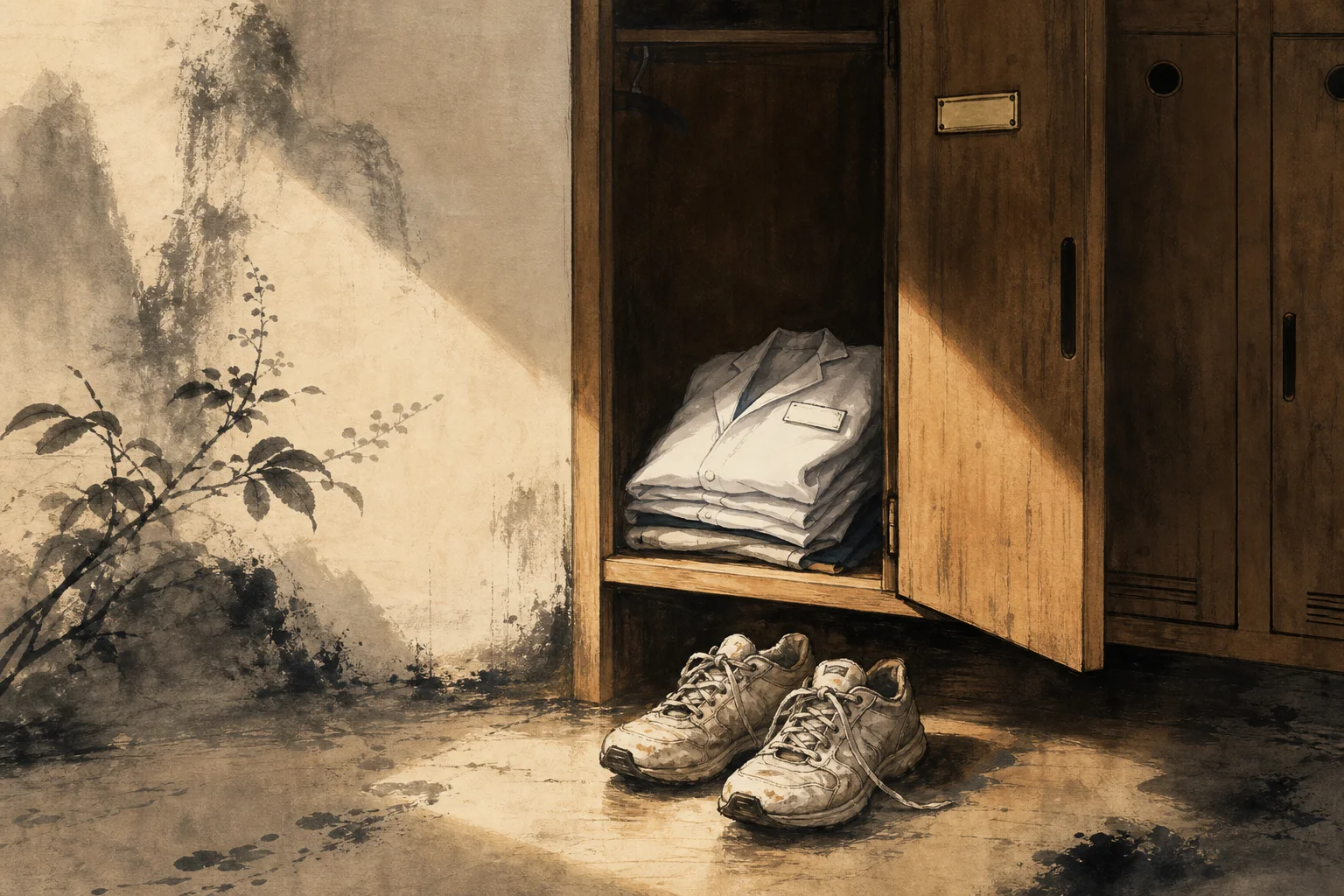
That is Song-hwa in one sentence. Exacting, not cruel. Warm, not soft. Her residents know it too. They ask to join her camping trip because she keeps them on their toes without making them uncomfortable. In the rain, Chi-hong comes anyway, finds her campsite, and notices she is wearing the shoes he gave her.
The moment is small enough to stay ambiguous, which is right for this show. Song-hwa does not turn it into a confession. Chi-hong barely manages to say that he bought the shoes. The rain does most of the talking.
The final minutes also throw Jun-wan toward a new personal complication. A soldier arrives at Yulje with a broken rib and a suspected tension pneumothorax. Her chart reads Lee Ik-sun. Earlier, Ik-jun had to clarify that Ik-sun is his younger sister, not his dog Micky. Now Jun-wan is looking at her name on a patient chart, and we are left with that connection hanging.
What works
- Jun-wan’s arc is specific enough to avoid a neat “cold doctor becomes kind” shortcut. He is still blunt, still prickly, still allergic to false reassurance. The change is in when he chooses to add warmth.
- The Mr. Yuk turn hurts because the setup is ordinary: a discharge, a toy, a jajangmyeon plan, a little boy asking for his father. The organ-donor scene does not need extra pressure.
- The karaoke stretch gives the friendship real texture. They are busy adults with heavy jobs, but they still know exactly how to annoy one another.
- Chan-hyeong’s mother is written with respect. Her toughness is not emptiness. It is a young mother trying to keep adults from taking control away from her.
- Song-hwa’s mentorship keeps landing because she explains the pressure without apologizing for the standard.
What stumbles
- The early hospital comedy around Gyeo-ul choosing HPD and everyone competing for her time is funny, but it is also a little noisy before the stronger patient stories take over.
- Hye-jeong’s divorce request is intentionally abrupt, but the scene gives her so little interior space that Ik-jun’s pain has more shape than the marriage itself.
- The 2003 flashback attached to the heartbeat is moving, though it arrives so quickly that viewers may need a second pass to place exactly whose memory is being opened.
What this sets up for Episode 04
Jeong-won’s priest plan is no longer a vague family concern; he has a timeline now, and Gyeo-ul knows enough to believe she still has a chance. Ik-jun’s home life has cracked open, while Jun-wan’s encounter with Ik-sun points toward a personal thread outside the operating room. Song-hwa and Chi-hong’s rainy campsite moment also gives their resident-professor dynamic a new charge without forcing it into romance yet.
Rating: 8.5/10
More episodes from Hospital Playlist — The Yulje Medical Center friend group, episode by episode. Jump to any episode in the season:
Where to go next
Reviewed by Mira Vance · QuizFandom Editor & Lead Reviewer. Every rating is an honest per-watch assessment from the desk that also writes the quizzes — not a press release rehash.