Lioness S2E6 Recap: Joe Gets Shot and Josie Blows the Carrillo Cover
Special Ops: Lioness, Season 2, Episode 6 — “2831” Paramount+ · Created by Taylor Sheridan · 2024
Joe’s rescue impulse becomes a public disaster, while Josie turns family confession into a hostage operation.
“2831” begins with Joe McNamara trying to hide the wreckage from the border intercept and ends with the mission sliding toward a black op nobody can authorize out loud. The trafficked-child recovery has left federal bodies, armed drones, and a cover story thin enough to tear. In Dallas, Josephina Carrillo tells her father the CIA knows who he is, forcing Cruz and the QRF to seize the house. Joe, meanwhile, realizes on a plane that one bullet slipped past her armor and calls Neal like she may not survive.
Joe Builds a Cover Story Around a Disaster
Joe McNamara (Zoe Saldaña) opens the hour in the narrowest possible mode of command. Bobby (Jill Wagner) asks whether she has run the mess up the flagpole, CBP wants a statement, and Joe gives the line she needs everyone to repeat: FBI credentials, overlap with a DEA investigation, undercover agents still in the field, no comment. It is not a solution. It is a lid.
The moral question arrives before the politics. Bobby tells Joe the dead girl is not her fault, and Joe answers with the question the season has been circling since the warehouse: would the child still be alive if they had not tried to save her? That is the hour’s most honest sentence. Joe acted because leaving the children behind was intolerable. The operation still turned a smuggling route into a mass-casualty federal incident.
The local aftermath gets worse when Alan and the other officers start yelling about drones with C-4, mined migrant trails, and agencies sitting on their hands. Joe’s answer is pure institutional anger: this is the United States, so there is no place where law enforcement gets to say it does not operate. She is right that paralysis has consequences. She is also standing amid the consequences of action taken with partial information.
Cruz Pushes Josie Into the Carrillo Confession
Before Dallas erupts, Josie Carrillo (Genesis Rodriguez) and Cruz Manuelos (Laysla De Oliveira) get the episode’s most delicate scene. Josie remembers her father as an almost mythic figure, the man who once leapt from a horse to catch a falling baby and then acted as if that was ordinary. The memory matters because it is not cartel mythology. It is childhood love. That is why the mission hurts.
Cruz answers from a different wound. She never knew her father, had a stepfather who felt like a friend, and found him shot in a railroad switchyard when she was 16. She uses that history to separate the father Josie remembers from the man in front of her now. The source-building lesson she offers is clinical but useful: a parent can remain trapped in the child’s favorite memory, while the child remains the age she was when the memory formed.
That is the psychological bridge Josie needs. She is not nine. Pablo is not immortal. Cruz also knows the clock is running because Pablo is too smart to miss the shape of the lie for long. By morning, the mission has to move from family visit to disclosure.
The breakfast scene works because Pablo’s suspicion begins in small domestic observation. He jokes about newspapers, keeps his cigarette, and looks at Cruz as the false girlfriend whose hand Josie does not hold and whose eyes do not meet hers. The cover story dies before anyone draws a gun.
Josie breaks first by telling him “they know.” Pablo keeps pressing until she names the CIA, then CIA Special Activities, and the house becomes a watched room with a closing window. Bobby and the operators see the operation going sideways from surveillance, but Cruz is still upstairs and Joe is unreachable. The team cannot simply storm the house without destroying whatever leverage remains.
Sheridan gives Pablo another large political speech here, and it is both revealing and overextended. His argument about the CIA, Afghanistan, heroin, and institutional hypocrisy tells us how he sees American power: not as law, but as appetite wrapped in procedure. The point has teeth because Pablo is trying to puncture Josie’s faith in the people who coerced her. It also sags because the monologue keeps expanding after the father’s immediate betrayal has already landed.
Then Cruz ends the debate by hitting him. The QRF moves, gunfire erupts outside, and the hour shifts from infiltration to seizure. Pablo is given two choices: arrest and near-certain death in county, or cooperation, witness protection, new accounts, and exile. Cruz’s pressure on his phone passcode, Tex’s questions about his children, and the handling of the maid all turn the house into an improvised detention site.
The maid is the twist that changes the map. Cruz finds her wired and extracts the name Gutierrez. That means the DEA was inside the Carrillo home before Joe’s people arrived and never disclosed it. It also means the failed raid, the staged security across the street, and the Dallas compromise are all tied to an interagency lie.
Joe Calls Neal From the Edge
Joe’s body catches up with the mission after she leaves the border. She calls Kaitlyn Meade (Nicole Kidman) from the plane and says she took one in the field: right side, no exit, dark blood, possible liver hit. The calm language is almost worse than panic. Joe is diagnosing herself while bleeding internally.
Kaitlyn shifts from political handler to remote trauma coordinator. She asks for pulse and blood pressure, redirects the flight, and talks the copilot through a needle decompression when Joe starts wheezing. The scene is one of the episode’s best procedural stretches because it makes competence frightening. Everyone knows what to do, and none of that guarantees she lives.
Joe still wants Neal McNamara (Dave Annable) on the phone. The call cuts from a soccer field to what may be a goodbye. Neal opens with a joke about their daughter’s zero-zero game, then hears Joe’s voice change. She tells him the sun rises and sets with him, that the girls will take it hard, and that they will need him. She is trying to leave instructions for the family she keeps asking to survive her absences.
The episode does not let Neal do doctor heroics in that moment. He is trapped on the other end of a personal phone while the copilot tries to keep Joe conscious and the tower clears every runway. That helplessness is the cost the home-front story keeps returning to. Joe chose the job, but Neal and the girls keep paying for the parts of it they are not allowed to know.
Washington Chooses Denial Over Permission
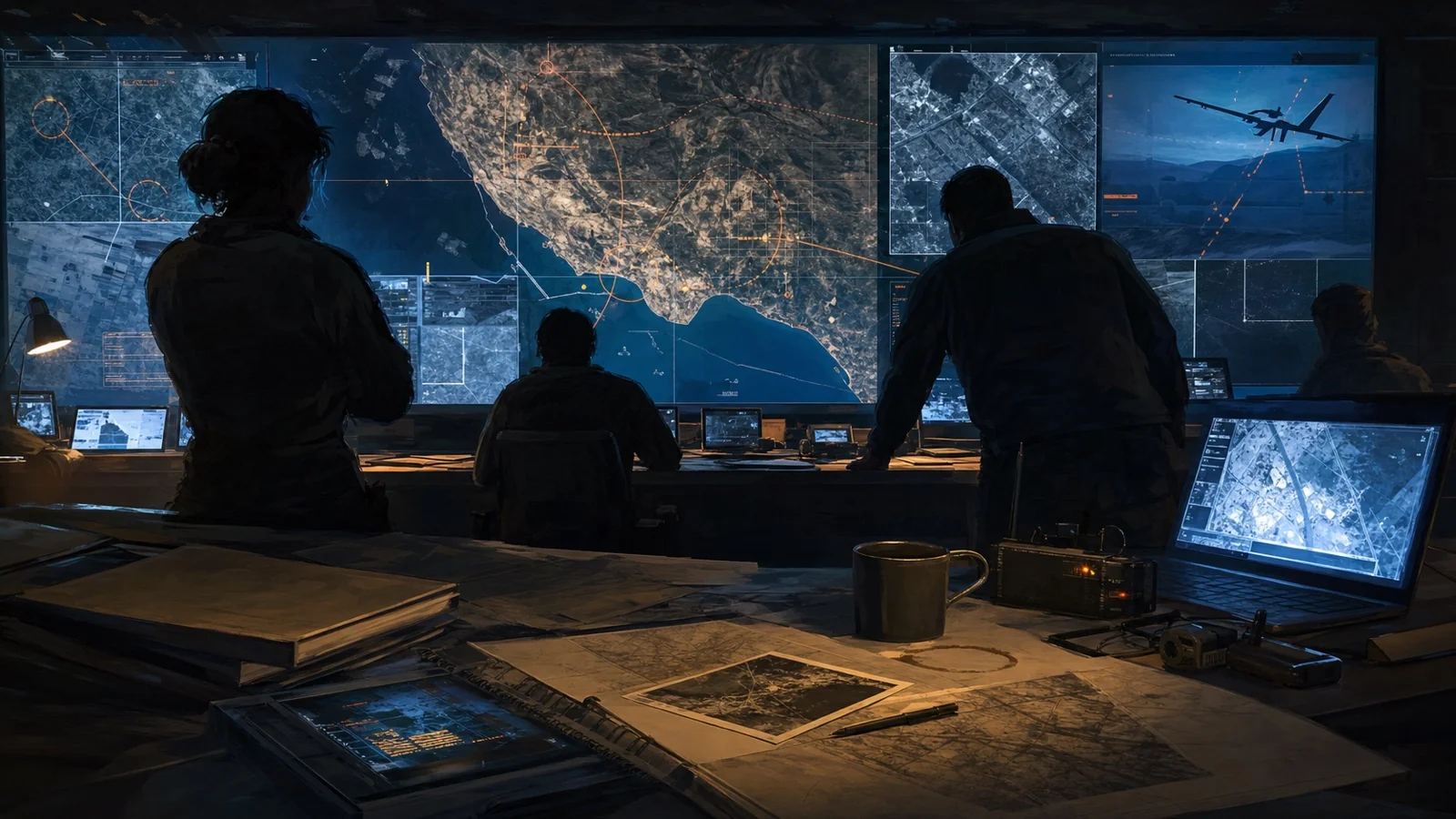
By the time Donald Westfield (Michael Kelly), Kaitlyn, Byron Westfield (Morgan Freeman), Edwin Mullins (Bruce McGill), and the political side gather, the cover story is already on television. The news calls it the largest federal loss of life since Waco, while the official joint statement hides behind undercover agents still in the field. The room is furious because everyone is exposed, and everyone wants exposure assigned to someone else.
This is where “2831” is at its sharpest and clumsiest at once. Hollar and Mason accuse the CIA of violating every assurance. Westfield throws back the impossible assignment: rescue the congresswoman, infiltrate a massive cartel, use a compromised asset, and coordinate with agencies the CIA warned against.
The scene also becomes another Sheridan boardroom brawl, complete with statute citations, blunt profanity, and men defining legality by how carefully they refuse to say yes. Kaitlyn lays out the Dallas compromise, Gutierrez’s hidden informant, Joe’s critical injury, and the lack of a stopping place. The proposed revision is no longer an insertion. It is a hard target hit: move Carrillo back to Mexico, aim at senior cartel leadership, and hope MSS is close enough to be caught in the blast radius.
Mullins does not authorize it. That is the whole point. He says they cannot authorize a black op, then tells Byron to make the whole thing disappear. The order is denial shaped like governance. The mission’s moral line does not move because someone believes in it. It moves because the paperwork cannot survive the truth.
Kyle’s interrogation of Gutierrez pushes the episode into uglier territory. He says flipping has different consequences in their game, then beats him and threatens to kill him if he cannot explain the hidden maid asset. Bobby’s later interrogation is colder. She lists Gutierrez’s wife, children, schools, classes, parents, and in-laws, then threatens exposure unless he surrenders every connection.
The scene is hard to watch in a way that fits the series’ view of covert power, but it also strains under its own brutality. Gutierrez’s explanation is plausible: the maid had once nannied his son, he had her from the beginning, and he did not wire her until the CIA appeared. He says Pablo does no business at the house, keeps no computers, takes no calls, and launders money so cleanly there is no evidence to seize.
That answer does not absolve him. It reframes him as another operator hiding information because he assumes everyone else is compromised too. The damage comes from every agency acting on the same suspicion.
What works
- Joe’s injury sequence is tense because it stays practical: pulse, blood pressure, decompression, descent, and one devastating call home.
- The Cruz-Josie opening gives the Carrillo betrayal an emotional foundation before the guns arrive.
- Pablo’s small observations about Josie and Cruz are sharper than any speech. He breaks the cover by watching how people fail to behave.
- The Washington scene captures the cowardice of non-authorization. Nobody says yes, but everyone knows what they are asking for.
What stumbles
- Pablo’s CIA-heroin monologue has useful character logic, but it runs longer than the scene needs.
- The Gutierrez torture material makes the program’s violence explicit, though Kyle’s threats become so florid that they briefly pull attention from the operational stakes.
- The episode spends less time with Josie after the house seizure than the emotional setup deserves.
What this sets up for Episode 07
Joe may survive, but the mission has already moved without its senior case officer on the ground. Josie, Cruz, Pablo, the maid, and Gutierrez are all pieces in an operation that has shifted from infiltration to containment. Episode 07 now has to answer whether the black op can find the target before the cover story, the cartel, or Joe’s injury destroys the chain holding it together.
Rating: 7.9/10
More episodes from Special Ops: Lioness Season 2 — Zoe Saldaña-led Sheridan-verse spy thriller, S2 episode by episode. Jump to any episode in the season:
Where to go next
Reviewed by Mira Vance · QuizFandom Editor & Lead Reviewer. Every rating is an honest per-watch assessment from the desk that also writes the quizzes — not a press release rehash.