Money Heist Season 5 Episode 5 Recap: Tokyo Chooses Her Last Escape
Money Heist (La Casa de Papel), Season 5, Episode 5 Netflix · Created by Álex Pina · 2021
Tokyo remembers the first robbery that broke her, then makes the Bank of Spain siege her final run.
Tokyo is already running before the guns even start.
First from the police. Then from grief. Then from the shape of her own life.
Silene Oliveira, Tokyo (Úrsula Corberó), lost René in a bank robbery before she ever met the Professor. She escaped because she was fast, reckless, and lucky. Berlin saw the news and called it art. Sergio Marquina, the Professor (Álvaro Morte), saw danger. Berlin, Andrés de Fonollosa (Pedro Alonso), saw a survivor with nothing left to lose.
They were both right.
Tokyo has been introduced twice: once as a fugitive after René, once as the red-suited narrator of the Royal Mint heist. Here, she introduces herself a third time, from the edge of death.
She does not turn saintly because she is dying.
She stays Tokyo.
Loud, vulgar, loving, impossible, armed to the teeth, and absolutely unwilling to be taken alive.
Berlin and the Professor find Silene Oliveira after René dies
The flashback begins with a robbery gone wrong in east Madrid.
René is dead. Security guards are dead. One female robber has escaped through the police blockade by taking officers into a patrol car and driving out with the sirens on. Berlin watches the report like he has found a rare painting in a junk shop.
Sergio is cautious. Berlin is delighted.
The argument explains why Tokyo fit into the Professor’s first crew before she even had a city name. Sergio wants calculation. Berlin wants nerve. Tokyo has both, but she does not yet have discipline.
Her voiceover keeps returning to motion: run, close your eyes, endure. She spent ten days hiding, replaying René’s death and the choice they made together. René did not want to hit a bank. They did it anyway. The grief got heavier because she had left him behind on the street, cold and soaked in rain.
So she ran faster.
That matters because the Bank of Spain present is also a dead end. Tokyo, Denver (Jaime Lorente), and Manila (Belén Cuesta) are trapped in the kitchen while Sagasta’s unit pounds at the door. Rio (Miguel Herrán) needs at least thirty minutes to hack the museum system. Bogotá (Hovik Keuchkerian) thinks he can cut through in eleven minutes if the gas holds. Lisbon, Raquel Murillo (Itziar Ituño), has to choose the ugly math.
Tokyo says she can hold as long as they need.
Of course she does.
Denver and Manila drag a heavy stove countertop into place. Grenades bounce in. Tokyo mocks the soldier who throws one badly: next time, add a little queso.
The joke is stupid, brave, and useful.
She is not trying to look fearless. She is buying minutes by being exactly annoying enough to make armed men lose their rhythm.
Gandía breaks formation after Tokyo taunts him
Sagasta wants patience. Gandía wants blood.
That split gives Tokyo an opening.
Gandía has already done the unforgivable. He murdered Nairobi under a truce. He terrorized the crew, crawled through vents like a nightmare, and then returned with the army because staying home would mean living with himself. Tokyo knows where to press.
She starts with his family.
Not gently. Not cleanly. She asks whether he called his wife and son after the whole country saw him come out alive. She imagines the bedtime-story version he could give his boy: Daddy executed a defenseless woman, betrayed his people, and would rather get himself killed than come home.
Gandía snaps. He disobeys Sagasta, charges the corridor, and gets one of his own men killed in the blast. Arteche calls it what it is. Gandía killed him. Sagasta tries to contain the damage, but the unit has already lost its clean line of command.
Tokyo’s move works, but it does not save anyone yet. It gives the crew a few more minutes, and a few minutes are treasure here.
Around the same time, Denver and Manila have the messiest possible relationship conversation behind cover. Manila tells Denver she meant what she said on the rooftop. Denver insists he is in love with Stockholm (Esther Acebo) and that their life in Indonesia is real.
It is a ridiculous place to have this talk.
That is why it fits. This crew never waits for peace to say the thing that might ruin everyone. Denver is not cruel to her, but he is firm. He grew up. He chose a life.
Then Stockholm’s own crisis cuts through the radio.
She has shot Arturo in Episode 4, and the shock is eating her alive while Helsinki (Darko Perić) needs help. She asks for morphine. Palermo, Martín Berrote (Rodrigo de la Serna), recognizes the look: the first kill stays in your head. Stockholm is not weak. She is discovering the bill.
Nobody gets a clean war.
Alicia Sierra names her daughter Victoria in the stormwater tank
While the bank is tearing itself apart, Alicia Sierra (Najwa Nimri) gives birth in the stormwater tank.
The tonal swing should be absurd. It is absurd.
Sergio announces the birth over the radio with that strange, breathless formality he uses when he is trying not to fall apart. A girl. Three and a half kilos. Healthy. A baby brings joy, he says, and there has not been much joy around here lately.
The crew starts offering names. Marseille (Luka Peroš) suggests Danica, morning star. Lisbon offers Lucía. Sierra lands on Victoria because the child will be victorious, and because Alicia Sierra naming a baby like she is declaring war on fate is completely in character.
Then Marseille buys everything in pink, and Sierra tears into him about conditioning a child before she is even a day old.
It is very funny.
It is also a reminder that Sierra is not suddenly soft because she has a newborn in her arms. She is still sharp, contrary, impossible to manage, and capable of starting an argument about gender with a rattle in her hand.
That matters because Tokyo’s own flashbacks are about the lives people offer each other.
René offers her Tokyo as a destination. A far city. A way to imagine freedom that is not another cheap job, another unpaid bill, another winter of choosing whether to turn on the heat. Later, he gives her a samurai snow globe and talks about paying her mother’s mortgage.
Tokyo knows the risk.
She says banks.
That single word is where the road bends toward everything.
Tokyo sends Denver and Manila down the dumbwaiter
The rescue plan starts losing parts one by one.
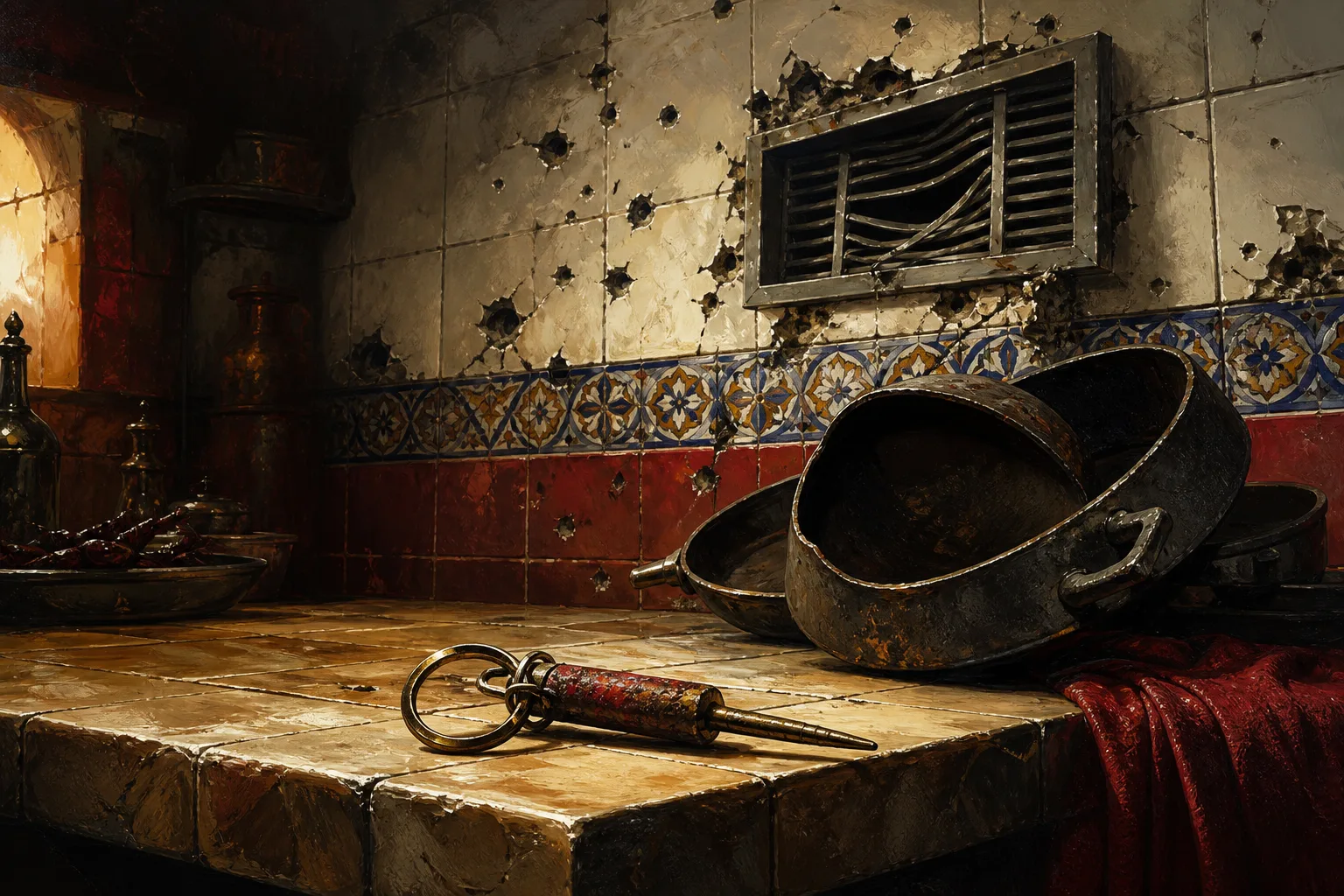
The smelters run out of gas. The lances fail. Sagasta’s unit finds the pantry angle. Snipers start hitting the kitchen. Tokyo is shot five times in the arms and legs, held together by adrenaline, rage, and the refusal to make this easy for anyone.
Rio is beneath her, drilling up through the floor. Denver and Manila are with her behind the trench. The Professor remembers the dumbwaiter from the office. It drops six floors.
It is a terrible exit.
It is also the only exit.
Tokyo cannot climb down. Her arms are ruined. She tells Manila to go first, find cushions, curtains, cardboard, anything that can break a fall. Manila does not want to leave. Denver refuses even harder. He has already lost his father in a heist. He will not lose his sister too.
Tokyo calls him darling and gives him the lie he needs.
She says he is going to save her life.
Denver believes it for half a second because he has to. Then he goes down, and the goodbye stays brutal. Tokyo is sending them away because love, at this point, means making the other person survive your choice.
Rio reaches her from below.
Rio is right there, close enough to hear her, too late to save her. She remembers their first night in Toledo, when he read her future in the stars and invented a boy she would meet dancing.
It was silly. It was sweet. It was the beginning of the next life the Professor once promised her.
Now she gives that line back to him. Something ends today, she tells him, but this is the first day of his next life. He has to live a lot of lives.
Rio does not want wisdom. He wants the floor to open in time.
It does not.
Gandía comes in, sees her smiling, and realizes too late what she has done. Tokyo has grenades pinned to her chest. She gives the Professor one last answer: he has always been her guardian angel, and now it is her turn to be his.
Then she takes Gandía with her.
Tokyo’s narration keeps going after the blast. That is not subtle, and it does not need to be. She has narrated this story like someone who already knew where the road ended. Growing old in a prison cell was never for her. If her body cannot run, her soul can.
It is enormous. It is sentimental. It is violent. It is Tokyo.
What works
Tokyo’s farewell gives her an actual shape, not just a heroic exit. The René flashbacks explain the wound without sanding down her danger. She was reckless before the Professor and grieving before Rio.
The siege procedure is strong because every choice has a timer. Rio needs an hour. Bogotá needs eleven minutes. The lances fail. The gas runs out. The dumbwaiter is found too late. The mechanics stay clear enough that the sacrifice does not feel decorative.
The Gandía taunt is nasty in the right register. Tokyo weaponizes his shame, and the result changes the tactical situation. It also lets Gandía die as the consequence of the same ego that brought him back into the bank.
Sierra naming Victoria gives the story air without removing the pressure. A birth announcement over a heist radio should be nonsense, yet the crew’s tiny burst of joy feels necessary after Nairobi, Arturo, the army, and the kitchen siege.
What stumbles
Denver and Manila’s conversation has emotional value, but the timing pushes hard. The bank is under military assault, Tokyo is holding a doorway, and the scene still makes room for unresolved romantic confession. That is very Money Heist, but it risks tilting into soap when the siege is already doing enough.
The René material is moving, though it arrives late for a character who has carried the narration from day one. It lands, but the backstory has the faint feeling of a farewell gift being delivered right before the door closes.
Stockholm’s shock after shooting Arturo is good character work, yet it gets crowded by the larger Tokyo farewell.
What this sets up for Episode 06
Tokyo’s death leaves the Bank of Spain crew alive and broken.
Denver and Manila survive because she forced them down the dumbwaiter. Rio survives because the floor held him back. The Professor survives because Tokyo becomes the blast that stops Gandía. That is a victory only on paper.
The army has breached the bank. Sagasta’s unit is damaged, but not gone. Arteche is still in play. The crew has lost its narrator inside the building, even if Tokyo’s voice is not finished with the story.
Sierra now has Victoria, which changes the stormwater tank from a hideout into a nursery with guns, panic, and the Professor’s entire plan still wobbling around it. Lisbon has to keep the inside crew functioning after another death. Rio has to keep moving after watching Tokyo choose the only exit she could reach.
Tokyo spent her last hour saying people can have several lives.
Now the survivors have to live with the ones she bought them.
Rating: 9.3/10
More episodes from Money Heist (La Casa de Papel) — Tokyo's last stand, the brass swap, and the series finale — La Casa de Papel ends. Jump to any episode in the season:
Where to go next
Reviewed by Mira Vance · QuizFandom Editor & Lead Reviewer. Every rating is an honest per-watch assessment from the desk that also writes the quizzes — not a press release rehash.