Reply 1988 Episode 01 Recap: Deok-sun Carries Uganda Into the Olympics
Reply 1988, Season 1, Episode 01 tvN · Written by Lee Woo-jung · 2015-2016
A shared birthday, a borrowed dinner table, and one Olympic placard make Deok-sun’s middle-child ache impossible to miss.
In Reply 1988 Season 1, Episode 01, Sung Deok-sun trains as an Olympic picket girl, loses Madagascar, and still finds her way into the opening ceremony under Uganda’s flag. Around her, Ssangmun-dong introduces itself through food, gossip, old TV, school fees, fried chicken, and parents who love loudly but miss what sits right in front of them. Deok-sun fights with Bo-ra, begs for her own birthday, and finally says the quiet part out loud: she is tired of being the child who always yields.
The Ssangmun alley trades dinner before anyone sits down
The first proper homecoming belongs to the alley, not to one family. Ryu Dong-ryong (Lee Dong-hwi) eats in Choi Taek’s room while Deok-sun’s narration names him as the block counselor. Kim Jung-hwan (Ryu Jun-yeol) gets called “Dog,” Sun-woo (Go Kyung-pyo) gets called the normal one, and Taek (Park Bo-gum) is introduced as a Go genius who still gets ordered around for rags, steamed cake, and milk.
Then the mothers start calling everyone home for dinner.
That little relay tells us almost everything about this block. No one eats alone for long, and no household keeps its side dishes to itself. Jung-hwan brings salad downstairs and returns with rice. Il-hwa sends radish kimchi back up. Curry and other dishes travel across the alley until the family tables begin to look like one shared meal split between houses.
The charm is how practical it all feels. Nobody makes a speech about generosity. Someone needs rice, someone has too much curry, someone else has radish kimchi, and the bowls keep moving.
By the time the gas delivery arrives and everyone realizes the food has circled the block anyway, one line feels like a neighborhood constitution: “Why don’t we just eat together?”
That warmth lands right beside the money pressure inside the Sung house. Sung Dong-il (Sung Dong-il) comes home on payday with pork, full of cheer, but Il-hwa (Lee Il-hwa) counts the missing 120,000 won from his pay packet. He bought books from an acquaintance who had gone under after co-signing. She reminds him that their family also went under because he co-signed a bad promissory note.
They are funny together, but the joke has debt under it. He can sing nonsense over a bankbook password and still come home short. She can scold him and still stretch dinner until the children eat. Their marriage arrives as a daily argument between softheartedness and survival.
Deok-sun carries Madagascar until Madagascar disappears
Deok-sun (Lee Hye-ri) enters the Olympic story with so much effort and so little glamour. She practices in the heat, raises her arm until it slips, smiles on command, repeats “Madagascar,” and keeps going even while school and home treat the placard job as half miracle, half joke.
Bo-ra (Ryu Hye-young) sees the political stain before anyone else in the family wants to talk about it. She snaps at Deok-sun for being proud of her role in the government’s Olympic plan and mentions residents displaced because of the Games. Deok-sun, who has been sweating through rehearsal and trying to be seen, cannot absorb that lecture as anything but another attack.
Both sisters are right in different languages. Bo-ra can be the terrifying older sister who grabs hair at dinner and a Seoul National University student with a politics-shaped anger and no patience for anyone’s comfort. Deok-sun is not naive because she wants the ceremony to matter. She is eighteen, picked from a small number of high schoolers, and desperate for one public thing that belongs to her.
That is why the interview cuts so sharply. Deok-sun sits down ready to give patriotic answers. She introduces herself as Madagascar’s picket girl, says the older women treated her like a younger sister, and repeats polished lines about commitment and determination. Then the interviewer asks when she found out Madagascar will not attend.
Deok-sun did not know.
Her practiced face has nowhere to go. The half year of work, the sunburn, the household teasing, and the pride she has been carrying all collapse into a few polite answers. She still manages the slogan. She still says she will cheer for the Olympics harder than anyone. But the walk home after that belongs to a girl who has just lost the one thing everyone was finally noticing.
Then the ceremony day gives it back in a stranger form. Deok-sun appears on television under Uganda’s placard, and the whole neighborhood erupts. Her father records the screen. No-eul shouts that she is his older sister. Even the neighbors who joked about her luck understand that she practiced hard enough for someone to remember her when another spot opened.
For Deok-sun, it is not simply a national event. It is proof she can be chosen twice.
Sun-woo and Jung-hwan give their mothers different silences
The boys carry their own family stories in smaller, quieter ways. Sun-woo’s mother worries over the scratch on his chin, a cigarette pack, and the possibility that he is slipping away from her because his father is gone. Her panic is not about one cut from shaving. It is about raising a teenage son without the person who would have shown him the things mothers are told they cannot teach.
Sun-woo softens as soon as he understands that. He tells her he cut himself trying to shave. He says his friends all cut themselves the first time. He apologizes for yelling. Then Uncle Tae-soo arrives later to drag him to the public bath, money and razor included, and the gag makes the earlier sobbing easier to breathe through.
That rhythm returns again and again: embarrassment, then tenderness, then embarrassment again.
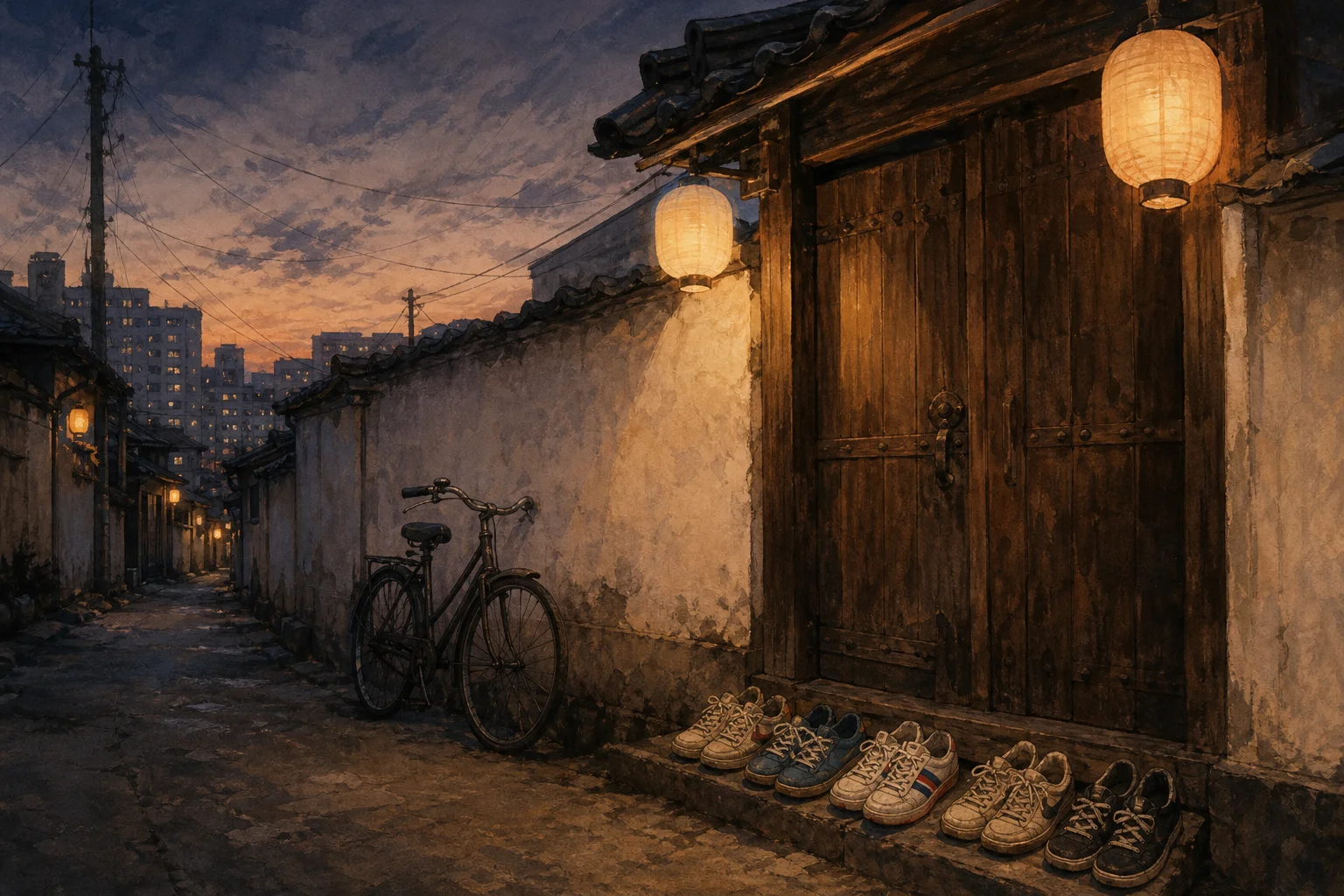
Jung-hwan and Mi-ran move in the opposite direction. She envies Sun-woo’s mother because Sun-woo tells her everything. Jung-hwan says only what is necessary. He gets his sneakers stolen and says nothing. He ranks first on an exam and says nothing. He sits at his desk while Mi-ran tries to ask for a life update without sounding needy.
Her request is simple and almost childlike: “I want to know everything, though.”
Jung-hwan cannot become chatty overnight, but he gives her something. He admits he lost his sneakers. It is not a grand confession. It is barely a sentence. For Mi-ran, it is enough to open a door.
At the Kim house, Jung-bong (Ahn Jae-hong) becomes one of the strangest comic engines, a 24-year-old six-time exam taker whose interests include everything except studying. His pop-culture trivia, wrong turns, and sudden facts sit beside Jung-hwan’s silence like two versions of sonhood: one overflowing, one sealed shut.
Deok-sun asks for her own birthday cake
The Sung family birthday scene is where all the small slights finally pile too high.
At breakfast, Bo-ra and No-eul get fried eggs while Deok-sun says she does not need one. Her mother gives her black beans because she assumes Deok-sun likes them. Her father takes No-eul for World Cone on the way home and tells him to eat slowly. Fried chicken arrives later, and the drumsticks go to Bo-ra and No-eul while Deok-sun is left with wings.
None of those moments looks cruel by itself.
Together, they explain the explosion.
When the family sings to Bo-ra first, removes three candles, and starts over for Deok-sun, she cannot swallow it again. She has already said she does not want to share this birthday. She has already asked for new glasses and a separate celebration. She has already lost Madagascar and come home late to a cake that still treats her as an afterthought.
So she says it all. She hates black beans. She loves fried eggs. She knows how to eat drumsticks. She hates being the only one with a plain, awkward name while Bo-ra and No-eul get names that sound like colors in the sky. And when she asks whether she is a joke to them, the room finally hears the middle child they have been stepping around for years.
Dong-il’s repair the next day is clumsy in exactly the right way. He brings a separate cake, lights eighteen candles, and apologizes. He does not pretend he and Il-hwa had a good reason. He says they did not know.
Then Dong-il says the line that makes the whole memory ache: “It was my first time being a dad.”
That apology does not erase the fried eggs, the drumsticks, or the shared birthday. It also does not make Deok-sun foolish for being hurt. It simply lets father and daughter sit together in the fact that parents can love a child deeply and still fail to see what that child keeps surrendering.
The adult interview frame at the end keeps the memory from becoming too polished. In 2015, adult Deok-sun laughs about carbon monoxide, marriage, and the old block. The mystery of who she married is present, but it is still light, almost tossed off. What matters more in this opening hour is the alley she came from and the family that wounded and held her in the same breath.
What works
- The food relay across the alley is a clear introduction to Ssangmun-dong. Rice, salad, radish kimchi, curry, and gas delivery turn exposition into household motion.
- Deok-sun’s Olympic arc gives her a public victory without making the pain fake. Losing Madagascar hurts; carrying Uganda still feels earned.
- The mother-son scenes are sharply different. Sun-woo’s shaving confession releases grief, while Jung-hwan’s sneaker admission gives Mi-ran a tiny piece of the son she keeps trying to reach.
- The shared birthday fight works because every complaint has already been planted: fried eggs, black beans, World Cone, chicken, glasses, and the candles.
- Bo-ra’s politics give the Olympic nostalgia some friction. Her anger keeps the opening ceremony from becoming pure postcard memory.
What stumbles
- The early pop-culture narration is charming, but it runs long before the families fully take over. The Pierce Brosnan, Tom Cruise, and New Kids roll call is useful texture; it also delays the warmer alley material by a few minutes.
- Some of the broad adult sex jokes around the mothers and fathers hit the same note several times. The gossip establishes intimacy, but the scene could lose a beat and keep the same point.
- Taek is still mostly an outline here. The Go genius label and the room full of friends are clear, but his emotional place in the group has less shape than Deok-sun, Sun-woo, or Jung-hwan.
What this sets up for Episode 02
Going into Episode 02, Deok-sun is newly visible at home and on television, but visibility does not fix her family position in one night. Sun-woo’s father-shaped absence, Jung-hwan’s guardedness, Bo-ra’s anger, and Taek’s quiet distance all need more room now that the alley has been introduced. The next hour has to show whether Ssangmun-dong can keep feeling this crowded without losing the private ache inside each house.
Rating: 8.7/10
More episodes from Reply 1988 — The Ssangmun-dong slice-of-life classic, episode by episode. Jump to any episode in the season:
Where to go next
Reviewed by Mira Vance · QuizFandom Editor & Lead Reviewer. Every rating is an honest per-watch assessment from the desk that also writes the quizzes — not a press release rehash.