Reply 1988 Episode 12 Recap: Deok-sun Finds Taek After the Long Match
Reply 1988, Season 1, Episode 12 tvN · Written by Lee Woo-jung · 2015-2016
Love is not always rescue; sometimes it means letting someone keep the pride that gets them through winter.
In Season 1, Episode 12, February 1989 settles over Ssangmun-dong with snow, pork cutlet coupons, secret dates, and a lot of people pretending they are fine. Sung Deok-sun (Lee Hye-ri) tries to live as the luckier “Soo-yeon,” Choi Taek (Park Bo-gum) loses a ten-and-a-half-hour baduk match and comes home hollow, and Sung Sun-woo (Go Kyung-pyo) discovers that his mother has been cleaning the bathhouse at night. Romance stays light on the surface, especially with Bo-ra and Sun-woo sneaking through the alley, but the parent-child story lands harder: a son hates seeing his mother suffer, while his mother needs the dignity of doing something for him.
Snow pulls Bo-ra and Sun-woo into the alley
The opening is pure Ssangmun-dong whiplash. Deok-sun’s father comes home drunk, praises No-eul’s baby face, and makes sleep impossible for the whole Sung house. A few doors away, Sun-woo waits on the phone for Sung Bo-ra (Ryu Hye-young) to confirm that everyone is asleep, including Jin-ju, who has woken up to pee and crawled into his bed.
Then it starts snowing, and Sun-woo cannot leave the moment alone.
He tells Bo-ra to come out, waits in front of her house, and immediately tests how reckless this new relationship can be. Bo-ra is all warning signs: No-eul is awake, the block is not safe, everyone could come outside. Sun-woo is all grin and nerve. When Taek wanders into the street and catches them, the panic turns into comedy fast, because Taek receives the secret with that sleepy gentleness that makes everyone underestimate him.
The comic turn is that Taek is not confused by the romance itself. He asks Sun-woo if he is not afraid of Bo-ra. Sun-woo says no, because she is cute. Taek’s answer, learned from the boys’ rougher vocabulary lessons, is a perfectly timed curse, and suddenly the softest boy in the alley is being coached in how to sound less like a pushover.
That joke matters because Taek is so often treated as fragile by nearly everyone around him. Here, he is a keeper of secrets. He can be innocent and sharp in the same breath. He can listen. He can hold something for a friend without turning it into gossip.
Deok-sun tries on Soo-yeon and senior-year discipline
Deok-sun’s name-change spell is still working on the adults, or at least they are trying very hard to make it work. Jung-hwan’s mother corrects herself from Deok-sun to Soo-yeon. Jung-hwan’s father calls out the new name with exaggerated cheer. Even the neighbors seem to treat the shaman’s prediction like a neighborhood group project.
Inside the house, the shift is funny because Deok-sun commits to it with her whole body. She wakes early. She leaves for school before anyone expects her to. She opens a vocabulary summary and tries to look like a student who has suddenly discovered discipline. Her friends are less convinced. When she says she is going to college too, Mi-ok and Ja-hyun cut through the dream with the kind of affectionate cruelty only teenage friends can get away with.
Kim Jung-hwan (Ryu Jun-yeol) keeps becoming the quiet center of Deok-sun’s new routine. She leaves early hoping to run into him, only to hear that he already went ahead. The next morning they end up on the bus together, both pretending their timing is accidental. He drinks coffee before school; she watches him with the awkward concentration of someone who wants a sign but would rather die than ask for one.
The Ddochi Western Food coupon pulls the friend group into a different kind of teenage adventure. Ryu Dong-ryong (Lee Dong-hwi) has five pork cutlet coupons, a rumor about a waitress who looks like Lee Mi-yeon, and absolutely no interest in letting anyone skip. The restaurant becomes a perfect little 1989 dream: pork cutlets, parfaits, too much excitement over dessert, and the boys trying to act worldly while knowing almost nothing.
Deok-sun, naturally, is the one who handles the flasher near the restaurant with almost no fear and full volume. After the other girls describe the man as frightening, she talks like seeing him would be a novelty. When he appears, she shames him loudly enough to send him running. The scene is crude, but it fits exactly who Deok-sun is in this group: not polished, not careful, not easily embarrassed, and often braver than the people teasing her.
Taek loses a ten-hour match and comes home to Deok-sun
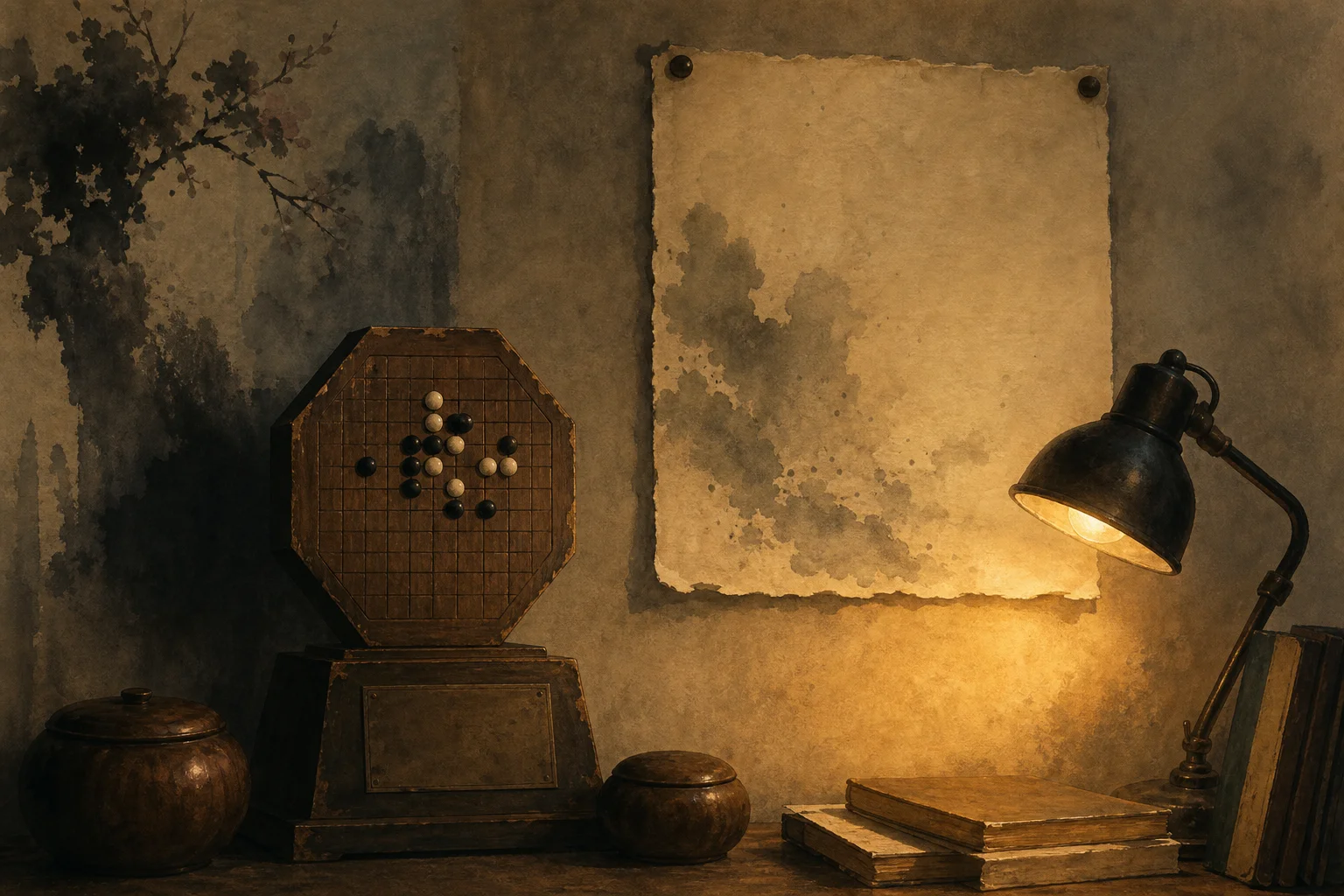
Taek’s professional world arrives through the television first. The news explains that his title match against Yoo Jin-ho, 9-dan, has no time limit, and that concentration and self-maintenance will decide everything. At home and school, everyone hears those stakes as if they are family business. His friends joke about baduk, porn videos, and dinner plans, but they still track whether the match is done.
The loss is cruel because it comes after ten hours and thirty minutes, by only one and a half points. The broadcast says Taek could not maintain momentum until the final move. That wording is dry, but the sight of him walking out says enough: pale, emptied out, too tired to carry the public dignity everyone expects from “Master Choi.”
Deok-sun meets him in the alley with her usual loud affection. She calls for him to lift his head and walk with his chest out. She starts to say the comforting thing people say after a loss, the easy line about losses happening.
Then she stops talking.
Taek steps into her and cries. Deok-sun does not perform wisdom. She does not tease him. She holds him and says, “You worked hard.” The moment is clean and generous because it gives Taek exactly what the match could not: permission to be a tired boy instead of a national prodigy for a few minutes.
The restaurant aftermath keeps that intimacy from becoming too neat. Taek later tells Deok-sun not to tell the others he cried. She lets him have that. When he says it is humiliating, she answers that it is okay to cry sometimes. Their friendship has always had a childlike softness, but this scene moves it into something more private. She sees his weakness without making him feel smaller.
Sun-woo finds his mother at the bathhouse
Sun-woo’s mother hides labor in plain sight. At the market, she bargains over bean sprouts, waves off her cold, and lets the other vendors praise her son before returning instantly to the 100-won discount. At home, she cooks too salty and waits for Sun-woo to tell her it will be fine with rice. She keeps saying she is fine because the house depends on that sentence.
Moo-sung knows more than Sun-woo does. He accepts Jin-ju, offers citron tea, notices the cold medicine, and tells Sun-woo’s mother to wear rubber gloves when she cleans. Their scenes are tender without being loud. He does not make a grand declaration. He notices the white hairs. He opens medicine. He sits with Jin-ju. In this alley, care often arrives as a small errand done before anyone asks.
Sun-woo finds the truth anyway. He cuts night session, buys medicine for his mother, follows the trail to Uksoo Bathhouse, and sees what she has been hiding. He asks the bathhouse worker not to tell her he came. Then he returns to Moo-sung’s place and says he knows his mother is working there too.
He tries to be noble about it. He says he will pretend not to know. But outside with Bo-ra, all the hurt comes out at once. He does not want good shoes, good clothes, private classes, or anything the other kids have. “I just want her not to work” is the line that breaks him open.
Bo-ra’s answer is hard because she loves him enough not to flatter his pain. She tells him to massage his mother’s shoulders. Then she names the part he does not want to see: his peace of mind is not the only thing that matters. For his mother, being unable to buy her son Nikes hurts too. Wanting to give is also love.
That is the adult lesson Sun-woo is not ready for and desperately needs. A child’s love wants to stop the parent’s pain. A parent’s love sometimes chooses pain because giving even a little feels like breathing.
What works
- Deok-sun finding Taek after the loss is plain in the right way. A hug, a short sentence, and the silence after public failure do the work.
- Sun-woo’s mother gets a full emotional life, not a saintly outline. Her bargaining, cooking, coughing, hiding, and pride all belong to the same woman.
- The Bo-ra/Sun-woo romance is funny because their temperaments keep clashing: he wants closeness and casual speech, she wants control, secrecy, and a plan.
- The Ddochi restaurant sequence nails teenage appetite. Pork cutlets, parfaits, bathroom panic, and fake sophistication all feel like neighborhood legend by tomorrow morning.
- Moo-sung’s quiet care for Sun-woo’s mother and Jin-ju adds warmth without pushing the relationship faster than the characters can handle.
What stumbles
- The flasher comedy is very period-specific and blunt. Deok-sun’s response is in character, but the setup lingers more on shock humor than the sequence needs.
- Dong-ryong’s X-rated-video bit repeats the same joke a few times before the payoff. It fits the boys, but it slightly crowds the stronger Taek material around the match.
- Deok-sun’s Soo-yeon study push is charming, though it still feels more like a comic runner here than a real academic turn.
What this sets up for Episode 13
Sun-woo now knows about his mother’s work, and pretending not to know will be harder than saying nothing. Bo-ra has become the person he can cry in front of, which makes their secret relationship less like a thrill and more like a responsibility. Taek’s loss also leaves the group with a new awareness: their gentle friend carries pressure none of them can joke away.
Rating: 9.2/10
More episodes from Reply 1988 — The Ssangmun-dong slice-of-life classic, episode by episode. Jump to any episode in the season:
Where to go next
Reviewed by Mira Vance · QuizFandom Editor & Lead Reviewer. Every rating is an honest per-watch assessment from the desk that also writes the quizzes — not a press release rehash.