Stick S1E5 Review: A Local Qualifier, a Bunker Called Copacabana, and a Picture Frame
What happens — the short version (spoilers)
- Pryce recruits Zero to secretly feed Santi the smart club choices from the gallery, like a Cyrano.
- On day two Santi overrides the safe call, finds a bunker and double-bogeys the Copacabana hole.
- Zero quits the scheme after Elena reveals Gary used to manipulate Santi the same way.
- Zero admits they move on when they don't feel safe, and that they feel safe with this group; Pryce gives Santi the smart seven iron.
- Santi sinks an eagle on 17 to advance to the final qualifier.
- Mitts forces the conversation about Jett; Pryce can't say his son's name, a picture frame gets thrown, and the two wrestle on the ground.
Santi enters his first real tournament with Zero whispering club choices from the gallery, Mitts watching Pryce circle the same grief he never named, and a kid named Christina Marie Duffy finally telling someone where she was born.
The fifth hour of Stick takes a premise that should be small — a two-day amateur qualifier in some unnamed town — and turns it into the kind of sports comedy where the trophy on the line is the least interesting prize in the room. Santi has clubs in his hand for two rounds. Pryce has a clipboard and a scheme involving a substitute caddie. Mitts has a folding chair and a grievance he has been white-knuckling since the cold open. By hour’s end the qualifier is decided, sure, and so is a much older fight that nobody mentioned out loud until the second beer.
The clinic in the kitchen, the deal in the parking lot
The cold open is a kitchen-counter golf lecture at an indecent hour, which is funnier than it has any right to be. Owen Wilson’s Pryce has dragged Zero out of bed and spread a full set of clubs across the counter like a man unveiling Christmas presents to an audience of one tired stranger. The lecture is the kind only a true believer delivers. Drivers and woods go far. Irons go shorter and higher. The loft angle on the clubface is, apparently, the whole game. Zero pushes back with the loaded take that golf is boring and bad for the environment and played by rich white men in zip-up pullovers, and Pryce defends the humble pullover like a man whose marriage to outerwear is on the line. The hoodie, he notes with some affront, is a cousin. The bit is the longest the show has let a single joke breathe, and it pays off.
Mitts is trying to sleep on the couch and providing pronoun corrections from the half-dark. “Show her the fucking clubs.” “It’s them.” “Just show them and her the fucking clubs.” Marc Maron plays the bit with the bone-deep exhaustion of a man who has lost this argument before and is too tired to lose it cleanly. The bit lands, but what’s really happening underneath is a sales pitch. Pryce is closing a deal in plain sight. Zero will be his Cyrano de Bergerac, or in the pun he refuses to apologize for, his Zero-no de Bergerac. They will whisper the right club from the gallery. Santi will think he is making the choices. The kid, Pryce reminds them, listens to Zero, not him.
It’s the first time the show puts the word “mouthpiece” on the table and the first time it gets pushed back on. Zero says no to that word. Pryce hears the no and keeps moving. The Cyrano framing is meant to make the manipulation sound classy. It does. It’s also still manipulation, just in a nicer cardigan.
Day one, day two, and the bunker called Copacabana
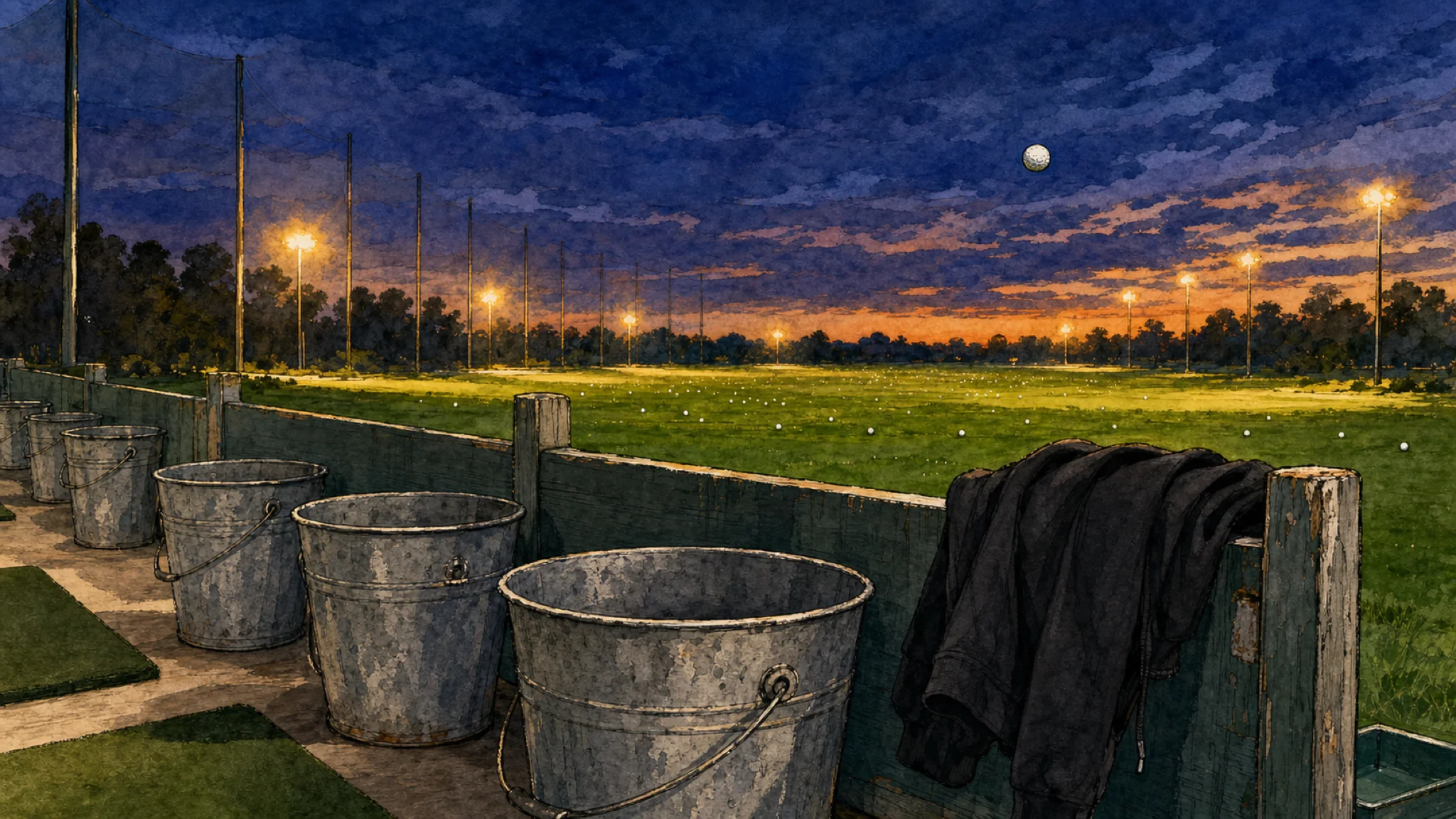
The qualifier itself is shot with the patience of a show that actually likes golf — long lens, slow gallery cuts, the satisfying clink of a struck iron. Thirty-six holes over two days, top two advancing to a final qualifier at Forest Dunes. The gallery is a cluster of golf bros yelling “Mashed potatoes,” “Boomshakalaka,” and “Bababooey” at the tee, a chorus that Lilli Kay’s Zero clocks in Spanish as the kind of crowd that gets louder and worse every year.
The plan works in flashes. Hole 11, the one with the bunker called the Copacabana, becomes the test case. Pryce has prepped Zero on every club choice. Peter Dager’s Santi wants to fly the bunker with the three wood, the kind of swing-for-the-fences move a kid raised by Gary makes by reflex. Zero, prompted, calls it a yoked-up alpha bro flex and asks the smart question: what’s the smart play. Five iron. Lay up short of the sand. Santi listens. The Princeton kid behind them goes for the green and pays for it in beach sand. Santi takes the lead on the leaderboard, and from a hundred yards away Pryce and Mitts have the conversation Stick has been signaling since the cold open.
Mitts is watching the plan work and getting madder the longer it does. He keeps trying to tell Pryce he is playing with fire. He says he hates being the guy who picks up the pieces. Pryce says nothing has gone sideways, that the kid is first on the leaderboard, that this is exactly the thing they came on the trip to do. Mitts says that is not why he came. The line lands and the episode walks away from it for half an hour before circling back to collect.
Day two opens with Zero already absorbed into the family unit, which is a bit and a sneak attack at the same time. Elena hands them a water bottle, calls them mijo and corrects herself with a small wince, and tells the story of Santi’s father Gary — an asshole on the spectrum where parental love is a faucet that runs only when the round is good. Santi never knew if what his dad said was real or a mind game to make him swing a certain way. Zero hears it. Zero is also the one whispering club choices from the gallery. The math is immediate and Zero does it on screen.
The Copacabana fails on day two. Santi shakes off the five iron, asks Zero to bury the Princeton kid, and Pryce, watching from a distance, tells Zero to let him send it. He’s an athlete. If he is feeling it he can clear this, no problem. Santi finds the bunker, four-putts the green, and double bogeys the hole. The golf bros across the fairway mock his choking with a Heimlich pantomime, which Bianca Sams as Elena answers in Spanish with what sounds like a polite weather observation: nobody likes you. It might be the biggest laugh in the season because Elena seems to genuinely believe she is breaking news.
The 17th, and the lie about being a nomad
The argument that follows on the cart path is the spine of the episode. Zero is done. The word that broke them is “manipulating.” Elena told them Santi’s dad pulled strings behind the kid’s back to make him do what Gary wanted on the course, and Zero has just spent two days pulling the same strings. Pryce defends the operation as helping the kid succeed. Zero asks what success even means here. Money and cars. Pryce, exposed for half a second, switches to the real answer: it is the game Gary stole from him, and they can give it back.
What turns the scene is a confession the show has been holding in its back pocket. Zero remembers the line from earlier in the episode about moving on every three months when they get bored, when they need a challenge. They tell Pryce it isn’t true. They move on when they don’t feel safe. They get antsy and bug out. And then they say the line the show has been building toward since the pilot: they feel safe with this group. They are not ready to move on. Pryce hears it and gives the answer the character has not managed for four episodes. He’s not ready for them to move on either. He gives Santi the seven iron. The smart play.
The eagle on 17 is shot like a sports movie because Stick has earned the sports-movie shot and knows it. Santi crushes the seven, the ball rolls, the ball keeps rolling, the ball drops. Elena screams. Pryce screams. Zero screams. The crowd does the thing crowds do when a kid no one came to watch becomes the story of the day. The cut to Pryce and Mitts in the parking lot, arms still warm from celebrating, is where the episode pivots from the qualifier to the older grief sitting in the truck.
What this hour is actually doing
The Cyrano de Bergerac frame Pryce offered in the cold open is the structural joke of the hour, and the writers know it. Cyrano feeds the right lines to the man with the face. The man with the face wins the girl. Nobody asks the man with the lines what it costs him. Stick sets up the bit and then knocks it over. Zero is being asked to be the voice, and the voice is being asked to pretend it’s the kid’s own swing instinct talking. Elena’s monologue about Gary is the hinge that makes Zero refuse the role, and the show is honest enough to let Pryce defend the manipulation right up until Zero names the safety they have found in the RV and the bunks and the four of them. The difference between a coach and a con man, in golf as in everything else, is whether the kid knows who’s picking the club.
The other fight is older and meaner. After the celebration dinner, Mitts and Pryce have the conversation Mitts came on this trip to force. Pryce has poured everything he has into this kid. Mitts has been hovering for episodes because he was in the hospital with Pryce after Jett died and was not sure Pryce would come back this time if Santi’s qualifier went sideways. Jett would be Santi’s age. Mitts says it out loud and the show does not score the moment with music. Pryce can’t say the name, and Mitts tells him that is weird, man, that is genuinely weird. The picture frame goes off the bar and across the parking lot. The two of them grunt and grapple and end up on the ground like men who have known each other too long to throw a clean punch. Pryce apologizes for the frame. Mitts says he hated that picture anyway. Francine, his late wife, liked it because her neck looked good in it. The show drops the line and keeps walking, and the line is funnier and sadder for it.
Verdict
This is the hour where Stick graduates from a show about a guy who used to be good at golf into a show about the four people in the RV. Wilson plays the cart-path apology and the parking-lot fight with the same wary brightness he uses for everything else, which is the choice that makes the second one land like a brick. Maron’s Mitts has spent four episodes being the conscience and finally gets the scene that names what he’s been guarding, and he plays it in a register so quiet you almost miss the gut punch. Lilli Kay delivers the “I move on when I don’t feel safe” line with the absence of an ask, which is the only way that confession plays as truth instead of a tactic. Dager’s Santi is mostly the object the adults are arguing about, but the eagle on 17 is shot with the faith that the kid can carry the emotional freight of the beat without saying a word, and he does. The golf bros are a thin running joke that occasionally overstays its welcome, and Elena’s “asshole spectrum” speech does a chunk of the same lifting the cart-path scene is about to do, which makes the middle of the hour feel a touch over-explained. The picture frame, though — that’s the kind of small dumb object a sports comedy gets to leave on the floor and not pick back up. Pharaohs were into needlepoint, and Stick was, all along, sneaking up on a much harder episode about grief than the cold open advertised.
Rating: 8.5/10
More episodes from Stick — Owen Wilson's washed-up golf pro takes on the youngest prodigy on tour, episode by episode. Jump to any episode in the season:
Where to go next
Reviewed by Mira Vance · QuizFandom Editor & Lead Reviewer. Every rating is an honest per-watch assessment from the desk that also writes the quizzes — not a press release rehash.