Tulsa King S1E4 Recap: Dwight Recruits Manny as Tyson's Nitrous Hustle Starts a Biker War
Tulsa King, Season 1, Episode 4 — “Visitation Place” Paramount+ · Created by Taylor Sheridan · 2022
Episode 4 turns Dwight’s Tulsa startup into a family problem, a gang problem, and a funeral call.
Tulsa King S1E4 makes Dwight Manfredi’s new operation feel less like a funny exile project and more like an actual criminal ecosystem. Dwight confronts Manny Truisi and learns the shooting came from fear, not an order from New York. Tyson Mitchell helps turn the nitrous hustle into real money, then gets beaten by Black Macadam and dragged into a brutal fight beside his own father. The hour also puts Dwight on the phone with his sister and dying brother, which gives all the father-and-son business a sharper edge.
Dwight Makes Manny Truisi Pay for Panic
Dwight Manfredi (Sylvester Stallone) begins the episode in Manny Truisi’s kitchen with a gun out and no interest in nuance. Manny (Max Casella) is on his knees while Dwight presses him on Chickie, on whether New York sent him, and on the driving-test shooting. The answer is grimly funny because it is so stupid: Manny saw Dwight in Tulsa, assumed Dwight had come to kill him, and fired first.
The scene works because it does not excuse Manny. He has a wife, kids, a horse-track life, and a fake-ish calm built over 19 years in Oklahoma. Dwight still sees the man whose old mistake helped send him away for a third of his life. Manny says Pete feared Dwight might flip and tried to set him up in prison through Tico Tavares, which forces Dwight to sit with the possibility that the loyalty he protected never protected him back.
Then the hour swerves from murder to domestic absurdity. Dwight asks for sugar, Manny has agave, and neither man knows what that is. Dwight plays the shift like his brain can only process betrayal in small pieces, so he notices the lawn, the kitchen, and the ordinary life Manny bought with disappearance. The punishment becomes practical: Manny works for Dwight now, starting at $300 a week.
Manny’s home life takes the hit after Dwight leaves. Clara has been sober 15 years, learns Boise was part of Manny’s hidden past, and asks how she is supposed to believe anything he says now. Manny’s gangster history is not colorful backstory to her. It is a live threat standing in the kitchen where her children eat cereal.
Tyson Takes Dwight’s Ring and Starts Losing His Home
Tyson Mitchell (Jay Will) spends this hour crossing a line he does not fully understand yet. The nitrous run starts cleanly. Mitch Keller (Garrett Hedlund) gets the tanks, Bodhi Geigerman (Martin Starr) warns Dwight that Bad Face is in town, and Tyson sells balloons in a parking lot with the delighted confidence of a young man who thinks he has found his lane.
That first night pays. Tyson and Bodhi burn through all ten tanks, report that they could have sold more, and Dwight rewards Tyson with cash. Then Tyson says he might buy himself one of those rings, and Dwight hands over his own pinky ring because it has “lost its luster.” It is a mob baptism for a kid still trying to prove he belongs in the room.
At Tyson’s dinner table, the ring becomes evidence. His father Mark does not need a full case file to read the sign. He says only two kinds of people wear pinky rings: mobsters and British aristocracy. Tyson calls that prejudice, but his defense is thin because he knows exactly what the ring means.
The later fight makes the damage physical. Black Macadam jumps Tyson and Bodhi’s crew, takes the tanks and cash, and leaves Tyson beaten. When Tyson comes home, Mark turns the bruises into proof that the job is corrupting him. Tyson throws money on the table as a nasty answer to his father’s “return on our investment” line, and Mark gives him five seconds to get it out of his sight. Tyson keeps the scene from becoming simple rebellion. He is angry because his father is right enough to hurt him.
Caolan Waltrip Hits the Nitrous Hustle and Dwight Builds a Crew
Black Macadam moves from background menace to active pressure in “Visitation Place.” The first parking-lot confrontation is almost casual. Tyson and Bodhi’s crew are selling balloons when two bikers walk up and ask who gave them permission. Tyson refuses the premise. The bikers leave, but only after making clear the lot is their territory.
Caolan Waltrip (Ritchie Coster) turns that embarrassment into doctrine. He berates his men for letting outsiders take food off their table, calls them weak links, and frames the incident as a threat to their existence. Waltrip is played like a man who enjoys making small losses sound sacred. Respect must be performed, or somebody pays.
Somebody does. The second attack is blunt and fast, more ugly than cinematic. Tyson, Bodhi, Fred, Clint, and the others get rushed, punched, stripped of tanks and cash, and sent back to Dwight with nothing but bruises. Dwight tells them they held their ground and lost, then decides they will recover the tanks and the money.
The plan is classic Dwight nonsense dressed as strategy. He quotes The Art of War about victories without battle, while Bodhi points out that war sounds pretty violence-adjacent. Dwight promises to use his head. Bodhi agrees, then says he is bringing Bad Face just in case. Everyone knows this is going to end in a brawl, including the people pretending it will not.
The Bred-2-Buck staging scene gives the episode its oddest team photo. Dwight has Tyson, Bodhi, Fred, Clint, Bad Face, and Manny. Mitch stays behind because of parole, so the bar owner can only provide guitar and moral support. Bad Face thanks Dwight for including him in the beatdown because he does not have many friends. That line is ridiculous and strangely sweet.
Mark interrupts the departure and refuses to let Dwight treat Tyson like hired property. Dwight says Tyson works for him. Mark says his son is decent and raised right. Then Mark comes along anyway, because he can hate Dwight and still refuse to let his son walk into a fight without him.
The actual brawl is cut to Edwin Starr’s “War,” which is about as subtle as a bat to the ribs and still works. Dwight’s side is outnumbered, Bodhi keeps asking for a real plan, Fred proposes a flank attack, and Dwight gives a fake-philosophical speech about growing a set of balls. Then they charge. Tyson fights. Mark fights. Manny fights because Dwight made him show up. Dwight gets to play general with a crew assembled from a dispensary break room, a cowboy bar, and a family intervention.
Afterward, Mark refuses to treat the fight as bonding. He tells Tyson he always has a home unless he chooses otherwise. Dwight thanks Mark for his participation and pays Manny separately from what Manny owes. Even in victory, every relationship is transactional except the father-son one, and that one is cracking.
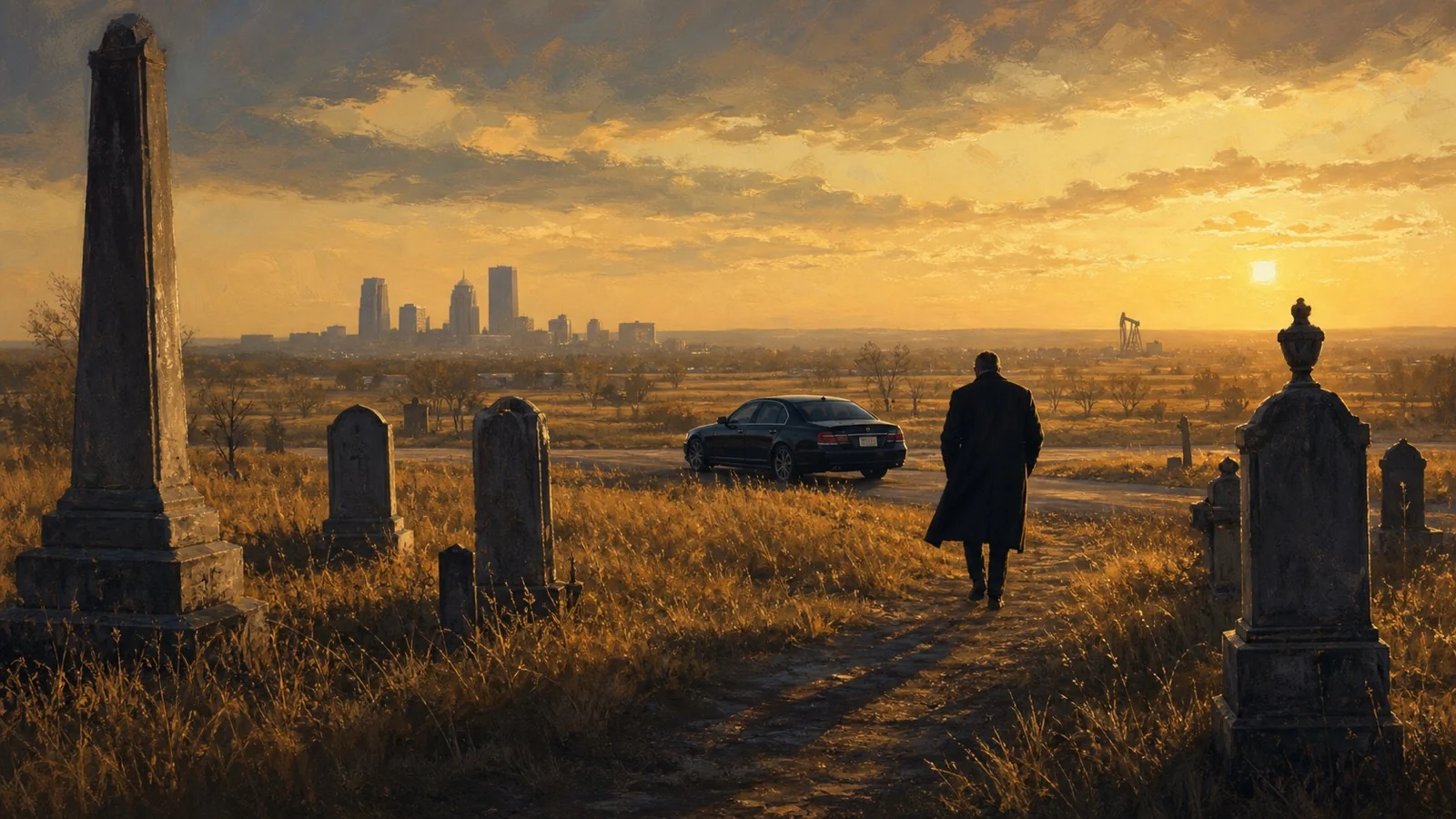
Dwight’s Calls Home Make the Episode Stop Joking
The quieter New York thread starts when Dwight calls Joanne. She answers by telling him he sounds old, which is fair and also merciless. He asks about Tina, but Joanne is not there to smooth anything over. Their brother Joe has lymphoma, and the family is taking shifts.
Dwight asks if he should come. Joanne throws the question back at him with the anger of someone who has absorbed 25 years of absence. He does not have a good answer for why he is calling now. He says, “I don’t know anything,” and for once the line is not a joke about apps, tolls, or Oklahoma customs. It is the truth.
The final phone call with Joe is the hour’s strongest emotional scene. Joanne says Joe cannot talk but can hear him, so Dwight tells a childhood story about Easter cookies, a shortcut, and a heavyset man in white whom Joe once asked if he was God. Dwight is not giving a speech. He is trying to hand his brother a familiar image to carry into death.
That call clarifies the episode’s title. Visitation is about missed visits, late calls, and the cost of letting protection become an excuse for absence. By the time Dwight talks about Tina growing up and getting married without him, the ache has landed. He built a crew in Tulsa because he knows how to gather men around danger. He has no idea how to repair the family that survived without him.
Stacy Beale (Andrea Savage) gets a smaller thread, but it mirrors that loneliness. At the bar, she breaks the cycle of drinking with her couch, accepts a drink from Colton, and drifts into flirtation. It keeps her making bad choices because quiet rooms are worse.
What works
- The Manny kitchen scene is a strong opener. It resolves the shooting without overcomplicating it, then pivots into agave, lawns, and a new envelope like only this show would.
- Tyson’s family material lands because Mark is not written as a scold. He is angry, protective, right about the danger, and still reckless enough to join the fight.
- Black Macadam finally gives Tulsa a local criminal force with its own rules. The nitrous lot is small business, but Waltrip’s reaction makes territory feel lethal.
- The brawl has the right register: sloppy, funny, violent, and built from the people Dwight has been collecting.
- Dwight’s call to Joe is the episode’s best Stallone scene. The performance drops the capo posture and lets the old regret sit there.
What stumbles
- Stacy’s bar flirtation is thin compared with the family and biker material. It tells us she is lonely and spiraling, but the scene mostly marks time.
- Waltrip’s speech is effective setup, though it pushes hard on villain grandiosity for a dispute over balloons and parking-lot cash.
- The Art of War gag is funny, but the episode repeats the “we’re using our heads” bit long enough that Bodhi’s obvious panic does more work than the joke itself.
What this sets up for Episode 05
Dwight has officially crossed Black Macadam, and Waltrip is not built to let public humiliation sit. Tyson has chosen Dwight’s world at real cost to his home life, while Mark now knows exactly how violent that world can get. Manny is trapped back under Dwight’s thumb, Stacy is still making unstable choices, and Dwight’s grief over Joe and Tina is pushing his protection talk into something more desperate.
Rating: 8.0/10
More episodes from Tulsa King — Stallone in Sheridan's mob comedy, episode by episode. Jump to any episode in the season:
Where to go next
Reviewed by Mira Vance · QuizFandom Editor & Lead Reviewer. Every rating is an honest per-watch assessment from the desk that also writes the quizzes — not a press release rehash.