Agent Kim Reactivated Episode 2 Review: "Episode 2" — Hye-ri asks Oh Min-cheol to erase the evidence, and Agent Kim learns the hunt has crossed a border
What happens — the short version (spoilers)
- A flashback reveals Im Yu-jin's final request: Agent Kim must leave his past behind and live as Min-ji's father.
- Ju Hye-ri's group forces Kim Nam-hoon to send the back-gate message, then panics after the violence against Min-ji.
- Hye-ri calls Golden Teeth Gang collector Oh Min-cheol and invokes her father, Ju Gang-chan, to ask for help disposing of a body.
- Agent Kim interrupts Hong-sik's debt-and-organ coercion operation while widening his search for Min-ji.
- Director General Ri Eung-ryeong sends Park Yeong-gwang's unnamed younger brother after the man using Number 66, while SMD director Kang Guk-cheol moves to reach Agent Kim first.
- A voice message claiming that Min-ji's body was taken care of and reports of a girl's body leave Agent Kim with a terrifying lead, not confirmation.
"Episode 2" makes the premiere's worst possibility feel larger without pretending it is settled. Kim Min-ji is still missing. Ju Hye-ri and the boys who helped her have a version of the night they want erased, a collector called Oh Min-cheol has heard the name Ju Gang-chan, and Agent Kim has started moving through Seoul like a man who has run out of reasons to be civil. At the same time, North Korean intelligence and South Korea's SMD begin treating Codename 66 as an international emergency. The show keeps that spy escalation useful by returning to the thing underneath it: a father who will not accept an audio message as an answer about his daughter.
Im Yu-jin asks Agent Kim to leave his past behind, and the episode explains why Min-ji is the life he chose
The episode begins with political violence, then promptly finds the quieter history that gives it weight. North Korean officials discuss Deputy Director Kim Jeong-seon and the cost of a peace process that has already turned lethal. It is crisp, chilling scene-setting, but “Episode 2” knows the more revealing flashback is the one at the hospital.
Im Yu-jin dies after Min-ji is born. Before that moment, she makes the request that has organized Agent Kim’s whole false ordinary life: leave the past behind, be Min-ji’s father, and raise their daughter to give and receive love. It is not a magical redemption speech. He is still a man who gets called away by work, who treats every request for freedom as something an institution can postpone, and who discovers too late that a child can become sick while he is negotiating an exit from a life built on absence.
That is why the flashback earns more than a sad backstory function. It rewrites the premise. Agent Kim did not merely retire from dangerous work and happen to become a parent. He chose the dull, embarrassing, intensely domestic version of himself because Yu-jin asked him to make it real. His inability to do that perfectly is the show’s tragedy; the fact that he is trying is what makes the present-day rage frightening.
The montage of Min-ji growing up is deliberately plain: a fever, school milestones, a father’s anxious attendance. The show could have used it to sand down the previous hour’s arguments. Instead, it lets the memory sit beside them. Min-ji’s anger was real. So was the life that made her the center of his world. Both things can be true, and neither helps him locate her now.
Ju Hye-ri turns Kim Nam-hoon’s account into a trap, then calls the Golden Teeth Gang when the school violence spins beyond her control
The school plot gets worse because Hye-ri does not need to understand every consequence in order to set it in motion. Her group corners Kim Nam-hoon, forces the message that will lure Min-ji to the back gate, and turns the same teenage ecosystem of phones, DMs, and spectator cruelty into an alibi machine. The premiere treated the message as a trap. Episode two shows the mechanics of who built it, and the answer is uglier than a random abduction because it is so petty at the start.
The confrontation with Min-ji is filmed without an easy corrective. Hye-ri and the others have crossed a line, but they are also panicking inside the aftermath. Blood, phones, bodies moving at the edge of the frame: the scene gives them enough terror to explain why they immediately start thinking about deletion and disposal. It does not ask the audience to mistake that panic for remorse.
Hye-ri calls Oh Min-cheol, identified as the South Side collector for the Golden Teeth Gang, and asks what to do with a body. She leans on the name that works everywhere else in her life: her father is Ju Gang-chan, chairman of Juhak Construction. The call is almost absurd in the way only a teenager trying to use adult power can be absurd. Then Min-cheol hears the name and the episode turns cold.
He does not simply become Hye-ri’s convenient fixer. He lets her go without payment because Ju Gang-chan is dangerous enough to be a bad debt. Later, his men wonder why he did not blackmail a construction chairman; Min-cheol answers by invoking the version of Ju that existed before the boardrooms. The show is careful about the chain of fear here. Hye-ri thinks her father’s name gives her a solution. Min-cheol hears it as a warning. The people below both of them understand that Ju’s protection is another form of predation.
Most importantly, the episode refuses to settle Min-ji’s fate just because its frightened teenagers use the word “body.” That is the story they are trying to buy their way out of. Agent Kim receives evidence meant to make him believe it. The review’s job is not to do their work for them.
Agent Kim goes after Hong-sik’s men, and a missing girl turns every small criminal operation into a question of time
There is a useful tonal pivot in the middle of the episode. Agent Kim follows the trail into a debt-and-coercion operation connected to Hong-sik, walks in looking more like a delivery worker than a black-ops legend, and finds people who assume they understand the kind of man in front of them. They see the box, the awkward manner, the bad timing. Then the room starts coming apart.
The fight is strong because it is not staged as a victory lap. A family is already being squeezed, and the threat in the room has the ugly banality of people using debt, fear, and a child’s safety as leverage. Agent Kim’s violence interrupts it with terrifying efficiency, but the scene does not pretend he has fixed the larger system. He has simply made the men in front of him answer a question they hoped would stay someone else’s problem.
That distinction keeps the action in the series’ register. The show is funny when a group of criminals discovers it has misread a rumpled middle-aged man. It is not funny about what made them feel untouchable. The amateur bravado falls away once Agent Kim starts asking about Min-ji, and the episode does not decorate his anger with speeches about justice. He is working outward from the one fact he cannot bear: his daughter went missing after adults and teenagers alike decided they could make a vulnerable person disappear from the record.
The episode also keeps giving him routes that lead nowhere cleanly. A name produces another name. A phone becomes something to ditch. A chat becomes a place for children to hide behind the certainty that the law will call them children. Every answer adds a few metres to the search and makes the scale of the cover-up feel more improvised, more desperate, and more dangerous.
Director General Ri Eung-ryeong reaches for the old Number 66, while Mole Cricket learns the North has seen Agent Kim again
Then the spy story stops being a buried dossier and becomes a race. Director General Ri Eung-ryeong hears that the man the North calls a traitor is active in Seoul. In his version of the past, the number Agent Kim carries has been stolen. The original Number 66 was Park Yeong-gwang, an exceptional warrior who died in action; the anger around that history is severe enough that Park Yeong-gwang’s younger brother is brought in to pursue the man now wearing the number.
The naming matters. Park Yeong-gwang is not a secret former identity for Agent Kim. He is the ghost the regime uses to make Agent Kim’s existence an insult. Ri’s response is not merely procedural: he wants the false Number 66 dealt with as an old betrayal that can finally be made visible.
On the South Korean side, Director Kang Guk-cheol, whose codename is Mole Cricket, receives the other half of the problem. Footage connected to Park Jin-cheol has exposed Agent Kim’s presence to North Korean intelligence. The government officially denies that Agent Kim exists, which is the sort of sentence that makes a character sound less safe, not more. SMD cannot acknowledge him cleanly, but it also cannot let the North gain physical access to him through the coming high-level talks.
This is all deliciously overbuilt in the way a Korean action thriller should be, yet the episode gives the apparatus a clear human use. Two states are arguing about an asset. Agent Kim is not available to be an asset because he is on the ground looking for Min-ji. The more they move to contain him, the more the show makes their language of security sound grotesque beside the name of a missing schoolgirl.
Ju Gang-chan teaches Hye-ri to make people afraid, and the father’s lesson is worse than the cover-up
Ju Gang-chan’s scene with Hye-ri lands harder than the earlier phone call because he does not need the whole truth of what happened to give her the wrong lesson. She asks whether Min-ji’s father is dangerous. He does not respond by asking what Hye-ri did or who might be hurt. He tells her not to take anything lying down, to make people pay several times over, to make them too afraid to meet her eyes, and promises that he will protect her.
It is a parenting speech shaped like a threat assessment. The tragedy is not simply that Hye-ri has a father willing to cover for her. It is that he has taught her the worldview which makes the cover-up feel natural. In Ju’s world, harm is what happens when someone lets another person see fear first. Min-ji is not a person with a family or a future; she is an inconvenience who did not know her place.
The episode then places that lesson beside the one Agent Kim received from Yu-jin. One parent asks a violent man to become a father. The other teaches his daughter that fatherly protection means making everyone else kneel. The contrast is broad, but it gives the show a clean moral pressure without pretending the two families are equally positioned inside it.
Ju is also not just an abstract rich villain. Min-cheol’s account of his climb from hired thug to construction boss suggests why even other criminals treat his name carefully. Power has not softened him. It has given the old methods a building company, a political vocabulary, and people who will call the consequences administrative necessity.
A voice message says Min-ji’s body was taken care of, and Agent Kim refuses the answer it is designed to force on him
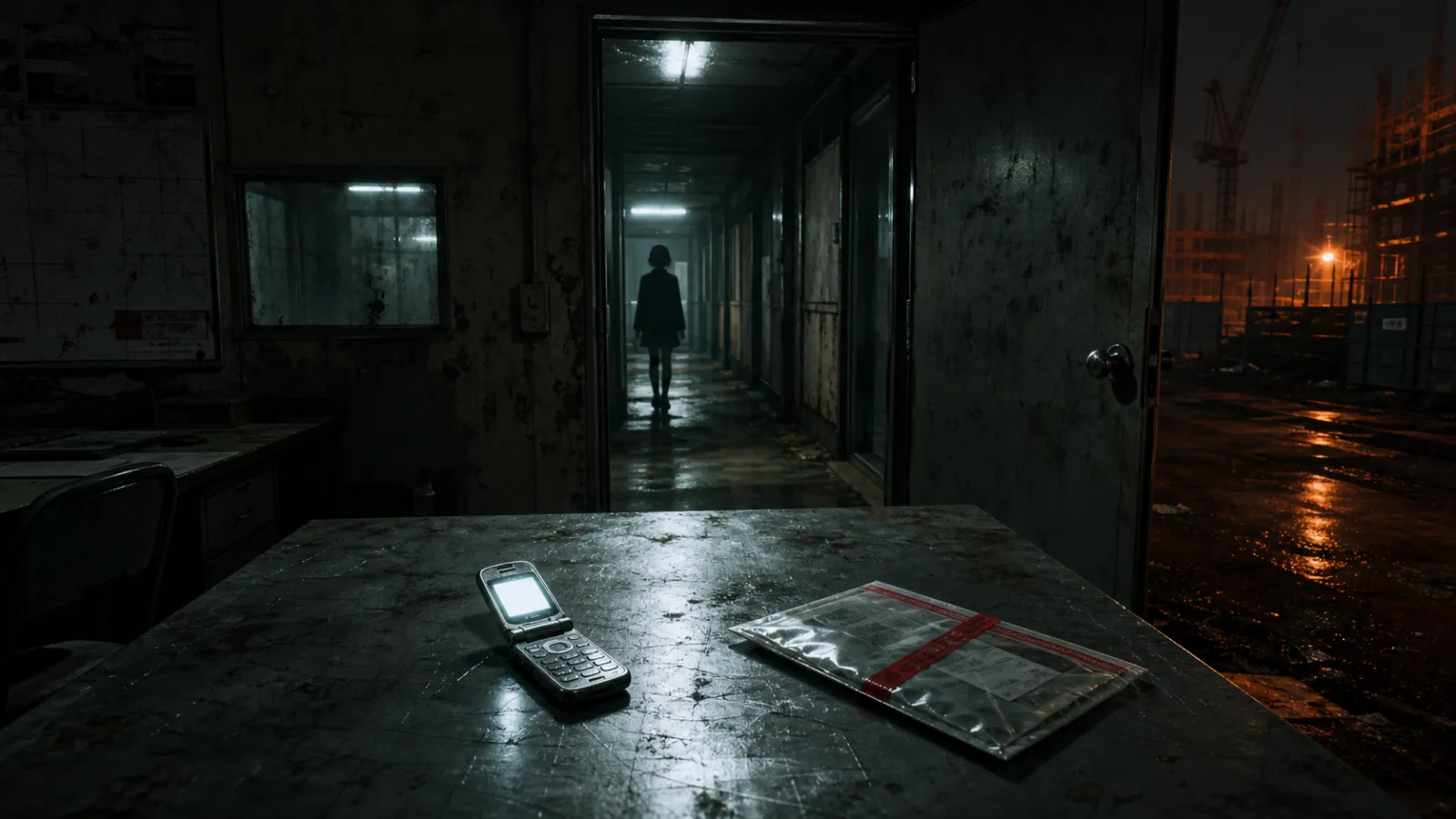
The ending is cruel precisely because it arrives as information. Someone says Min-ji’s body has been taken care of. A report about a discovered high-school girl’s body enters the search. Agent Kim sees the evidence and the episode leaves him in the space between proof, manipulation, and panic.
The series does not use that uncertainty to play a cheap gotcha with the audience. It uses it to show the difference between a system that wants a case closed and a father who knows the girl in question. The message is supposed to make him stop looking, or at least make him act from a grief so blinding that he becomes easier to direct. Instead, it strips away the last pretense that this can be managed through normal channels.
That is the key move of “Episode 2.” The premiere ended when Agent Kim’s old abilities returned to the surface. This hour makes those abilities a liability in every direction: criminals want him scared, the North wants him dead, the South wants him contained, and Chairman Ju’s world assumes a father without money can be made to accept whatever story he is given. None of them have understood what Yu-jin made him promise.
Tiny details worth clocking
- The hospital flashback makes Min-ji’s name part of Yu-jin’s final instruction, not a generic sentimental reveal.
- Hye-ri’s call to Oh Min-cheol maps inherited power exactly: she does not know the criminal network, but she knows her father’s name is supposed to open it.
- The debt operation’s macarons are an excellent cover because they let the show introduce Agent Kim’s old competence through an object that belongs in his awkward domestic comedy.
- The argument over Park Yeong-gwang makes Codename 66 a contested wound, not simply a cool designation Agent Kim gets to wear.
- Ju Gang-chan’s advice to Hye-ri is not a private consolation. It explains why she treats fear as something to impose before anyone can impose it on her.
Final verdict
“Episode 2” does the necessary second-episode work with unusual discipline. It expands the show from one terrible school-night disappearance into a criminal and inter-Korean pursuit, but it keeps the expansion attached to the same emotional nerve. Agent Kim can now fight his way through people who thought a missing girl was an errand to erase. That does not make the audio message at the end any easier to hear.
The plotting is occasionally eager to announce how many institutions have an interest in Codename 66. Ri, Mole Cricket, Park Yeong-gwang’s history, and the negotiations all arrive quickly. Yet it stays readable because each new layer answers a different question: who wants Agent Kim gone, who wants him hidden, and who believes money can make Min-ji’s disappearance disappear with him.
Its best choice is letting the fathers’ lessons do more work than the dossier material. Yu-jin asked Agent Kim to build a gentle life and he has spent years failing at it in ordinary, recognizable ways. Ju teaches Hye-ri that protection means terror. Once those two ideas are on the table, the coming collision feels less like a genre obligation than the only possible result.
Rating: 8.6/10 — A tense, emotionally clear escalation that turns a missing-person search into a three-sided hunt without losing sight of the girl at the center of it.
More episodes from Agent Kim Reactivated — A father, a vanished daughter, and a black-ops past reopened. Jump to any episode in the season:
Where to go next
Reviewed by Mira Vance · QuizFandom Editor & Lead Reviewer. Every rating is an honest per-watch assessment from the desk that also writes the quizzes — not a press release rehash.