Agent Kim Reactivated Episode 5 Review: "Episode 5" - Min-ji gets out of the cold room, but the road home keeps moving
What happens — the short version (spoilers)
- A childhood flashback shows Min-ji getting trapped during hide-and-seek and helping her father find her by remembering landmarks.
- A Golden Teeth man tells Agent Kim that Min-ji is in a cold-storage warehouse, while shifting blame for what happened onto Hye-ri's call and the claim that Min-ji was already dead.
- Inside, Min-ji rejects a captor's promise to release her because she knows he will not let her safely report what she saw.
- Gang Seong, Park Yeong-gwang's younger brother and the former Number 73, confronts Agent Kim over the original Number 66's death; Agent Kim denies killing him.
- Flashbacks establish that Gang Seong and Agent Kim were friends and rivals before the North's operation left Gang Seong behind.
- Min-ji gets out of the cold-storage danger and reaches the road in the rain, while Agent Kim receives CCTV coordinates that put him back on her trail.
"Episode 5" brings the season's first disappearance back to the smallest version of itself: a little girl lost during hide-and-seek, calling for her father behind a locked door. That memory gives the cold-storage plot its awful force. Min-ji is alive, alert, and unwilling to trust the man outside her door; Agent Kim is close enough to keep hearing her name and still far too late. Meanwhile, the man who blames him for the original Number 66 has a name, a brother, and an old friendship that makes the revenge story harder to file away.
A childhood hide-and-seek game turns into the episode’s quietest mirror of the present
The opening does something unexpectedly gentle before the hour goes back to panicked searches and people threatening one another in the rain. Young Min-ji is playing hide-and-seek around the Jeilwon Senior Welfare Center. She wanders into a space she cannot get out of, hears the building closing down around her, and calls for help after everyone else has gone home.
It is not a grand traumatic origin story. That is exactly why it lands. The adults searching for her have the distracted, practical fear of people who believed a child was safely nearby until she suddenly was not. Her father checks the apartment complex, the park, every place that makes sense after the fact. When he finds her, Min-ji explains that she could not open the door. She is proud that she did not cry. He is too relieved to make a speech about it.
The detail that matters is how she helped the search. Min-ji remembered the fish-shaped bun stand, the post office box, and the red house. She turned a frightening place into directions because she had paid attention. That small aptitude becomes a cruelly useful echo of the present. The girl in the cold storage is not waiting passively for the plot to recognize her. She is observing, judging the people around her, and trying to make enough of the world visible for someone to find her.
Agent Kim’s line after the childhood scare is ordinary parental instinct: do not go off on your own again. The show lets the line sit without making it accusatory. The adult Min-ji did not choose what happened to her. But the memory explains why her father cannot treat this search as another operation, another debt, or another old enemy asking to be settled. He has already once run through a neighborhood calling her name, terrified that he was too late. The episode puts him back inside that memory and makes the stakes colder.
A Golden Teeth man points Agent Kim toward cold storage, but the lead comes packaged as a lie someone needs him to believe
At the warehouse, the people holding Min-ji realize their basic assumption has failed. She is alive. That does not make them gentler or more useful; it makes her a complication they do not know how to price.
Agent Kim forces an answer out of one of the men connected to the Golden Teeth operation. The answer is the cold-storage warehouse. The man says Min-ji is frozen inside, then tries to explain the group’s part in it away: they only moved her after Chairman Ju’s daughter called, and she was supposedly dead from the beginning. It is a calculation disguised as confession. He is trying to give Agent Kim enough information to redirect the violence while still placing the original crime somewhere else.
The episode leaves that claim in its proper category: an account from a frightened criminal who needs Agent Kim to hear it. The cold storage is real. Min-ji is real. Everything else in the story is still being fought over by people with reasons to make themselves smaller inside it.
That uncertainty gives Agent Kim’s threat its real temperature. He does not need to announce a wider conspiracy or prove who ordered what before he moves. He needs to know whether his daughter is alive. When he says that if Min-ji is really dead he will kill all of them, it is not a piece of action-hero decoration. It is what happens when the ordinary manager from the bank has exhausted every version of being reasonable.
The series has been good at making his violence feel like an interruption to the life he wants, not evidence that he secretly prefers it. E05 makes the interruption uglier. Every useful answer comes out of someone who is already lying, frightened, or trying to trade another person away. He can get a destination. He cannot get a version of the night he can trust.
Min-ji refuses the false deal at the freezer door, and the episode lets her understand the danger for herself
Min-ji’s scenes in the cold storage are the strongest part of the episode because the show does not reduce her to a voice on the other side of a door. The man outside tells her she will freeze if she stays in there. He asks her name. Then he offers a deal: he will let her go if she promises not to tell anyone what happened.
His pitch is full of the evasions adults use when they want a child to help them escape responsibility. He says they have nothing against each other. He says he only followed orders. He says he brought her there because he thought she was dead. The words are meant to make the danger sound administrative, as if she has wandered into someone else’s mistake and can simply walk away from it.
Min-ji does not accept the framing. She tells him he is lying. She says he killed the security guard, and that he will kill her the second she steps out. “You think I’m stupid?” is a sharp answer because it is not bravado. It is survival. She has watched what the adults around her do when they believe a weaker person will stay silent. She knows a promise from this man is not a route home.
The parallel with the welfare-center memory pays off here without becoming sentimental. As a child, Min-ji could tell her father where she had been by naming what she saw outside. As a teenager, she has to read the person trying to lure her out of a freezing room. In both cases, the show gives her competence before it gives her rescue.
It also protects the father-daughter story from becoming one-sided. Agent Kim is fighting his way toward her. Min-ji is fighting in the only space she has. The hour respects both efforts, and it refuses to pretend either is enough on its own yet.
Gang Seong calls Agent Kim his brother’s killer, and Number 66 becomes a friendship before it becomes a feud
The old Number 66 thread finally gains a human face in Gang Seong. He confronts Agent Kim with the accusation he has carried: do what you did when you killed my brother. When Agent Kim asks which brother, Gang Seong identifies Number 66. The answer changes the earlier mythology immediately. Park Yeong-gwang was not only a legendary operative or a disputed codename. He was someone’s older brother.
Agent Kim recognizes Gang Seong, and the episode moves backward into their training years. The flashbacks are modestly revealing rather than overloaded with explanations. Gang Seong and Agent Kim were Number 73 and Number 66. They sparred, traded insults, and called each other nemeses with the particular ease of people who know they are friends. When Gang Seong cannot remember his own family name after months of abuse, Agent Kim remembers that it is Kim. The joke is not sweet enough to erase the horror around it. It is simply proof that someone still saw him as a person.
That is why the later memory hits. On an operation, Gang Seong is badly injured. He cannot keep going. The men promise survival to each other because there is nothing else useful to promise. The past then leaves Gang Seong with a brother gone, a country that has supplied him one explanation, and Agent Kim standing in front of him as a defector.
Agent Kim says, “I’m not the one who killed your brother.” The episode gives the line the weight it deserves but does not turn it into an answer. Gang Seong does not have to believe him. The audience does not yet know the full history of Park Yeong-gwang’s death. What E05 establishes is the painful thing underneath the action rivalry: the people trained as numbers had friendships, family, and names worth remembering before the state turned their losses into instructions.
The confrontation also gives the show a useful moral complication. Agent Kim has not become innocent because he became Min-ji’s father. Gang Seong has not become a cartoon villain because his grief has been directed at the wrong target. They are both men shaped by a system that used them, then told them surviving was betrayal.
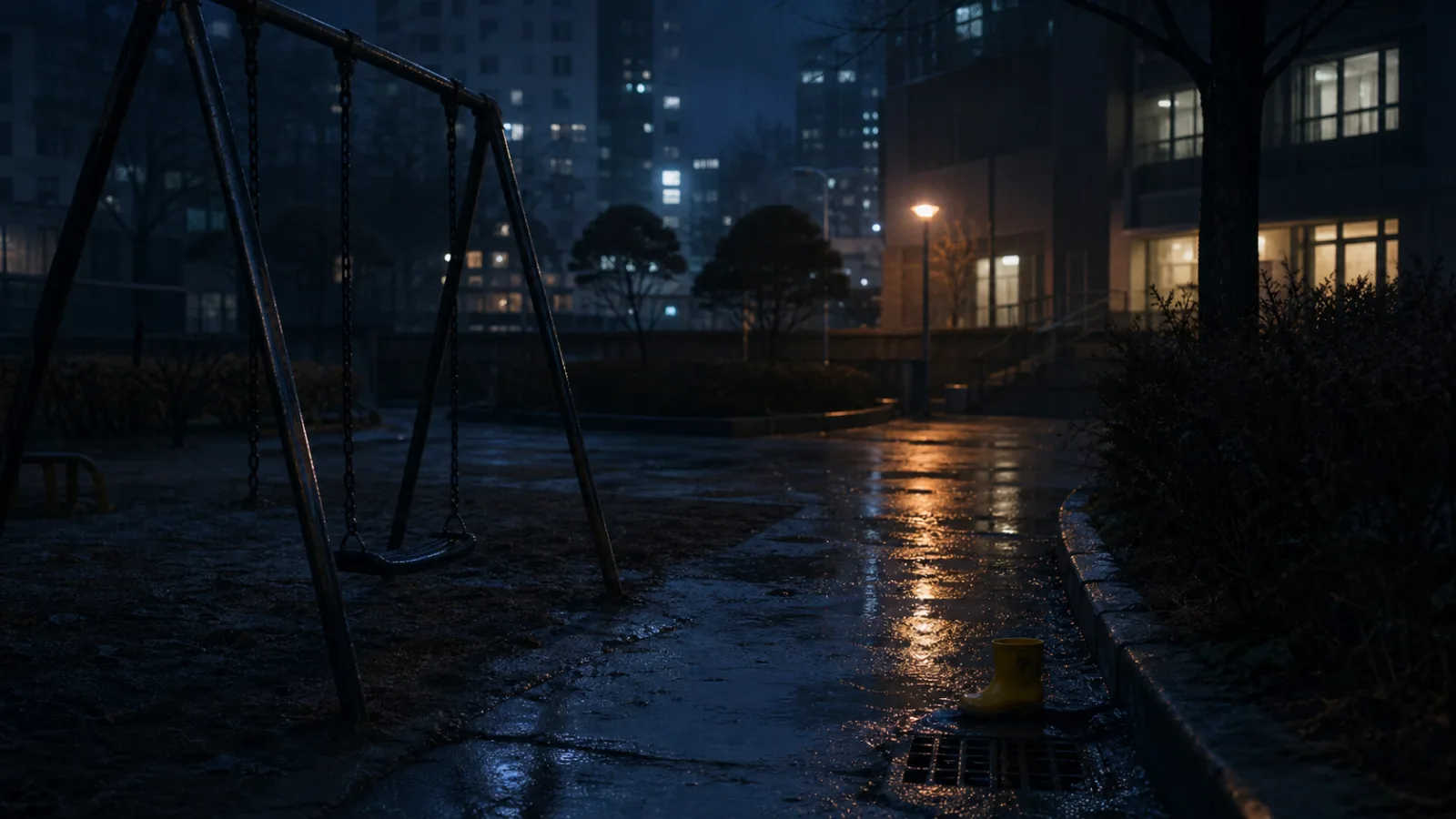
The search at Myeongpo Port stays messy, funny, and focused on the one thing nobody can replace
Around the warehouse pursuit, the SMD side of the episode supplies the series’ familiar rough-edged comedy. People complain about food, equipment, noise, money, and each other’s basic competence while the situation keeps getting more serious. Park Jin-cheol surrenders and then escapes during transport; Sung Han-soo keeps moving; the director’s personnel are left trying to explain how a straightforward operation became another embarrassment.
The humor works because it never asks the audience to forget Min-ji. It is a pressure valve, not a different show. These men are not sleek professionals in a perfectly coordinated rescue. They are older friends, overwhelmed agents, and stubborn survivors improvising around bad information.
The important development is that Agent Kim’s search has become legible to everyone else. SMD watches his movements and realizes they are centered on his daughter. One official hears that fact and reaches the obvious human conclusion: any father would act this way. Another turns it into leverage and orders Min-ji found first, so she can be used as a hostage.
That pivot is chilling precisely because it is so bureaucratic. Min-ji is not a person to the people making the order. She is Agent Kim’s weakness, a route to a man who has become inconvenient. The episode keeps placing that cold description next to the reality of her: frightened, smart, physically exhausted, and still trying to get home.
Min-ji reaches the road, Agent Kim gets a new trail, and no one mistakes motion for a reunion
The cold room does not hold Min-ji for the entire hour. She gets beyond it, and the danger changes shape rather than ending. In the rain, she tries to stop a car. Elsewhere, the men who assumed they had a body learn there is no body at all. Their cover story has failed, and the search for Min-ji turns from concealment into a new scramble to find her first.
Agent Kim receives a call with a specific road and a request to pull the CCTV from ten minutes earlier. The caller tells him it will show Min-ji’s whereabouts. It is the kind of lead this show understands: precise enough to start a chase, late enough to make every minute feel like an accusation.
He does not suddenly find her. He does not hear her voice and call the job finished. He gets on the road because that is all the episode will give him. The restraint is welcome. A lesser hour might have treated the warehouse escape as a release valve and sent Min-ji home by the end credits. E05 knows that an escape can be another form of exposure when every faction has now decided she is useful.
The last movement also returns the episode to its first image. Child Min-ji was behind a locked door and waited for her father to find her. Present-day Min-ji is outside in the rain, with more roads around her and more people looking. Agent Kim is moving toward her again. That is hope, but it is not safety.
Tiny details worth clocking
- Young Min-ji’s landmark list - the fish-shaped bun stand, post office box, and red house - makes her observational skill part of the story, not a late convenience.
- The man at the cold storage asks Min-ji to trust him only after admitting he followed orders. She hears the contradiction before he does.
- Gang Seong once remembered Agent Kim’s surname when he could not remember his own. The present conflict is built on a friendship the two men were trained to forget.
- Park Jin-cheol’s surrender-and-escape beat keeps the SMD pursuit appropriately undignified without reducing the danger surrounding Min-ji.
- The episode never confirms the whole chain behind Min-ji’s abduction. A useful location and a criminal’s explanation are not the same thing as a solved case.
Final verdict
“Episode 5” uses its parallel stories with real purpose. The hide-and-seek opening could have been a sentimental shortcut, but it changes how the present scenes read. Agent Kim has searched for Min-ji before. Min-ji has been trapped and found before. The difference now is that everyone around them has made her fear into leverage.
The Gang Seong material is equally valuable. It does not resolve the original Number 66 mystery, but it gives the mystery a missing brother, two old friends, and a history of boys being taught to survive as numbers. Agent Kim’s denial is a start, not a verdict. That restraint gives the confrontation more room to matter later.
Most of all, E05 gives Min-ji meaningful choices under pressure. She sees through the freezer-door deal, keeps looking for a way out, and reaches the road before the closing stretch. Agent Kim is finally on a concrete trail. The series is smart enough to keep both achievements from becoming the reunion they deserve.
Rating: 8.8/10 - A taut, emotionally grounded chase episode that gives Min-ji agency, deepens the Number 66 history, and makes every new lead feel urgently incomplete.
More episodes from Agent Kim Reactivated — A father, a vanished daughter, and a black-ops past reopened. Jump to any episode in the season:
Where to go next
Reviewed by Mira Vance · QuizFandom Editor & Lead Reviewer. Every rating is an honest per-watch assessment from the desk that also writes the quizzes — not a press release rehash.