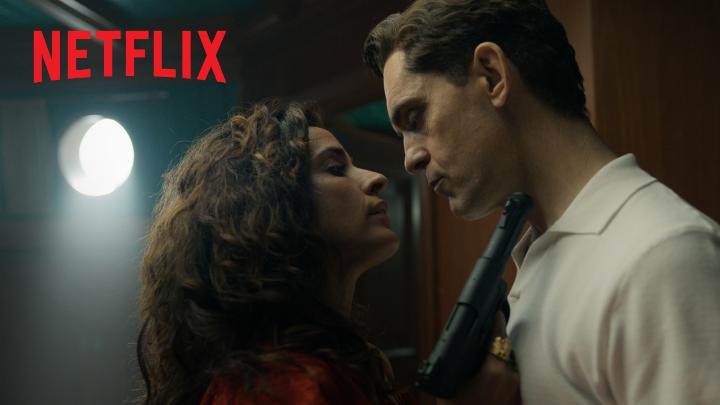
Berlin and the Lady with an Ermine Episode 6 Review: A Late-Night Bunny Delivery, a Forged Wine Label, and a Vault Built to Cook You Alive
Episode 6 gives us rabbit romance, candlelit throuple chaos, Damián in horse-therapy hell, and a Duke whose palace may be less museum than murder machine.
The cutest title in the season is also the most dangerous
“Pomelo Loves Mandarin” sounds like a fluffy bottle episode until the final minutes make it feel like a warning label.
Yes, the title literally comes from Berlin showing up at Candela’s door at 2:55 a.m. with a female bunny named Mandarin because her Pomelo seemed jealous. It is ridiculous, theatrical, and so aggressively Berlin that you can practically hear the violins tuning themselves. This man cannot simply say, “I missed you.” He has to research rabbit anatomy, find a miracle pet store, cross the city, and turn yearning into a velvet-lined monologue.
But Episode 6 is not really about bunnies. It is about pairing: Pomelo and Mandarin, Berlin and Candela, Keila and Bruce and Claudio, Damián and the Duke, the gang and the vault. Every “couple” here looks charming from a distance and terrifying up close.
The episode’s cleverest move is staging intimacy as access. If someone lets you in, what are they really opening — a heart, a job, a trapdoor, a crypt?
By the time the Duke stares at Damián and asks, “Did you actually believe you could make it this far on your own?” the answer is obvious. In this palace, every invitation is a locked door wearing perfume.
The Duke is not a buffoon — he is another performer
Early on, Berlin realizes Álvaro Hermoso de Medina may be more dangerous than he looks.
The Duke wanders into the crew’s workspace acting like an aristocratic heist fanboy: curious, overexcited, theatrical, weirdly proud to be sponsoring “the heist of the century.” Damián reads him as an exuberant boss. Berlin sees the inspection underneath the charm. The Duke checks laptops, asks too many questions, and pokes at the plan like someone testing a lock.
That is pure Money Heist. Berlin, the franchise’s original drama king of elegant criminality, recognizes another man weaponizing performance. The Duke also talks about theft as art, about plans as masterpieces, about secrets as treasures. But where Berlin romanticizes crime, the Duke seems to sanctify ownership.
That difference matters once the team scans the vault.
The architecture behind the door is secure the way a coliseum is secure — theatrical, performative, built for an audience. A circular corridor like a bullring. Titanium plates. Double walls. Oxygen. Some other gas. No obvious handle, hydraulics, or exit. The crew jokes about Indiana Jones and hot dogs, but the implication is gruesome: the Duke may have built a vault designed to gas and burn intruders alive.
This is not “rich villain has quirky security.” This is punishment as interior design.
And suddenly Berlin’s read of the Duke stops sounding paranoid and starts sounding mercifully early.
Dinner is the heist before the heist
The black-tie dinner is Episode 6 at its funniest and most revealing: bergamot candles, old-money decadence, erotic philosophy, and everyone pretending this is normal while a fake Leonardo heist hangs over the table.
Then Bruce detonates the room.
His announcement that Keila is having an affair — and that maybe the solution is a throuple with Claudio — is painful, hilarious, and magnificently embarrassing. Roi calls him a moron, and honestly, fair. But the scene works because Bruce is not playing strategy. He is trying, disastrously, to choose generosity over possession.
Later, when Roi tears into him, Bruce’s answer is almost shockingly sincere. Love inspires more than hate. He knows he will suffer. He accepts that risk. In a show full of thieves turning people into leverage, Bruce’s emotional logic is so open-hearted it almost looks like madness.
The dinner also gives us Damián’s “swan vs. bonobo” speech: swans are monogamous romantics, bonobos are libertine chaos. It is a joke until the Duchess hears exactly what kind of man Damián believes himself to be.
Because Genoveva does not just flirt. She counterfeits.
Her message to Damián is hidden on a wine label, seamlessly redesigned into the typography of a 1996 Rioja: “Tomorrow. 8:00 p.m. Dinner on your boat for 500,000.” That is one of the episode’s best micro-heists. In a season built around art, copies, prestige, and surfaces, of course the Duchess seduces through forged design.
Berlin’s advice is crude but sharp: go, become her best friend, make the passion boring, and “if you don’t screw… we can’t get screwed.” Classic Berlin — vulgarity wrapped around strategy.
Naturally, Damián ends up hugging a horse.
Damián walks into the Duke’s mirror maze
The Damián/Duke sequence starts almost tenderly. Damián cannot sleep, so the Duke brings him to Prince, his horse, and introduces him to equine therapy: synchronized breathing, heartbeat regulation, oxytocin, peace. It is bizarre and oddly beautiful. For a second, the Duke looks less like a villain and more like a relic mourning his own extinction.
Then Damián makes the episode’s most dangerous emotional mistake: he compares the Duke to Berlin.
He describes his friend as epicurean, narcissistic, self-absorbed, passionate, catalytic — someone whose presence fills a room and whose absence leaves emptiness behind. That is such a perfect Berlin description it could be carved onto the Royal Mint wall. For Money Heist fans, the dramatic irony is brutal. We know Berlin becomes mythic because he dies spectacularly. We also know the monster part never really leaves.
The Duke, of course, enjoys the mirror.
Then he takes Damián to the chapel, opens the crypt through the angel-hand mechanism, and reveals what he calls his “secure vault.” His three treasures, he says, are his art gallery, his wife, and this hidden vault. That phrasing is disgusting in exactly the right way: art, woman, money — all categorized as possessions.
When he forces Damián to cross the line and says “Boo,” the playfulness curdles. The Duke has not been bonding. He has been staging a demonstration.
Berlin and Candela are romantic, doomed, and very bad for operational discipline
The episode’s softest scene belongs to Berlin and Candela, and it absolutely works.
Candela admits she felt neglected after Berlin went to dinner with the Duke. She knows it was professional. She knows there was no rational reason for her to be there. But her feelings were hurt because she is starting to fall in love with him.
Berlin’s response is pure golden-age Andrés: he thought about her every time the conversation turned to love, every time he was supposed to be thinking about the palace vault, and late into the night until the bunny mission possessed him. He calls himself bewitched. Somewhat in love. “You cannot imagine how much.”
It is absurdly romantic. It is also a giant red flag with a ribbon on it.
That is the Berlin problem, and the franchise knows it. He is intoxicating because he makes desire feel like destiny and logistics feel like poetry. But Money Heist fans cannot watch him romance anyone without remembering where this man ends up: Royal Mint legend, coercive monster, mythic sacrifice, beautiful contradiction.
So yes, the Candela scene is swoony. Pedro Alonso sells every syllable. The rabbit is weaponized cuteness.
But Berlin thinking about love while he should be thinking about how to beat a lethal vault? That is not a side plot. That is how this universe starts loading the gun.
The heist finally bites back
One of Episode 6’s biggest wins is that the job feels dangerous again.
The crew is not simply pretending to plan a perfect theft anymore. They are realizing the Duke’s palace has teeth. Keila can crack the outer code quickly, but that almost makes things worse. The real threat is not the keypad; it is the imagination behind the vault.
The bullring comparison is nasty. If the circular corridor really is a trap, then the Duke has turned intruders into animals in the ring. He does not just want to stop thieves. He wants to stage them, dominate them, maybe burn them.
Meanwhile, Cameron’s yacht subplot adds a quieter dread: fake electrical repairs, a crew conveniently sent away, a pallet of Nigerian rice when the galley is already full of Valencian rice. Rice should not be ominous. Somehow, this rice is extremely ominous.
And the Lady with an Ermine framing keeps paying off. A Leonardo is not just “expensive art.” It is the kind of target you cannot move without waking every alarm in Europe. Small enough to imagine stealing, famous enough to make selling it insane. Perfect Berlin bait: beauty, prestige, danger, impossibility.
The twist is that Episode 6 suggests the painting may not be the most dangerous object in the story.
The Duke is.
Verdict
“Pomelo Loves Mandarin” is messy in the most franchise-native way: horny dinner debates, rabbit romance, wine-label seduction, horse therapy, ominous rice, secret crypts, and a possible human barbecue vault all in one hour.
But underneath the flamboyance, it is one of the season’s sharper chapters because every emotional scene doubles as tactical exposure. Bruce’s love makes him vulnerable. Candela’s confession distracts Berlin. Genoveva turns desire into forged typography. Damián’s empathy gets him walked into the Duke’s private nightmare.
In Berlin’s universe, love rarely stays love. It becomes leverage, disguise, weakness, fuel, proof of life, and sometimes the hand that pushes the angel down.
Pomelo may love Mandarin. But in this palace, love is how the cage opens.
Rating: 8.5/10 — seductive, funny, and finally dangerous enough to make the heist bite back.
More episodes from Berlin and the Lady with an Ermine — The Money Heist spinoff, episode by episode. Jump to any episode in the season:
Where to go next
Reviewed by Mira Vance · QuizFandom Editor & Lead Reviewer. Every rating is an honest per-watch assessment from the desk that also writes the quizzes — not a press release rehash.