Bridgerton S01E2 Recap: "Shock and Delight" — Daphne Takes the Reins
What happens — the short version (spoilers)
- Simon is born as Sarah dies, and his father later rejects him for his stammer.
- Daphne bargains Simon into six public appearances and flowers to make their false attachment convincing.
- Anthony promises Daphne to Berbrooke, but Simon exposes Berbrooke's misconduct at Vauxhall.
- Violet and the servants spread the truth about Berbrooke's abandoned maid and child until Whistledown prints it.
- Daphne and Simon agree to use first names and continue the scheme, while Simon's vow never to marry or father an heir lingers.
Daphne Bridgerton enters a false courtship to escape one bad bargain, only to learn how quickly a woman must fight for the shape of her own life.
Bridgerton, Season 1, Episode 2 — “Shock and Delight” Netflix
“Shock and Delight” begins with a birth that has no softness in it.
Sarah, the Duchess of Hastings, labors while her husband waits outside the room and demands news of a son. Lady Danbury tries to get past him because someone should be with Sarah. He blocks her. The only answer he wants is the one that preserves his name.
Then the boy arrives.
Simon Arthur Henry Fitzranulph Basset is born, Sarah sees him, and the room fills with celebration before anyone has fully faced the blood. The old duke has what he wanted. Sarah has given him a son. Sarah does not survive it.
That memory hangs over every courtship joke that follows. Marriage in this world may promise comfort, children, houses, rank, and a name printed beautifully on a card. It can also trap a woman inside everyone else’s demands. Daphne does not know Simon’s wound yet. Simon does not know the depth of Daphne’s fear yet. Both are moving through a society that can turn a body, a title, or a rumor into property.
Daphne and Simon negotiate their false courtship after Vauxhall
Lady Whistledown wastes no time making Daphne and Simon the talk of London.
The morning after Vauxhall, Whistledown gives society its new entertainment: Daphne Bridgerton has risen from “irrelevance” after dancing twice with the Duke of Hastings. In this market, ruin and triumph can both begin with a man choosing to stand near you in public.
Daphne understands the opportunity, which is why she arrives at the promenade ready to bargain. Simon thinks their arrangement should keep eager mothers away from him. Daphne wants it to secure a real marriage in her first season. He offers four balls. She pushes for six, with flowers that very day, expensive enough to look convincing.
Simon flirts because it comes easily. If he were truly courting her, he says, he would not need flowers, only five minutes alone with her in a drawing room. Daphne catches the impropriety. Simon catches himself.
The terms matter because Lord Berbrooke still exists. So does the secret of the Dark Walk. Daphne tells Simon that even a rumor of being alone with a man, let alone punching him, would ruin her. Simon answers that she did nothing wrong.
He is correct.
Society will not care.
That is the cruel little knot. Daphne can be right, Berbrooke can be vile, and the consequences can still aim themselves at her first.
Penelope hears Marina’s story while Eloise hunts for answers
The Featherington house is suddenly full of whispers that nobody knows how to explain politely.
Prudence and Philippa know Marina is with child. Penelope wants details because she does not understand how it happened, and Lady Featherington tries to shut the entire conversation down by telling the girls Marina’s condition is catching. It is a wonderfully useless lie, and also a perfect maternal tactic for a house where information is treated like contraband.
Eloise is no easier to manage at the Bridgerton breakfast table. She has learned that marriage is not required for a woman to be with child, and the revelation hits like a trapdoor opening. She wants university, accomplishment, and a life that does not end at a ball because a man likes her face and hair.
Penelope gets the gentler answer from Marina.
Marina tells her about George Crane, the vicar’s long sermons, the cake and biscuits smuggled to her in church, the notes passed back and forth, and the letters that continued after George went to Spain with Wellington. Penelope asks whether Marina’s condition came from love. Marina says yes.
That answer does not solve anything for Penelope. Marina is a young woman in love with a man who is far away, trapped in a house that sees her pregnancy as a logistical disaster.
Eloise and Penelope keep circling the same fear from different doors. If love can lead to this, and marriage can end a woman’s freedom, what exactly are girls being trained to desire?
Anthony promises Daphne to Berbrooke and Simon challenges him
Daphne’s new popularity arrives at the Bridgerton house in a crush of callers.
For a moment, the plan seems to work too well. Daphne squeals at the sight of so many suitors. Then Berbrooke forces his way back into the morning with the confidence of a man who believes Anthony’s word matters more than Daphne’s refusal.
Anthony has promised his sister to him.
Daphne’s anger is clean and deserved. Nobody has proposed. Nobody has secured her consent. Anthony insists Berbrooke is a fine choice because he looked into him. Violet is appalled. Daphne says she cannot imagine a greater disrespect than being promised to Nigel Berbrooke, and Anthony answers with the smugness of inherited authority: one day, she will be appreciative.
That sentence deserves every cold look it gets.
Anthony carries his outrage to Simon at the boxing club. Anthony says Daphne is already engaged. Simon notes that Berbrooke is unworthy. Anthony fires back with Simon’s years away from London and the places he imagines Simon spent them.
Simon has cultivated a reputation Anthony can use against him. But Anthony’s logic is still rotten. He is willing to hand Daphne to a man he barely understands because Berbrooke appears manageable, titled, and presentable. Simon may be a rake. Berbrooke is a danger with paperwork.
The difference matters.
Lady Danbury finds young Simon after his father casts him aside
Simon’s past fills in with no mercy.
At four years old, he cannot get words out cleanly in front of his father. The old duke hears a stammer and calls him an imbecile, an idiot, a half-wit unfit to carry the Hastings name. He says the family line must remain extraordinary because the monarchy granted it, and then he declares the boy dead to him.
Lady Danbury refuses that verdict.
When she finds Simon, she looks at him as Sarah’s son, not his father’s disappointment. She asks whether he can read, write, ride, and fence. He can. When he stammers that he cannot speak, she understands him anyway.
Her advice is not soft, but it is loving in the only language this world respects. She tells him that she once wanted to hide, then made herself frightening.
Then she offers Simon a bargain of her own. She will help him overcome the stammer. In exchange, when he steps into the light, he must be worthy of the attention he commands.
That promise explains so much of adult Simon. The reserve. The control. The refusal to need anyone.
But the wound is still open.
When Lady Danbury later presents Simon to his father, the boy has achievements ready: marks in his studies, riding, fencing, shooting. His father still calls him a failure and says the knowledge that Simon will inherit Hastings is too great an insult. Simon asks whether his letters were received. His father does not answer — he pivots straight to a fresh denunciation, declaring that witnessing Simon’s struggle is too great an insult to bear.
Berbrooke threatens scandal and Violet sends the rumor through town
Before the picnic, Simon exposes Berbrooke at the ball. He tells Anthony that Berbrooke attempted something dishonorable at Vauxhall and that Daphne planted the bruise on his eye. Anthony orders Berbrooke away, but Daphne is furious that Simon spoke for her. She is defending the small remaining territory of her own voice.
Then Berbrooke returns at the picnic with a special license and a threat.
He tells the Bridgertons he has taken matters into his own hands. He hints that Whistledown might enjoy hearing what happened between him and Daphne on the Dark Walk. The cruelty is precise. He does not need the truth. He needs a rumor that can wreck Daphne faster than her family can deny it.
Anthony reaches for a duel. Violet shuts that down at once. Daphne sees the trap more clearly than anyone. If Berbrooke speaks before Anthony shoots him, she is ruined, and so are they all. She decides she must marry him because the world has left her no other path.
Violet refuses to leave her daughter there. Her answer begins with tea.
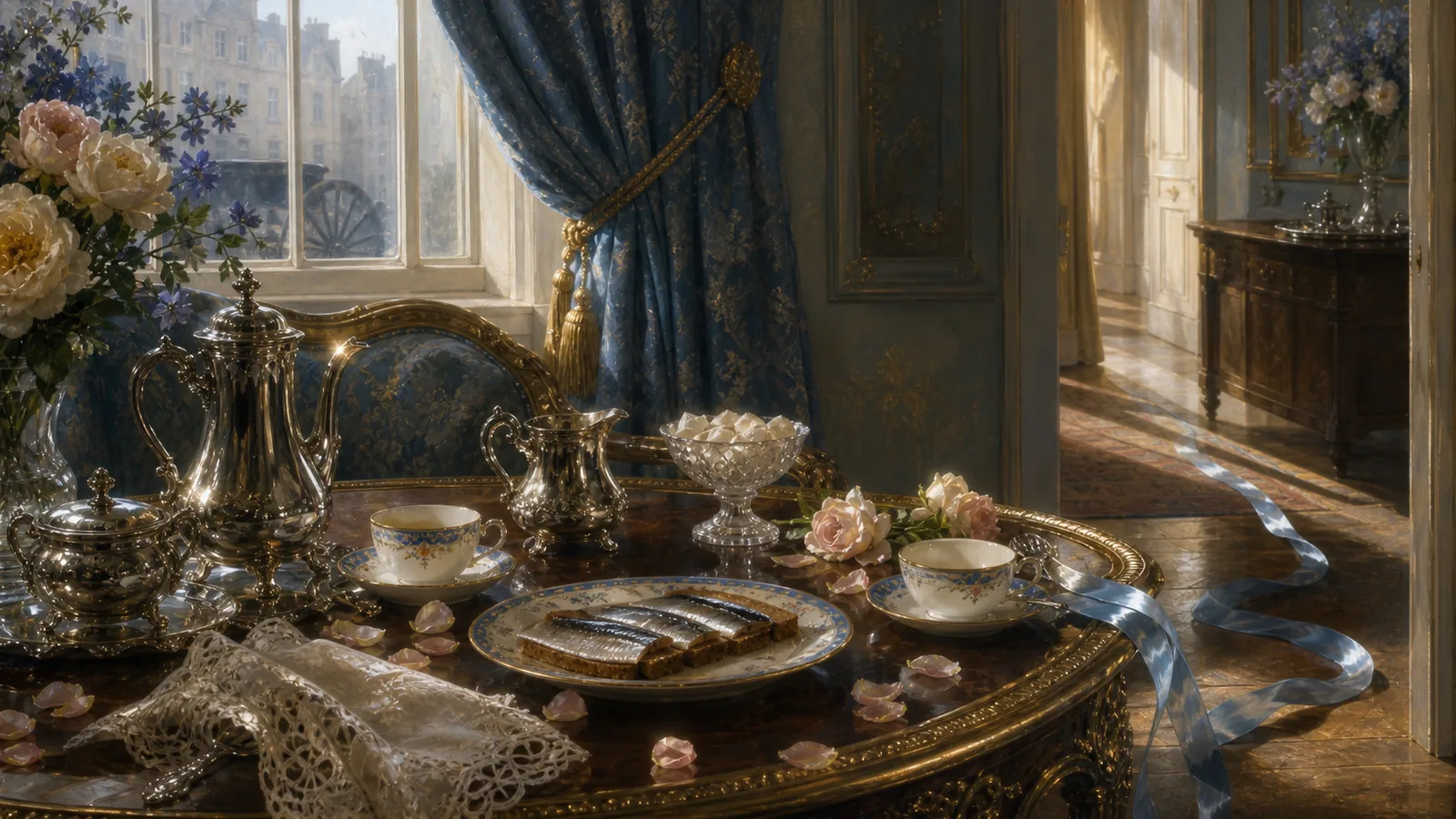
She invites Lady Berbrooke over, suffers through talk of Nigel’s perfection and kippers on rye, and lets the servants gather what polite conversation will not admit. Rose hears from Celia that Berbrooke has a child by one of his maids, a maid and child he sent away to live off scraps.
Daphne worries he will deny it. Violet does not pretend women will be believed over a man’s word. She simply knows another route. “So we shall do what women do,” she says. “We shall talk.”
The rumor moves from maid to mistress, from tea table to social call, until Whistledown prints it. By the next morning, Berbrooke is expected to leave town on alleged business, perhaps to send overdue funds to the former maid and young boy who deserve better than his name.
The threat that almost traps Daphne is answered by women using the same society that usually cages them. Violet does not win with a duel, a title, or a brother’s command. She wins by knowing where information lives.
Anthony notices. He admits the solution did not happen by chance and tells Violet he is resolved to handle matters differently. Violet answers gently, and with no doubt, that she is more than capable.
Daphne and Simon agree to use their names at the ball
With Berbrooke gone, Daphne has one more conversation that cuts deeper than courtship strategy.
Eloise comes to Daphne’s room and admits that marriage and children frighten her. She remembers Violet’s screams the night Hyacinth was born, only months after Edmund’s death. Daphne tried to hide the sound by singing, but Eloise still hears it in dreams.
Daphne does not dismiss her.
She says she is frightened too. But dawn brought Hyacinth, and the family is richer for her. Daphne wants marriage, family, and children with her eyes open enough to tremble.
At the next ball, Simon meets that version of her.
Daphne tells him he should not have lost his temper with Berbrooke. Simon says he will not tolerate a bully. Daphne answers with the truth that changes the tone between them: this arrangement is about her life. Not Whistledown. Not the queen. Not the ton. Her life. She must finally take charge of it.
Simon agrees on one condition.
She must call him Simon.
It is a small intimacy dressed as a tactical choice, and both of them feel it. Daphne laughs at the name before she can stop herself. Simon gives her name back to her in kind. Then Daphne says what she wants plainly: a husband, a family, children.
Simon cannot offer himself. He offers the plan. “Then let us find you a husband.”
They dance, and the room sees exactly what it is meant to see.
Only we know the blade under Simon’s smile. In his father’s final moments, Simon returns to make one vow. He will never marry. He will never sire an heir. The Hastings line will die with him.
Daphne is trying to build a future. Simon has sworn to end one.
That is a gorgeous problem.
Verdict
“Shock and Delight” is richer because the romance breathes through social danger instead of pausing the danger for romance. Daphne and Simon are charming together because both are negotiating for survival. She needs the right kind of public attention. He needs distance from every maternal scheme in London. Neither expects the arrangement to start feeling personal so quickly.
The Berbrooke plot is ugly in all the right ways. He is a mediocre man protected by rules that favor him, and that makes him harder to dismiss. The pleasure comes from watching Violet, Daphne, Rose, and the women around them beat him with talk, tea, and timing. Simon’s childhood gives the sparkle real ache.
The final vow is a sharp hook. Daphne wants the very future Simon has sworn to deny himself. That leaves their fake courtship with a lovely, dangerous tension: every look helps Daphne find a husband, unless Simon becomes the man she cannot stop seeing.
Rating: 8.5/10
More episodes from Bridgerton — Season 1 — Daphne and the Duke's fake courtship, episode by episode. Jump to any episode in the season:
Where to go next
Reviewed by Mira Vance · QuizFandom Editor & Lead Reviewer. Every rating is an honest per-watch assessment from the desk that also writes the quizzes — not a press release rehash.