Citadel Season 2 Episode 5 Review: Mason turns Paulo into leverage, Dahlia reopens the family wound, and Abby answers as Celeste
What happens — the short version (spoilers)
- Mason and Dahlia leave Windsor with Paulo in the trunk
- Edison is gone, and the team starts tracking Mason instead
- Paulo tries to make Mason bigger than the bargain
- Bernard and Nadia turn Mason into a shared indictment
- Dahlia and Paulo reopen the same family case from opposite sides
- Paulo pushes guilt until the plan changes shape
Citadel* Season 2 Episode 5 turns a hostage exchange into an identity trap. Mason takes Paulo Braga because Abby is the only objective left that still makes sense to him. Dahlia helps because family, guilt, and unfinished damage have always guided her. Bernard and Nadia tear into the decision that brought Mason back into play, while Joana burns every favor she can reach to recover Paulo. By Charing Cross, the question is no longer whether Abby can be rescued. It is whether anyone involved still agrees on who Abby is.
Mason and Dahlia leave Windsor with Paulo in the trunk
The episode begins with the job already mutating. Paulo Braga is in the trunk, pounding and shouting, while Mason and Dahlia drive away from the Plymouth Estate. It is not a clean extraction. It is a family car ride with a Manticore head locked behind them, a police presence nearby, and Dahlia trying to pull Mason through memory before the night collapses.
Her choice of pressure is revealing. She remembers him as a child in London, singing in The Nutcracker, with a voice that carried above the chorus. Mason says he does not remember. Dahlia calls it a shame because it was one of the few good memories. Memory is never neutral here. If Mason cannot remember that child, Dahlia can still use him as evidence in a case only she is trying to win.
The road stop strips away the softness. A cop becomes a problem because Paulo is making noise, cameras are everywhere, and the car can be tied to the kidnapping. Dahlia shoots him, then explains the decision as arithmetic. Mason sees a kid. Dahlia sees a cop, a camera trail, a risk to Abby, and a route that will close fast if they hesitate.
That is the first clean split of the hour. Mason wants Abby badly enough to steal Paulo, but Dahlia is willing to make the cost immediate. When Mason calls her a monster, she does not deny the category. She values monsters because they get things done.
Edison is gone, and the team starts tracking Mason instead
Back at the broken operation, Citadel is counting several mistakes. Hutch tells Bernard that they lost Edison. Nadia clarifies the worse version: Paulo killed the person they had in hand, and Hutch admits the file-level truth was incomplete because Edison’s wife was the hacker.
The mission cannot simply reset. Edison has been taken by the knife-wielding player from the gala, and Paulo is gone with Mason. One target can finish the program. The other is the bargaining chip Mason needs for Abby Conroy.
Joana’s reaction gives the Paulo side its own clock. She orders every favor called in, including Metro Police and 10 Downing. Braga’s people can turn public systems into private reach when the family asset is at risk.
Bernard’s side has to do lower, messier work. Sharpe remembers a gray Fiat, and Bernard asks for property records tied to Dahlia Archer or Thomas Kane. Mason’s disappearance is not just tactical. It is genealogical.
Paulo tries to make Mason bigger than the bargain
Once Paulo is tied up, Mason defines the operation in the narrowest possible way. He does not care about satellites, the assassin, or the larger Manticore design. He is there for his wife. That clarity is useful, but Paulo attacks it immediately because a narrow man is easier to reroute if you can make him feel small.
Paulo’s offer is not freedom for himself. It is partnership. He frames Mason as someone who wants to give his daughters and his wife a life worth living, then puts that beside his own desire to protect his son. He says they can create peace and build a world without war, violence, or greed. It is the same language Braga has been using all season: a future for children, paid for by present control.
Mason rejects the pitch when Paulo brings Asha and Hendrix into it. Paulo is not trying to persuade Kyle. He is trying to locate Mason Kane, the part of the man Dahlia later says they may need if the exchange goes wrong. The name Mason is not only an identity. It is a weapon system with shame underneath it.
Dahlia’s call to Joana turns that psychological fencing into a real timetable. She demands Abby Conroy in London immediately and says she will call back with a location. Joana threatens to find them within the hour. Dahlia hangs up after taking control of the next move.
Bernard and Nadia turn Mason into a shared indictment
The Citadel room scene is the episode’s bluntest internal reckoning. Bernard wants to blame Nadia for keeping her daughter from Mason. Nadia wants to blame Bernard for bringing Mason into the mission even though he knew Mason was dangerous, unstable, and already compromised by history.
Both charges land through the consequences. Mason did not simply improvise a better field move. He broke from the team, took Paulo, and changed the entire night. Bernard defends the choice by saying Mason is the best killer he has. Nadia’s answer is practical before it is emotional: they barely have a team left, and Bernard still chose the operative most likely to turn the mission into his own private war.
The argument widens into the older wound. Bernard names the agency rule against getting involved with another agent and treats Nadia and Mason’s relationship as the compromise that poisoned everything. Nadia throws the origin back at him, citing Mason’s father and the violence that helped make Mason what he is. Mason’s betrayal is his own act, but Citadel helped build the conditions around it.
Dahlia and Paulo reopen the same family case from opposite sides
At 37 St. Ann’s Way, the episode slows into a three-person chamber piece. Sharpe’s contacts trace the gray Fiat toward Croydon, but before Citadel arrives, Dahlia and Paulo get their private confrontation. Paulo calls out the death warrant she signed against him. Dahlia says she was a Manticore mole in the highest levels of British government, and that Thomas Kane could have become a threat because he knew what she did.
Her explanation is the old Manticore defense with a personal edge. She says she had something greater to protect and was helping build a safer world. Paulo does not buy the nobility. He argues that she built Manticore to set the world on fire after what happened to her husband, and says Mason’s father rescued her once before.
Then Dahlia makes dinner.
Then Dahlia makes dinner, and the domestic turn becomes control. Chicken cacciatore, drugstore perfume, and burning flesh become Mason’s memory trail. Dahlia remembers his father as brilliant, intoxicating, dishonest, cruel, and small. Then she turns the blade toward Mason: he is risking the woman he loves for the woman he married.
Mason says he loves Abby. Dahlia questions the distinction between wife and love, then lands too close to something he is already suspecting. When he asks whether she made a deal with Paulo, she admits there were negotiations but says no deal was made. Mason needs Dahlia, but he cannot afford to trust what her help is purchasing.
Paulo pushes guilt until the plan changes shape
The next pressure comes from Paulo, who stops selling peace and starts selling self-disgust. He talks about his father, a recurring dream off the coast of Sao Luis, and the fact that pancreatic cancer, not Paulo, killed him. The confession is not sentimental. It is a way of explaining the fantasy of becoming one’s real self when a father dies.
Then he turns that idea on Mason. Paulo names the scale of Mason’s revenge: his father died with hundreds of others, and Mason killed thousands after it. He asks whether Mason’s father would be proud, then argues that spycraft gave Mason a way to hide his true nature even from himself.
Paulo is tied up, but he is not powerless. If flattery failed, guilt might still work. He imagines Mason’s daughters growing up horrified by what they inherit from him, and the speech runs long enough to become dangerous.
The cut after that is fractured: a ringing phone, Mason’s panic, a call for his mother, and then a question about suit size. The plan no longer stays at Heymouth Bridge at 4:00 a.m. Dahlia changes the meet to Charing Cross, old Platform 3, with ten minutes on the clock.
Charing Cross rescues Abby and reopens Celeste
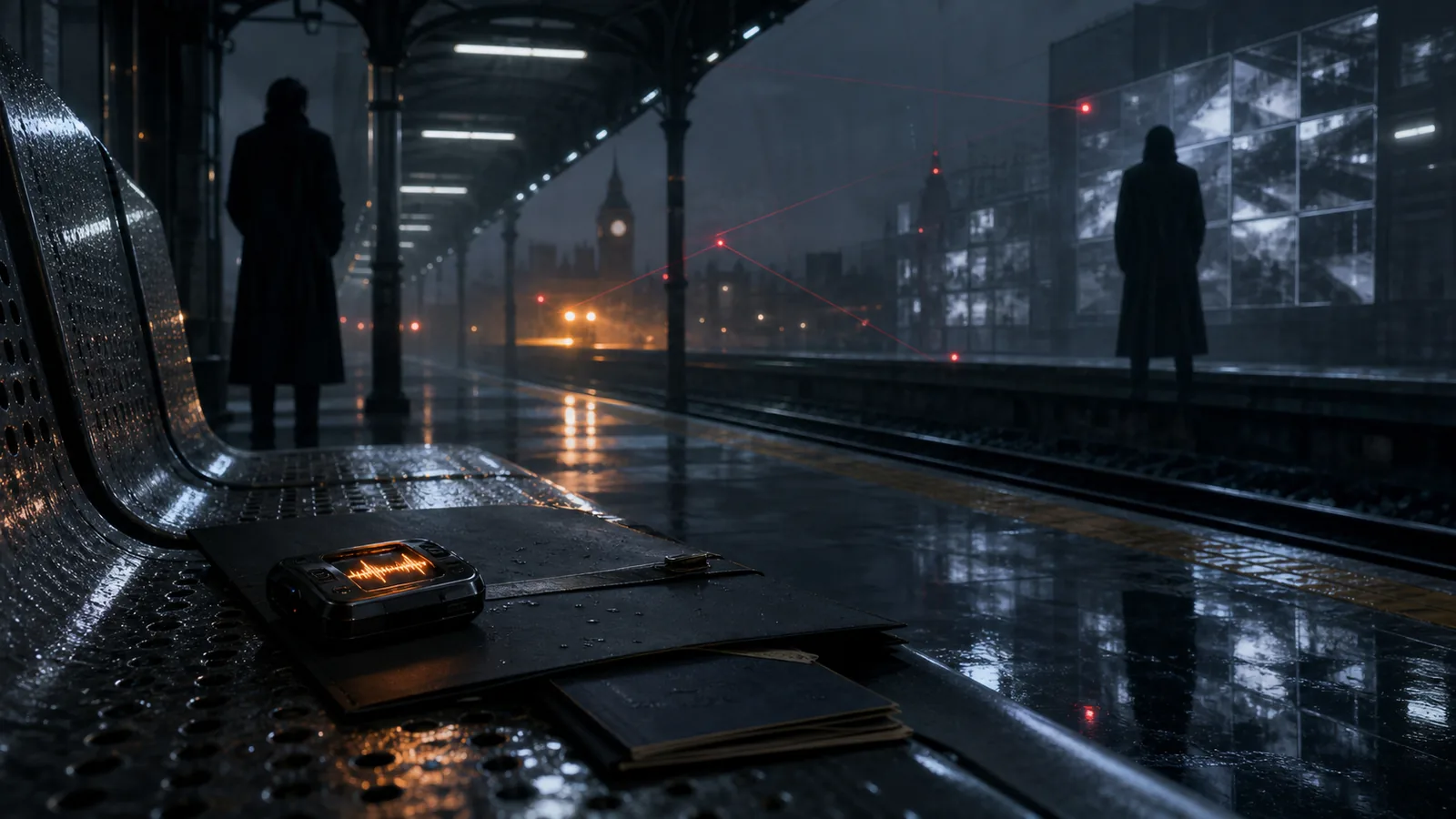
The Charing Cross exchange is the hour’s strongest operational sequence. Before the meet, Dahlia tells Mason to get Abby out no matter what happens and says that if things go bad, he should make way for Mason because they will need every bit of him. The device work around Paulo’s voice makes the deception functional. By the time Joana arrives, Dahlia can present Paulo as present, threatened, and responsive while Mason is positioned elsewhere.
The platform negotiation is stripped down to guarantees no one can actually guarantee. Dahlia says if she goes, Paulo goes. Joana says the girl walks only if Paulo is released. They settle on the same-time exchange because every other version ends in a threat.
Abby reaches Mason, but safety lasts less than a minute. The violence spills out immediately, and the rescue becomes movement, cover, gunfire, and refusal. Mason tells Abby to go. She does not. When he checks on her and calls her Abby, her answer is the episode’s cleanest final cut: “You mean Celeste?”
That line does more than tease a memory return. It collapses the reason Mason broke the mission into the identity problem he has been trying to outrun. He stole Paulo to recover Abby Conroy, the wife who gave Kyle a civilian life. The woman standing with him names herself as Celeste, the buried Citadel identity tied to the larger damage between Mason, Nadia, Bernard, and the agency.
Tiny details worth clocking
- Dahlia’s good memory of Mason singing in London is framed beside his inability to remember it, which keeps family history unstable from the opening scene.
- The gray Fiat clue is not glamorous tradecraft; it is a small observation that lets Sharpe’s old contact network become useful again.
- Joana’s first instinct is institutional reach: police, Downing Street, and every favor available.
- Bernard calls Mason the best killer he has, which is both a defense of the choice and the reason the choice was so dangerous.
- Dahlia’s dinner uses smell as memory more effectively than any exposition dump: chicken, perfume, and fire all point to different versions of family.
- Paulo’s father story makes his politics feel less abstract without softening his willingness to use other people’s children as leverage.
- The voice-device beat at Charing Cross turns Paulo from hostage into instrument before the real Paulo is recovered.
Final verdict
Episode 5 is less clean than Episode 4, but its mess is productive. The Edison thread moves offscreen after the wife is taken, which sharpens the hostage story. Mason is no longer helping Citadel win the larger operation. He is using that operation’s most valuable body to buy back the life Kyle believes he still owns.
Dahlia can cook dinner, remember a childhood performance, admit old treachery, and arrange a brutal exchange without changing registers. Paulo can be bound to a chair and still keep pressing every paternal bruise Mason has. Bernard and Nadia can be right about each other and still be useless at stopping what Mason has already done.
The Charing Cross finish gives the episode the payoff it needs. Abby is recovered, but the recovery is not emotional closure. Her final correction makes the rescue feel like a detonation: Mason got his wife back, and may have lost the version of her he was fighting for.
Rating: 8.2/10 - A tense, family-driven hostage hour with sharp identity stakes, a strong Charing Cross exchange, and just enough operational blur to make the rescue feel unstable.
More episodes from Citadel S2 — Spy fallout and family secrets, episode by episode. Jump to any episode in the season:
Where to go next
Reviewed by Mira Vance · QuizFandom Editor & Lead Reviewer. Every rating is an honest per-watch assessment from the desk that also writes the quizzes — not a press release rehash.