I Will Find You Episode 1 Review: The Six Flags Photo Reopens Matthew's Case, and David Runs From Briggs
What happens — the short version (spoilers)
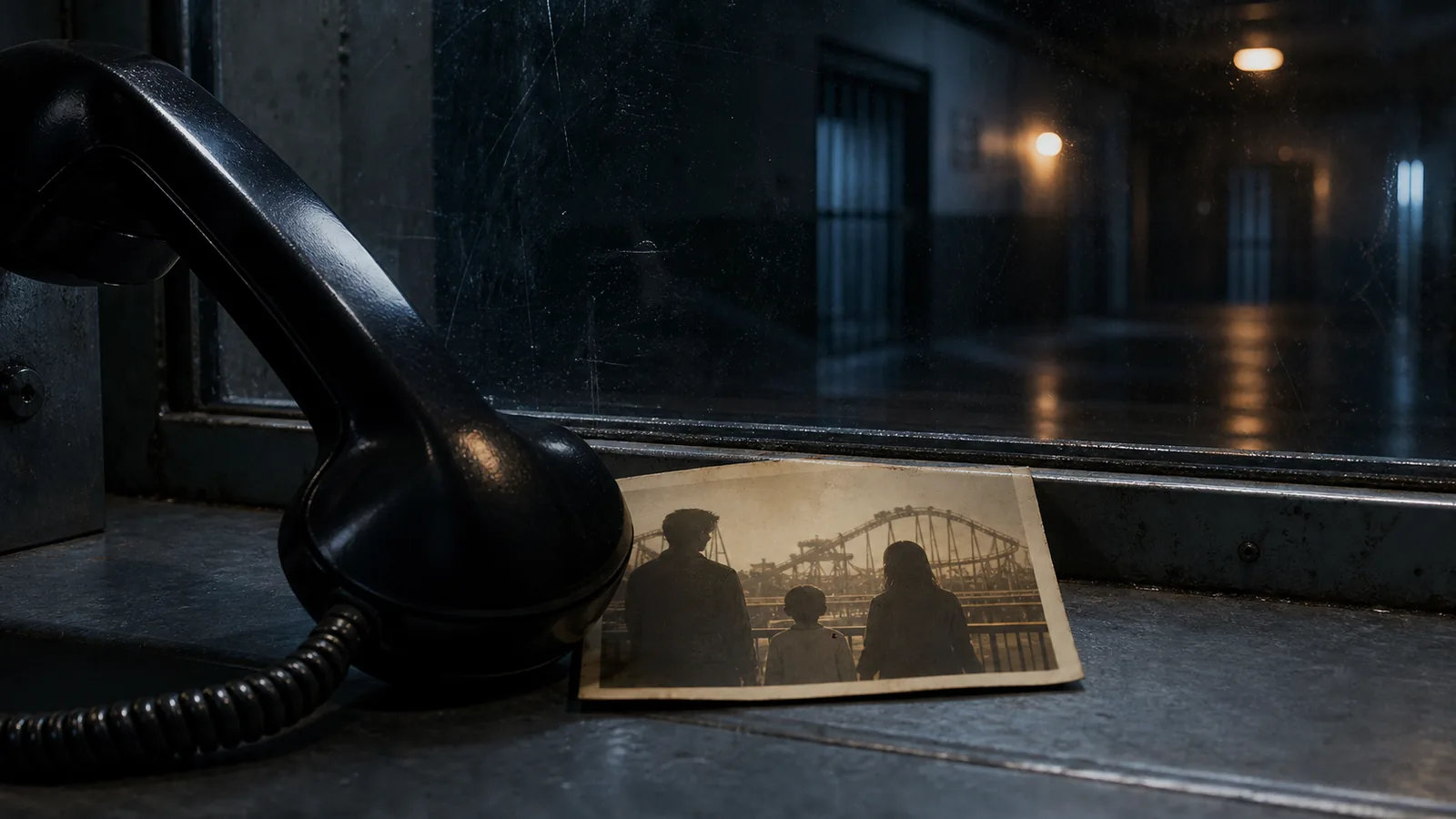
- Rachel visits David in prison with a Six Flags photo and points out the birthmark that makes the boy look like Matthew.
- Philip Mackenzie dismisses the photo in public, then privately asks Lenny what old case details could come back on them.
- David studies the murder book and finds Hilde Winslow, the baseball bat, and the fact that the body was not visually identified.
- Ross Sumner attacks David after the prison visit while the guards wait before stepping in.
- Jim traces Hilde to a new legal name as Ted Wesson admits he was paid to kill David.
- Philip and Adam use a fake hostage plan to get David out of Briggs, turning grief into escape.
I Will Find You opens with a father legally buried under one story, then gives him a photograph that makes passive grief impossible. Episode 1 moves fast, but its best work is procedural: a birthmark, a murder book, a vanished witness, and a prison system that turns violent the moment David starts asking the right questions. The premiere is blunt in places, and a few escape beats strain convenience, but the central hook has teeth because every new clue costs someone something.
David Burroughs begins by telling us what prison can and cannot punish. He is five years into a life sentence for killing his little boy, Matthew, and he insists he did not do it. Then he corrects the moral math: innocent of murder, maybe, but guilty in his own mind of failing to protect his son.
That distinction gives the premiere its fuel. David enters as a father who has accepted the public version of the worst night of his life because the alternative is too impossible to survive. Rachel Mills changes that with one visit, one amusement-park photo, and one command: Look closer, David.
Rachel brings David the Six Flags photo, and the birthmark makes grief dangerous again
The prison visit works because Rachel does not arrive with certainty. She brings an online photo from her college friend Irene’s trip to Six Flags in Springfield. The boy in the picture looks like Matthew would look now, down to the birthmark on his cheek. David reaches for the sanest explanation: the birthmark is smaller, Matthew never got older, and this must be a random child who resembles the son he buried.
Rachel is careful in a way the hour needs. She has not shown Cheryl because Cheryl has spent five years rebuilding a life that already had to survive the unspeakable. That choice keeps Rachel from reading as a mystery tourist. She knows this could detonate her sister, and she still cannot leave David alone with the photo.
David’s reaction is the first time the episode lets hope look almost cruel. He asks if Rachel showed Cheryl. Rachel says no. He pushes back because if the photo is possible, the official story did worse than convict the wrong man; it may have stopped everyone from looking. When the guard cuts the phone, David’s instruction is simple: Show Cheryl.
Philip Mackenzie dismisses the photo, then asks Lenny what could come back on them
Warden Philip Mackenzie enters as David’s protector and one of the premiere’s messiest pressure points. He knows Rachel came to Briggs. He knows David has not asked for anything in five years. He also knows the evidence that convicted him: DNA matched Matthew, the injuries made visual identification impossible, and David’s night terrors gave the prosecution a way to make horror sound medical.
Philip’s first response is human and institutional at once. He tells David that lifers grab onto impossible ideas because hope can break them. He says Rachel used to be a respected journalist, then mentions that she was fired from the Globe. He also reminds David that he pulled strings to get him into Briggs and promised Lenny Burroughs he would look out for him.
Then David gives him the line that shifts the room: he knows something no one else does, that he is innocent, and that someone else was there that night.
The cleanest suspicion work comes next. Philip books a flight to Boston and visits Lenny, where their old friendship stops sounding comforting. Lenny asks why David wants Matthew’s murder book now. Philip says David does not have the thing in his eyes that cannot be erased, then asks Lenny whether anything in the file can come back on them.
That is a loaded question. Lenny’s answer is worse: nothing they did that night changed anything. Episode 1 does not explain the sentence, which is wise. It just drops the two men who once protected David into the same room and lets their shared past hum under the case file.
The murder book gives David Hilde Winslow, a baseball bat, and a body that could not be visually identified
Once the murder book reaches David, the premiere turns from grief hook to evidence board. The case against him is ugly and tidy: no signs of forced entry, no fingerprints or foreign DNA, David asleep alone in the house, a history of night terrors, a baseball bat found in the woods, and DNA confirming the body as Matthew.
The flashback testimony also gives the hour its first concrete target. Mrs. Winslow, a neighbor, testified that she saw David bury something in the woods behind his home on the night of the murder. David and Rachel do not have enough to prove a conspiracy, but they have enough to ask better questions: if the body was not Matthew, who was he, and why did Hilde Winslow say what she said?
That is where Rachel becomes more than the messenger with the photo. She reads the case like a reporter even after her career has collapsed. In her classroom, she tells her students that journalism is about seeking truth, holding power to account, and listening to people without a voice. It is an on-the-nose speech, but the timing works because the episode makes her live inside it.
Her private life gives the choice a cost. Cheryl is pregnant, carrying a girl, and trying to make peace with the idea that the baby is not replacing Matthew. Rachel almost tells her about the photo, then swallows it when Cheryl breaks down. Later, when Cheryl learns Rachel is at the Briggs Motor Lodge because she needed to see David, Cheryl refuses the conversation: she is done talking about this.
Ross Sumner attacks David after the visit, and the guards wait before stepping in
The prison plot is blunt, but effective because the violence follows the evidence. Ross Sumner appears on work detail, a place he should not be, and he knows too much. He knows about Rachel’s visit. He knows David’s conviction. He needles him with Matthew’s murder until the fight breaks open, and the guards wait before intervening.
Sumner’s taunt, Nobody’s coming to save you, lands because David has already spent the episode trapped inside that sentence. Matthew said “Dad” in David’s memory, Rachel can only visit through glass, and Philip’s protection has limits the prison itself is starting to expose. David fighting back is survival reflex, not action release.
Rachel’s next visit gives the episode its best partnership scene. David is bruised, wary, and suspicious enough to ask whether the photo is just a story for her. Rachel answers with the kind of plain emotional logic this kind of thriller needs: the worst things usually cannot be fixed, but if Matthew is alive and they find him, maybe this is one time they can.
From there, the two start thinking like investigators. A different missing boy could explain the body. The DNA could have been altered in the lab. Hilde Winslow could have lied because someone put her up to it. Rachel calls Jim Doherty at the Globe and asks him to run Hilde’s name just as Briggs becomes more dangerous inside.
Jim finds Hilde’s new name, while Wesson admits he took money to kill David
The Hilde lead pays off with exactly the kind of clue a first episode should deliver: specific, checkable, and unfinished. Jim finds that Hilde Winslow is now Harriet Winchester. She changed her name in November 2021, one month after her testimony sent David to prison. She sold her house in Revere, dropped off the map, and left only a P.O. box in New York under the new name.
Officer Ted Wesson’s attack is the hour’s bluntest proof of reach. He wakes David in the night, claims he has to take him to the infirmary, and then tries to kill him in the corridor. When David asks why, Wesson says the line that changes Philip’s posture later: I took their money. He does not say whose money. The answer is large enough to buy a guard, get Ross Sumner onto the wrong detail, and make a shiv appear on David after he is knocked out.
Philip first performs the official version in front of Wesson and Lu: David attacked a decorated officer, and of course he believes the officer over a child killer. Once he has David away from them, he reveals the second version. Officer Diego saw Wesson plant the shiv, Sumner was likely no accident, and whoever wants David dead can buy inmates and guards alike.
Philip and Adam break David out, and the fake hostage plan turns real enough to trap them
The breakout is wonderfully ridiculous in the way a Harlan Coben prison escape should be: half desperate, half meticulously improvised, always one suspicious guard away from collapse. Philip and Adam bring David into the plan because staying in Briggs now means dying there. David will wear Adam’s uniform, pass one low-security crossover, move through the visitors’ exit, take Adam’s cruiser, and get a two-hour head start before roll call notices.
The emotional beat belongs to Adam. He jokes that David has never known what he would do without him, then gives him the only instruction that matters: Go find Matthew. It is friendship, family debt, and moral panic in one line. Philip may be keeping a promise to Lenny, but Adam’s choice feels less strategic. His old friend has been turned into a target, and the only honest move left is treason.
Wesson catches enough of the plan to break it. David and Philip pivot into a hostage performance, with David putting a gun on the warden and Philip coaching him through the part. Adam’s cruiser is too far away, Philip’s truck becomes the exit, and the roadblocks close fast. By the final minutes, they are boxed in by spike strips, police cars, a negotiator, and a sniper waiting for the go/no-go.
Philip’s last instruction compresses the hour into one tactic. David has to look like a desperate man willing to do anything rather than go back. The lie only works because the system has already made it true.
Tiny details worth clocking
- Rachel notices the birthmark is smaller, and David remembers the doctor said it would shrink as Matthew aged.
- Philip calls David “like a son” before the episode lets that protection become something criminal.
- Cheryl’s pregnancy scene hurts because Rachel hides the photo right after Cheryl says the baby girl does not feel like a replacement.
- Hilde changing her name one month after the trial is the episode’s strongest non-prison clue.
- The escape plan depends on Adam’s uniform, but the actual exit ends up depending on Philip’s truck and David’s ability to look guilty in public all over again.
Verdict
Episode 1 is a strong, propulsive start because it treats its central question as both a case and a wound. The Six Flags photo collides with Rachel’s failed career, Cheryl’s fragile new life, Philip and Lenny’s old secrets, and the machinery of Briggs. Every person who touches the possibility that Matthew is alive has something to lose.
The weakness is that the prison escalation can feel almost too neatly timed. Ross Sumner appears exactly when the episode needs proof that someone inside Briggs can reach David. Wesson’s attack arrives with similar efficiency. The final escape is tense, but the plan asks for a little forgiveness around checkpoints, uniforms, and timing. Still, those contrivances mostly serve the hour’s strongest idea: once David stops grieving quietly and starts testing the evidence, the world around him stops pretending it is neutral.
That is the premiere’s thesis, anchored in the photo behind the glass. David is not freed by hope. He is endangered by it. The same picture that makes Matthew possible again also turns David from a contained prisoner into a moving threat to whoever benefited from the case staying buried. By the time the sniper has a shot, the show has done enough work to make the chase feel less like an escape from justice than a father’s first real chance to run toward it.
Rating: 8.2/10
More episodes from I Will Find You — The Harlan Coben fugitive thriller, episode by episode. Jump to any episode in the season:
Where to go next
Reviewed by Mira Vance · QuizFandom Editor & Lead Reviewer. Every rating is an honest per-watch assessment from the desk that also writes the quizzes — not a press release rehash.