I Will Find You Episode 2 Review: Wesson Breaks, Rachel Runs, and Hilde Winslow Becomes the Next Target
What happens — the short version (spoilers)
- David loses the helicopter in a mall garage and Rachel becomes his getaway driver.
- Greer and Williams connect Rachel's prison visit to the Mackenzie escape story.
- Wesson sends his family away, tells David he was paid to watch him, and kills himself before the FBI can take him in.
- Rachel explains the Catherine Tullo case, giving David a clearer view of her own damaged history.
- The FBI follows REH Holdings while David finds Burroughs's hidden case file.
- Rachel calls Hayden for a New York apartment as David gets his first hard lead on Hilde.
I Will Find You turns David's escape into a stress test for everyone who touched Matthew's case. Episode 2 works best when it lets the chase and the evidence move in opposite directions: David and Rachel follow Wesson toward the people behind the photo, while Greer and Williams rebuild the breakout from visitor logs, erased video, and money that has been moving for five years. The hour leans hard on thriller convenience, but it earns most of its speed because every shortcut leaves a body, a paper trail, or a new person in danger.
David Burroughs begins the episode with Philip Mackenzie in a truck, a gun to the warden’s head, and no clean road ahead of him. The fake hostage plan from the premiere has become real enough to draw snipers, spike strips, a negotiator, and every cop in the area.
That is the right place for the show to resume. David has spent five years being treated as a fixed object inside Briggs. The moment he moves, everyone else has to declare what story they believe: child killer, desperate father, corrupt warden’s project, or fugitive with a clue no one wants followed.
David loses the helicopter in a mall garage, and Rachel becomes his getaway driver
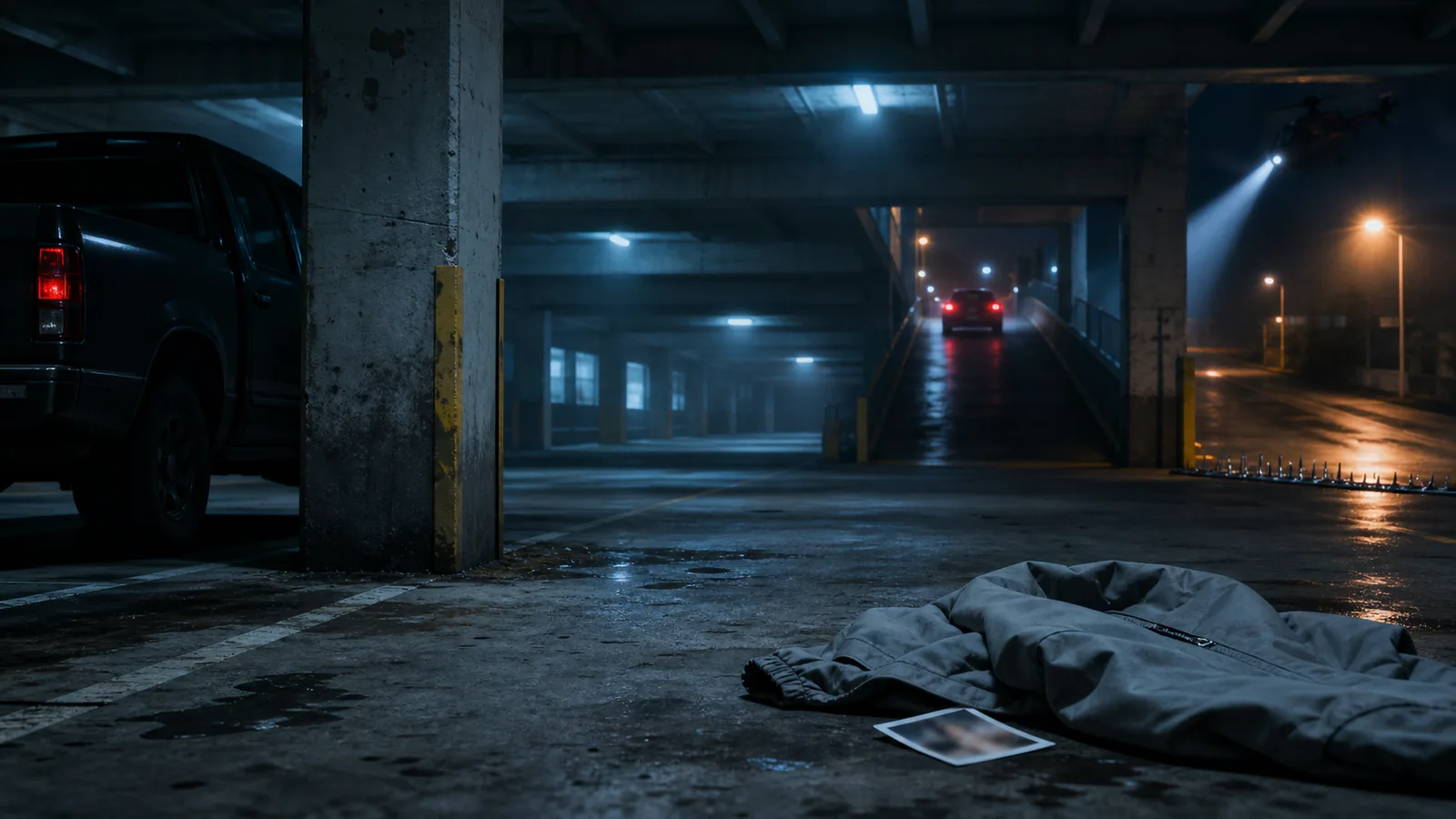
The opening escape is pulpy, but it is cleanly staged. David keeps Detective Wayne Semsey on the phone, screams for the spike strip to be pulled, and forces the police to watch Philip’s truck long enough for the Greenville Outlet Mall trick to work. The truck goes into the parking garage with David inside and comes back out without him.
Philip is left in the official version. Rachel is waiting in the real one.
That handoff does two useful things at once. It keeps Philip and Adam exposed for the choice they made, and it turns Rachel from the woman with the Six Flags photo into David’s active accomplice. Her reaction is exactly right for the show: panic first, questions second, sarcasm as a pressure valve. When she asks when David decided to break out of prison, his answer is basically a shrug: Kinda just happened.
The car scenes also keep Cheryl in the hour without forcing a full confrontation yet. Rachel admits Cheryl knows she visited Briggs, but not the truth about Matthew. Cheryl has remarried, she is pregnant, and she is trying to build a life that does not collapse every time David’s name hits the news. Rachel’s baby-shower ramble is funny until David absorbs the part that hurts: Cheryl always wanted a girl.
Greer and Williams pull apart the Mackenzies’ story, and Rachel’s prison visit becomes the missing link
The FBI side of the hour starts as workplace business and quickly becomes a character test for Sarah Greer. A Seattle Fugitive Task Force opening is dangled in front of her right before the Burroughs case arrives, which gives her chase work a useful edge. She wants to be seen as ready, and then the case gives her a story full of people who are lying badly.
Greer and Max Williams are strongest as a pair when they are doing math, not speeches. They look at the garage footage and understand that David did not vanish; someone picked him up. They bring in Philip and Adam, and the Mackenzies’ hostage story starts wobbling almost immediately. A handcuffed inmate supposedly stripped a police sergeant of his gun and uniform. Philip keeps calling David “the inmate,” as if distance can cover the fact that David grew up around Adam and Lenny worked Robbery-Homicide with Philip for decades.
The visitor logs give the lie a direction. David had no visitors for five years, then Rachel Mills appeared three days before the escape. That is a strong procedural turn because it lets the FBI catch up through ordinary records rather than genius leaps. They do not know about the photo yet. They do not know what Rachel believes. They only know the quietest prisoner in Briggs changed right after his former sister-in-law walked through the door.
Wesson sends his family away, tells David he was paid to watch him, and shoots himself before the FBI arrives
Ted Wesson is the episode’s ugliest dead end. Before David ever reaches his house, an unseen voice calls him Theodore, tells him Burroughs is out, and makes the real threat plain: Wesson has been taking their money for years, and money leaves a trail. The advice is simple and cold: run.
Wesson gets his wife and daughter out of the house after the call. His daughter asks whether he will be home in time to finish Harry Potter, and the scene snaps out of conspiracy language. He is corrupt, violent, and terrified; he is also choosing which part of his family gets punished.
David nearly loses the moral line at the door. He knows Wesson has a family inside, and for a second he talks like that should not matter because Wesson worked for the people who took Matthew. Rachel stops that version of him cold. She did not sign up for a home invasion with a child in the house, and the episode needs that boundary. David can be desperate without becoming the monster every news chyron calls him.
Wesson gives David just enough to make the case bigger and more frightening. He says the people behind this have watched David since the day he arrived at Briggs. He was supposed to keep an eye on him, then Rachel showed up with the photograph and the order changed. Wesson does not know whether Matthew is alive. He does not give up a name. He says he is a loose end, warns David he has no idea what kind of reach these people have, and shoots himself before the agents can reach the front door.
Rachel admits what happened to Catherine Tullo, and Wesson’s phone gives David a voice to threaten
Wesson’s suicide sends Rachel back to the Globe story she has been avoiding. On the drive to New York, she finally tells David how she lost her job at the Globe. She had been investigating sexual assaults at Lemhall University, with faculty and powerful boosters trying to bury the story. One victim, Catherine Tullo, did not want to go on the record. Rachel pushed until she did.
Catherine killed herself the night before they were supposed to meet.
It is a heavy confession, and the show does not over-polish it. Rachel says she pushed too hard and could only see the story. David tells her she cannot blame herself; Rachel answers with the harder fact that Catherine’s parents did. That history makes her current choice sharper. Rachel is helping David because the photo may be real, but she also knows what it costs when a person gets turned into proof for someone else’s pursuit.
Then Wesson’s phone rings, and the pursuit gets a voice. The caller knows David went to Wesson. He knows the police will think David killed him. He taunts him with the official story of Matthew’s death, then tells him the truth would not matter even if David found it. David’s answer gives the series its title without feeling like a slogan: I’m gonna find you. He says he is coming for his son, and for once the threat sounds less like hope than a promise to make the hidden people answer the phone again.
The FBI finds REH Holdings, and Burroughs’s hidden case file sends them toward Hilde Winslow
The best procedural work in Episode 2 happens after Wesson is dead. Greer and Williams do not simply accept the easy version, even though David walking into Wesson’s house gives them one. They dig into Wesson and find a thousand dollars a month from REH Holdings, a Cayman-registered shell company. The payments started the month David arrived at Briggs.
That detail matters more than the gunshot. It proves Wesson’s role was not a last-minute panic after the Six Flags photo. Someone paid him for five years to watch David sit in a cell.
The prison-side clue is just as good. An inmate says Wesson took David out in the middle of the night with his emergency key instead of having the shift guard buzz the cell open from the panel. Wesson wanted the move off the books. Suddenly the question is not why David would attack a guard before escaping. It is why Wesson moved him where no one could cleanly track him.
The flashlight bit is a neat small engine for the next discovery. The promised flashlight is missing from David’s inventory list, and a search of the mattress turns up Matthew’s case file instead, with Hilde Winslow circled. The agents know Hilde as the witness who testified she saw David bury the bat. If they still read David as a revenge-driven fugitive, Hilde is the obvious next target. If David is right, she may be the next witness someone else needs erased.
Rachel calls Hayden for a New York apartment, while David learns how loud the outside world is
The New York stretch gives the hour a different texture. Hilde’s P.O. box in Midtown does not open until morning, so Rachel needs a place to hide. She calls Hayden Payne, an old connection with enough money to casually buy a painting for $1.5 million and enough lingering affection to leave apartment keys at the front desk after one fake stolen-purse story.
David in Hayden’s apartment is one of the hour’s quieter useful beats. He has been out of real life for five years, and the city looks absurd to him in ways he cannot quite name. Rachel jokes about a dog in a Gucci sweater. Hayden’s fridge is empty. David borrows clothes and cannot stop watching the news call him a convicted child killer while warning that anyone helping him will be prosecuted.
Rachel tells him not to look. Then she brings bodega dinner, searches for the kind of bottle Hayden would own, and sits with him inside the absurdity of it. The line that lands is simple: We’re gonna find him. Together. David and Rachel have spent the day getting chased, threatened, and framed. In Hayden’s kitchen, they are exhausted, wanted, and maybe one step ahead of people with money, prison access, and clean-up calls. But they are no longer alone with the photograph.
Philip and Adam’s final thread keeps the cost alive back in Boston. Philip worries Adam could lose his shield. Adam answers with the only logic that has governed him all episode: David is family. Then he leaves on a late errand while the hour closes on unanswered calls and an unnamed person saying the job is being taken care of. It is a blunt hook, but by then Episode 2 has earned another door opening.
Tiny details worth clocking
- The unseen voice calls Wesson “Theodore” and “Teddy,” which makes the threat feel personal before we know who is speaking.
- Rachel’s “Bonnie and Clyde” joke lands better because David does not have the space to enjoy it; he is already thinking about Wesson.
- The agents catching Philip’s repeated use of “inmate” is a small tell with real character weight.
- Wesson’s REH Holdings payments start the same month David arrives at Briggs, not the month Rachel brings the photo.
- The hidden object in David’s cell is Matthew’s case file, not a weapon or escape tool, which says exactly where his mind has been.
Verdict
Episode 2 is a tighter fugitive hour than a mystery hour, and that is mostly a strength. The chase out of Briggs, Wesson’s collapse, Rachel’s old Globe wound, and the FBI’s slow reconstruction all keep pushing the same idea from different sides. David is running toward Matthew; everyone else is racing to decide whether that makes him dangerous, delusional, or inconvenient.
The weakness is that the hour sometimes uses convenience with both hands. Wesson becomes available exactly when David needs the next lead, the agents arrive seconds too late, and the anonymous phone call is pure thriller machinery. Hayden’s apartment also drops into the plot with almost comical ease. The difference from weaker versions of this kind of show is that the conveniences usually leave residue: a dead guard, a shell-company payment trail, a hidden case file, and Rachel’s name on a BOLO.
The episode’s thesis sits in Wesson’s kitchen. He has been paid for five years to watch a man everyone claimed was already solved. The moment Rachel’s photo appears, surveillance becomes murder, and murder becomes clean-up. David may still be legally buried under Matthew’s case, but Episode 2 shows the dirt moving. Someone is afraid of what happens if he keeps digging.
Rating: 8.0/10
More episodes from I Will Find You — The Harlan Coben fugitive thriller, episode by episode. Jump to any episode in the season:
Where to go next
Reviewed by Mira Vance · QuizFandom Editor & Lead Reviewer. Every rating is an honest per-watch assessment from the desk that also writes the quizzes — not a press release rehash.