Michael Jackson: The Verdict Episode 2 Review: "Episode 2" - Opening statements, the first witnesses, and the defense turning history into a weapon
What happens — the short version (spoilers)
- The prosecution and defense reduce the case to predator versus extortion scam.
- Judge Melville keeps cameras out while fans and noise keep pressing in from outside.
- Martin Bashir testifies and the documentary that started the trial gets folded back into court.
- Star Arvizo describes Neverland details that the prosecution uses to argue grooming and secrecy.
- Mesereau presses on the magazine date, bedroom chime, and other gaps in Star's account.
- The episode keeps pushing the jury toward Gavin's story as the real center of gravity.
The trial finally starts talking in full sentences here, and the whole hour is about who gets to define the story before the jury does. The prosecution says it has a pattern; the defense says it has a scam; the documentary keeps cutting between those claims and the public theater outside the courthouse. What gives the episode its shape is the way it makes credibility the real battlefield. Not just whether the witnesses are believed, but whether the courtroom can keep celebrity from swallowing the facts.
The trial opens as a contest between predator and extortion scam
The episode starts by stripping the case down to the two stories both sides want the jury to carry home. On one side, the prosecution says Michael Jackson is a predator. On the other, the defense says the family is running a money play. The documentary is blunt about that split, and it is useful because it shows how binary the trial is becoming.
That framing also gives the hour its rhythm. Every later witness gets measured against one of those two theories, which means the episode never drifts far from the central question of what kind of proof can survive a case built on memory, reputation, and motive.
No cameras in the courtroom, but the fans and the courthouse noise fill every other frame
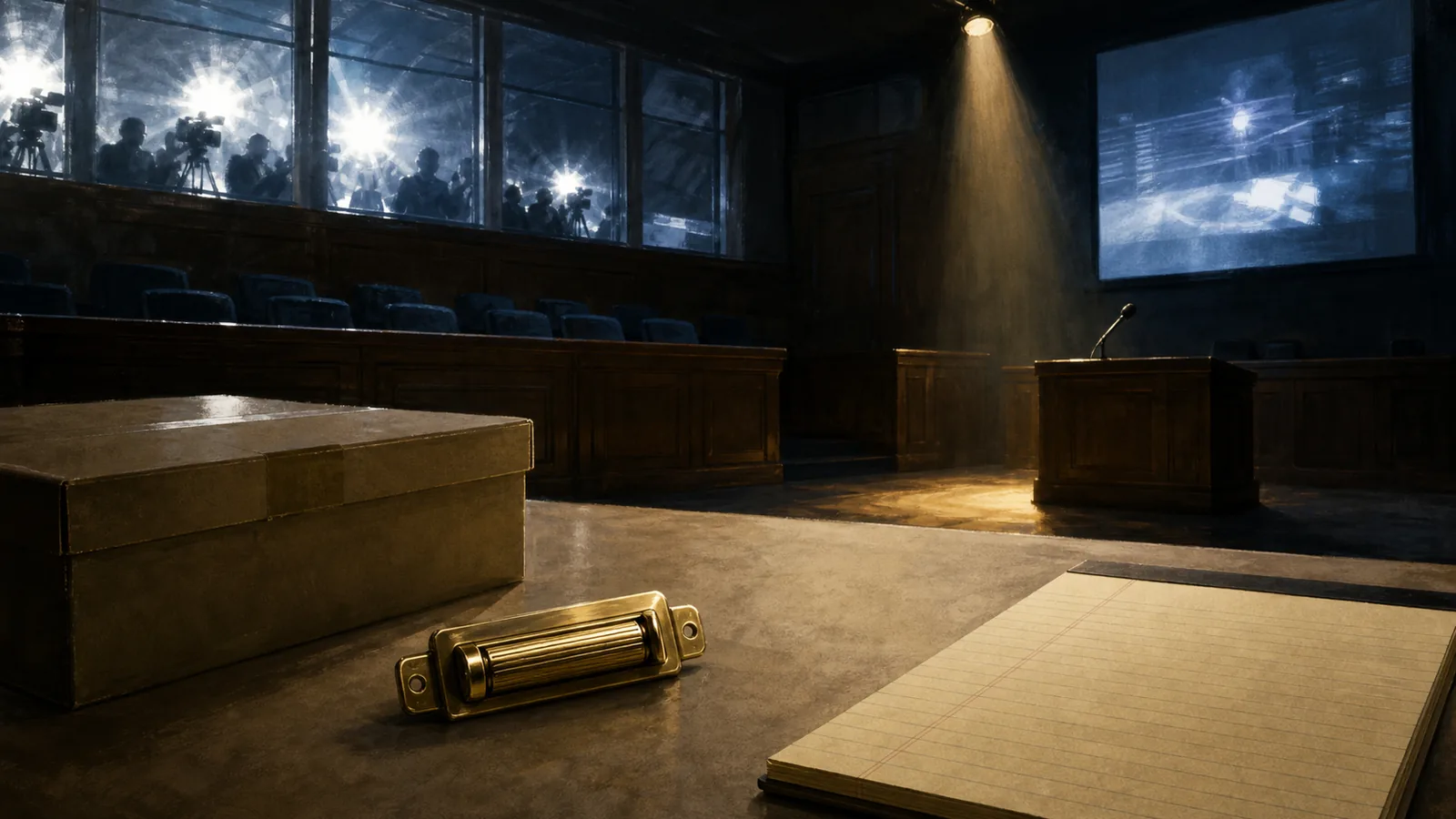
Judge Melville keeps cameras out of the courtroom, and the documentary makes a point of saying why that matters. Without the camera, the lawyers are forced to talk to the judge and the jury instead of performing for the six o’clock news. Outside, though, the noise keeps building. Fans shout “Innocent, innocent, innocent!” and the streets around Santa Maria look like a live event trying to break through the courthouse walls.
That contrast matters. The hour understands that this trial is public even when the courtroom is sealed, and that the absence of cameras inside only makes the outside scene louder. Michael’s bodyguard even describes the route in terms of threat assessments and vulnerability, which keeps the episode tense without ever turning it into a melodrama.
Martin Bashir takes the stand, and the documentary that started the trial gets dragged into court
Witness number one is Martin Bashir, and the documentary makes no effort to hide the significance. This is the man whose film sparked the entire criminal trial, and the episode uses his appearance to fold the media story back into the legal one. He says he is frightened by the rhetoric written about the film and about himself, which is fitting because the film has already become part of the evidence ecosystem.
The episode does not treat Bashir as a neutral messenger. It treats him as one more lens in a case that has been mediated from the start, which means the trial is never only about witness memory. It is also about who got the first edit.
Star Arvizo maps Neverland’s bedroom, the pornography, and the secret rules the boys say they lived under
The episode’s most important witness stretch is Star Arvizo’s testimony. He says Michael Jackson took the boys aside and told them to ask their parents if they could spend the night in his room, then he describes what happened once they were inside: a laptop with porn sites, a combination lock the kids knew and their mother did not, a loft with a king-size bed, and a Last Supper painting with Michael in the Christ position. The prosecution frames all of that as grooming, even if the teenager does not use that word.
The details pile up because the episode wants the jury to see structure, not just insinuation. There are books of nudes, porno magazines, a title like Barely Legal, and the repeated instruction not to tell anybody. The transcript makes the point plain: secrecy is part of the room’s design, and the prosecution is trying to make that design look intentional.
Mesereau attacks the magazine date, the doorway chime, and the gaps in Star’s account
Tom Mesereau’s cross-examination is where the hour begins to wobble the prosecution story. He points to the Barely Legal magazine and notices the date, August 2003, long after the family had left Neverland for good. He also pushes on the bedroom door bells and asks whether Michael would have heard Star coming up the stairs and pretended to be asleep.
That is a very specific kind of attack. It does not deny the larger accusation so much as it drills into the details that make the accusation feel less fixed. The episode shows the courtroom reacting in real time, and it makes clear that the defense’s job is not to win on one dramatic line. It is to make the witness look less certain with every question.
The judge, the jury, and the town all sit through the Bashir film while Michael’s music does its own work
The documentary keeps coming back to Martin Bashir’s film as a kind of poison and seduction at the same time. The prosecution plays the documentary in its entirety, and the people in the room sway to Michael Jackson’s music while the film is on. One observer notes that the jury seems to enjoy the film because it is fabulous, which is exactly the problem for the prosecution.
When the court reaches the scene with Gavin, the mood changes. That contrast is the whole point of the exercise. The music can make the room feel warm, but the testimony is supposed to make it cold again. The episode knows how dangerous that swing is, because it reminds you that public affection and courtroom scrutiny are never far apart.
Gavin is still waiting offscreen, and the episode keeps telling you the case comes down to his story
The hour closes by reminding you that Star is only the brother. Gavin is the real center of gravity, and the documentary says his story will make or break the case. Michael is under gag order when asked about the allegations, so the defense and prosecution do the talking for him. That silence matters because the whole trial is now moving toward one question: what does Gavin say happened?
What the episode does well is keep that question suspended. It has already given the jury the spectacle, the media frame, the bedroom details, and the defense’s best challenge. What it has not given them is an easy answer. That is where the tension comes from.
Tiny details worth clocking
- The juror who grew up on the Jackson 5 keeps reminding you how hard it is to separate fandom from judgment.
- The transcript’s phrase shock and awe is doing real work on the defense’s image.
- The courtroom literally sways along with Michael’s music before the testimony turns the room cold.
- Star’s description of the bedroom lock and the loft makes Neverland feel built around access.
Final verdict
Episode 2 is the series at its most courtroom-aware. It understands that the case will not be won by one dramatic line, but by whether the jury finds Star’s details believable after all the cross-talk, publicity, and old baggage. The prosecution’s grooming case is strong because it gives the jury a physical map of Neverland; the defense’s attack on the magazine date and the bedroom bells gives them a reason to hesitate.
What makes the hour work is its refusal to simplify the trial into a single moral lesson. It stays with the process: opening statements, witness sequencing, media contamination, and the fight over what a bedroom full of secrecy means. That is the right lane for this material, and the episode stays in it.
Rating: 8.7/10 - A sharp middle chapter that turns the courtroom into a credibility trap for both sides.
More episodes from Michael Jackson: The Verdict — Neverland trial docuseries, episode by episode. Jump to any episode in the season:
Where to go next
Reviewed by Mira Vance · QuizFandom Editor & Lead Reviewer. Every rating is an honest per-watch assessment from the desk that also writes the quizzes — not a press release rehash.