Money Heist Season 1 Episode 4 Recap: The Professor Changes the Masks
Money Heist (La Casa de Papel), Season 1, Episode 4 Antena 3 / Netflix · Created by Álex Pina · 2017
Arturo bleeds, Raquel counters, and the Professor turns a medical rescue into another trap inside the Mint.
At the start, the worst possible version of the plan is working. Moscow has opened the doors in panic, Arturo is on the roof in a Dalí mask, and the police see a robber aiming at another masked figure. Raquel gives the green light. The bullet hits Arturo instead.
That mistake changes the temperature of the whole robbery.
Until now, the Professor’s advantage has come from patience. He wants time. He wants the police guessing wrong. He wants the hostages scared enough to obey but alive enough to protect the crew from an assault. Arturo’s wound breaks that clean math. A hostage can die on the Mint floor, and if he does, Raquel can make the robbers own it in public.
Inside, Berlin keeps smiling like a man hosting dinner with blood on the table.
Arturo is shot on the roof
Arturo Román (Enrique Arce) has spent the robbery trying to make himself a hero, a lover, a husband, and a victim. Now he has the spotlight he keeps reaching for, and it is miserable.
He is bleeding on a table because the escape plan he pushed through Mónica has collapsed into chaos. His first demand is to speak to his wife. Tokyo’s narration cuts through the absurdity with a kind of disgusted amusement: Arturo is near death and still unable to decide which woman should receive his final performance.
Laura is the wife of fourteen years. Mónica is the secretary he has impregnated. Arturo wants both stories to be true. He wants to be the man returning to his family and the man redeemed by forbidden love. Berlin knows exactly where to press.
Berlin (Pedro Alonso) is cruel here in a specific way. He does not shout Arturo into shame. He stands close, offers him the phone, and turns the call into a private theater. Arturo promises Laura the Australia trip she has always wanted. He says he has neglected her and the children. He sounds almost sincere until he calls her Mónica.
That slip is brutal because it does not reveal a hidden heart. It reveals a man who cannot stop making women absorb the damage from his cowardice.
Berlin enjoys the humiliation, but he also needs Arturo alive. The wounded hostage has become a problem with too many uses. Raquel needs him as evidence that the police can still save lives. The Professor needs him as leverage. Berlin needs him as proof that the crew can keep control after a public disaster. Arturo, naturally, needs him as Arturo.
The farce and the blood sit side by side.
Raquel sends doctors and officers toward the Mint
Raquel Murillo (Itziar Ituño) makes the mistake, then does the harder thing: she stays at the table.
Her first move is clean. She admits responsibility inside the tent, then pushes the Professor into a public bind. If he refuses a medical team and Arturo dies, the police can tell the country that the robbers let a hostage bleed out after a police mistake. If he allows the team in, Raquel gets movement inside a building that has been sealed against her.
The Professor (Álvaro Morte) hears the trap and still has to answer it. No one comes out. Two surgeons, one nurse, surgical supplies. That is the deal.
Raquel uses the opening fast. Ángel Rubio (Fernando Soto) argues to go in with the medical team because he can count their weapons at a glance, identify the makes, and tell real rifles from fakes. Raquel refuses at first, then adjusts. Ángel will enter as part of the medical team. Suárez and Lobo will crawl through a new ventilation route under the Mint, wearing red overalls and Dalí masks, and join the hostages while the doctors draw the crew’s attention.
It is a strong counterpunch from a woman who has just made the worst call of her career.
Raquel also gets a small private scene with her mother, and it matters because it does not make her soft in a cheap way. She calls home because she needs one voice that is not Interior, not CNI, not Ángel, not the Professor. Her mother tells her to breathe, then somehow turns a hostage crisis into gossip about the stranger Raquel drank with. It is funny, sad, and very human.
Raquel can command the tent. She can read the Professor’s pressure points. She can plan an infiltration under the floor. She can also be a daughter in a car, letting her mother talk her back into herself.
That balance is why she works as the Professor’s opposite. He lives by rehearsed distance. Raquel keeps making decisions with a real life pressing against her skin.
Denver and Moscow hide Mónica from Berlin
While Arturo receives doctors, Mónica Gaztambide (Esther Acebo) is hidden away with the bullet Denver put in her leg.
Denver (Jaime Lorente) did not kill her, but he did shoot her. He did it because Berlin ordered an execution and he could not find another way out fast enough. That is not innocence. It is panic with a gun in its hand.
Moscow (Paco Tous) understands the difference and still cannot forgive the shape of it. His son has crossed a line without meaning to, and Moscow is old enough to know that good intentions do not clean blood. He tells Denver they came to steal, not kill. Then he sits with the hostage his son wounded and tries to keep her conscious.
The Mónica scenes slow down without losing tension. She is feverish, frightened, and still thinking about Arturo. She wants him told she is alive. She wants him told about the baby. She is not foolish for that. She is trapped in a relationship where Arturo has trained her to carry his fear, his lies, and his future.
Denver lies badly. He tells her Arturo loved her, then borrows pieces from Arturo’s call to Laura. Australia gives him away because Mónica is afraid of planes. The truth lands before Denver can manage it: Arturo spoke to his wife, not to her.
That could have been played as a punchline. Instead, it leaves Mónica staring at the wreckage of a love story she was still trying to save while bleeding on a floor.
Moscow gives her a tender answer. When she asks what being a father is like, he does not dress it up. It is worry for the rest of your life. It is emergency rooms, school trouble, fear, and the daily hope that your child will become normal enough to survive. His speech is messy and funny because Moscow is messy and funny. Then the fear comes back when Mónica starts fading.
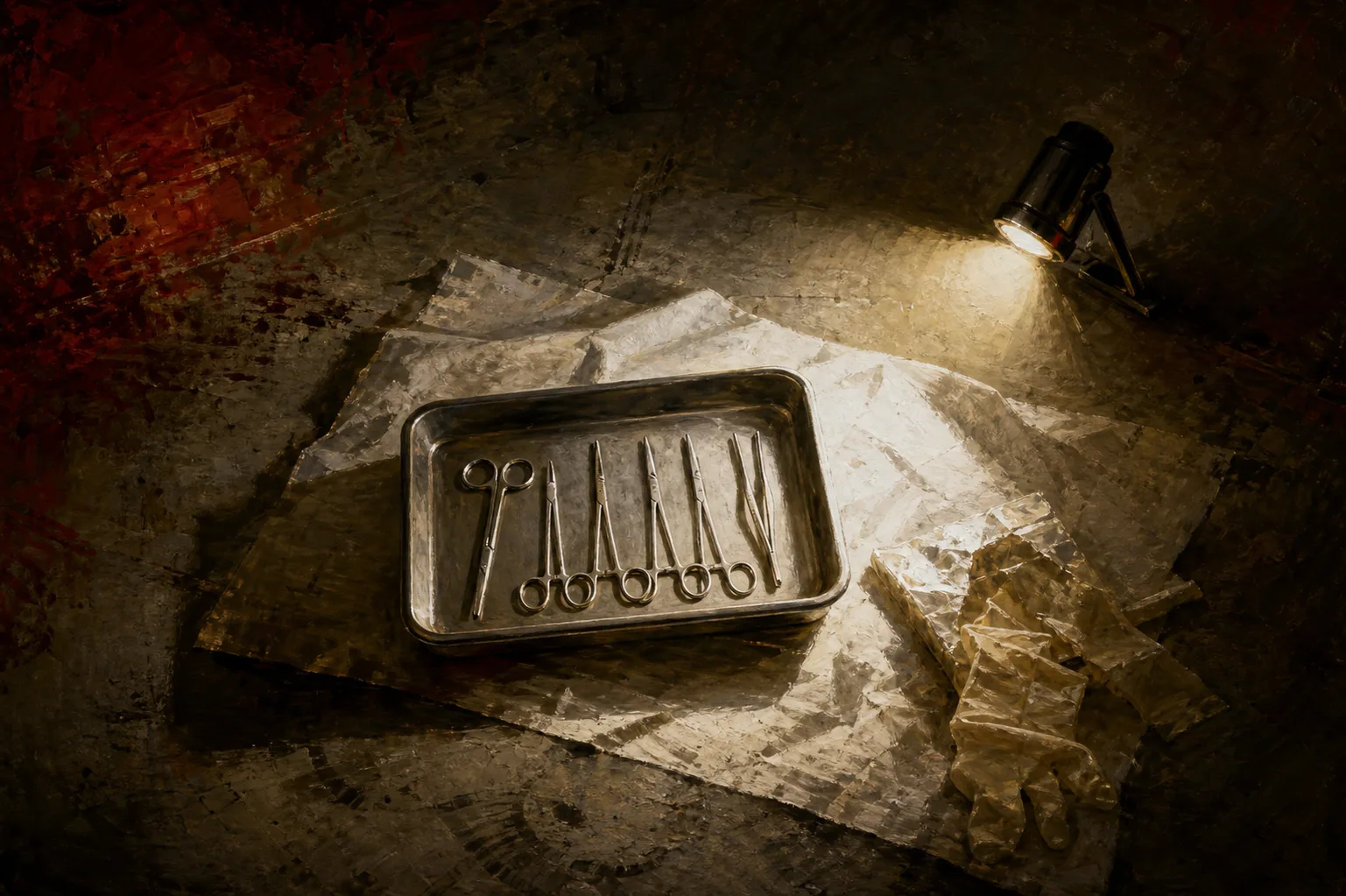
Denver returns with supplies stolen from the doctors. Moscow starts cutting and makes a mess. Nairobi takes the tools from him.
That is the turn. The crew can lie, steal, threaten, and improvise, but somebody still has to save the woman Berlin wanted dead.
Nairobi tells Tokyo about Axel
Nairobi (Alba Flores) has been bright energy around the presses, but now she has a wound with a name: Axel.
The first hint comes in a flashback during one of the Professor’s medical lessons. The crew is supposed to learn how to remove a bullet if the robbery goes wrong. Berlin complains. Denver mouths off. Helsinki jokes. Tokyo notices Nairobi’s C-section scar, and Nairobi nearly turns the room into a fight.
Later, Tokyo (Úrsula Corberó) finds Nairobi alone and asks about the boy. Nairobi resists at first, then tells the story in pieces. Axel is seven. His father was never there. Nairobi raised him alone until she went out for five minutes to pick up pills to sell. Axel climbed out onto a terrace pretending to be Spider-Man. Police and firefighters came. Nairobi was caught with drugs, priors, no job, and no clean story to offer anyone.
She went to prison. Axel went into care. Now he is in the Canary Islands with a family that owns a hotel.
Nairobi’s plan is simple because she cannot afford a softer one. She will take the money, get Axel, and go to the other side of the world. She says no one is going to ruin this heist for her. The threat is real. So is the grief.
Tokyo’s recklessness usually arrives first, but here she listens. She sees the scar, misreads it, gets shoved away, then comes back with enough patience to let Nairobi speak. Their friendship begins in an ugly exchange and deepens over the kind of confession nobody in the crew is supposed to make.
Nairobi helping save Mónica now makes complete sense. She is not suddenly saintly. She is a mother who lost her child after one bad decision, and she cannot watch another woman lose hers because the crew is too proud to ask for help.
The heist needs Nairobi’s precision. Mónica needs her hands. Tokyo needs the reminder that everyone in that red suit arrived with a life already broken.
What works
The medical-entry plot keeps the pressure tight. Raquel’s plan feels smart, and the Professor’s answer feels smarter without making Raquel look foolish. She finds the first real crack in the robbery. He anticipated the kind of crack she would use.
The mask switch is a great payoff. The police think Dalí masks will let Suárez and Lobo blend into the hostage crowd. Ángel spots the change too late: the crew has switched masks, and the two officers are crawling into a room where their disguise will mark them immediately. It is a clean heist reversal because it comes from preparation, not luck.
Nairobi also becomes essential here. Her humor, rage, and competence all sharpen in one episode. She can joke during an anatomy lesson, threaten Tokyo for staring at her scar, confess the worst thing that ever happened to her, and then take over a bloody procedure because nobody else can do it properly.
Arturo’s call to Laura is another nasty little gem. It is funny until it is not, then funny again in a way that makes everyone in the room look worse. Berlin turns it into sport, but Arturo supplies the cruelty himself by forgetting which woman he is supposedly choosing.
What stumbles
The translated subtitles are rough in places, and some of the slang lands with a thud. A few lines sound stranger than they should, especially during the anatomy flashback and the doctors’ entrance. The performances carry the intent, but the English text sometimes makes the rhythm clumsy.
There is also a stretch where the undercover medical-team mechanics get busy. Doctors, fake nurse, surgical clock, ventilation route, frequency inhibitors, changed masks, Arturo’s operation, Mónica’s operation: all of it works, but the viewer has to track a lot at once while characters keep crossing between rooms.
Alison Parker’s scene with Rio is useful setup, but it is thinner than the surrounding material. Her gun knowledge and trauma around shooting give her texture, and Rio’s insecurity shows immediately. Still, next to Raquel’s counterplan and Nairobi’s confession, that scene feels like a smaller piece waiting for its real use.
What this sets up for Episode 05
Suárez and Lobo are inside the Mint with the wrong masks. Ángel knows the trap, Raquel orders an abort, and the warning breaks apart under interference. The cost of the Professor’s mask switch is about to arrive in real time.
Mónica now knows Arturo chose Laura in the crisis, even if Arturo would never describe it that cleanly. Denver has moved from captor to caretaker, and that shift is dangerous for both of them. Berlin still believes Mónica is dead, which means Denver’s lie has an expiration date.
Raquel has also learned that the Professor can predict a rescue attempt before she makes it. That will not make her retreat. It will make her angrier, sharper, and less willing to accept the version of the robbery he keeps feeding her.
And Nairobi’s reason for being there is no longer background. Axel is waiting somewhere outside this building, even if he does not know it. Every printed bill now has a child’s name under it.
Rating: 8.7/10
More episodes from Money Heist (La Casa de Papel) — Eight strangers, the Royal Mint of Spain, and a heist that became a movement — episode by episode. Jump to any episode in the season:
Where to go next
Reviewed by Mira Vance · QuizFandom Editor & Lead Reviewer. Every rating is an honest per-watch assessment from the desk that also writes the quizzes — not a press release rehash.