Money Heist Season 4 Episode 6 Recap: Nairobi Dreams Past the Gun
Money Heist (La Casa de Papel), Season 4, Episode 6 Netflix · Created by Álex Pina · 2020
Nairobi imagines a louder future while Gandía turns the panic room into the bank’s cruelest corridor.
Money Heist Season 4 Episode 6 begins with a hunted woman who refuses to act like prey.
Gandía has Nairobi at gunpoint. Tokyo is locked in the panic room. Denver and Rio crawl through vents and hit a man who knows the bank better than they do. Palermo is back in command, sort of. Helsinki is running on terror and rage. Outside, the Professor tries to think while the family he built comes apart over the radio.
Then Nairobi appears before the blood.
She is at a table with the Professor, talking about Christmas, motherhood, and the strange little country this crew has built for itself. Nairobi never asks politely when she can kick the door open. She wants the Professor to be the donor for her child. No romance. No domestic contract. Good genes, her body, her plan.
The request lands like a joke until it stops being one.
Nairobi is not asking for a fantasy. She is asking for a future with a child, a dog, a chosen family, and no apology for wanting all of it after a life that gave her scraps. That is why the rest hurts. She keeps planning past the robbery.
Gandía is already planning the opposite.
Gandía drags Nairobi into the panic room
Gandía has stopped pretending this is hostage control.
He is wounded, armed, and delighted by the chance to make the crew listen. He keeps Nairobi close enough that every rescue angle becomes a death sentence. Denver and Rio get above him through the bathroom route, but he hears enough and fires back hard enough to keep everyone frozen.
Nairobi, Ágata Jiménez (Alba Flores), does what she has done since the Royal Mint: she talks in the direction of danger until danger has to answer her.
She mocks Gandía. She calls to Helsinki. She dares the room to imagine him killed by the people he despises. Gandía answers by forcing everyone to sing. A church song becomes another way to keep a hostage tied to his survival.
Tokyo’s narration calls it a funeral song, and for once the line is not too heavy.
The Professor, Sergio Marquina (Álvaro Morte), hears the voices and finally admits the thing that has been ruining his math. He has too many emotional attachments. Before, he had people with city names. Now Lisbon is his wife, Nairobi has asked him for a child, and the inside crew is less an operation than a family with automatic weapons.
He still finds the room.
Marseille (Luka Peroš) helps him reason it out. A panic room protects the governor, not the gold, so the hidden space must sit near the governor’s office, behind a bathroom wall that the official plans refuse to admit exists. Palermo, Martín Berrote (Rodrigo de la Serna), gets the location, but location is not rescue. Gandía still has Nairobi. Tokyo is still trapped. Every person with a gun is still listening to a man who enjoys having a hostage.
That is the ugly bargain. The crew knows where the monster is. Knowing does not make him smaller.
Arturo finds Nairobi’s phone while Tamayo protects himself
The hostage room gets its own coup because Arturo Román remains allergic to silence.
Arturo has always been ridiculous, but ridiculous is not harmless. He hears the shots and church music, reads the bank’s confusion correctly, and pushes the governor to act. The governor wants to wait. Arturo wants a rebellion with himself in the center of the photo.
Then Miguel ends up with Nairobi’s police phone in his hands.
The phone turns the hostage room into a second command post. Arturo is vain enough to perform bravery and useful enough to understand the opportunity. He coaches Miguel to keep the call connected and to feed the police what they need: the hall is poorly guarded, Matías is alone, and Gandía has loosened the whole bank.
Outside, Alicia Sierra (Najwa Nimri) and Tamayo (Fernando Cayo) circle the same truth from opposite sides.
Sierra knows something is wrong because Tamayo is too calm for a building full of gunfire. Tamayo admits Gandía is loose, armed, and acting alone, which is a very neat way to enjoy the benefit of violence while keeping the paperwork clean. Sierra calls him on it. She sees the dirty work being outsourced and the medal already waiting if Gandía’s rampage helps the state.
She is disgusted. She also does not want to stop it.
That contradiction is why Sierra stays dangerous. She can diagnose Tamayo’s cowardice with perfect aim and still accept the tactical gift. Her morality is not absent. It is just never in charge for long.
Lisbon, Raquel Murillo (Itziar Ituño), keeps pushing back from custody. Sierra tries to prod her with sex, marriage, jealousy, and pregnancy, but Lisbon hears the wobble under the cruelty. She says the poison inside Sierra is eating her away. Sierra laughs it off, then catches the real lead: Lisbon stalled the interrogation so the Professor could escape.
That matters because the police side finally understands the Professor is moving again.
So is Arturo. So is Tamayo. So is Gandía.
Manila tells Denver who she has always been
In the middle of gunfire, Denver and Manila get a bathroom conversation that could have gone very wrong and mostly does not.
Denver, Ricardo Ramos (Jaime Lorente), is confused, clumsy, and a little scared of saying the wrong thing. Manila, Julia (Belén Cuesta), lets him ask anyway because she knows the man underneath the panic. He remembers Juanito. She tells him she has always been a woman.
Manila describes the private room after the robberies: music, a joint, red lipstick, a body allowed to feel like home for a few minutes. She is not giving Denver a lecture. She is showing him the part of her life he never saw because he did not know how to look.
Denver needs a second.
Then he gets there.
He tells her she has always been a woman, and the sentence arrives without ceremony. For Denver, that is almost elegant. He talks faster than he understands himself, but here he hears enough to correct the picture in his head.
Manila being Manila, she also uses the moment to mess with him about an old crush. It keeps the scene alive. Her identity is treated with care, but she is not turned into a glass object. She can be tender, filthy, funny, brave, and impatient with being ordered back into the hostage crowd when the crew needs help.
That last part matters too. Manila wants a gun. She can see the danger clearly. Palermo sends her back because her role is still hidden among the hostages, but she is not a reveal.
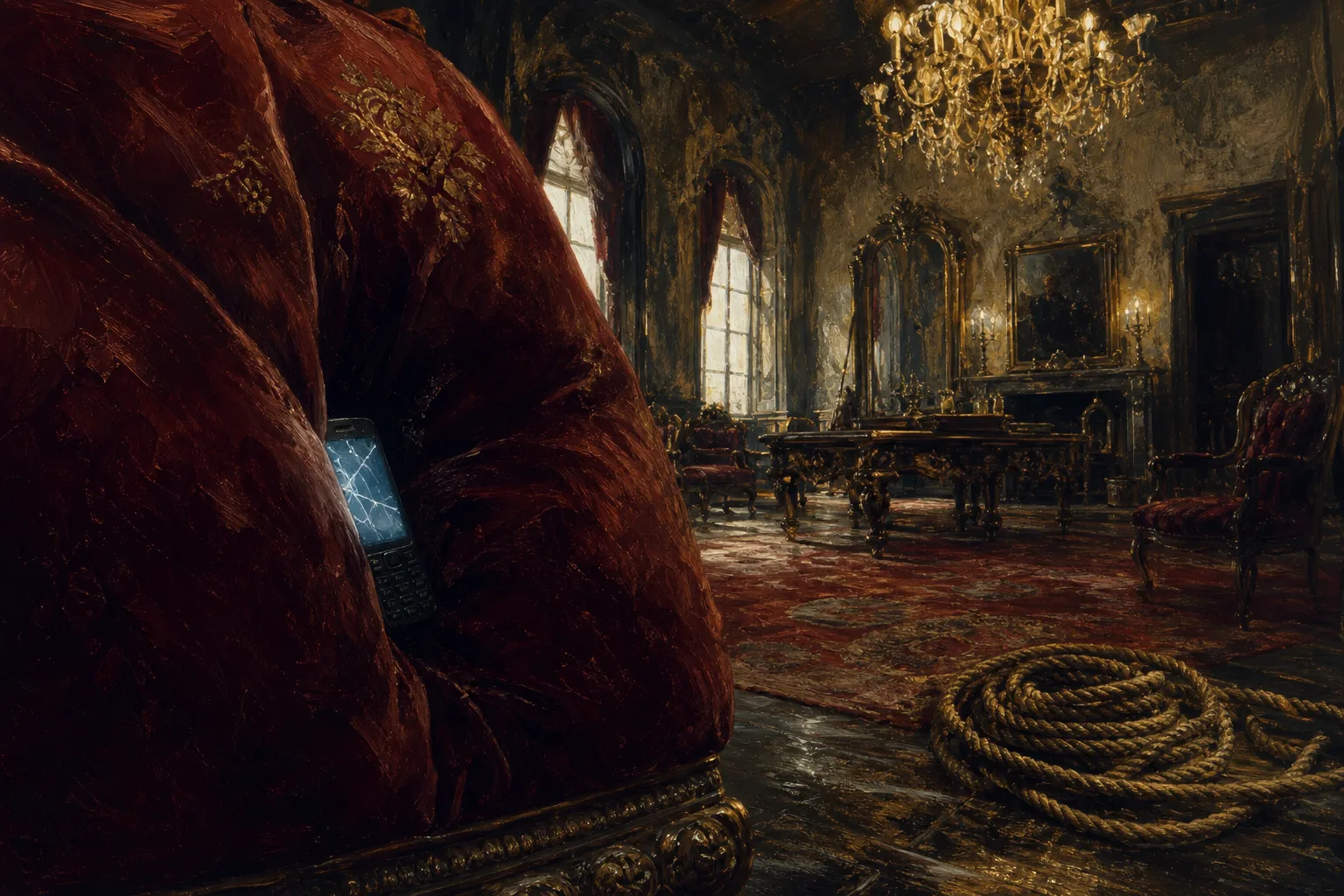
Gandía walks Nairobi into the corridor
The Professor rebuilds the wider counterattack from Rio’s old wound.
Rio, Aníbal Cortés (Miguel Herrán), was tortured outside Spain, and Lisbon heard enough during captivity to remember a mosque call. The Professor follows that sound backward. Shakir tracks the Spanish Air Force plane that carried Rio home to Timimoun, Algeria. From there, the Professor sends Marseille toward the source and orders Benjamin’s people and the Serbs onto offense.
He is not back to calm genius. He is a man doing push-ups because his brain needs somewhere to put the panic.
Inside the bank, Gandía offers a deal. He will walk out with Nairobi, keep the gun on her head, make the crew stand against the wall, then let her go. Nobody believes him. Everybody also knows storming the panic room could get her killed before they reach the door.
Nairobi decides to save Tokyo by making Gandía angry enough to keep his attention on her.
She humiliates him. She reminds him how Tokyo outplayed him. She digs at his soldier pride until he wants to answer her instead of finish the negotiation cleanly. It is brave and reckless and completely Nairobi. She is buying seconds with the only weapon left to her.
Then comes the family she wants.
Tokyo, Silene Oliveira (Úrsula Corberó), wakes Nairobi with the news that the Professor said yes. Nairobi will have a child after the heist. Tokyo will be an aunt, then a godmother. They choose “Ibiza” as a name because rules are for other people, and the room fills with the kind of silly, impossible joy this crew only allows itself when death is already close.
They talk about Christmases together.
Back in the corridor, Gandía makes everyone lower their weapons. He dances Nairobi forward, calls to Helsinki, Yashin Dasáyev (Darko Perić), and toys with the crew’s relief until the release looks real for one awful second.
Then he shoots her.
Nairobi had survived the sniper. She had survived surgery on a table inside a besieged bank. She had survived shame, prison, addiction, losing Axel, and men who mistook loudness for invulnerability.
Gandía kills her after she has already imagined the baby, the aunt, the godmother, the Christmas table, the island name, and the life after the vault.
That is why the death lands so hard. It does not arrive as a noble sacrifice. It arrives as theft.
What works
Nairobi’s death is built from future tense, not nostalgia. The Professor donor scene and the Tokyo godmother scene both let her want something specific: a child, a name, holidays, family, a little chaos after the job. The loss has shape because the future had shape.
Gandía is awful in a way that changes the air inside the bank. He is not cleverer than the crew in every sense, but he knows terrain, timing, and hate. His homophobia, sadism, and soldier pride make him easy to despise without making him vague.
Manila and Denver’s scene gives the siege a needed human pocket. Manila explains herself, teases Denver, and still wants in on the fight. That balance matters.
The Professor’s procedural recovery also keeps the heist spine intact. The panic room deduction, Rio’s Algeria flight, the weather satellite trail, and Marseille’s new mission all move the plot while Sergio is emotionally wrecked.
Sierra remains a gift. She can call Tamayo a coward, needle Lisbon, smell out the Professor’s escape, and still choose the brutal tactical lane when it suits her.
What stumbles
Arturo’s rebellion thread is useful, but it still asks for a lot of patience with Arturo. He is meant to be unbearable, and he is. The phone gambit gives him plot value, but every second he spends inflating himself can feel like time stolen from Nairobi.
Gandía’s near-superhuman survival continues to push against credibility. He takes damage, moves through vents and walls, fights multiple armed robbers, controls Nairobi, and still has enough energy to perform cruelty like theater. The rage he creates is effective. The logistics sometimes strain.
The command tent stays broad when Tamayo starts shouting about intervention. Sierra cuts through it, but the police side works better with specifics than with screams toward armored vans.
What this sets up for Episode 07
Nairobi’s death leaves the Bank of Spain crew without the person who made the gold operation feel human.
Helsinki has sworn revenge. Palermo has to carry the blame for freeing Gandía in the first place. Tokyo is still locked in the panic room with the man who just murdered her friend outside it. Denver, Rio, Stockholm (Esther Acebo), and Bogotá (Hovik Keuchkerian) have to keep functioning after watching hope get executed in front of them.
Outside, the Professor has finally stopped playing defense. Marseille is heading toward Algeria. Shakir has found a trail. Benjamin’s team and the Serbs are being pushed into action. Tamayo is ready to storm the bank because Arturo gave him a window. Sierra knows Lisbon helped the Professor move.
The robbery is no longer only about getting Lisbon back or melting the gold.
Now the bank has a dead queen on the floor.
Rating: 9.1/10
More episodes from Money Heist (La Casa de Papel) — Nairobi falls, Helsinki crushed, Alicia Sierra goes rogue — the heist's costliest stretch. Jump to any episode in the season:
Where to go next
Reviewed by Mira Vance · QuizFandom Editor & Lead Reviewer. Every rating is an honest per-watch assessment from the desk that also writes the quizzes — not a press release rehash.