Signal Episode 04 Recap: A Father Lies, and Jae-han Pays
Signal, Season 1, Episode 04 tvN · Written by Kim Eun-hee · 2016
The South Gyeonggi case closes with proof, grief, and a reminder that saving one life never erases the cost.
At the start of Episode 04, Lee Jae-han (Cho Jin-woong) reaches for a rescue that fails by minutes. He has Kim Won-kyung’s name, her workplace, the date, the alley, and the awful knowledge that she is supposed to die. He runs through Hyunpoong-dong shouting for her, asking strangers for any sign of a young woman with long hair, trying to turn a future file into a living person.
He finds the aftermath instead.
That is the wound under this chapter of Signal. Park Hae-young (Lee Je-hoon) and Cha Soo-hyun (Kim Hye-soo) can solve the South Gyeonggi serial murders in 2015, but the answer does not arrive cleanly. A wrong man confesses. A father protects a son who murdered women. A dead woman becomes a memory Jae-han cannot put down. And Hae-young, watching another case end too late for some of its victims, is pulled back toward the death of his own brother.
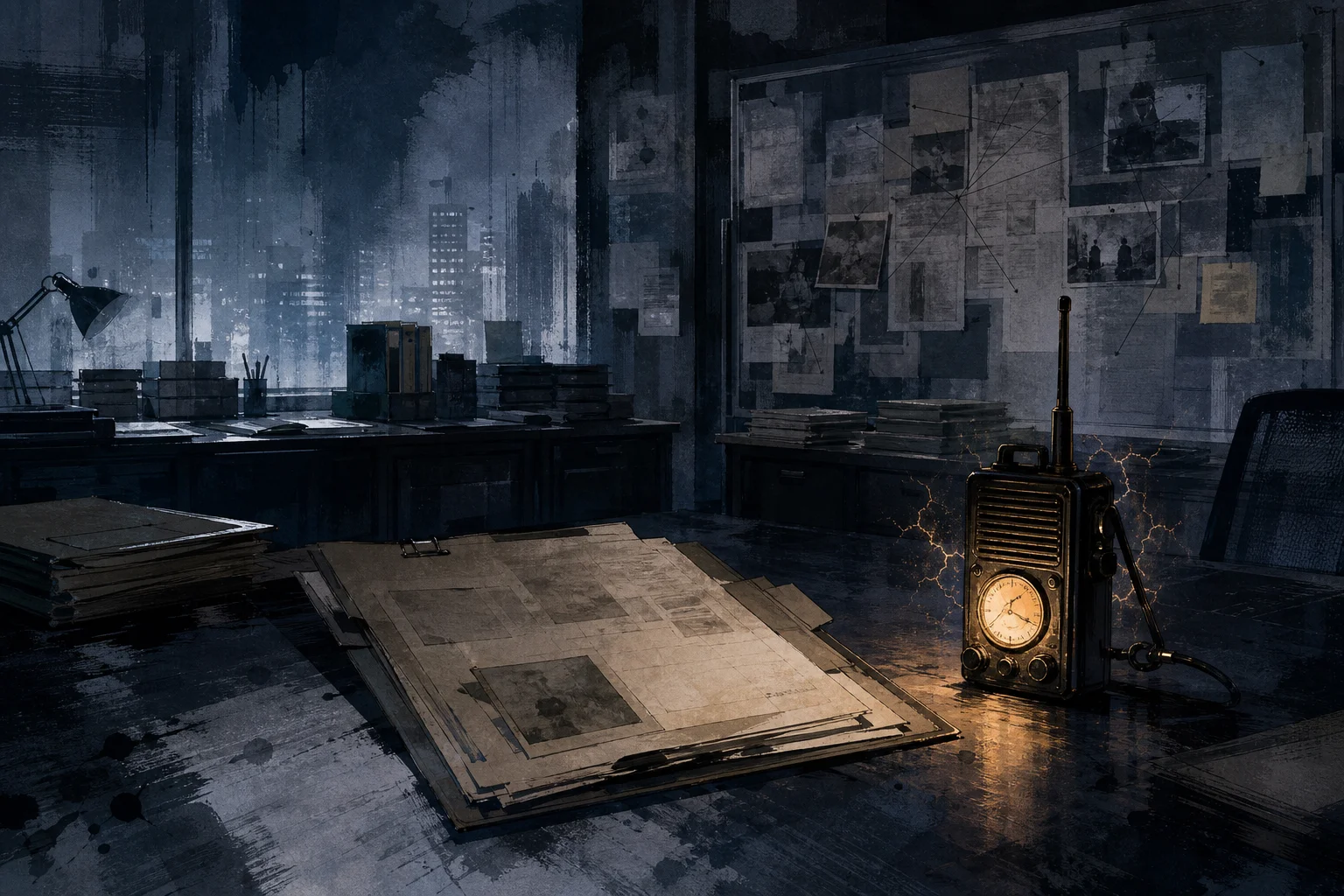
The walkie-talkie gives them a miracle.
It does not give them mercy.
Lee Jin-hyung is identified through Bus 95
The modern investigation starts with a trap that almost works. Lee Chun-goo’s fingerprints are on the broken glass from Jung Kyung-soon’s murder scene, and CCTV places him where he should not have been. On paper, that makes him the South Gyeonggi killer returning after 26 years to clean up evidence.
Hae-young rejects the easy answer because the details refuse to line up. Chun-goo was driving Bus 95 when Choi Young-shin was wrongly arrested in 1989. The profiler math is wrong too. The original killer was believed to be in his early twenties, socially isolated, and inexperienced in relationships. Chun-goo is too old, too visible, and too tied to the bus route in a different way.
The missing piece is his son.
At Sehoon Rehabilitation Hospital, Hae-young finds Lee Jin-hyung registered under Chun-goo as guardian. The former bus driver had quit his job after his son’s accident, using severance pay for treatment. Another driver remembers that Chun-goo raised Jin-hyung alone after his wife died, and that the son used to ride Bus 95 all day because the bus was where he felt close to his father.
That memory shifts the whole case. The victims did not share age, job, or neighborhood. They shared a route home. Bus 95 becomes the quiet connection running under every murder.
The flashbacks fill in the lie. Jin-hyung is on the bus. Hwang Min-joo gets off. Won-kyung gets off later. Jae-han chases after the wrong end of the clue because Chun-goo, trying to protect his son, tells the police no one got on at the Hyunpoong stop. One father’s false statement does not only protect a killer. It sends the investigation toward Choi Young-shin, costs another woman her life, and leaves the victims’ families with 26 years of wrong answers.
Chun-goo’s love for his son is never treated as noble. It is shown as narrow, selfish, and vicious in its consequences. He can look at Jin-hyung’s ruined body and call that punishment enough. He cannot look at the women who died, or the families who had to live after them.
Jae-han loses Kim Won-kyung twice
The strongest stretch belongs to Jae-han after Won-kyung’s death. Hae-young asks across the radio whether the last victim survived, and Jae-han answers from a place no file can reach.
To Hae-young, the victims have been names, jobs, discovery times, and locations. To Jae-han, Won-kyung was alive days ago. She comforted him. She smiled at him. She teased warmth out of an awkward young officer who did not know what to do with kindness.
“She was alive just a few days ago.”
That line carries the case out of procedure and into grief without leaving the investigation behind. Jae-han is not angry because a clue failed. He is angry because a person who made crab stew at home, worked late, and tried to hand him movie tickets is now a body he could not reach in time.
Hae-young has to become the one who holds him back. The man in 2015 knows what revenge would cost the man in 1989, so he tells Jae-han not to kill the culprit. If Jae-han crosses that line, he becomes a criminal too. It is a hard reversal. Hae-young spends so much of the early series treating the past as a crime scene he can revise. Here he has to treat Jae-han as a living detective who can be broken by what he sees.
The radio cuts out before Jae-han can fully hear the plan, and that silence matters. These transmissions do not open whenever the detectives need them. They arrive briefly, under their own strange weather, and disappear before comfort can settle. Hae-young can pass information backward. He cannot stand beside Jae-han in the alley.
So Jae-han carries the failure alone.
Soo-hyun finds Jung Kyung-soon’s hidden evidence
In 2015, Chun-goo’s confession puts the cold case squad against the police institution around them. Gyeonggi Police want closure. The commissioner is preparing a public briefing. The story is ready: a notorious killer, pressure from renewed investigation, a confession, and a press room waiting to applaud the organization that finally caught him.
Soo-hyun refuses to let that version harden.
The actual evidence trail runs through Jung Kyung-soon. Before Chun-goo killed her, she had been threatening him. Hae-young reasons that she must have kept proof of Jin-hyung’s guilt somewhere away from her own house. When the statute of limitations disappeared for violent crimes before 2000, that proof became valuable again. If she checked on it after the October 1 legal change, her movements could lead the team to it.
The search is wonderfully practical. Hae-young reads her messy room through clothing, weather, worn sleeves, perfume, and an old bus ticket to Sunyang. Soo-hyun does not waste time pretending the lead is elegant. She goes with him, pushes through the pressure from above, and lets the work stay physical: drawers, coats, storage boxes, a relative’s house, a place Jung had visited without explanation.
They find what the first investigation missed.
At the press conference, Soo-hyun takes the evidence into a room already prepared for a false conclusion. The proof carries Won-kyung’s blood and the killer’s DNA. Lee Jin-hyung, paralyzed after 1989 and hidden in a hospital bed for decades, is named as the South Gyeonggi serial killer.
Soo-hyun’s confrontation with Chun-goo is the moral center of the reveal. She names the victims one by one: Choi Eun-young, Park Soon-hee, Kim Yoon-joo, Kim Mal-soon. She forces him to look at people, not a case number. He says his son already paid. She answers with the lives he helped erase.
Then the 1989 truth arrives. Jae-han confronted Jin-hyung and attacked him after realizing Chun-goo would never admit the truth. Jin-hyung’s paralysis was not an accident. Jae-han went to Chun-goo afterward, prepared to turn himself in and asking him to make his son do the same. Chun-goo buried both crimes under the same lie.
The cruelty is not only that he hid a murderer. It is that he called that hiding suffering.
Hae-young remembers Sun-woo after Soo-hyun tells him to find a way
After the case breaks, Soo-hyun finds Hae-young shaken by the body and gives him advice from experience. Drink, punch something, do whatever helps. Dead bodies do not get easier, she says. Murder cases do not become routine because a detective sees enough of them.
Hae-young answers quietly that this is not his first dead body.
That line opens the Inju wound. The memory is blunt: the headline about the high school gang rape case, his mother calling for Sun-woo, and Hae-young finding his brother’s body. The first episode had already tied his childhood to a police failure, but Episode 04 places that grief beside the South Gyeonggi case. Hae-young did not become a profiler because death fascinated him. He became one because the living failed his family, and because somebody had to learn how failure gets built.
Young Soo-hyun and young Jae-han carry a softer echo of the same lesson. In 1989, Soo-hyun cries after seeing a body. Jae-han gives her food, tells her the other detectives cry too, and explains why they still have to catch culprits. The families have cried enough tears to make an ocean, he says, and the detectives can lessen only a tiny amount of that pain.
It is not grand. It is work.
That is why Hae-young keeps the final transmission restrained. He tells Jae-han they caught the South Gyeonggi killer, but the evidence cannot help him in 1989 because the science of his time cannot read it. Then he gives him the only honest credit he can.
“You are the one who caught him.”
Jae-han left the evidence behind. Hae-young and Soo-hyun lived in the time that could use it. The case closes because two timelines did the same job across a gap neither side fully understands.
What works
- The Bus 95 clue gives the procedural work a clean line. It links geography, witness memory, victim movement, and profile mismatch without turning the clue into a lecture.
- Chun-goo’s false confession gives the case a painful human shape. His love for Jin-hyung is real, but it is also the reason he abandons every other family in the room.
- Jae-han’s grief over Won-kyung gives the South Gyeonggi case a face without exploiting her death. She is remembered through work, kindness, awkward affection, and the gift she never got to give.
- Soo-hyun’s press-room intervention lets her authority matter. She does not win through swagger. She wins because she keeps following the evidence after everyone else wants the simpler story.
- The Sun-woo memory hits at the right moment. Hae-young’s private history does not hijack the case; it explains why the case has been cutting him so deeply.
What stumbles
- The press briefing sequence moves fast enough that the evidence handoff can feel slightly convenient. The trail from Jung’s storage to a national confession reversal is clear, but the timing is compressed.
- Jin-hyung remains more outline than person in this hour. That choice keeps attention on the victims and Chun-goo’s lie, though it also makes the killer feel colder and less specific than the damage around him.
- The preview tag packs in a new kidnapping case, Hae-young’s father thread, and warnings about the transmissions. It does its job, but it arrives after an ending that could have used a little more quiet.
What this sets up for Episode 05
Episode 05 points toward a 1995 timeline and a kidnapping case, but the bigger setup is emotional. Soo-hyun is still searching for Jae-han in 2015, checking unidentified remains for a man with a metal plate in his shoulder. Hae-young now knows the transmissions can solve cases and still leave scars. Jae-han has learned that his choices can reach the future, even when his own present gives him no victory anyone can see.
That is the dangerous lesson going forward. The radio lets Hae-young change records, save victims, and expose killers. It also leaves new losses, new guilt, and new versions of old pain. Hae-young’s final warning in the preview says the quiet part aloud: these transmissions may have started for a reason, but that does not mean they should have started at all.
Rating: 9.0/10
More episodes from Signal — Kim Eun-hee's time-bridge cold-case thriller, episode by episode. Jump to any episode in the season:
Where to go next
Reviewed by Mira Vance · QuizFandom Editor & Lead Reviewer. Every rating is an honest per-watch assessment from the desk that also writes the quizzes — not a press release rehash.