Avatar: The Last Airbender S2 Episode 4 Review: "The Water Falls, the Stones Emerge" — Long Feng cages Aang with kindness, Toph buys a Beifong secret, and Azula walks through Ba Sing Se's gate
What happens — the short version (spoilers)
- Toph blindfolds Aang and teaches him to feel life under stone instead of treating earthbending like force.
- Long Feng tells Aang to trust his heart while Professor Zei warns Sokka that people vanish in Ba Sing Se.
- Sai's room is emptied, Joo Dee explains it away, and Long Feng tells Aang to stay out of trouble.
- Jet points Li toward the Fire Nation district, where Zuko finds refugees who refuse Ozai.
- Toph buys proof of Beifong war contracts, and Sokka follows her into a haiku fight.
- Aang learns Long Feng controls the Dai Li, meets a new Joo Dee, and Azula enters Ba Sing Se disguised as a Kyoshi Warrior.
Avatar: The Last Airbender* Season 2 tightens Ba Sing Se from refuge into surveillance machine, and the trap works best when it sounds like help. "The Water Falls, the Stones Emerge" has Aang learning to feel what is hidden under stone while Long Feng teaches him to trust the part of himself the city is already using. Around him, Sai's disappearance turns polite guidance into evidence, Toph discovers her family money is tangled in Fire Nation weapons, and Zuko finds Fire Nation exiles who hate Ozai more openly than he can. The hour keeps asking who gets protected by silence, then lets Azula answer by choosing the front door.
Toph wakes Aang with nicknames, blindfolds him, and teaches him to feel the life under stone
Toph’s earthbending school has become a daily assault on Aang’s dignity, which is probably healthy for him. She cycles through nicknames like an alarm system: Twinkle Toes, Windbreaker, Melonhead, Snorebender, Flight Risk, Boomerang, Bald Sing Sae. Aang is improving, but he is still an Airbender trying to learn an element that punishes flinching.
The lesson this time is distance. Toph can knock a date away from Sokka with a tiny pillar from across the room, then pretend that is normal teaching material. Aang wants to know how he can bend something he cannot see, so she gives him the answer her whole body has been trying to teach him: stop letting sight be the only way the world exists.
Her explanation is one of the hour’s cleanest pieces of fantasy language. There is, she says, “a secret life of the world” beneath sand, rock, and everything Aang thinks he knows. If he can feel it, he can change it. The phrasing matters. Earthbending is not strength first. It is contact first, and Aang keeps looking past the contact right under his feet.
Long Feng tells Aang to trust his heart, while Professor Zei warns Sokka that people vanish too
Long Feng gives Aang the opposite lesson in a softer room. Aang asks about the secret life under things, and Long Feng turns the question away from suspicion. Aang sees good in everyone, he says, and brings that goodness out. Trying to feel beneath appearances sounds, in Long Feng’s mouth, like distrusting the way Aang naturally sees the world.
That is the cleverest danger in Ba Sing Se. Long Feng does not tell Aang to be cruel. He tells him to remain himself, then places that kindness exactly where it benefits the Dai Li.
Sokka and Katara get the rougher version of the same city. Professor Zei arrives with library scraps, complains that the university shelves have been stolen from and censored, then lets the bigger truth slip. In Ba Sing Se, books are not the only things that disappear. Teachers who ask the wrong questions and students who organize protests get taken.
Sokka is trying to build a telescope because Sai is missing and the comet proof is still out of reach. Zei hears that and finally names the fear: the Dai Li. The royal guards are no longer background etiquette. They are the reason the city can smile while making people impossible to find.
Sai’s room is emptied, Joo Dee explains it away, and Long Feng tells Aang to stay out of trouble
Sai’s apartment turns concern into proof. The messages Amita sent to Katara are gone. Sai’s things are gone. Amita has not seen him since the group’s first night in the city, and nobody has received her calls for help.
Then Joo Dee arrives with the exact amount of brightness required to insult everyone in the room. Sai is not missing, she says. He has a highly coveted position with the Ba Sing Se Royal Engineers and is housed at the palace. No one has heard from him, but that only gives Joo Dee more room to say the sentence Ba Sing Se keeps weaponizing: everything is fine.
Long Feng improves the lie by giving Aang a piece of the truth. Sai was brought in by the Dai Li, questioned as a Fire Nation spy, and tied to the old Omashu mess with Bumi. Aang tries to explain the difference between spying for the Fire Nation and spying to keep Omashu safe, but even he hears how bad it sounds.
The advice Long Feng gives is poison wrapped in patience. Do nothing. Stay out of trouble. If the Dai Li are watching, prove that Aang is worthy of an audience with the king by behaving. Aang wants a grown-up with power to help him so badly that the leash almost feels like strategy.
Jet points Li at the Fire Nation district, and Zuko finds refugees who refuse Ozai
Zuko’s Ba Sing Se life keeps shrinking into names he can survive. At the tea shop, people know Iroh as Mushi and call him Uncle because he is sweet and shy. Zuko hears that like a foreign language. Then Jet finds Lee, clocks his misery, and offers him a night of “light rioting” against the reformed Fire Nation refugees living in the old stables.
The accusation is convenient: a restaurant burned, so it must be the Fire Nation district. Jet dresses revenge as civic concern, then asks Zuko to watch his back. Zuko does not join him. He goes to warn the people Jet wants to hurt.
At the old stables, Zuko meets a Fire Nation he has not been taught to recognize. These refugees call themselves true Fire Nation, live under Earth Kingdom suspicion, and reject “the warmongering tyranny of Ozai.” When Zuko corrects the elder to Fire Lord Ozai, the answer lands hard: Ozai is not his Fire Lord.
Zuko came to tell them danger is coming. The elder sees the blazing ring form in the way he catches fruit and tells him he cannot cut the fire from his soul. That should sound like pride. Here it sounds like a warning.
Toph buys proof of Beifong war contracts, and Sokka follows her into a haiku fight
Toph’s secret is funnier on the surface and uglier underneath. Sokka hears her sneaking out every night, tries to tell her Aang will notice once his earthbending improves, and then almost says the wrong thing about how Aang acts around Katara. It is a beautiful little Sokka panic spiral. Toph hears the part that matters anyway: if Aang learns the truth, the group will have another problem.
The problem is Lau Wong, a shady little man with documents tying Beifong-controlled companies to pistons, gears, sheet metal, and a Fire Nation military factory in Jang Hui. Toph’s parents always say business knows no borders. Ba Sing Se may insist there is no war inside the walls, but the money has apparently been crossing them just fine.
Sokka follows her, Katara buries Joo Dee in cabbage shopping, and the chase lands in a poetry class where Toph and Sokka have to argue in public haiku. The setup nearly tips into farce, then Sokka steadies it by protecting a friend in the only format the room allows.
Toph needles him about contributing nothing to a team of benders. Sokka answers awkwardly, then sincerely: he can withstand heat for his team. Toph calls blindness her strength, not a burden, and wealth the burden Sokka should understand. By the time he finally breaks meter to say he cares about his friends and Toph is one of them, the joke has turned into a promise. He will not tell the others. He is, for once, solid as steel.
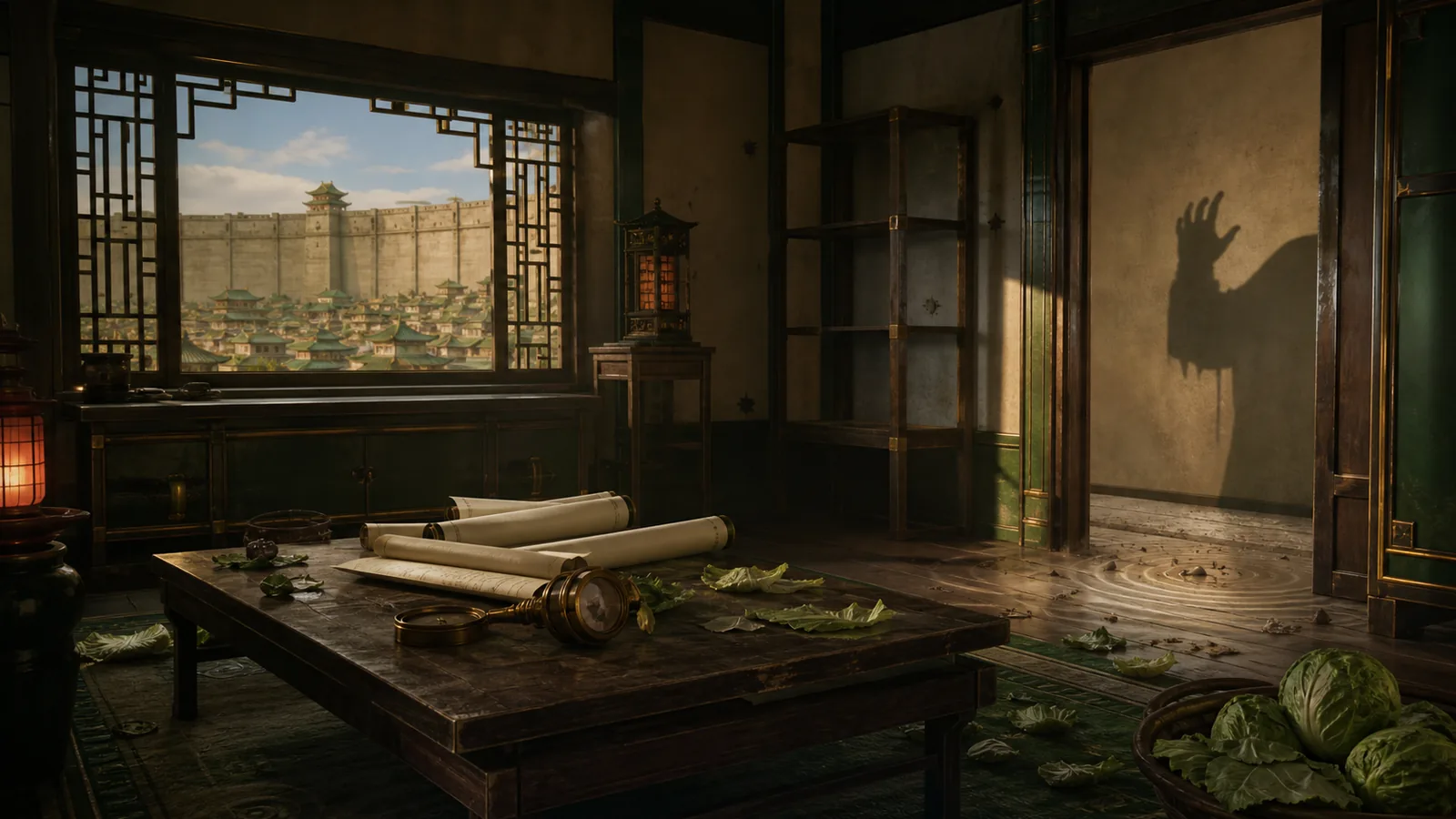
Iroh is robbed at the siege memorial, and the old stables riot exposes a Fire Nation deserter
Iroh’s walk through the Lower Ring is quiet until the city throws his past on a wall. A memorial commands people to remember the siege, the dead, the names. Iroh was the Dragon of the West before he was a tea uncle in exile, and the episode lets that history hit him before anyone says Lu Ten’s name.
When a starving man tries to rob him, Iroh does not reach for pride. He looks at all those names and says it should have been him that day. The robber breaks before the threat does. He is hungry, not murderous, and Iroh gives him a place to sit instead of a lesson.
That mercy echoes into the old stables. The mob arrives ready to punish every Fire Nation refugee for one fire, every person who gave shelter for one fugitive, every old wound with a new body. The elder confesses he was once an officer ordered to do terrible things, then deserted and saved Earth Kingdom lives. It does not calm the room. Pain that has been organized into revenge rarely wants new information.
The fight is messier than the idea behind it. Zuko’s warning becomes action, Katara sees someone helping Fire Nation people and asks why, and Iroh later offers the starving robber a chance at tea-shop work. The hour’s gentlest answer comes after that, when Iroh stands alone and says, “If only I could have helped you, my son.” The city remembers the siege as public history. Iroh remembers it as a father.
Aang follows General Sung’s soldier, learns Long Feng controls the Dai Li, and meets a new Joo Dee
Sokka’s plan almost works by being wrong. Aang follows the man tailing him, expecting Dai Li headquarters, and ends up with General Sung instead. The Outer Wall commander has been lying in public because the palace is full of Dai Li agents. Outside the wall, a massive Fire Nation army is assembling. Inside the city, the Dai Li and the army do not talk because control matters more than survival.
General Sung also brings Suki into the hour without using her as a rescue prize. He trusts Aang because Suki told him what Aang once said: where he comes from, people help each other. That line cuts through Aang’s defensiveness long enough for him to explain the comet, Sai, and the proof they still need.
Then Sung says the thing Aang has been fighting not to hear: “Long Feng is the Dai Li.” Aang rejects it instantly. Long Feng is his friend. Long Feng understands the pressure. Long Feng has been helping. Sung only has to ask whether Long Feng has ever actually let him meet the king.
Aang storms to Long Feng and demands the Earth King anyway. Long Feng answers with the city’s prayer: “There is no war in Ba Sing Se.” The Joo Dee who appears beside him has a different face, and that is somehow worse than a confession. By the time Aang returns to Katara, Sokka, and Toph, the sentence is simple: they are in big trouble.
Azula loses the siege plan, takes the mission, and enters Ba Sing Se as the Kyoshi Warriors
Azula’s thread starts with the Kyoshi Warriors and ends with their name at the city gate. The opening fight tells the audience enough: fans feed flames, the Kyoshi name still carries trust, and the route into Ba Sing Se may be better worn by someone people already expect to welcome.
Then the Fire Lord cancels the attack. The general tries to make it sound strategic. Azula makes him tell the truth: Ozai gave no reason. Ty Lee reads the empty space better than anyone in the tent. If Ozai stopped the siege, maybe he decided Azula’s mission matters more than the army’s.
Azula hears that as permission. “My plan. My attack. My mission.” By the end, the Fire Nation army is no longer the problem Ba Sing Se has to worry about. Its general is presented as defeated, and the renowned Kyoshi Warriors are welcomed back inside the walls.
That is the hour’s cruelest punch line. Ba Sing Se built an entire system to keep war out, and Azula walks in wearing the shape of rescue.
Tiny details worth clocking
- Toph’s nicknames are a running gag, but “Bald Sing Sae” also marks how completely Ba Sing Se has entered the group’s daily life.
- Long Feng telling Aang to trust his heart sounds kind until you place it beside Toph’s lesson about feeling what sits underneath appearances.
- The cabbage merchant insisting his cabbages are the roundest in Ba Sing Se turns a familiar joke into Katara’s best spycraft of the episode.
- Toph’s haiku line that “blind is no burden” refuses the softer pity everyone keeps trying to place on her.
- The new Joo Dee does not need to explain anything. A different face with the same name tells Aang enough.
Final verdict
“The Water Falls, the Stones Emerge” is a dense middle chapter, and its best choice is letting Ba Sing Se become frightening through useful people. Long Feng helps. Joo Dee guides. General Sung lies at the palace to survive. Even the Beifong fortune, far from Toph’s old house, reaches into a Fire Nation factory through contracts and components. The city has no single villain in a robe. It has a lot of polished systems teaching good people to wait for permission.
The crowding shows in places. The old stables riot has strong material around Fire Nation guilt, refugees, and Iroh’s grief, but the fight itself moves faster than the emotions around it. Azula’s Kyoshi Warrior turn is chilling as a closing move, yet the episode withholds enough connective tissue that it lands more like a trapdoor than a fully played infiltration. Still, the braid holds. Aang learns to feel the secret life under stone at the same time he learns his own kindness has been handled from below.
By the end, the army outside the wall almost feels like a distraction. The real breach is already inside under a trusted name.
Rating: 8.4/10 — A smart, overstuffed Ba Sing Se hour that makes trust feel dangerous and sets up a sharper collapse, even when a few threads have to sprint to the gate.
More episodes from Avatar: The Last Airbender S2 — Aang, Toph, Zuko, and Ba Sing Se, episode by episode. Jump to any episode in the season:
Where to go next
Reviewed by Mira Vance · QuizFandom Editor & Lead Reviewer. Every rating is an honest per-watch assessment from the desk that also writes the quizzes — not a press release rehash.