Bridgerton S03E1 Recap: "Out of the Shadows" — Penelope Steps Into View
What happens — the short version (spoilers)
- Francesca presents beautifully before Queen Charlotte, but the queen withholds the season's diamond declaration.
- Colin returns from abroad with new polish, and Penelope notices how easily he performs for the room.
- Penelope rejects Portia's citrus gowns and asks the modiste for a Parisian look that might help her find a husband.
- Cressida tears Penelope's gown at Lady Danbury's ball, humiliating her just as Lord Debling shows unexpected kindness.
- Penelope confronts Colin about saying he would never court her, and he later apologizes by offering husband-finding lessons.
- Lady Whistledown prods Queen Charlotte and wounds Colin by questioning whether his new personality is genuine.
Penelope changes the dress, Colin changes the posture, and London quickly proves it notices the wrong things first.
Bridgerton, Season 3, Episode 1 — “Out of the Shadows” Netflix
London is back in season. The carriages roll, the mamas measure prospects, and Lady Whistledown returns to remind everyone that privacy is a luxury no one in the ton can actually afford.
For Penelope Featherington, that is more curse than comfort.
She enters Season 3 with two broken friendships pressing on her at once. Eloise knows her secret and will not forgive it. Colin returns from abroad with a tan, a wardrobe, and a confidence that makes every young lady flutter, except the one person who remembers what he said when he thought she could not hear him.
That is the tender little trap of “Out of the Shadows.” Everyone wants to be seen differently. Francesca would rather not be inspected at all. Colin wants his new ease accepted without question. Eloise wants a new friendship to cover the bruise of an old one. Penelope wants a life outside her mother’s house badly enough to become visible, even if visibility has never been kind to her.
Unfortunately, visibility is London’s favorite weapon.
Francesca Bridgerton presents herself while Colin Bridgerton returns from abroad
The morning belongs to Francesca before she has any interest in claiming it.
Violet frets outside her door. Hyacinth and Gregory gossip in the hallway. Eloise notes that this year is not last year, which is a sentence that would carry more comfort if anyone in that house believed a Bridgerton debut could ever be casual.
Francesca is not upstairs panicking. She is downstairs playing the pianoforte, already dressed, already fed, and already treating her presentation like a task on an ordinary day. Her calm nearly works on Violet until the family clocks the tune: Mozart’s funeral march.
That tells us plenty.
Francesca is not rude. She is not icy. She simply has no appetite for the spectacle everyone else expects her to enjoy. Presented before Queen Charlotte, she acquits herself beautifully, but the queen withholds the season’s great public benediction. No diamond. No easy headline. No clear prize for the mamas to chase.
Then Colin arrives and makes the room do what Francesca would rather avoid.
He glides in late, dressed with continental polish, answering his family’s teasing with a new lightness. Benedict and Anthony recognize him, but barely. Violet asks what foreign sun made him so sturdy. Colin says his time away gave him proportion, and Hyacinth immediately wants some for herself.
At the presentation and later among the young ladies, Colin knows exactly how to perform. He smiles. He flatters. He withholds just enough travel detail to make every blank space sound scandalous. The old Colin used to seek approval. This Colin collects it.
Penelope notices the change at once.
So does Eloise.
Penelope Featherington trades citrus gowns for a husband hunt
The Featherington house has money again, or at least a story about money.
Portia sells society on Aunt Petunia’s fortune, a lie so fragile that even Varley worries a dead spinster with no donkey cart may not convince London. Portia presses forward anyway. The family has standing to reclaim, daughters to maneuver, and one urgent legal fiction to protect.
The estate will go to whichever Featherington daughter produces a male heir first.
That news sharpens Penelope’s problem. Prudence and Philippa are not merely tiresome sisters anymore; they are potential future rulers of her home. Prudence already imagines banishing Penelope’s books to the cloakroom. Philippa is no kinder, only less exact. Portia assumes Penelope will always remain close enough to care for her.
So Penelope makes a decision.
No more citrus. No more sour colors. No more dressing like a daughter her mother can arrange on a shelf. She goes to the modiste and asks for something Parisian, something that might help her take a husband who is sensible, kind, and willing to allow her privacy.
The privacy matters, obviously.
Penelope is still Lady Whistledown. She is also still a lonely young woman who wants a door out of a house that keeps shrinking around her. Her new gown is not vanity. It is a practical attempt at escape, stitched in a color that refuses to apologize for her.
That makes the ball feel like a test she has set for herself.
It also makes the fall hurt more.
Eloise Bridgerton keeps Penelope’s secret and chooses Cressida Cowper
Eloise’s summer has done something odd to her.
She comes back from the country with Cressida Cowper on her arm, a copy of Emma in hand, and a tone that sounds almost pleased to be done losing battles. Colin gives her a rare Bavarian text on women’s rights, and she brushes it aside because she is reading a novel now. Austen, at least, gives her friendship pains she can believe.
That is funny.
It is also bleak.
When Penelope asks for a private word at the modiste, Eloise does not erupt. She does something colder. She tells Penelope she kept the secret because she does not want to keep revisiting the past. She does not need explanations. Penelope has her life. Eloise has hers.
And yes, that life now includes Cressida.
The Cressida friendship is not played as simple revenge, which helps. Cressida is still Cressida; she is sharp, status-hungry, and perfectly capable of cruelty. But she also admits that the season pits young ladies against one another until friendship itself becomes difficult to keep. She has been lonely too. Eloise hears that.
It does not make Cressida safe.
It does make Eloise’s choice more understandable. Penelope’s betrayal left a space, and Cressida walked into it with attention and unexpected kindness in the country. In a world where every girl is trained to compete for notice, being chosen as a friend can feel dangerously close to rescue.
Penelope sees only the danger.
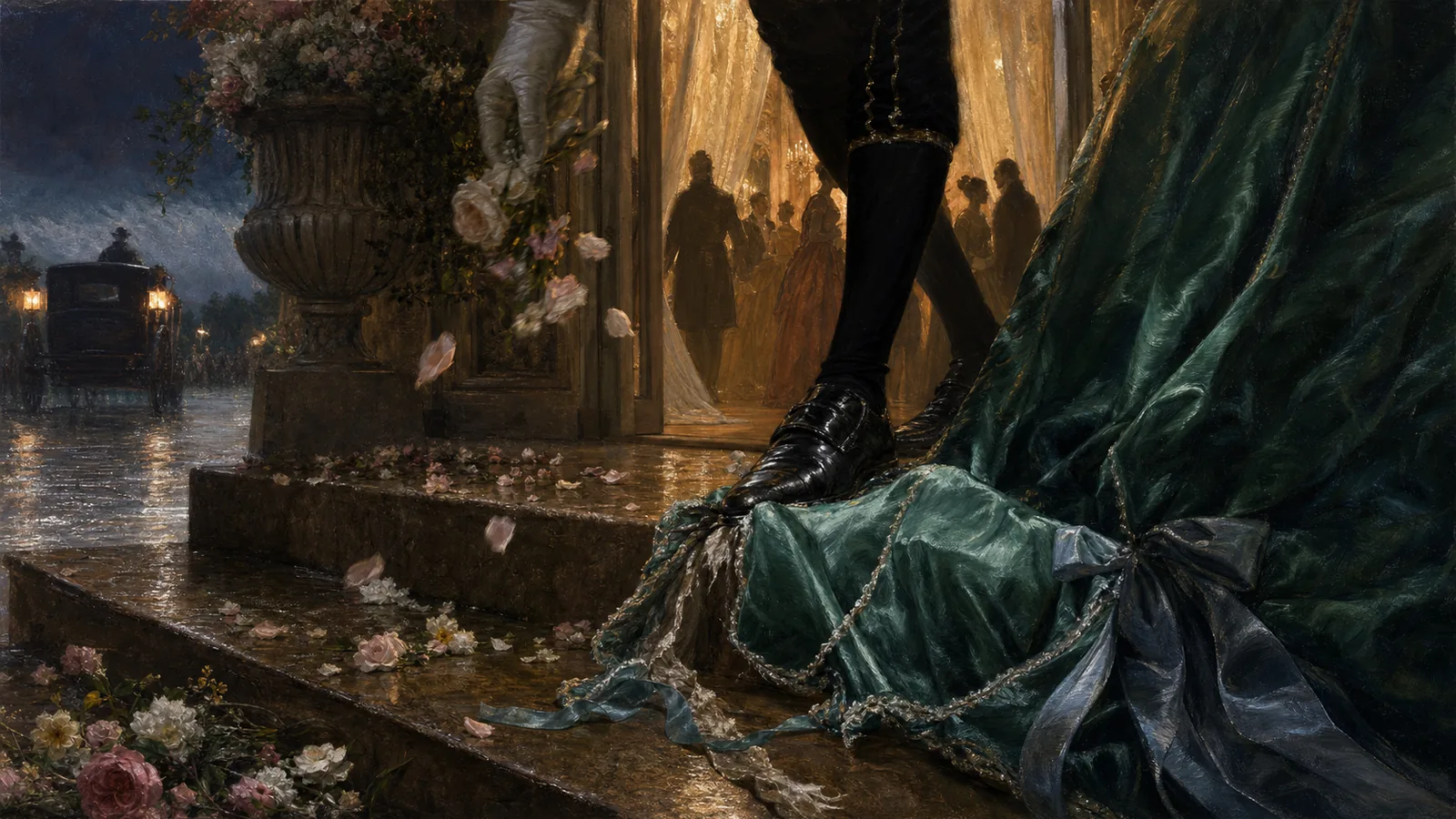
Lady Danbury’s ball leaves Penelope exposed and Francesca overwhelmed
Lady Danbury’s first ball gives Penelope the entrance she wanted.
She arrives in a new gown, and for a breath, the room does exactly what she hoped it might. People stare. The Featheringtons stare. Colin stares. Penelope looks like someone who has stepped out of a family joke and into her own reflection.
Then she has to talk.
That is where the fantasy thins. Penelope’s first attempt with a lord becomes a spiral of correction and apology. She compliments his evening dress, clarifies that she does not mean his gown, then clarifies the clarification until the poor man retreats under the polite cover of Whistledown risk. It is painful because Penelope is not foolish. She is too aware of herself. Every sentence arrives already frightened of the next one.
Francesca understands a different version of the same discomfort.
The gentlemen circle her with questions that sound less like conversation than appraisal. Hobbies. Interests. Desires. Despised things. Francesca expected a dance card, not an examination. She escapes to the wall, where Penelope finds her and offers advice from long residence there.
Their exchange is gentle. Penelope tells Francesca that once someone finds the wall, leaving it becomes difficult. Francesca says at least the wall is not interrogating her. For a moment, neither young woman has to pretend that attention feels flattering.
Then Lord Debling approaches Penelope with surprising kindness. He notices Cressida’s sneer, shrugs off the social frost, and seems amused by Penelope’s hidden edge.
Cressida turns it into humiliation.
She steps on Penelope’s gown, tears the fabric, apologizes loudly, and then makes sure the room understands the insult. Eloise sees the cruelty. Colin sees Penelope leave.
Penelope does not wait to be pitied.
Colin Bridgerton apologizes and offers Penelope lessons
Outside the ball, Colin follows Penelope and tries to be kind in exactly the wrong way.
He compliments the dress. She hears mockery. He asks why she is leaving without a chaperone, and she answers, “Spinsters don’t need chaperones.” It is a brutal little line because Penelope says it as if she is reporting a fact already written on her forehead.
Colin finally asks whether something is wrong between them.
So Penelope tells him.
She heard him at her mother’s ball last season. She heard him tell other men he would never court her. Colin wants privacy for the conversation, which only deepens the wound. Penelope asks if he is embarrassed by her, and once the accusation is in the air, the distance between them stops being sweetly awkward and becomes real.
It is good that she says it.
Penelope has spent too many seasons absorbing embarrassment because fighting back would make her more visible. Here, with her gown ruined and her hope bruised, she lets Colin see the cost of being treated like a joke by someone she trusted.
His apology the next day is careful in a way his charm rarely is. He comes to her house, owns the callousness, and tells her he seeks her out because she lifts his spirits and changes how he sees the world. Penelope admits it has been vexing to watch him move through society with ease while she prays for that comfort and never finds it.
Then Colin makes the offer that will make half the ton faint if they ever learn of it.
He will help her find a husband. Charm, he says, can be taught. They will have lessons. He wants to earn back the favor of the person who has always made him feel appreciated.
Penelope agrees with a handshake and one word: “Friends.”
No one in that room is being honest with themselves.
Delicious.
Lady Whistledown challenges Queen Charlotte and wounds Colin
Penelope may have agreed to Colin’s help, but Lady Whistledown still has ink on her fingers.
Her new issue arrives early, and she uses it to prod the queen over the missing diamond. Queen Charlotte has resisted naming one, partly out of pride and partly because the game no longer belongs entirely to her. Whistledown frames the season as a match waiting for the queen’s serve.
Charlotte takes the bait because of course she does. She loves a game, especially one she expects to win.
But Penelope’s sharper mistake is closer to home. In the same issue, she writes about Colin’s new personality and questions whether even he knows who he is now. It is not false, exactly. Eloise has asked a version of the same question. Colin’s family has joked around it. Penelope herself has been wounded by the ease he wears in public.
Truth does not make the cut cleaner.
Colin reads it, and his hurt turns toward Whistledown. He says he will never forgive her for what she did to Lady Crane and Eloise, then asks whether Eloise has any idea who the writer might be. If he ever finds out, he promises ruin.
Penelope stands there with the secret between them.
That ending gives the premiere its real charge. Colin wants to help Penelope step into society, and Penelope has just wounded him from behind the one mask he can never be allowed to recognize. Their new bargain begins on a handshake, a lie, and a gossip sheet sharp enough to draw blood.
In this marriage mart, romance will have to survive the paperwork.
Verdict
“Out of the Shadows” is a brisk, satisfying return because Season 3 begins with embarrassment instead of grand destiny. Penelope’s makeover does not magically fix her confidence. Colin’s charm does not erase his carelessness. Eloise’s new friendship does not make her pain less messy. Francesca’s debut does not turn her into a glittering social creature overnight.
That restraint suits the premiere. The romance is already humming, but the pleasure is watching everyone misjudge what kind of visibility they actually want. Penelope steps forward, gets hurt, and still accepts the hand extended to her. Colin enjoys being admired until one paragraph punctures the performance. Francesca learns that notice can feel like pressure. Eloise learns that choosing a new friend is easier than forgiving an old one.
A little slower than a peak Bridgerton ball, yes, but rich with promise, social comedy, and one very dangerous handshake.
Rating: 8.2/10
More episodes from Bridgerton — Season 3 — Penelope and Colin, and Whistledown unmasked, episode by episode. Jump to any episode in the season:
Where to go next
Reviewed by Mira Vance · QuizFandom Editor & Lead Reviewer. Every rating is an honest per-watch assessment from the desk that also writes the quizzes — not a press release rehash.