Bridgerton S03E4 Recap: "Old Friends" — Friends Become Something Else
What happens — the short version (spoilers)
- Lord Debling brings Penelope a plant, and Portia immediately treats the visit as family opportunity.
- John Stirling calls on Francesca, sits with her in comfortable silence, and later has music rearranged exactly as she imagined.
- Lord Debling asks Portia for permission to propose, while Portia tells Penelope that romance means security.
- Eloise visits Cressida's cold home, where Lord Cowper orders Cressida not to be seen with her again.
- Colin interrupts Penelope and Lord Debling's dance, prompting Debling to see Penelope's feelings and withdraw.
- Colin chases Penelope's carriage, confesses he has feelings for her, and asks whether she is going to marry him.
A practical proposal waits in one corner of the ballroom, but old affection has very poor manners once it decides to arrive.
Bridgerton, Season 3, Episode 4 — “Old Friends” Netflix
There are two kinds of courtship moving through “Old Friends.”
One is sensible. It arrives with a potted plant, a blessing from Mama, and a house large enough to make Portia Featherington see chandeliers where other people see feelings.
The other kind is inconvenient. It has been sitting across the square for years, pretending friendship is a tidy enough name for longing. It interrupts dances. It climbs into carriages after the proper thing has already gone wrong.
Penelope wants safety badly enough to consider a life built around Lord Debling’s long absences. Colin wants to be the easy, worldly man he has been performing all season. Francesca is pushed toward a marquess with royal approval, while John Stirling answers in music.
London keeps offering correct choices.
The heart, naturally, becomes a nuisance.
Lord Debling brings Penelope a plant while Violet questions Colin
Penelope’s morning begins with proof that the marriage mart has finally noticed her, and the Featheringtons react with all the dignity of people spying from behind curtains.
Lord Debling calls with a plant so Penelope can keep enjoying nature from her windowsill. It is awkwardly sweet, which makes it exactly right for him. Penelope, for once, answers without vanishing into apology. She has grown tired of the view and is glad to be in the room with him.
Portia wastes no time inserting herself. Prudence and Philippa whisper theories about blackmail, closets, and potions. Portia translates the visit into opportunity. Penelope’s happiness is already being measured for family use.
Across the square, Violet finds Colin in a mood he cannot charm away. He tries to dodge Francesca’s caller procession with a joke about eating all the biscuits, but Violet sees through him.
She asks about the question he raised at the previous ball: whether friendship can become love. Colin insists it was speculative and meant for Francesca. He is lying with the softness of a son who knows his mother can hear the truth before he says it.
Violet lets him go.
She does not look convinced.
John Stirling calls on Francesca before Lord Samadani arrives
Francesca’s courtship plot has a royal favorite, a prepared mille-feuille, and one unexpected earl.
John Stirling, Earl of Kilmartin, arrives to call on Francesca after their brief meeting at the Hawkins ball. Violet assumes he must be there for Francesca because there is no other available daughter in the frame, but the surprise is the silence.
Francesca and John sit together without filling the space. Hyacinth is baffled. Hyacinth jokes that silence may be a radical new method for discouraging suitors. Violet wonders if the two of them might actually be enjoying themselves.
They are.
Then Lord Samadani arrives, all polish and readiness, and John removes himself rather than compete. The marquess gets the pastry. John gets the look Francesca gives him as he leaves.
That difference matters.
Later, when Francesca and Violet cross paths with John outdoors, Francesca asks why he left so abruptly the other morning — when Lord Samadani arrived and he removed himself. John is the one who raises the missed occasion, saying he had hoped to see her at Lord Fuller’s collection opening. He admits he does not often attend society events unless good manners require it. She teases him for speaking only out of politeness, and he quietly points out that she stopped him.
Then a fiddler plays nearby, and Francesca says the tune would be sweeter in three-quarter time so a person could feel it. John does not flatter her. He listens.
That is his entire argument.
Penelope and Debling discuss a proposal as Colin unravels
Portia nearly ruins it by telling Penelope not to read too much. Men, in her view, enjoy explaining the world to women, and a woman who has already explained it to herself risks making a man feel unnecessary. Terrible advice, yes. Very Portia, also yes.
Debling finds Penelope with a book about northern voyages. Portia tries to make her seem adorably confused, but Penelope eventually gets room to speak for herself. She admits she is drawn to love stories because they carry connection and hope for a better life. Debling does not sneer. He likes that she has a passion.
Then he turns the conversation toward his own practical needs. He travels often. His work claims much of him. Could a wife be happy staying behind, tending an estate, if she had interests of her own?
He asks, in the language of a fictional book, how such a gentleman might ask for the lady’s hand. Penelope says he would ask her mother. When he asks whether the young lady would say yes, she tells him he would have to read the book.
Colin sees enough from a distance to lose the last of his composure. His misery follows him into paid company, where even pleasure fails to distract him, and then into a drinking circle where other men boast crudely about women from their travels. Colin tries honesty there, of all places. He asks whether it is lonely to treat desire like sport.
He has never looked less like one of them.
Debling asks Portia for permission to propose, and Portia reacts as though Providence has finally learned to take instruction.
She tells Penelope about Debling’s house, staff, curricles, and travels. She imagines the influence Penelope could have managing his estate. More importantly, she imagines the influence all of them could have through Penelope.
Penelope has not said yes. That fact seems almost rude to Portia. When Penelope hesitates over love, Portia turns cold in the familiar way. Love belongs in storybooks. Romance, to her, is “Security.”
Portia is not wrong about the danger. She is wrong about the hunger. Debling can offer privacy, room, and respect. He cannot offer the thing Penelope still wants after trying to talk herself out of it.
Colin receives a gentler version of the same lesson from Violet. He wants to stay home from the queen’s ball, but Violet sees the hangover, the sadness, and the strain. She reminds him that he has always been sensitive and warns him that living to please others can become painful.
Then she tells him Penelope may receive a proposal that night.
That is the sentence that gets him dressed.
Eloise visits Cressida while the Mondriches face the cost of rank
Cressida’s home explains more about Cressida than any ballroom insult ever could.
Eloise calls on her after noticing something wrong, and Cressida admits she has never had a friend visit the house before. The place feels less like a home than a mausoleum, and both young women laugh because the joke is accurate enough to be dangerous.
Then Lord Cowper enters and orders Cressida not to be seen with Eloise again. Friendship itself seems to offend him.
At the queen’s ball, Eloise lets Cressida apologize. She even offers distance if Cressida needs it. Cressida refuses. Her father will have to endure the friendship. That small rebellion suits her better than all the sharp remarks she has ever worn as jewelry.
The Mondrich marriage faces another version of society’s pressure. Will’s club is losing aristocratic accounts because the ton cannot decide what to do with a titled man who still works. Alice wants him at the ball and in their new life. Will wants to keep what they built. Lady Danbury warns Alice that the queen will not look kindly on that compromise.
Even the side flirtations know the theme: old lives are calling, and new ones are asking a price.
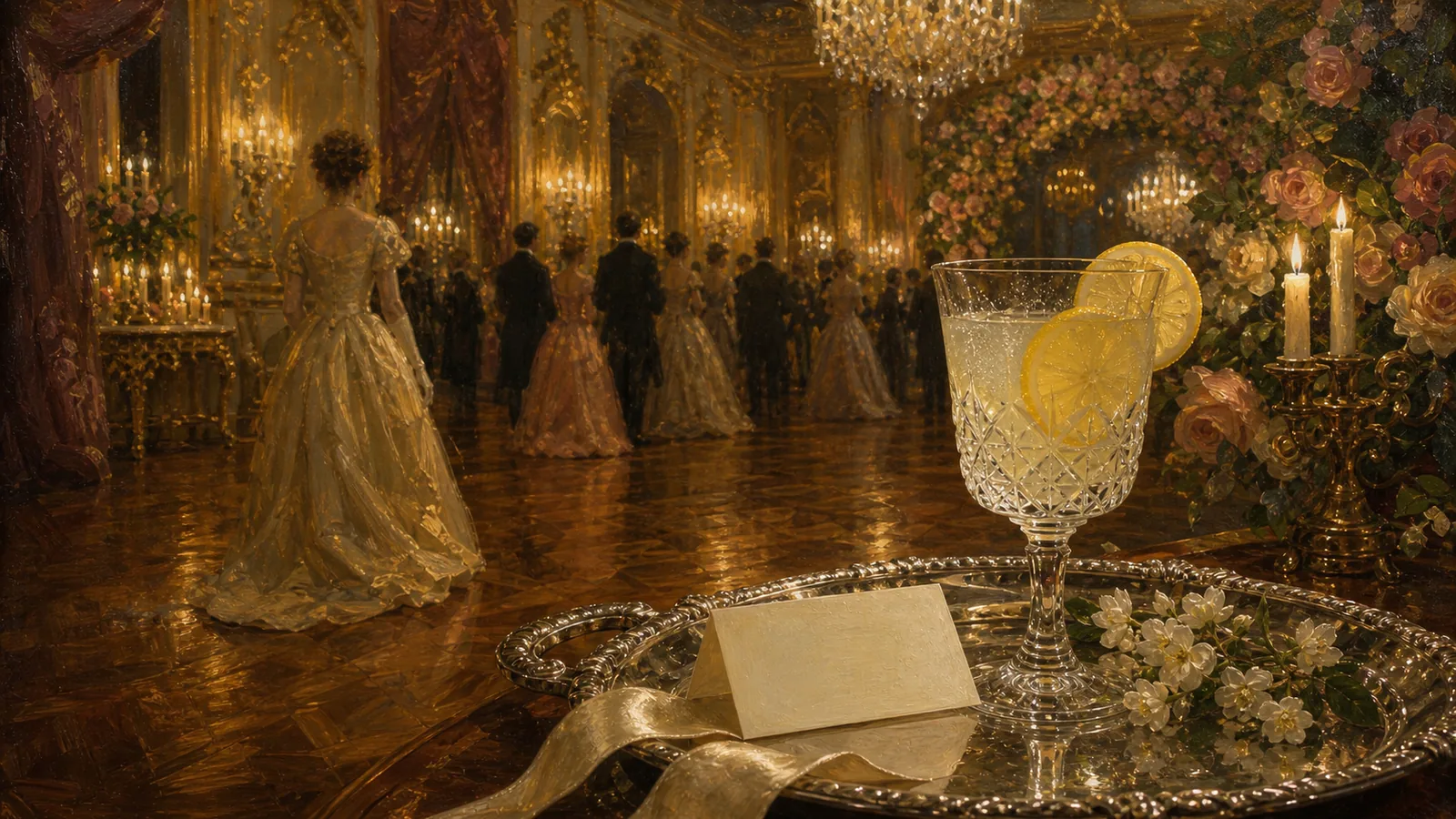
Francesca leaves Lord Samadani’s lemonade untouched
Queen Charlotte hosts a ball to celebrate her own good standing and to secure the match she believes she has already arranged for Francesca. Her Majesty watches her sparkler with satisfaction.
Francesca dances with Lord Samadani, and by the rules of the ton, everything is proceeding beautifully. He is handsome, favored, attentive, and approved from the very top.
Then John returns with the answer to Francesca’s passing comment about the fiddler.
He has the earlier music rearranged exactly as she imagined it. He admits he is not a man of many words and says he believes in “the power of a gesture.” For Francesca, who has been dragged through conversation after conversation by people trying to know her loudly, the gesture lands.
Lord Samadani arrives with lemonade at the wrong moment.
Francesca does not drink it.
That tiny social refusal tells the room more than a speech would. Queen Charlotte notices at once. Lady Danbury translates the disaster: the sparkler is not drinking the lemonade.
Francesca asks Violet to leave early. At home, she plays John’s rearranged music and tells her mother he made it exactly as she imagined.
Violet understands then.
Not every spark starts in public.
Colin interrupts Penelope’s dance and climbs into her carriage
Penelope gives Debling one last honest question on the dance floor: could love grow between them with time?
His answer is kind, but it is not the answer she wants. His work already occupies so much of his heart that he does not know whether he can make more space. He admires her full life. He thinks she is beautiful. He is decent enough to be painful.
Then Colin interrupts.
It is a scandal, and Penelope knows it. He tells her she cannot marry Debling, that she barely knows him, that he will leave for three years. Penelope has already made peace with that. Colin has not made peace with anything.
Cressida, dancing with Debling, supplies the fatal context without quite knowing how much damage she is doing. Penelope and Colin are old friends from across the square. Debling looks again at the window, the search, the interrupted dance, and the feelings Penelope keeps denying.
Debling withdraws with grace.
Portia’s first question is what Penelope has done. Penelope finally asks the question her mother never thinks to ask: does she matter without an engagement ring? Philippa, blessedly absurd in the middle of the wreckage, announces that she thinks she is pregnant.
Penelope leaves in tears.
Colin runs after her carriage.
Inside, she is furious, and she has every right to be. Debling rejected her because of Colin. Colin has cost her the practical future she was ready to accept. Then Colin stops hiding behind concern and asks, “What if I did have feelings for you?”
He has tried to feel less. He has tried to become the man society expects. Instead, he has spent weeks thinking about Penelope, dreaming of her, wanting the torture of it because giving it up would be worse. Penelope begs him not to say things he does not mean. Colin means them.
The carriage ride turns breathless, hungry, and tender all at once. When it reaches Bridgerton House, both of them laugh at the interruption.
Then Colin steps out, turns back, and asks whether she is coming with him. Penelope panics that his family will see her.
Colin answers with the proposal that will keep Mayfair fed for a week: “Are you going to marry me or not?”
Friends, apparently, can be very dangerous.
Verdict
“Old Friends” has the snap of a midseason romance hitting its point of no return. The Debling courtship works because he is never treated like a villain. He is practical, honest, and perceptive enough to see Penelope’s heart before she can name it aloud. Colin is not rescuing Penelope from a cruel man. He is arriving late, badly, and completely in earnest.
Francesca and John give the story its quiet counterpoint, with one rearranged piece of music doing more than Lord Samadani’s royal advantage. The side stories are thinner, especially the Mondrich pressure, but they echo the central question cleanly: what must a person give up to enter the life society has chosen for them?
By the time Colin asks Penelope to marry him, the answer is wonderfully improper. Sometimes the correct match loses to the old friend who finally stops pretending.
Rating: 8.8/10
More episodes from Bridgerton — Season 3 — Penelope and Colin, and Whistledown unmasked, episode by episode. Jump to any episode in the season:
Where to go next
Reviewed by Mira Vance · QuizFandom Editor & Lead Reviewer. Every rating is an honest per-watch assessment from the desk that also writes the quizzes — not a press release rehash.