Goblin Episode 16 Recap: Love Runs Back Through the Rain
Guardian: The Lonely and Great God (Goblin), Season 1, Episode 16 tvN · Written by Kim Eun-sook · 2016-2017
A wedding, a death, and a promise that refuses to stay buried send Kim Shin back into the rain.
Kim Shin (Gong Yoo) asks Ji Eun-tak (Kim Go-eun) to become the bride of a man from Goryeo. It is the proposal waiting behind all those buckwheat flowers, except now the sword is gone, the memory gap has closed, and the bride is no longer a frightened teenager bargaining with fate. Eun-tak says yes to the lonely man in front of her. The price of that yes arrives later.
This is a finale built out of goodbyes. Some are gentle. Some are punishing. Some arrive after thirty years. The romance gets its answer, but not in a clean straight line, and that is where Episode 16 is both moving and divisive.
Kim Shin and Eun-tak marry with a bowl of water
The first stretch lets Kim Shin and Eun-tak be almost embarrassingly happy.
After the proposal, Eun-tak tells her mother she is getting married. The old ghosts who used to hover around her return long enough to cry, tease her, and congratulate her. Kim Shin barges into her workplace when he hears about a possible blind date and announces himself as her boyfriend, then corrects it to fiance. By lunch, Deok-hwa is sitting across from them trying to catch up with family secrets everyone else has been carrying for years.
That lunch keeps the early stretch from floating away on doom. Yoo Deok-hwa (Yook Sung-jae) asks blunt questions, and Secretary Kim turns the moment into a lesson about growing up. Deok-hwa talks about marriage like a future he can schedule. Secretary Kim says loving someone means caring about the joys and sorrows of people around him, not just collecting attention.
It is a quiet handoff from one generation of the Yoo family to the next.
Kim Shin and Eun-tak’s actual wedding is deliberately tiny: dressed up, standing before a bowl of water, making vows in a room that feels closer to a private prayer than a ceremony. The line that matters is not fancy. It is the repetition of agreement. Until death parts them, whatever the other says, they will agree.
That vow lands with a sting because death has never been symbolic here. Eun-tak has already been a missing soul. Kim Shin has already lived through centuries of people leaving. A wedding in Goblin cannot pretend death is far away. It can only choose love anyway.
Their celebration after the ceremony is sweetly awkward. Kim Shin cools champagne to the proper temperature. The Grim Reaper / Wang Yeo (Lee Dong-wook) looks pale before the glass even reaches him. Eun-tak sings with them, falls asleep, and says she loves Kim Shin.
For a few minutes, the house feels full.
That matters because it will not stay full.
Sunny leaves Wang Yeo with the memory he deserves
The Sunny and Wang Yeo thread gets nearly as much emotional weight as the main romance, and it should. Their story has always carried the second wound: not immortal waiting, but guilt that outlives one lifetime.
Sunny (Yoo In-na) sells her building and leaves a letter behind. Eun-tak learns that Sunny remembered everything alone: her brother, Wang Yeo, the past life, the pain, the years when Kim Shin was gone. Sunny helped Eun-tak when Eun-tak could not remember. She longed for Kim Shin. She still chose not to remain where Wang Yeo could reach her.
That choice is not petty. It is the punishment Wang Yeo has to accept.
When Sunny counts to fifty outside, Wang Yeo appears before she can finish. She tells him plainly that he will not hear from her and that they will never meet again in this life. He asks for one hug. She gives it to him. Then she leaves.
There is no grand forgiveness scene because Sunny does not owe him one on his schedule. She can love him and still walk away. That is important for a romance so full of debt and reincarnation. Love can survive memory. It does not erase consequence.
Wang Yeo’s later conversation with another reaper names his punishment without softening it. Grim reapers are people who took their own lives in a past life, forced to guide death while living without names or memories. The idea is harsh, but there is mercy inside it: punishment may end when a person becomes desperate for life again.
Kim Shin also gives Wang Yeo a way to keep what belongs to him. The portrait of the queen was never only Kim Shin’s relic. It was resentment, sin, and longing, and Wang Yeo is allowed to hold it. Kim Shin asks him to keep living, guide the dead, make penance, and maybe forgive himself someday.
That is not a clean absolution.
It is a job. For Wang Yeo, that may be the only honest mercy available.
Eun-tak chooses the daycare bus
Before the crash, Eun-tak gets one last ordinary victory lap.
Her aunt returns as a ghost, still cruel, still obsessed with the bank books and the money she believes she lost. The scene could have been pure payback, but Eun-tak thanks her for raising her and wishes they might meet on better terms in another life. The older ghost who used to be Eun-tak’s companion drags the aunt away and says she has finally found a sparring partner for the afterlife.
It is funny, but it also closes a door. Eun-tak does not need revenge on that family anymore. She has a home, a husband, a job, a community, and enough peace to answer cruelty without becoming cruel herself.
Then the Grim Reaper gives her a wedding gift and asks if she is worried about her name appearing. Eun-tak answers with the clearest statement of her adult self. The mark on her neck is gone. She pulled out the sword. She has lived nine years without disaster. But she is still a missing soul, and every human dies someday. That does not make life smaller for her. It makes it more precious.
She decides to live each day as if it were her last.
Then that sentence becomes literal.
After a perfect radio show and a perfect day, Wang Yeo receives name cards for a daycare bus driver and a seven-year-old child. Then the cards are discarded because the children’s fates have changed. He understands why. There has been a death without a name card.
A sacrifice.
Eun-tak is driving when a truck rolls loose toward the road. If she moves away, the daycare bus takes the hit. She understands the choice before Kim Shin can reach her over the phone. She is terrified. She still turns the car.
The cruel part is how neatly the day prepared her for that moment. Waking in Kim Shin’s arms, making good eggs, succeeding at work, hearing love, saying love back. She realizes those perfect hours brought her there so she would not be late.
At the tea house, Wang Yeo has to ask her to confirm her own death: Ji Eun-tak, age twenty-nine, car accident. Eun-tak admits she was scared. Then she asks which of her four lives this one was and receives the answer that keeps despair from swallowing the scene. This was her first.
She still has three more.
Her goodbye with Kim Shin is the hardest scene because both of them know the old rules and still have to say the human things. She tells him the person left behind has to live fully. She asks him not to make it rain too much. She refuses the tea of oblivion. She promises to come back running.
Kim Shin has already waited centuries. Now he has to wait again, but this time the waiting has a name attached to it.
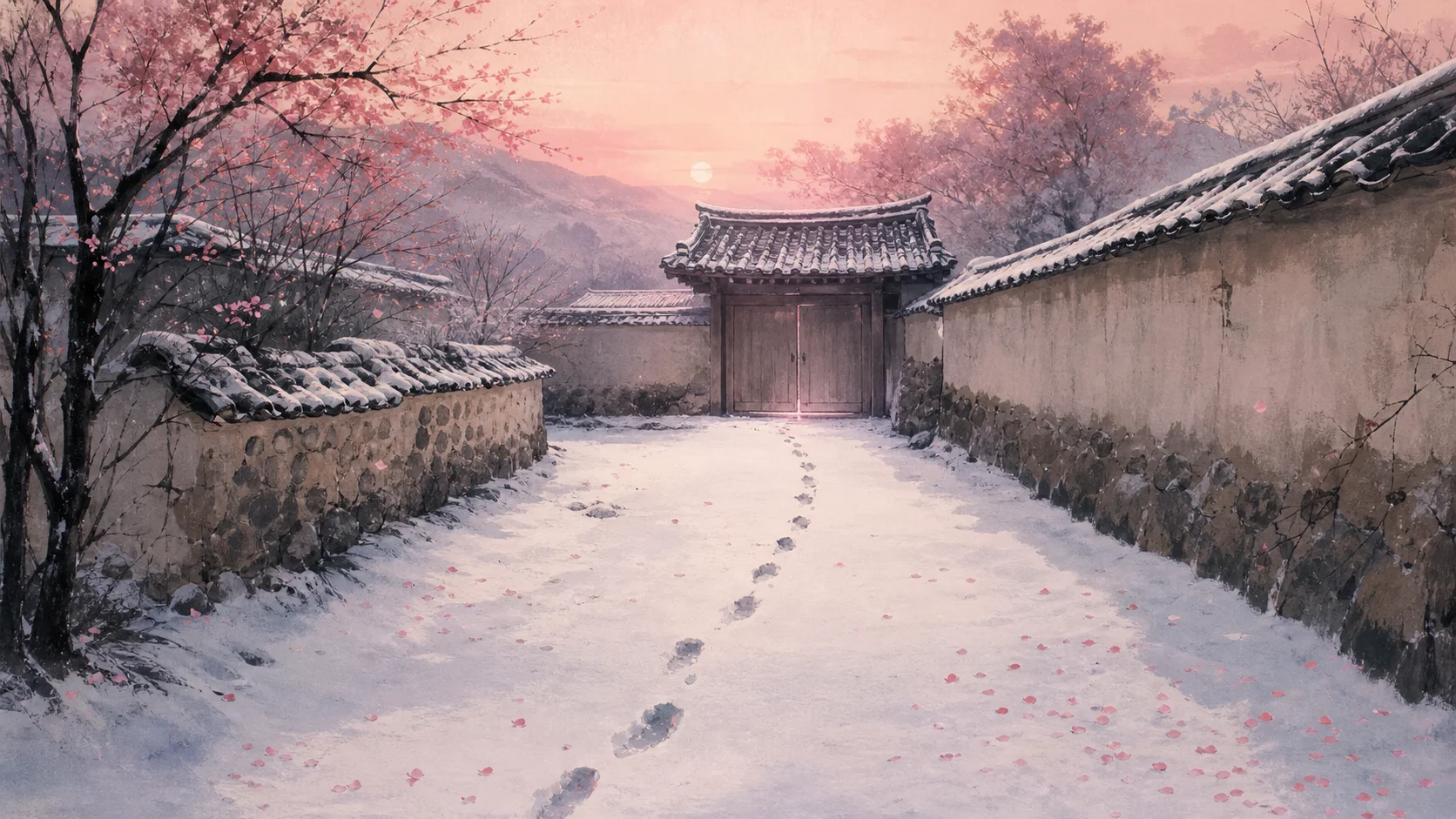
Thirty years later, old promises find new bodies
The epilogue is where Episode 16 will split people.
After Eun-tak dies, Kim Shin’s grief becomes a long rainy season. Years pass. He helps strangers at the edge of despair. Deok-hwa ages into the Yoo family role and meets a mechanic whose life Kim Shin seems meant to touch. The world keeps offering small nudges, small mercies, small signs that godhood in this story is often just someone showing up with a sandwich or a direction.
Then Wang Yeo receives his final name card. His punishment ends, and his last job is Sunny.
Thirty years after their goodbye, Sunny enters the tea house as Kim Sun, age sixty-eight. Wang Yeo puts the ring on her finger properly. She asks if this is their happy ending. He tells her this was her third life and admits he does not know where he stands. Kim Shin waits outside long enough for a last sibling goodbye, and Sunny apologizes for leaving first.
The farewell is tender because everyone in it has learned restraint. Kim Shin does not storm in. Wang Yeo does not demand. Sunny does not pretend the past hurt less than it did. They simply use the little time they have.
Then time jumps again.
Kim Shin releases a lantern and wishes that his sister and his king will meet one day in the future and be happy. They do. In a new life, she is an actress and he is Lee Hyuk, a detective from Gangnam Police Station. Their banter is broad, almost sitcom-bright after so much mourning: handcuffs, undercover wardrobe jokes, one vacant hotel room, and a confession that turns an arrest into flirting.
That tonal swing will not work for everyone. It is charming, and it gives Sunny and Wang Yeo the lightness they were denied before. It also arrives so quickly that the grief has barely settled before the next-life romcom starts.
The same is true for Eun-tak’s reincarnation. Kim Shin walks in Canada, and a young woman in a school uniform finds him. She remembers him. She calls herself the first and last goblin’s bride. The image is powerful because the promise from the tea house has come true.
It is also abrupt.
Eun-tak said she would come running, and she does. Some viewers will find that perfect. Others will feel the reincarnation shortcut asks too much after the crash. Both reactions make sense.
What works
Episode 16 works best in specific gestures: the bowl of water at the wedding, Sunny counting outside, Wang Yeo placing the ring correctly, Eun-tak refusing the tea, Kim Shin trying not to flood the world with grief.
The Grim Reaper material is especially strong. Wang Yeo is not reduced to Kim Shin’s roommate or Sunny’s sad almost-lover. His work, his sin, and his desire to live all come together here: punishment, purpose, apology, and release without pretending any of it was simple.
Eun-tak’s sacrifice also fits the woman she has become. She is not punished for being loved. She makes a choice only a human can make, and that choice is brave and frightening at the same time.
What stumbles
The reincarnation epilogue is emotionally bold, but it is rushed.
Sunny and Wang Yeo’s new-life comedy is fun on its own, yet the shift from tea-house farewell to film-set banter is sharp. Eun-tak’s return in Canada has the right mythic shape, but viewers get little time with her second life before it becomes romantic closure.
There is also a real age-and-time awkwardness in the final Eun-tak image. The promise matters. The reunion matters. Still, the school-uniform presentation can make the scene feel more fairy-tale symbolic than emotionally settled, especially after the adult Eun-tak we just lost.
What this sets up for Episode 17
There is no Episode 17, so the setup is spiritual rather than literal.
Kim Shin remains the guardian who waits. Eun-tak returns with her memory and three lives still ahead of her. Sunny and Wang Yeo get a life where their first scene can be flirtation instead of palace blood. Deok-hwa grows into a man who can notice other people. The world keeps moving, and the dead keep leaving traces in the living.
Goblin closes on a promise rather than a period. Love does not defeat death here. It argues with death, crosses lives, leaves rings and flowers behind, and comes back when it can.
That is why the ending still lingers, even when parts of it move too fast.
Rating: 8.7/10
More episodes from Goblin: The Lonely and Great God — Kim Eun-sook's 939-year-old goblin and his bride, episode by episode. Jump to any episode in the season:
Where to go next
Reviewed by Mira Vance · QuizFandom Editor & Lead Reviewer. Every rating is an honest per-watch assessment from the desk that also writes the quizzes — not a press release rehash.