Tom Clancy's Jack Ryan S3E5 Review: A Father Makes Old Treason the Family Inheritance
Druz'ya i Vragi tightens the Russia arc by making every alliance feel temporary, useful, and already compromised.
“Druz’ya i Vragi” is the point where Tom Clancy’s Jack Ryan Season 3 stops treating the Sokol conspiracy as a buried Cold War relic and starts treating it as an active inheritance. Jack Ryan is still working outside the clean protection of the CIA, but the episode is less interested in fugitive glamour than in the damage done by men who call their old loyalties patriotism. Alena Kovac is dragged into the truth of her father’s politics, James Greer has to reason with an enemy who may be the only man telling him the truth, and Mike November follows Jack into Matoksa on the kind of operation that offers no institutional comfort. The hour’s strongest idea is simple and sour: nobody in this plot gets to stand outside history.
Radek Makes Loyalty a Hostage Situation
The episode opens with personal betrayal before it widens into geopolitics. Radek has fled the official world of Czech security and taken Alena away from the party, while Greer learns from Cahill that the president left with the same man they now suspect in Dmitry Popov’s assassination. That information matters because Radek’s betrayal is not only operational. He was close enough to Alena to leave the building with her, close enough to use trust as transport, and close enough for the abduction to feel like a personal insult before it becomes a national crisis.
Radek’s phone call with Petr gives the hour its first hard turn. Petr is inside Radek’s apartment when Radek calls, and the conversation immediately clarifies the hierarchy between them. Radek knows Petr’s methods because he has helped execute them. Petr knows Radek’s vulnerabilities because he can threaten the wife and child Radek sent away. The exchange, “My family for yours,” is not a clean negotiation. It is two conspirators discovering that the logic they used on other people can now be used against them.
That scene gives Radek’s later behavior with Alena a panicked moral texture. He tells Alena she is his president and his friend, then insists that he is doing this for both of them. He also says they are both “means to an end,” which is the line that strips the ideology down to its working mechanism. Radek is not a mastermind. He is a disposable piece who has begun to understand the price of being useful to Petr Kovac. When Alena asks why he killed Popov, Radek points her back toward her father. The show does not make that revelation cathartic. It makes it dirty, partial, and frighteningly late.
Matoksa Makes Jack Bet on the Lie in Front of Him
While Greer chases Alena’s trail, Jack and Mike enter Matoksa under Elizabeth Wright’s remote supervision. The facility is introduced as a nuclear fallout site in the middle of Russia, and the episode uses the radiation meter as a neat test of Jack’s field instincts. The first readings are elevated but survivable. Then the numbers jump fast enough to scare everyone around him. Mike voices the obvious discomfort, while Rami and Seiko try to translate the danger into practical terms.
Jack’s response is pure Season 3 Jack: not reckless because he wants to look brave, but reckless because the details bother him. He questions why the reading would spike after only a few steps, then suggests the radiation threat might be a cover. The episode lets the walk play out slowly enough for the wager to feel physical. Jack keeps moving as the device climbs from alarming to nearly catastrophic, and the scene works because no one around him sounds impressed. They sound worried. When the number suddenly drops, Mike’s dry “Yeah, he does that” lands as character shorthand, not applause.
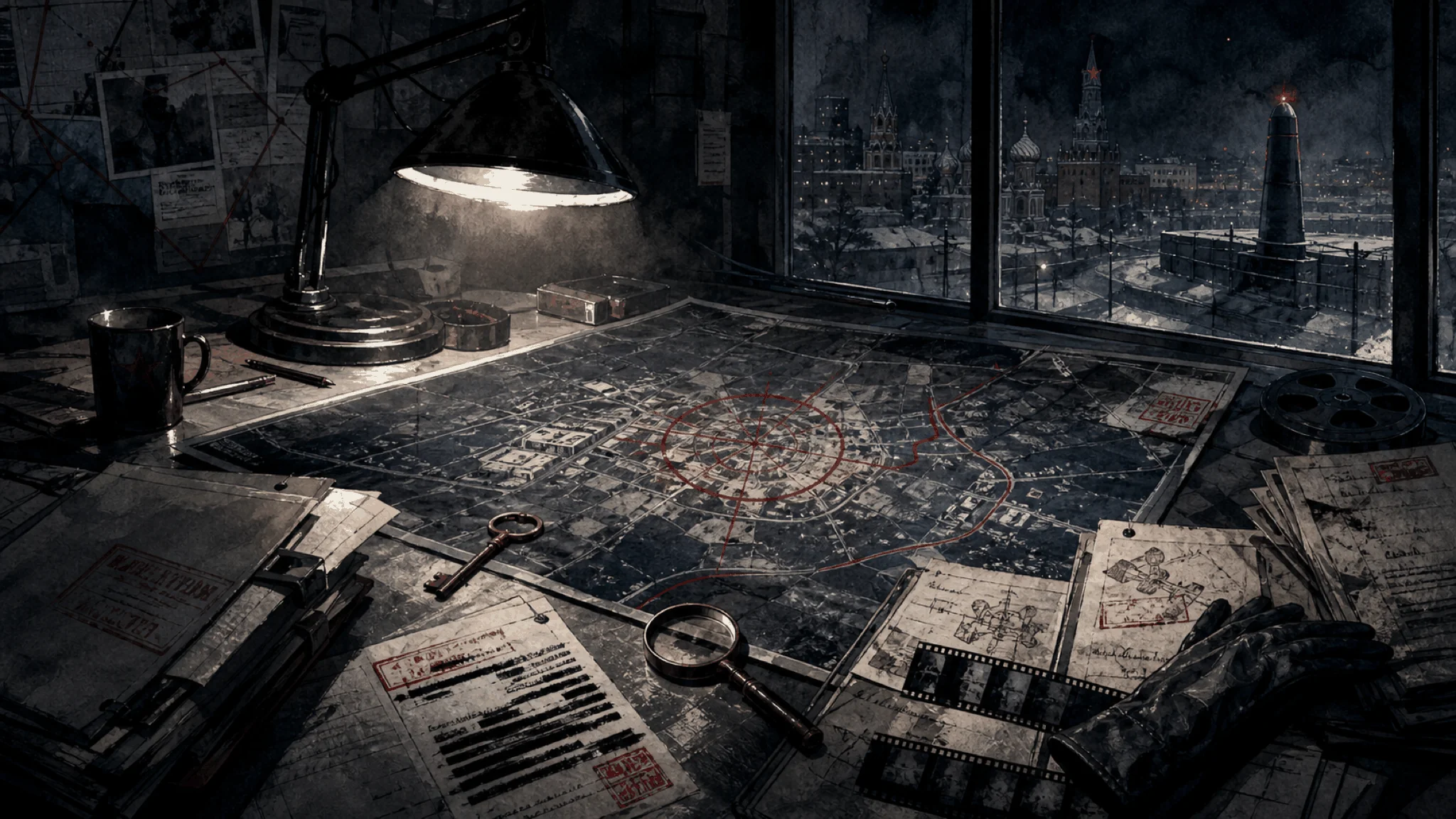
The discovery inside Matoksa deepens the season’s mythology without burying the hour in exposition. Jack sees the old Sokol material and says this is where it all started. The line matters because it ties the current plot to a failure that did not stay in the past. Matoksa is not only an abandoned site. It is a place where an old project survived long enough to become usable again. The facility’s false danger, hidden workers, and armed clean-up operation all point toward the same truth: the conspiracy has been protected by fear, secrecy, and the convenient assumption that a dead program stays dead. The action that follows is functional rather than decorative. Jack, Mike, Rami, and Seiko split through the building, lose clean communication with Wright, and run into armed resistance. Rami is injured, Mike sends Seiko back to him, and Jack keeps moving because the objective is slipping away. The episode’s best physical beat is not Jack winning a fight in heroic silhouette. It is the mess of movement, bad signals, wounded allies, and Mike keeping the team alive while the operation falls apart around them.
Luka and Petr Expose Two Versions of Patriotism
Luka Gocharov’s arrival is the episode’s most interesting reversal because he does not arrive as rescue. He appears in the facility and tells Jack that there was a time when taking him off the board would have been a matter of pride. That line carries the Cold War into the room without speechifying. Luka is old enough to remember the moral grammar of the old game, and self-aware enough to know the board has changed underneath him. His explanation is also deliberately unsatisfying. Luka says Alexei Petrov trusts him, that he can only work from the inside, and that Sokol is a tool. Jack wants to stop the device. Luka wants to follow it to the hand that will use it. The distinction is the episode’s central strategic argument. Jack sees a weapon leaving Matoksa and wants the immediate threat contained. Luka sees the weapon as bait, the only line back to whoever revived Sokol. When Luka says Sokol never died, he is not being poetic. He is admitting that the old machinery stayed alive because people like him failed to kill it when they had the chance.
The parallel scene at the country house brings that same idea home. Petr intervenes once Radek’s standover crosses into physical threat, asks Alena if she has been hurt, and then has to answer for everything she already suspected. Petr does not deny the assassination. He reframes it as duty. He speaks about oaths, country, and the people he believes needed guiding. Alena answers with the democratic oath she took to the people who elected her, and Petr cuts into her entire self-understanding by saying they needed “a thumb on the scale.” It is a brutal father-daughter scene because Petr does not only confess to manipulating events around Alena. He tells her that her public legitimacy was part of his access strategy.
That is where the episode’s politics are sharpest. Petr’s nationalism is not presented as wounded nobility. It is control dressed up as sacrifice. He helped build the problem, pushed his daughter into power for access, used Radek, and treated Popov’s assassination as a move toward a larger endgame. Alena’s devastation after Greer arrives is quiet but decisive. When Greer says they need her help because she knows Petr better than anyone, she rejects the premise: “Nobody knows anyone. Not really.” It is less a bitter slogan than a precise description of the hour she has just lived.
What this episode argues
“Druz’ya i Vragi” argues that old wars do not return by themselves. They are carried forward by people, protected by institutions, and translated into new weapons by men who know exactly which memories still have power. Luka and Petr are both products of that old world, but the episode draws a hard line between them. Luka’s guilt makes him secretive and dangerous, but it also makes him hunt the conspiracy from inside it. Petr’s guilt has curdled into entitlement. He does not merely want to serve the nation. He wants to decide what the nation must become, then make everyone else live inside that decision.
The title, friends and enemies, fits because the hour keeps refusing stable categories. Greer may need Petr’s information even while distrusting him. Jack may need Luka’s plan even after Luka allows the weapon to leave. Radek may claim friendship while imprisoning Alena. Petr may call himself a patriot while using his daughter as infrastructure. The episode’s skepticism is useful. It does not pretend that alliances are pure because the stakes are high.
Verdict
“Druz’ya i Vragi” is a strong middle chapter because it lets the season’s conspiracy become personal without shrinking its geopolitical scale. The Matoksa material gives Jack and Mike a tense field operation with clear stakes, while the Czech thread gives Alena the episode’s harshest emotional blow. Jack is at his best when he is irritated by a detail no one else wants to test, and Alena’s shock takes a hard, contained shape rather than collapse.
The hour is slightly more compelling in its betrayals than in its gunfight mechanics, but the final discovery gives the episode a clean jolt. Jack realizes the device is being built into a missile meant to mirror an American nuke, so that when it detonates, the world will think the United States fired it. That is the Russia arc in its purest form: not a plot to win a war outright, but a plot to make history accuse the wrong hand.
Rating: 8.2/10
More episodes from Jack Ryan — Season 3 — The Russia arc — Jack on the run after a rogue Sokol plot is uncovered. Jump to any episode in the season:
Where to go next
Reviewed by Mira Vance · QuizFandom Editor & Lead Reviewer. Every rating is an honest per-watch assessment from the desk that also writes the quizzes — not a press release rehash.