Mayor of Kingstown S1E10 Recap: Mike Enters the Riot as Kyle Survives the Prison Assault
Mayor of Kingstown, Season 1, Episode 10 — “This Piece of My Soul” Paramount+ · Created by Taylor Sheridan and Hugh Dillon · 2021
The finale sends Mike into the yard, leaves Kyle fighting below, and lets Iris name what survival costs.
Mayor of Kingstown closes its first season with the prison no longer pretending to be a controlled institution. Mike McLusky (Jeremy Renner) is pulled from a fragile morning with Iris (Emma Laird) into the riot, where the state needs him to talk to men it has spent years refusing to hear. Kyle McLusky (Taylor Handley) and Ian Ferguson (Hugh Dillon) are still trapped underneath the prison until Robert’s team finds them, and the rescue becomes less an extraction than a demand that Kyle participate in the counterattack. By the time the gunfire stops, the prison has been retaken. The finale is blunt about the bill: Mariam McLusky (Dianne Wiest) gets one son back alive, while Iris tells Mike that trauma has taken pieces she may never recover.
Mike Leaves Iris Behind as the Riot Reaches His Family
The first scene is almost cruel in its softness. Iris asks what she and Mike are celebrating, then answers for both of them: “Chapter two of me.” She wants champagne, a purpose, and a part to play in the little domestic fiction they are trying to stage. Mike, never especially built for gentleness, tells her to start writing that chapter and promises he will not be gone long.
That promise collapses before he even gets a handle on the news. His phone fills with alerts, the radio reports that roughly 75 guards are trapped inside the prison, and Tracy McLusky (Nishi Munshi) calls in panic because officers are at the house asking about Lt. Kyle McLusky. Mike tells her to say she saw Kyle that morning, but she admits she last saw him before his shift the previous day.
Mariam’s call is sharper because she knows exactly what kind of son she raised. She tells Michael to let the police do their work and not go to the prison, but the line is already useless. Mike knows the police do not have jurisdiction inside. The old family argument becomes an emergency procedure: Mariam asks him not to become the thing he always becomes, and he is already on the way.
Mike Forces the Command Post to Listen
The staging area outside the prison is a perfect Kingstown tableau: everybody has authority, nobody has command, and the arguments are mostly about who gets to be responsible when this fails. State police, corrections, city tactical officers, and prison officials fight over jurisdiction while the prison itself keeps producing facts faster than they can process them. Robert Sawyer (Pha’rez Lass) refuses to hand his team to people he thinks have never been shot at.
His useful intervention is practical. He realizes the cell signal has been jammed, which means Kyle and Ian cannot call out and no one outside can learn what is happening below. Mike’s fury gets the towers restored, and Kyle’s silent phone finally becomes a lifeline. The command post triangulates him in the southeast corner, then learns he and Ian are beneath the prison.
The scene also sharpens Mike’s unofficial status. When the inmates ask to speak to him, one state official reads him his rights because a man requested by prisoners must be either lawyer, criminal, or both. Mike calls himself an inmate advocate, which sounds almost absurd and almost true. The state insults him and then hands him the phone.
Paul Makes Mike Watch the Yard Before He Enters It
Carlos is the voice on the line, but Mike hears quickly that Carlos is not leading the riot. The speech is too composed. Carlos talks about dignity, manhood, punishment, and the way prison takes more than time or freedom, and Mike recognizes language being read rather than rage being spoken. That detail matters because the riot has organization beneath its chaos. It is not only men smashing what they can reach; someone is arranging an audience.
Mike tries to pull Carlos back toward consequences. He tells him this ends with snipers on the wall and the National Guard through the gate, shooting anything that moves. Carlos answers that the prison is theirs and that everyone inside wants the moment played out. When Mike asks for demands, Carlos says to watch the yard, and a hostage is dragged into view.
The demand is made with a body. The hostage curses the men holding him and is shot after Carlos tells Mike they will let him enter. Mike is not talking anyone down. He is being shown the price of admission.
That is where the episode’s politics cut hardest. The inmates have real grievances, and the hour gives those grievances language, but it also shows the violence those grievances have been made to carry. It asks why a city built around cages keeps acting surprised when every available form of speech becomes coercive.
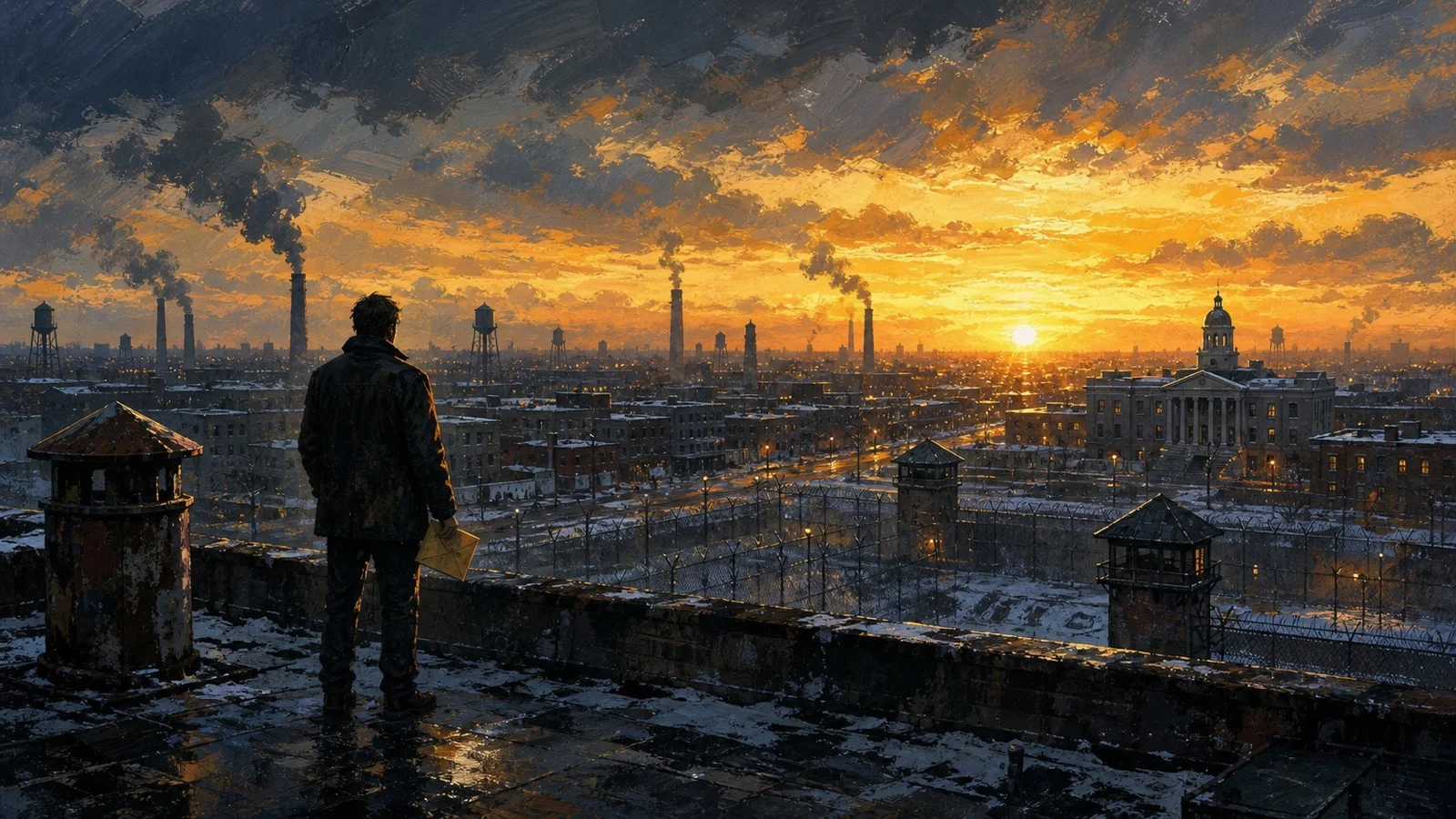
Mike enters the yard wearing identification beacons that are supposed to make him visible to shooters, which would be more comforting if anyone outside could keep a clear line of sight. Mariam sees him on television and recognizes him immediately. The family crisis has become public spectacle, the exact form of pain Kingstown keeps broadcasting while pretending to contain it.
Inside, Mike finds the man actually steering the moment: Paul, someone he knew from before and thought had gotten out. Paul says he did get out, then was sent back, and now he will never leave. Their conversation gives the riot its argument in its least dismissible form. Paul admits he is a criminal. He also says the guards beat men, degrade them, tamper with letters to their children, and run the contraband economy they pretend to police.
Mike pushes back where he can. Paul was sent to prison for attempted murder, so the institution did not invent his violence from nothing. But Paul’s answer is not an innocence plea; it is a claim about what punishment has become. He says he can control how he dies, and he refuses to become an old man painting birds he never sees.
Paul wants the guards and the cameras to see what the prison has made. Mike tries to keep him from turning that message into another death, but Paul frames Mike himself as the picture: “you’re my Mona Lisa.” The shot that follows breaks the negotiation and opens the state assault.
Kyle Survives by Fighting His Way Out of the Prison
Below the prison, Kyle and Ian spend much of the hour in a panic rhythm: hiding, breathing, moving, and trying to understand which direction leads out. Kyle is frayed badly enough that Ian has to talk him through his breathing after gunfire and screams tear through the corridor above them. He is terrified, and he should be.
Robert’s team finds them, but rescue comes with its own brutal ethic. Ian wants Robert to cook the attackers and get Kyle out. Robert tells Kyle that if he does not face them and hit them back, he will regret it for the rest of his life. Survival is offered as another initiation.
The assault sequence is long, loud, and deliberately exhausting. Tactical teams move through corridors, gunfire rolls through the prison, and the framing stays with bodies as much as objectives. When Mike comes through alive, his first question is where his brother is. Kyle is alive, Ian is alive, and their reunion is less triumphant than stunned.
Kyle breaks in Ian’s arms, and Mike immediately tells them not to do it there. That moment says a lot about the McLusky survival code. Feeling is permitted only after extraction, maybe after the car, maybe never. They have won the immediate fight, but the show has spent ten episodes making clear that immediate fights are where Kingstown hides its lasting damage.
Mariam’s relief scene is simple and necessary. She opens the door, sees Kyle, and folds into gratitude before she can turn it into anger. Mike says, “Sorry, Mom,” which is both too little and exactly the only thing he has.
The quieter ending belongs to Iris. She tells Mike she learned something: what was taken from her will never fully come back. She describes each violation as taking a piece of her soul until there is less of her left, and then names the terrible choice that follows. She can live with the missing pieces, or she can “cut the rest” away.
Mike says he learned that too, and the line links her trauma to his without equating them. He asks what changed her mind when she says she thought about ending herself. Iris answers with the episode’s only fragile hope: maybe a soul can grow back. After the riot’s scale, that sentence is small enough to feel honest.
What works
- The finale makes the prison riot both spectacle and argument. The execution, Paul’s speech, and the tactical assault all trace back to the same economy of abuse, overtime, revenge, and official denial.
- Mike is especially strong in the negotiation scenes. He is useful because he knows everyone is lying, but the hour keeps showing the limit of that usefulness.
- Kyle’s survival material gives the action a human tremor. His panic, Ian’s steadiness, and Robert’s hard push into violence make the rescue feel morally bruised rather than clean.
- Iris’s final scene is careful with language. After a season of men assigning meaning to her body, she gets to describe the damage herself and decide that survival may still be possible.
What stumbles
- The jurisdiction arguments outside the prison are credible, but the dialogue sometimes makes every official sound like a megaphone for institutional failure.
- Paul’s grievance speech is powerful and specific, though the finale leans hard on monologue as its main vehicle for political clarity.
What this sets up for Episode 11
There is no Episode 11 in Season 1, so the finale is really setting up the next chapter of the series. Kyle is alive but visibly broken, Mike has become even more indispensable to the same system that nearly killed his brother, and Iris is trying to imagine a life after being used as leverage. The prison is back under official control, but nothing in “This Piece of My Soul” suggests control is the same thing as repair.
Rating: 8.6/10
More episodes from Mayor of Kingstown — Jeremy Renner in Sheridan's prison-town drama, episode by episode. Jump to any episode in the season:
Where to go next
Reviewed by Mira Vance · QuizFandom Editor & Lead Reviewer. Every rating is an honest per-watch assessment from the desk that also writes the quizzes — not a press release rehash.