Monarch S2E5 Review: Santa Soledad Closes the Family Wound
What happens — the short version (spoilers)
- In a mid-1960s flashback, Hiroshi sings 'Furusato' to a young Cate by phone, then stops mid-verse to name his newborn son after his father, Bill.
- Lee lays out that Apex isn't building a Titan kill switch but a leashed, sellable Titan controlled by a synaptic implant — a weapon with a price tag.
- In an abandoned outpost, Keiko gives Hiroshi the apology he needed, owning that her choices cost her years she could have spent as his mother.
- Apex launches the synaptic-link drone under pressure, but May's under-tested code can't scale to the Titan's brain and the feedback loop blows the system.
- Scarabs pour out during the failure and Hiroshi is impaled and dragged to cover.
- Cate and Keiko cradle the dying Hiroshi and finish singing 'Furusato' together as he dies on the verse he never completed.
- Director Barris locks down the site and orders all data preserved as evidence, treating the wreckage as a find while the family grieves.
A Titan migration drags the Randa-Miura-Shaw constellation to the same cove where a thirty-year-old apology has been waiting to land.
Monarch has spent five hours teaching its audience to read two clocks at once. One is geological, set by Titan migrations and Axis Mundi rifts. The other is domestic, set by absent fathers, lost mothers, and the letters they leave behind in dresser drawers. The fifth hour pushes both clocks to the same hour mark. Apex has trailed Bill Randa’s old data to Santa Soledad, the island where Titan X is due to feed and spawn. The Randa-Miura-Shaw constellation arrives the same evening with a Zodiac in a cove and a plan to jam two drone rotors with metal torches. By the time the synaptic link fires and the Scarabs pour out of the rocks, a family reckoning and a corporate test are burning on the same shoreline.
A bedside song reopens the ledger
The cold open is the season’s sharpest scene. Tokyo, mid-1960s. Hiroshi stands at a hospital pay phone singing “Furusato” to Cate half a world away, promising he will be home soon. A nurse interrupts him, the song stops at the verse, and across the corridor Emiko is holding a newborn boy. She offers her stepfather’s name, William. Hiroshi gives the child his father’s name instead. The scene cuts between a daughter waiting for the rest of a lullaby and a son being named for a man who could not stay. The next forty minutes earn the right to end where it does. That unfinished verse is the hinge the rest of the episode swings on.
The flashback also reframes Bill Randa as something other than the ghost the season has been chasing. Hiroshi’s note to Cate that he will finish the song later, “so you will have something to look forward to,” is the family’s organizing lie. Every adult in the room keeps a piece of themselves in reserve in case the other shoe drops. Keiko wrote the Lee letter expecting it would never be read; Hiroshi keeps a second household because being abandoned as a child taught him to engineer redundancy; Lee Shaw kept the letter for thirty years to either flagellate or congratulate himself, depending on the mood. Deception runs through the family like structural steel, not gossip, and that’s what gives the later confrontation its weight.
Apex turns a leash into a weapon
The plot mechanics are conventional and Monarch knows it. Apex has the Suzuki-device-awakened Titan X heading toward Santa Soledad ahead of its 2023 migratory window. Monarch has a fugitive colonel, a journal, and Tim trying to talk Director Barris into a course change. Apex has a drone, a projectile, a synaptic link, and May’s code. Monarch has Bill Randa’s hand-drawn map and the cove. The board is set inside the first act, and what follows is about who gets there first and what they think they are using the Titan for once they do.
Lee Shaw’s pitch under the tavern roof is where the season earns its premise. Apex is not building a kaiju kill switch. Apex is building a leashed Titan that can be sold. Whoever holds the other end of the link can prevent a G-day or aim one, which turns the synaptic implant into a weapon with a price tag rather than a public defense. Lee delivers the line as a tactical brief, not a speech, and Keiko lets it land without protest because she has been a Monarch scientist long enough to know what private contractors do with public miracles. May stays inside that calculation. Her belief that the project could prevent another G-day plays not as foolishness but as the version of the truth Brenda needed her to hold to keep coding.
The tavern conversation also clears the floor for the episode’s quietest indictment. Lee asks Hiroshi what life he is buying himself by staying fixated on the past, and the question only lands because Lee is the last person who should be allowed to ask it. The hypocrisy gets to sit. Hiroshi’s response, when he gives it, is not absolution; it is a willingness to keep walking.
Furusato finishes on the wrong continent
The Scarab attack functions as a wedge, not a climax. Apex launches the drone under pressure, May watches her under-tested code climb a Titan brain that has too many neurons for the synaptic link to scale, and the feedback loop blows the system. The set piece is staged with rare clarity for kaiju television. The handheld coverage stays on faces; Titan X stays mostly off-screen except for the bellow that announces the override is failing; the technician’s report that every muscle group is seizing is the only specific the audience needs. The camera spends its attention on the periphery, not the monster.
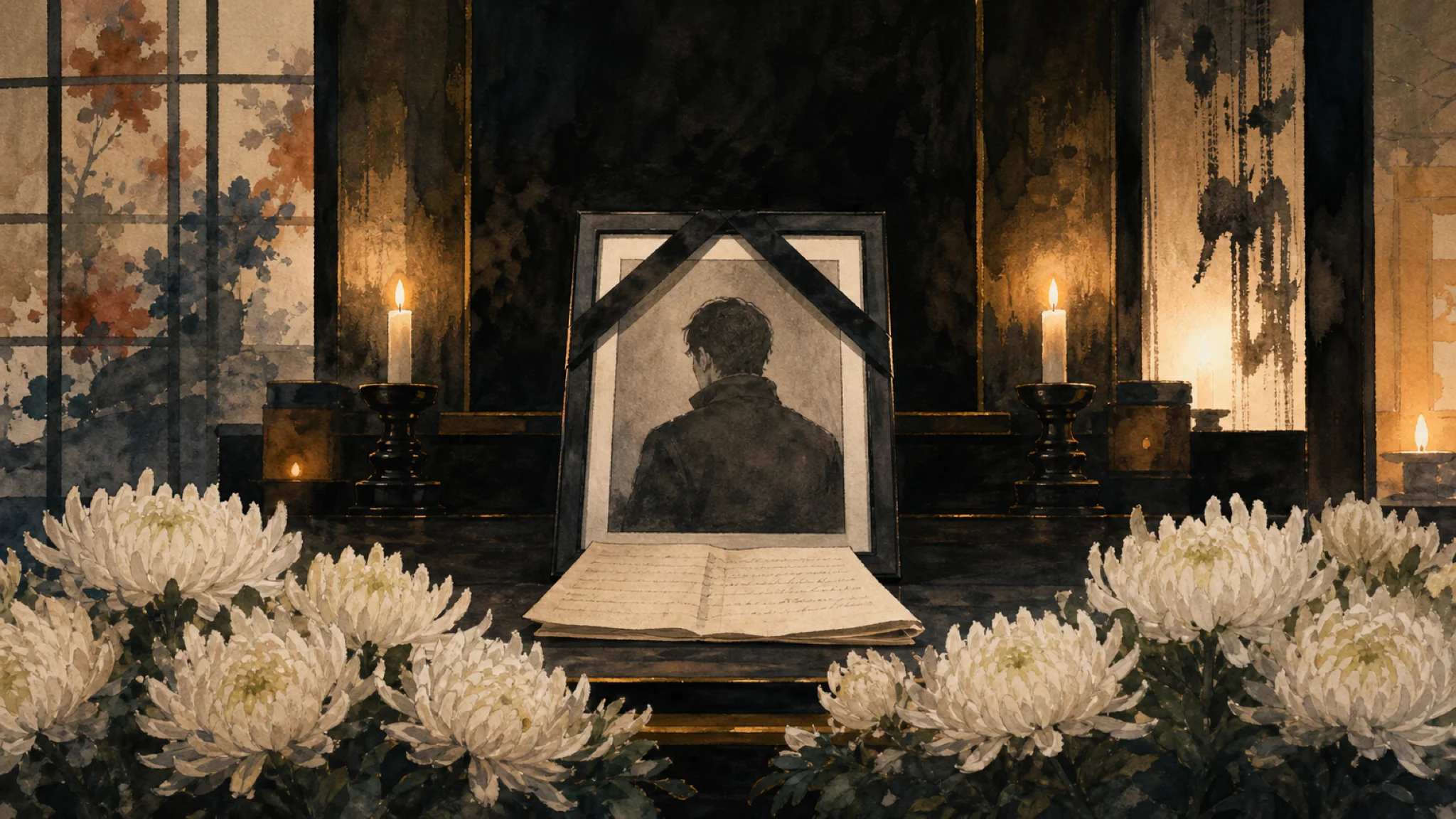
What happens on the periphery is that Hiroshi is impaled in the chaos and dragged under cover. Cate cradles him in the dust. Keiko kneels and asks if he remembers their song. Mother and daughter sing “Furusato” together while the man between them dies on the verse Hiroshi started in Tokyo and never finished. The cut from the singing trio to Director Barris locking the site down and ordering every shred of data preserved is brutal. The family gets the song; Monarch’s first priority is the wreckage as evidence. Both readings are true, and the episode flinches from neither.
The grace note belongs to Keiko. She has spent two episodes failing to apologize, partly because she does not believe a thirty-year-old letter is hers to apologize for and partly because she suspects Hiroshi cannot yet hear one. The earlier conversation in the abandoned Monarch outpost — where she tells Hiroshi that her decision to descend through the rift cost her years she could have spent as his mother, and that her mistakes were her own to own — is the season’s most generous piece of dialogue. Mari Yamamoto delivers the speech without strain. Ren Watabe plays Kentaro’s listening in the corner as the second beat of the same conversation, the brother who knew Hiroshi as an absent father standing where the mother who was a stolen one finally lands the line. It is the apology Hiroshi needed and the family meeting Bill Randa never had the courage to call.
Three institutions, one bad habit
The episode draws a clean line between the MonsterVerse machinery and the Randa family wound: they are the same story. Bill Randa built two households because being abandoned had taught him that one was a single point of failure. Apex builds a leashed Titan because the public defense apparatus is also, in their view, a single point of failure. Monarch builds Tim’s grant-funded courtship of Director Barris around the bet that a public agency with a real mandate can still be moved by a hand-drawn migratory map. Each institution is trying to make redundancy do the work of trust. None of them succeed. The hour does not punish the impulse; it just shows what it costs.
The second through-line is about who has the right to forgive. Keiko’s speech in the abandoned outpost works because she refuses to ask for forgiveness on Bill’s behalf. She tells Hiroshi the people she disappointed were her own to disappoint, and she lets him own his. Lee Shaw’s earlier sermon to Hiroshi about moving past blame plays differently after the outpost scene. Lee is asking Hiroshi to grant him a discount on accountability that Keiko has just refused to claim. The show’s sympathies sit with the woman who came back through a rift after thirty years and the daughter who taught her the lullaby in a hospital bed, not with the colonel who kept the receipt.
The third through-line: the season’s villain is a procurement model. Brenda Holland is not a megalomaniac. She is a project manager with a deadline, a Walter to keep updated, a faith in Corah’s code that is also a faith in Corah’s docility, and a willingness to let perfect be the enemy of good when the launch window closes. The drone goes up because the Scarabs forced the issue, not because Apex believed the synaptic link was ready. The show is making a quiet point about how technology gets shipped under pressure — a point that has nothing to do with the Titans and everything to do with the meetings.
Verdict
“Furusato” clears the season and probably the series. The cold-open frame is the kind of structural risk that only works if the closing scene meets it, and the closing scene does. The Apex plot moves with admirable economy: the antagonist’s plan is articulated in plain English, the protagonists’ counter-plan is articulated in plain English, and the failure mode is engineered into the synaptic link from the first scene Corah and Brenda share. The set piece is staged for character rather than spectacle. The performances around Hiroshi’s death — Anna Sawai holding a dying father, Mari Yamamoto holding a son she barely knows, Ren Watabe standing at the edge of the frame with no useful thing to do — are calibrated with the kind of restraint the show has been building toward since the pilot.
The episode also leaves the season with real stakes. Apex has lost a drone, a launch site, and a proof of concept, but they have not lost the contract or the intellectual property. Director Barris has the data spike from Santa Soledad on his desk by morning. The Randas have a body to bury and a song they finally finished together. Kurt Russell’s Lee Shaw has a leg wound and the unenviable job of being the last living adult in the room. Monarch has bought itself the right to take its time with the next two hours.
Rating: 9.1/10
More episodes from Monarch: Legacy of Monsters — Season 2 — The MonsterVerse expands — Randa family secrets and new titans, episode by episode. Jump to any episode in the season:
Where to go next
Reviewed by Mira Vance · QuizFandom Editor & Lead Reviewer. Every rating is an honest per-watch assessment from the desk that also writes the quizzes — not a press release rehash.