Monarch S2E8 Review: The Beach, the Egg, and a Mother Who Will Not Move
What happens — the short version (spoilers)
- The Pentagon wants to nuke the unmoving Australian Titan with tactical warheads; Barris invokes Bikini Atoll and grants the team a three-hour window to find another way.
- Lee Shaw plans to bait Godzilla to kill the Titan using a Castle Bravo gamma-signature device while the nuclear fleet closes in offshore.
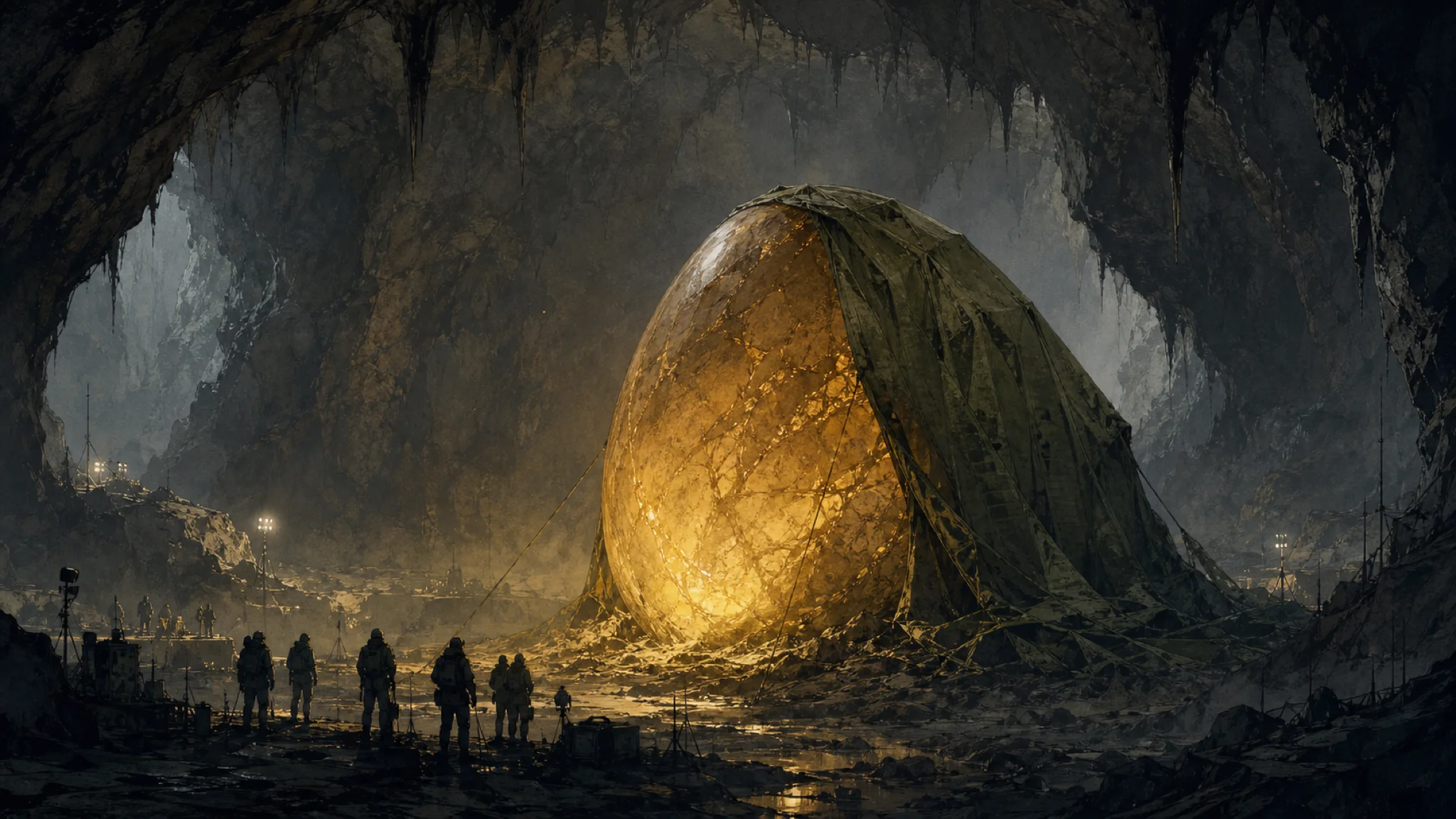
- Cate slips off and discovers the Titan has been nesting — an egg sits in a debris chamber, revealing the creature is a mother who carried her offspring this far.
- Kentaro, secretly feeding Apex coordinates, tells Isabel about the egg, choosing to balance the wrong ledger of betrayals.
- An Apex strike team cuts through the Scarab swarm, seizes the egg, and exfiltrates inside Godzilla's approach radius.
- May cracks that Brenda Holland is taking a fall for a golden parachute and warns Tim that Apex is already moving.
- Godzilla and Titan X converge on the beach; Tim talks the fleet into standing down to avoid friendly fire, and the mother is left bellowing at the sea that took her child.
A Titan camped on the Australian coast turns out to be nesting, and the episode forces Cate, Keiko, and Shaw to argue what mercy looks like before the missiles arrive.
Monarch has spent two seasons asking a question its parent franchise rarely bothers with. The MonsterVerse films treat Titans as weather events with mythological branding, things to be photographed from a safe distance and survived. The show keeps asking what it would feel like to be a scientist standing on the same beach as one, with a stopwatch running and a Secretary of Defense on the other end of a satellite line. The eighth hour of the second season is the cleanest argument the series has made for the difference. A Titan has not moved from a stretch of Australian coast for eighteen hours. The Pentagon wants to nuke it. Wyatt Russell’s Lee Shaw wants to bait Godzilla over to kill it. Mari Yamamoto’s Keiko Miura and Anna Sawai’s Cate Randa want to walk up to it and ask why it stopped. The episode picks a side. It also pays for the choice.
The Pentagon brings the bomb back to the table
The cold open sets the political ceiling. Director Barris is on the line with a Secretary of Defense who keeps reminding him there are no other options. The Australian Parliament is invoking a mutual Titan defense pact. Twenty ships with nuclear-tipped Tomahawk cruise missiles are already in transit. Barris pushes back the only way a Monarch director can push back, which is to remind his boss that humanity tried this once before. Castle Bravo, Bikini Atoll, 1954. The Secretary’s answer is the line the season has been circling. “Technology’s much more advanced since Castle Bravo. It’s, uh, tactical. Limited.” Barris answers that the fallout is still the same in every sense of the word. The Secretary tells him to clear the population center ten miles inland to a radius of three hundred miles and get out of the way. The line drops.
The next move is the small structural choice that earns the rest of the hour. We cut not to the missiles but to a helicopter pad. Kurt Russell’s elder Lee Shaw arrives with Keiko and Cate, and Tim ushers them past the asset-management threat Barris keeps reaching for. The scene is a negotiation in miniature. Barris has a known threat, a known location, and a sanctioned response. Cate has a feeling. Keiko has a husband’s research and the memory of Bikini Atoll, where she stood on a different beach and watched the United States try the same play. Barris gives them three hours because Tim asks him to, and because Keiko’s closing argument is the one line of dialogue the show has been building toward all season. “Monarch has always tried to find improbable solutions to impossible problems. It kinda feels like we’re staring at a textbook case right now.” The director who keeps almost firing them lets them go.
The three-hour window is the episode’s clock. Everything that follows is staged against it. Shaw is already on the beach with a device Suzuki built to mimic the Castle Bravo gamma signature, betting that Godzilla still answers to that frequency the way he did in 1954. The fleet is closing in from offshore. Apex has its own team somewhere in the dark, with Isabel Simmons working Ren Watabe’s Kentaro on a satellite phone and a payload of its own moving through the perimeter. Three plans converge on one stretch of beach, none of them aware of the others, all of them confident.
Cate and Keiko walk up to a mother
The chopper ride to the beach is the episode’s brief moment of quiet, and it uses the silence well. Cate tells Kentaro he does not have to come. Kentaro tells her not to say that. He has spent the season trying to decide whether the mission is his or whether he is just following his sister into trouble, and the line he chooses is the one closest to his father’s grave. Hiroshi’s children both keep showing up. Then the helicopter takes a bird strike, the rotor seizes, and the rescue bird that meets them on the ground is Lee Shaw with a service revolver and a wrong assumption about who he was about to shoot. Lee plays the recognition with the same closed-off panic Wyatt Russell has carried all season. He was going to be out here by himself. Just Godzilla, the Titan and him. Nobody else around. Nothing.
The argument on the beach is the scene the season has been promising since the cliffside reunion. Keiko cannot tell Lee how Titans work, because nobody can, and that is exactly her point. Sixty years since Billy’s map, and Monarch has more weapons and no more understanding. Lee’s counter is the one the franchise has spent a decade rehearsing: humanity’s relationship with the Titans changed on G-Day, and the people who lost family at the foot of one do not have the patience for migratory-route theory. He names her dead. Her father. Her son. He begs her to get off the beach.
What breaks the deadlock is the discovery, and the show plays it with the right amount of restraint. Cate slips off from the truck while Keiko keeps Lee talking. She finds a chamber dug into the rock and a structure of woven debris the size of a building. An egg sits at the center. The Titan has not been crouching on the coast because it was wounded or aggressive or off course. It has been nesting. Apex knocked Titan X off her migratory route at Santa Soledad and she carried her offspring this far before she ran out of road. Cate’s hand on the shell is the closest the show has come to making its central thesis literal. The Titan is not a weather event. She is a mother. Cate plays the moment with the same controlled breath Anna Sawai uses for her panic attacks, because for Cate the two states have always been the same channel.
Apex was already inside the perimeter
The third plan is the one nobody on the beach knows about until it is too late. Kentaro’s phone rings. Isabel Simmons, daughter of Apex’s founder, is on the other end. The script has been parking this thread for two episodes, and it cashes it here with a turn that lands cleaner than the post-funeral hookup it grew out of. Kentaro has been feeding Apex Monarch’s coordinates. He hesitates when Isabel asks about the scarabs, then folds when she pushes. “Forget about the scarabs. Tell Trissop there’s an egg.” Ren Watabe plays it with his eyes closed, which is the right read. He is not a villain. He is a son who is trying to decide whose betrayal he is finishing, his father’s of Apex or Cate’s of their father, and he picks the wrong one to balance the ledger.
The Apex raid that follows is the action setpiece the season has been husbanding its CGI budget for, and it earns the spend. A strike team in unmarked armor cuts through the scarab swarm with a directed-energy weapon, secures the egg, and exfiltrates inside Godzilla’s approach radius. Lee and Keiko reach Cate and Kentaro a beat too late to stop them. The scarabs that have been guarding the chamber attack on instinct. Titan X bellows from the beach because her offspring is being carried away. The show does not yet tell us what Apex wants with the egg, but it does not have to. Walter Simmons has spent two seasons trying to weaponize Titan biology, and a fertilized one is the asset he has been waiting for. Kiersey Clemons’s May, meanwhile, is doing parallel work in an interrogation room halfway around the world, trying to crack Brenda Holland’s confession. Brenda is taking the fall in exchange for a golden parachute, and May knows it because she has sat in that chair. The interrogation does not produce evidence. It produces the line that lets May call Tim and tell him Apex is already moving. Tim believes her. Holland sends her.
The convergence on the beach is the hour’s strongest sequence, and the editing knows it. Titan X roars at the sea because Godzilla is in the water. Godzilla roars at the shore because Shaw’s device is calling him. Apex’s strike team withdraws with the egg under Trissop’s order to hold the line until the payload is clear. The fleet’s missiles are minutes out. Tim is on the radio trying to get the naval commander to stand down before two Titans share a coordinate with a thermonuclear warhead. Shaw, watching it all from a ridge with the woman he last touched in 1962, says the line we have been waiting on. “Jesus, did that get them?” Keiko answers him without looking away. “They’re safe.”
What this episode argues
“Come Get Some, Boy” is the show’s clearest statement of its own argument, and the statement arrives as a three-way collision rather than a speech. Lee Shaw believes the only language Titans understand is force, and that force has to be calibrated by someone who has been there. Keiko believes the only thing sixty years of weapons has produced is more weapons, and that understanding is the prerequisite to survival. Apex believes the question is moot, because biology can be owned. The episode does not pretend the three positions are equivalent. It gives Keiko the moral high ground, gives Shaw the operational competence, and gives Apex the win. The egg leaves the beach in an Apex container. The missiles are held, but only because Godzilla is close enough that the Pentagon would have lost a carrier group to friendly fire. The mother is left bellowing at a sea that has taken her child.
The other argument running underneath is about who gets to be a parent in this universe. Hiroshi’s funeral is six episodes back and his children are still arguing about which of them he loved. Keiko lost her son to a Titan and her husband to her own absence. Cate has spent two seasons trying to be a sister to a brother she did not know existed, and tonight he sold her out on the phone while she was inside a nest. The Titan on the beach is the only mother in the episode whose choices read as uncomplicated, and the show punishes her for them. The MonsterVerse films would have ended this hour with Godzilla cratering the beach and a slow camera pull-back over the wreckage. The show ends it with a woman watching another woman’s egg disappear over the horizon, and a man with her son’s name watching from a ridge.
Verdict
“Come Get Some, Boy” is the season’s strongest hour and the one that retroactively justifies the meander of the middle three. The dual-timeline structure has been doing the heavy lifting all season, and the script finally collapses the two registers into a single beach and lets Mari Yamamoto and Wyatt Russell argue a thesis without translating it for the audience. The Apex twist works because Ren Watabe has been playing Kentaro’s grief as compliance for six episodes, and the betrayal reads as a tilt rather than a swerve. The action setpieces are choreographed with the same restraint the show has used for the rest of its monster budget. We see the scarabs in flashes. We hear Godzilla before we see him. The egg is the only Titan body we sit with for long, and the lingering is the point.
It is not a flawless hour. Barris’s late-season pivot from antagonist to ally is still pat. The Brenda Holland interrogation, structurally necessary, would benefit from another scene of breathing room. The Isabel Simmons character remains a phone voice rather than a person, which weakens the Kentaro turn by an inch. None of that is enough to dim what the episode actually does. It commits to a moral position the franchise has been dodging for a decade, and it commits with a setpiece that earns the position rather than declaring it. The mother stays on the beach. The egg leaves with Apex. The fleet stands down. The finale has somewhere to go.
Rating: 9.0/10
More episodes from Monarch: Legacy of Monsters — Season 2 — The MonsterVerse expands — Randa family secrets and new titans, episode by episode. Jump to any episode in the season:
Where to go next
Reviewed by Mira Vance · QuizFandom Editor & Lead Reviewer. Every rating is an honest per-watch assessment from the desk that also writes the quizzes — not a press release rehash.