My Royal Nemesis Episode 14 Review: "My Royal Nemesis" — Seo-ri Saves Cheongheon, Se-gye Pulls Her Back, and Mun-do Finally Loses Chail
What happens — the short version (spoilers)
- Seo-ri wakes in Joseon before Cheongheon drinks the poisoned soup and realizes the King used her as bait to make the Grand Prince die quietly.
- She names the poison, tells Cheongheon he awakened her will to live, and pushes him to survive the ambush so Se-gye can live in the present.
- Se-gye wakes from surgery but cannot find Seo-ri, asks Dal-su for help, and later learns from the spirit-channeling shaman that she gave up everything to save him.
- Tae-hee points Se-gye toward the museum portrait, where the Seonghyeon Pavilion Diary reveals Cheongheon's silence as protection rather than indifference.
- Seo-ri rejects a painless reward-world, returns under summer snow, reunites with Se-gye, and imagines Cheongheon and Dan-sim escaping history together.
- Seo-ri and Se-gye crash Mun-do's press conference, expose the evidence, and watch Chail abandon him as Inspector Lee arrests him.
- Seo-ri visits Mun-do in prison, promises Ok-sun she will live warmly, and ends by the sea with Se-gye turning Grandma's seasonal list into a life plan.
Episode 14 turns the comet bargain into the finale's real test: Seo-ri can save Se-gye only by stepping back into Dan-sim's last, worst day and changing the story before history hardens around it. The hour moves between Cheongheon refusing poison in Joseon, Se-gye begging a silent Seo-ri to wake, and the quiet prison where pain has been removed along with joy. By the time summer snow falls over Seoul, the question is no longer whether fate can be broken, but what kind of life is worth coming back to.
Seo-ri wakes before the poison errand, and the King sends her to Cheongheon with bait in her hands
The finale opens with Se-gye bleeding out in the street and Cheongheon standing at the edge of the death history already wrote for him. Doctors call it an abdominal stab wound and hemorrhagic shock. In Joseon, the Grand Prince receives the King’s letter and the Queen Dowager’s restorative soup, recognizes that a royal edict would have been cleaner, and prepares for the kind of death rulers prefer: quiet and useful.
Seo-ri wakes inside the palace before that ending can close. The past has shifted just enough to make room for her. She is a palace attendant in the Queen Dowager’s quarters, the King is on the throne, the Grand Prince is alive in exile, and the soup is on its way. The show gives her the cruelest possible version of agency. She is not sent with a sword or a prophecy. She is sent as bait.
That makes the first reunion ache in two directions. Cheongheon sees a changed Dan-sim and tries to protect her the old way, by making himself colder. Seo-ri names the poison before he can drink and tells him what his kindness did for her. He awakened her will to live.
Seo-ri names the poison, Cheongheon survives the ambush, and Se-gye wakes to an empty world
The poison scene works because it lets both versions of the romance correct each other at once. Cheongheon keeps insisting Dan-sim is nothing to him. Seo-ri keeps answering with the truth he will not say aloud. She was a court lady with no one to confide in but a stray dog, and he was the first person to look into her heart. He calls her memories something to bury. She answers with survival.
Then the assassins arrive to make the King’s plan less delicate. Cheongheon knows his brother sent them. Seo-ri refuses to run unless he comes too, because this rescue is no longer only about a doomed prince. He is more precious than life to me, she says of Se-gye, and Cheongheon hears enough to understand why her eyes are different now. He does not promise victory. He promises something smaller and better: he will live.
That choice reaches the present before anyone understands how. Se-gye wakes from the ICU asking for Shin Seo-ri, moved from near-death into absolute rest, and the first thing the world gives him is absence. Seo-ri is not at the restaurant. She is not at home. Her phone is unreachable. Mun-do needles Se-gye with the thought that everyone beside him ends up with a dagger over them.
Se-gye has no clean defense against that thought.
Se-gye begs Dal-su for help, Seo-ri is found unconscious, and the shaman tells him she went back to save his life
The modern fallout is more procedural than romantic at first, but the desperation keeps it alive. The police can take a missing-person report, not launch a full hunt without clearer foul play or immediate family. Seo-ri’s grandmother is gone. Se-gye is half-healed and stuck asking institutions to recognize a bond the forms do not.
So he goes to Dal-su. The grandson who spent so much of the season treating his grandfather as an opponent comes to him bleeding, feverish, and honest: he cannot find Shin Seo-ri, and he thinks something happened to her. He asks for help. Dal-su, newly forced to hear his daughters’ old wounds, gives him what power can still give.
They find her unconscious, with no visible injury and no easy way back. Her mind has shut itself down from a shock it cannot handle. The medical language is ordinary; the shaman brings the stranger version to Se-gye. Seo-ri gave up everything and went back to save him.
Se-gye throws her out. Then he keeps hearing it anyway.
Tae-hee points Se-gye to the painting, and the diary gives Cheongheon the words history hid
Tae-hee’s role in the finale is small but useful. She understands waiting well enough to tell Se-gye the part he does not want to hear: waiting without an end in sight drains the life out of you, and it does not promise the answer you want. Then she gives him the practical clue. The court lady in the half-burned museum portrait looks like Seo-ri.
The Seoul Museum of History has been a haunted place all season. This time, it becomes a bridge. The guide explains the portrait’s secrets, the hidden woman’s face and the Seonghyeon Pavilion Diary beneath it, and Se-gye reads the last record Cheongheon left before history called him vanished. The Grand Prince knew Dan-sim was coming. He wanted her to hate him because hatred would serve her life better. He chose cruel words because he believed heartbreak was protection.
That is the old wound finally translated into Se-gye’s language. Seo-ri’s rescue was real. Cheongheon’s silence was not indifference. The diary turns the season’s biggest ache into evidence, and Se-gye carries it back to the hospital with the one plea he has left: Can’t you please stop making me wait?
Then it snows in summer.
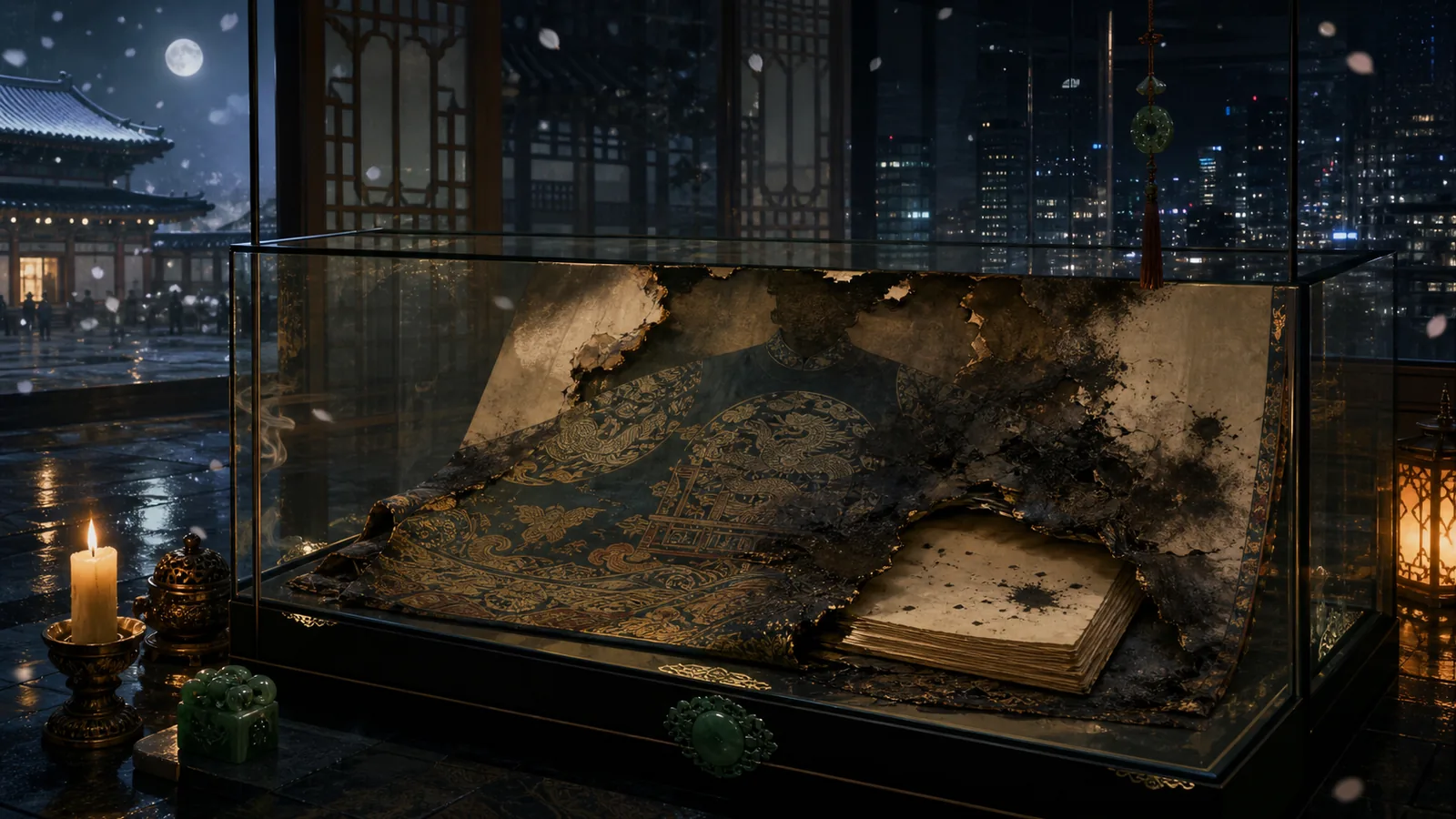
Seo-ri rejects the quiet prison, returns under summer snow, and Joseon gets the runaway ending history never recorded
Seo-ri’s limbo is frightening because it is gentle. No wind, no noise, no loss, no demand to keep surviving. The voice offering it calls it a reward: sever every thread, ill-fated or destined, and she will never again lose the people she loves. For a woman whose lives have been defined by pain, the offer is not absurd. It is the most understandable temptation in the episode.
Memory saves her, not logic. Se-gye’s voice reaches the place with no day or night. The old promises return: his need for her, her vow to carry one memory wherever she goes, his promise not to let her be alone. Seo-ri names the trap clearly enough. This is no reward. Without pain, there is no happiness; without sorrow, joy has nothing to answer. She is offered the past, the present, the future, or another world with no trace of the vixen, and she chooses the life that can hurt.
Her return is pure MRN: snow over Seoul, two people sobbing and arguing before they can even kiss, Se-gye furious that she left him behind, Seo-ri relieved that he is alive, both of them too alive to be graceful. She says she loves him first, again. He complains, again. Love does not wait for the right order anymore.
And Joseon, at last, is allowed a different rumor. Seo-ri believes Cheongheon and Dan-sim found their own road, disguised and running toward Qing, bickering with the same odd little spark that keeps surviving in Seoul. History wrote disappearance. The finale imagines escape.
Seo-ri crashes Mun-do’s press conference, and Se-gye turns the deepfake trick back on him
The Chail resolution is the least delicate part of the finale, but it is satisfying in the old revenge-comedy way. Mun-do plans to face reporters, sidestep direct allegations, and leave for the US branch. Seo-ri walks in as a reporter with the only affiliation she cares to name: Cha Se-gye. Then she announces, in full returned-Dan-sim mode, that Mun-do messed with her man.
The scene is ridiculous on purpose. Seo-ri threatens wrists, Se-gye arrives late because traffic was bad, and Mr. Son pushes the evidence to every reporter in the room. Mun-do tries the same dodge he used when he released Se-gye’s power-trip video: deepfake, fabrication, modern uncertainty. Se-gye was ready. The board has already dismissed Mun-do, Chail’s legal team will not defend him, and Inspector Lee has more than a video. Mun-do’s aide turned himself in with records of every task he was given.
It is not elegant, but elegance was never what Mun-do deserved. The man who believed caring made people weak loses because he never imagined his own staff might stop carrying his dirt.
Seo-ri visits Mun-do in prison, Grandma gets her warm house, and the season ends by the sea
Seo-ri’s prison visit is sharper than the arrest because she does not come to gloat about evidence. She comes to correct the word fate. Mun-do still talks like a man who expects the world to bend back toward him, but Seo-ri rejects the whole idea. Fate, to her, is a garbage notion made by people in power so nobody beneath them dares to rise.
What she believes in now is karma. The show does not pretend Mun-do is redeemed by fatherhood; it lets Seo-ri name the chance he wasted. He could have washed something clean. Instead, he gets the cold prison and the slow work of remembering the door he refused to open.
The epilogue is busy, almost too busy, but its best notes are simple. Dal-su has Seo-jun in the house and his daughters close enough to bicker like family. Gwang-nam becomes exactly the kind of manager Ji-hyo needs. Tae-hee chooses happiness without needing Se-gye to hand it to her. Seo-ri visits Nam Ok-sun’s grave and promises to live fully, surrounded by warmth.
By the sea, the four-season fantasy from Episode 12 stops being a countdown and becomes a plan. Flowers, fruit, trumpet vines, chrysanthemums, beach roses, all the little joys Grandma said have to be enjoyed in their time. Happiness does not earn interest.
Tiny details worth clocking
- The finale answers Grandma’s storm rule by making Se-gye wait in the snow. He cannot hold an umbrella over Seo-ri in limbo, but his voice still stands with her.
- Tae-hee pointing Se-gye toward the portrait gives her a clean final function: not rival, not fake fiancee, just someone who helps him keep waiting.
- Seo-ri’s cheek slap after the reunion is a perfect tiny callback to the show’s body comedy. Proof of life is warmth, pain, and her hand on his face.
- Mun-do being undone by an aide’s records is a neat inversion of his whole worldview. He treated people like tools, then looked shocked when the tools kept receipts.
- The beach scene turns the two-week flower list into a whole-life calendar. Borrowed time becomes both of them planning a yard.
Final verdict
“My Royal Nemesis” is a finale with some bulky furniture in the hallway. The Mun-do takedown has to juggle a board vote, deepfake language, police evidence, an aide’s confession, press-conference theatrics, and Seo-ri’s returned-villainess swagger all at once. The Gwang-nam and Ji-hyo material is sweet, but it still feels like an epilogue subplot getting its own hallway outside the main house.
But the emotional architecture holds. The final enemy was never only Mun-do or Anjong or even fate. It was numbness. Cheongheon tried to save Dan-sim by making her hate him. Seo-ri is offered peace only if she severs every tie. Se-gye nearly dies inside the old punishment of waiting. The finale rejects all three exits. Pain is not noble by itself, but a life without grief would also erase Grandma’s warmth, the brine stone, the seasonal fruit, the stupid jealousy over kiss scenes, and the person waiting in the snow.
That is the season’s final answer, anchored in Seo-ri’s choice to come back: love is not silence, possession, or protection that leaves someone alone. It is the courage to stay reachable, to say the words before history edits them, and to keep choosing the world where happiness arrives in season and never earns interest. For a show that started with a woman erased into villainy, letting her end as a frost flower living freely is exactly the right kind of reward.
Rating: 9.1/10 — a slightly crowded but deeply satisfying finale, strongest when Seo-ri rejects painless oblivion, Se-gye calls her home, and the season turns borrowed time into a life they can finally spend.
More episodes from My Royal Nemesis — Joseon villainess in modern Seoul, episode by episode. Jump to any episode in the season:
Where to go next
Reviewed by Mira Vance · QuizFandom Editor & Lead Reviewer. Every rating is an honest per-watch assessment from the desk that also writes the quizzes — not a press release rehash.