Outlast: The Jungle Episode 3 Review: "Burned Out" — Sean's evacuation, Sarah's fracture point, and the vote that turns camp language into a weapon
What happens — the short version (spoilers)
- Sean's burn aftermath and medevac strip away any illusion of a safe game.
- A sunset deadline forces camps to choose between a player and a supply.
- Sarah becomes the camp's most convenient blame point.
- The vote stops sounding strategic and starts sounding personal.
- Sarah's machete theft reads as revenge and a signal of hardening lines.
- Charlie still cannot get fire, so every argument feels justified by the conditions.
The third hour is the season at its ugliest so far. It opens with Sean's injury aftermath and never lets anyone forget that a dumb split-second mistake can turn into a medevac, then it uses that shock to sharpen the social lines everywhere else. Charlie is stuck trying to become a team while also deciding who is expendable, and Sarah ends up at the center of the mess because she is useful, loud, and easy to blame all at once. The episode keeps asking whether the board can keep pretending to be a team game after everybody has started talking like enemies.
Sean’s burn forces the whole board to look at what “outlasting” actually costs
The hour starts in the aftermath of Sean falling into the fire at Bravo Camp, and that is the right way to frame the episode. Nobody can keep pretending this is just about shelters and votes when an ambulance and a medevac are part of the same story. The camps watch the helicopter leave, and the reaction is split between concern, relief, and the uncomfortable truth that one less player changes the math.
That response matters because it strips away the fake softness. People say they feel bad. People also say the board is smaller now and that changes the money. The show does not need to pick a side for them; it just lets the contradiction sit there. That is what makes the hour feel sharp. The game rewards cold calculation, but the body keeps interrupting the calculation.
A sunset offer gives every camp the same rotten choice: keep a player or take the supply
The episode’s central twist is the one that really exposes how the season works. A note offers fire, hunting, or shelter in exchange for a player flaring out by sunset. The language is simple and mean. If you want the resource, you have to make a sacrifice. If you keep the player, you keep the struggle.
That turns the rest of the episode into a debate about loyalty that everyone already knows is fake at the edges. One camp says it would never trade a teammate. Another says it needs fire too badly to ignore the offer. Charlie especially becomes the place where the argument gets personal, because the people making decisions are also deciding who they can live with tomorrow. The jungle is not subtle about this. It never asks whether survival makes people selfish. It asks how quickly they will admit it.
Sarah becomes the camp’s easiest target, and the vote stops sounding like strategy
Sarah’s problem is not just that people think she is hard to deal with. It is that once the team starts talking about resources, every annoyance gets inflated into a reason. She is loud, she is emotional, and she keeps pushing back when she feels dismissed. The camp starts talking about her as if the real issue is the noise she makes instead of the fact that everybody is tired, hungry, and already looking for a clean way to get more fire.
The vote is where the hour gets especially nasty. People stop pretending they are weighing the whole team and start talking about Sarah like she is a problem to be solved. Sarah fires back, points out the hypocrisy, and makes the point that the team has been using her work when it suits them. That is the moment where the episode’s title really earns itself. Everybody is burned out, but the one person getting treated like a liability is the one still doing the work.
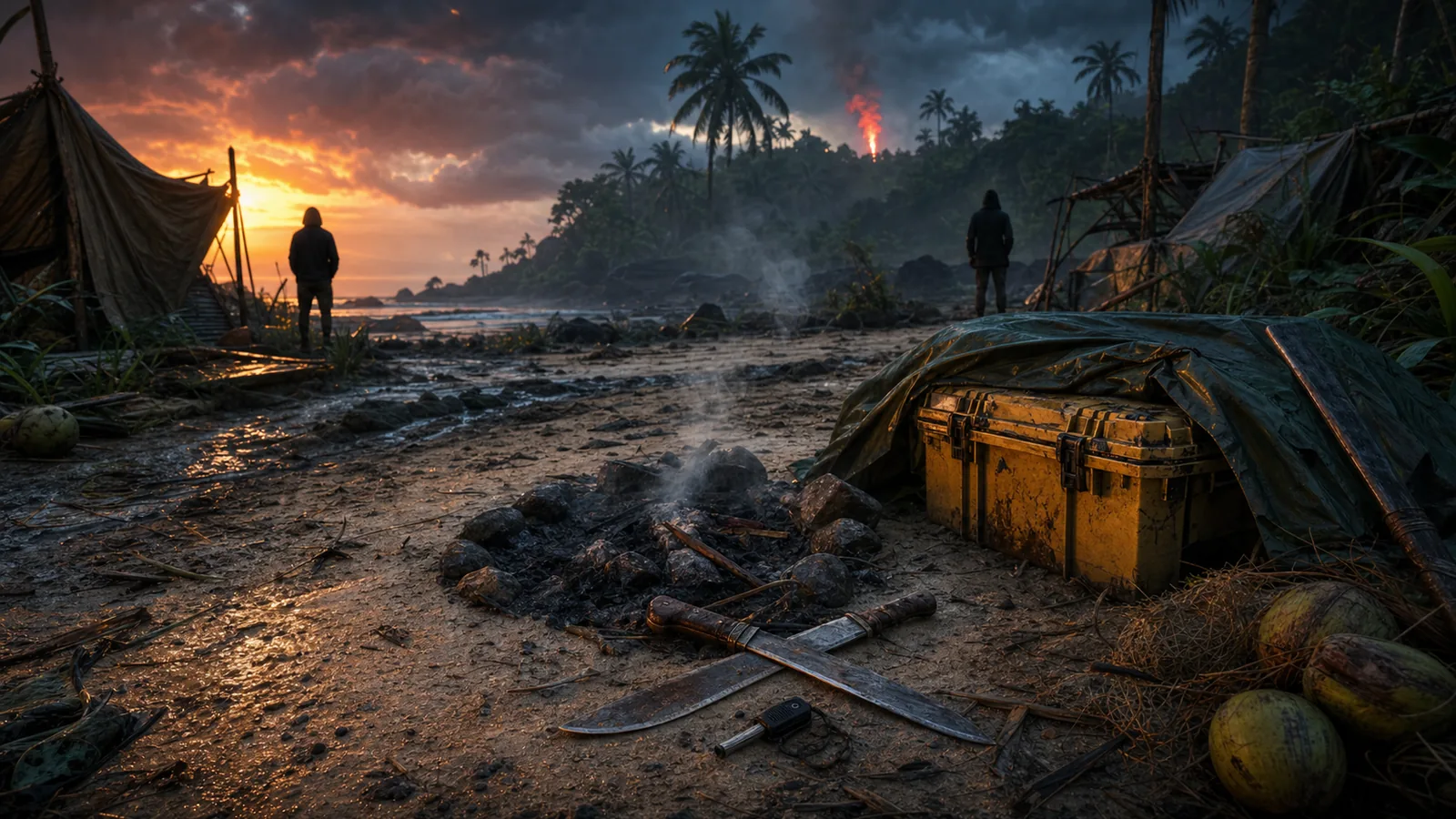
Sarah’s machete theft is revenge, but it also exposes how fast the board is hardening
The machete theft is one of those moves that tells you exactly how far the season has drifted from clean play. Sarah takes two machetes from Charlie, and the response is immediate fury. Charlie treats it like proof that she was never trustworthy. Sarah treats it like payback for the way the camp has been treating her. Both things can be true.
What makes the scene work is that the show does not make the theft feel clever in a shiny, game-theory way. It feels petty and understandable at the same time. That is why it lands. The camp has already decided that people can be graded by usefulness, so Sarah responds by reminding them that she is not a free resource. In a different show, this would be a twist. Here it is just the next consequence.
Charlie keeps trying to talk itself into a team while the fire keeps not happening
Even as the social temperature climbs, the practical failure underneath it all stays the same. Charlie still cannot get a fire going, and without one the team cannot cook, cannot boil water, and cannot get the smoke that would help with bugs. The hour keeps pulling the camera back to that simple reality while the players talk about morale and work ethic.
That is the good stuff in the episode. The camp’s biggest problem is not just Sarah or even the vote. It is that every single day without fire makes the arguments feel more justified. If the team had food and dry shelter, maybe the social friction would look smaller. Without those things, every complaint sounds like evidence. That is why the episode feels so bleak. It is not a bad mood. It is a structural one.
Tiny details worth clocking
- The helicopter response after Sean’s injury is the season’s clearest reminder that the game can cross from strategy into emergency instantly.
- The sunset deadline on the supply offer is what makes the episode breathe like a pressure cooker.
- Sarah keeps saying the others are disrespecting her work, and the show never gives her a totally wrong read on that.
- The machete theft is framed as a revenge move, which makes the group’s anger feel earned even when it is also hypocritical.
Final verdict
This is the first episode that really feels like the game is chewing on the players instead of the other way around. Sean’s injury hangs over everything, and Sarah’s isolation gives the hour a mean center of gravity that the season was building toward. The important thing is not simply that Charlie votes somebody off. It is that the team has already started treating survival as a justification for everything, including cruelty. Once that logic sets in, every resource becomes both a prize and an excuse.
The episode’s best idea is also its ugliest one: the board only keeps working if people are willing to tell themselves that their behavior is practical. Sarah’s theft, the vote, the talk about fire, the constant focus on who is helping and who is hurting the camp. It all fits together. That is what makes the hour sting.
Rating: 8.4/10 — A harsh, bruising chapter that makes the season’s social decay feel impossible to ignore.
More episodes from Outlast: The Jungle — Panama survival game, team politics, and million-dollar pressure. Jump to any episode in the season:
Where to go next
Reviewed by Mira Vance · QuizFandom Editor & Lead Reviewer. Every rating is an honest per-watch assessment from the desk that also writes the quizzes — not a press release rehash.