The Master Cutter Episode 28 Review: "Episode 28" - Tonet Becomes Netchai, Emerson Breaks, and Raki Roman Becomes the Target
What happens — the short version (spoilers)
- Tonet leaves Karla and decides it is time to confess the truth she has been carrying.
- Emerson first thinks Tonet has a crush on him, until she calls him Big Brother and the joke drops out.
- The flashback explains why Emerson cannot forgive quickly: he remembers losing Netchai and being left with the guilt.
- Emerson rejects Netchai and turns his anger on Atoy, while Cita gives Tonet space to hurt without pushing.
- Queenie's laptop gives Atoy the Raki Roman lead, moving the missing-women case from grief into pursuit.
Episode 28 lets the family wound take over before snapping Queenie's case into a sharper direction. Tonet finally tells Emerson she is Netchai, his long-lost sister, but the reunion curdles into old abandonment, public humiliation, and a near-fight with Atoy. Underneath the pain, Atoy keeps working: the missing women share an age range and weak family support, Queenie's laptop still holds her MatchTayo login, and her last conversation points straight to Raki Roman.
Tonet leaves Karla and decides to confess
The episode begins at the bar, where Karla is finally admitting Tonet may have been right about Gavin liking her. Gavin looked jealous of Raki, Karla says, and she is pleased enough to tease herself. Tonet should be having fun with that. Instead, Cita’s advice about Emerson keeps echoing.
If Tonet has really become a good person, maybe her brother will not reject her. That hope is enough to pull her out of the bar. She leaves Karla behind and returns to the shop, where Cita scolds her for disappearing during work hours.
Tonet does not dodge this time. She says she will follow Cita’s advice and confess. Cita still thinks this is a romantic confession to Emerson and happily gives her permission to go. Ibyang overhears and, because she hears every wrong thing at exactly the right time, decides to support Tonet so Ame will lose a rival for Atoy.
The scene is funny on the surface, but Tonet’s face keeps the stakes clear. She is not going to flirt. She is going to ask whether the brother she hurt can recognize her and maybe forgive her.
Emerson thinks Tonet has a crush until she calls him Big Brother
The confession starts as a public comedy of errors. Tonet arrives with puff pastry. Emerson immediately assumes the thing everybody else has been assuming: she likes him. He remembers the puff pastry and wallet she left before and tells her he already knew she had feelings.
It is excruciating because Tonet is trying to say something sacred and Emerson is turning it into ego. He explains, with awful confidence, that she is beautiful but too young for him. The crowd eats it up. Paldo gets jealous. Ibyang declares she supports Sis Tonet. Everyone thinks they are watching romance.
Then Tonet speaks in Visayan and calls him Big Brother Emerson.
That stops the joke cold. Emerson knows nobody in Manila calls him Big Brother. Tonet finally says it: she is Netchai, his sister. Emerson repeats the name like it has come back from a place he had locked away.
The public setting makes the reveal worse. There is no private room, no gentle sit-down, no careful approach. Just a crowd, a wrong assumption, and a brother realizing the woman he thought was crushing on him is the child who left him years ago.
The flashback explains why Emerson cannot forgive quickly
The flashback is devastating because it makes both siblings easy to understand. Young Emerson sings to Netchai and promises he will always be there even if their mother is not. He plans to save money, go to Manila, work, and let her study. They promise not to leave each other.
Then their mother returns. Emerson wants to bring Netchai with him to Manila, but the mother asks the child who she wants to go with. Netchai chooses their mother because she wants to be with her too.
For Emerson, that choice is the abandonment everything else grew around. He had been mother and father to her. He cared for her, planned for her, and built his own survival around keeping her alive. When Netchai chose their mother, he lost the person he loved most.
For Netchai, the choice became a different punishment. Their mother later left her and built another family. Netchai says she did everything to survive in Manila and did everything she could to find Emerson so she could say sorry.
That is why the scene hurts. Netchai was a child. Emerson was also still too young to carry that much responsibility. The wound is not fair to either of them, but it is real enough that an apology cannot erase it in one afternoon.
Emerson rejects Netchai and turns his anger on Atoy
Netchai asks for forgiveness. Emerson hears the apology and cannot receive it. He asks what she wants from him now. Pity? He tells her she does not know the agony he went through alone in Manila, that he came there to keep her alive because she was his only family, the sibling he loved most.
Then he says it is too late.
He orders her to leave. When Cita intervenes, the whole neighborhood learns the truth: Emerson has a sister. The crowd turns messy, as it always does, but Emerson’s anger finds a familiar target. Atoy steps in only to stop him from hurting people, and Emerson lashes out at him for always acting like the main character, the blessed one, the best.
Atoy refuses to fight. He keeps telling Emerson he understands and that nobody wants to fight him. The crowd turns it into a spectacle anyway, chanting both names and treating the family breakdown like a match. Emerson swings, Atoy dodges and contains it, and the moment ends with Emerson more humiliated than helped.
The scene is uncomfortable in the right way. Atoy is trying not to escalate, but his very presence makes Emerson feel smaller. Emerson’s anger at Netchai has old roots; his anger at Atoy is the local version of the same wound, the feeling that everyone else gets to be chosen.
Cita gives Netchai space, while Emerson’s friends tell him the obvious
Afterward, Cita tells Netchai to leave Emerson alone for now because he is shocked. Karla is hurt that Tonet never told them she had a sibling, and Tonet apologizes, explaining she held back once she learned Emerson and Atoy were enemies.
Atoy immediately objects to the word. Emerson is not his enemy. If Emerson has an issue with him, Atoy does not have an issue with Emerson. It is a small correction, but it matters. Atoy refuses to turn Emerson’s pain into a rivalry just because the neighborhood wants one.
Ame, meanwhile, gives the harsh practical version: maybe if Emerson cuts Tonet off, it is a blessing in disguise. No siblings, no enemies, no problems. Tonet answers that being aloof and loveless is not exactly a life goal, and she leaves with the wound still open.
Even Emerson’s friends know he is not done with the feeling. Paldo jokes about maybe becoming his brother-in-law if Tonet liked him. Others tell Emerson to forgive his sister because the past was a long time ago. Emerson snaps that he raised her and did not abandon her. He still says it with pride, which means the love is not gone. It is just buried under the anger.
Queenie’s laptop leads Atoy to Raki Roman
The casework returns with a cleaner profile. Atoy has noticed the missing women are around 18 to 21 years old, often without family in the city, or with family they do not get along with, or with only a guardian. Father Peping insists he checked on Queenie often, but she never mentioned trouble. Atoy explains that teenagers may be more comfortable talking to peers than to older people.
Then the laptop becomes the key. Queenie had been on it a lot lately. Atoy asks whether she might have used MatchTayo, the same app tied to Mandy. The laptop is still logged in through the default browser setting, so Atoy gets into the account.
The last chat matters immediately. Queenie was supposed to meet someone last Friday, the last day before she disappeared. The messages do not show where, but the person asked for her phone number, which means the final arrangements likely moved to calls or texts.
The name on the chat is Raki. Raki Roman.
The episode then cuts back to the bar, where Raki is bothering Tonet, trying to make her sit with him after she says she wants to drink alone. A bartender tells him to leave Tonet alone. That is all the audience needs. The charming vocalist Karla idolized is now connected to Queenie’s last contact and is already ignoring a woman’s no.
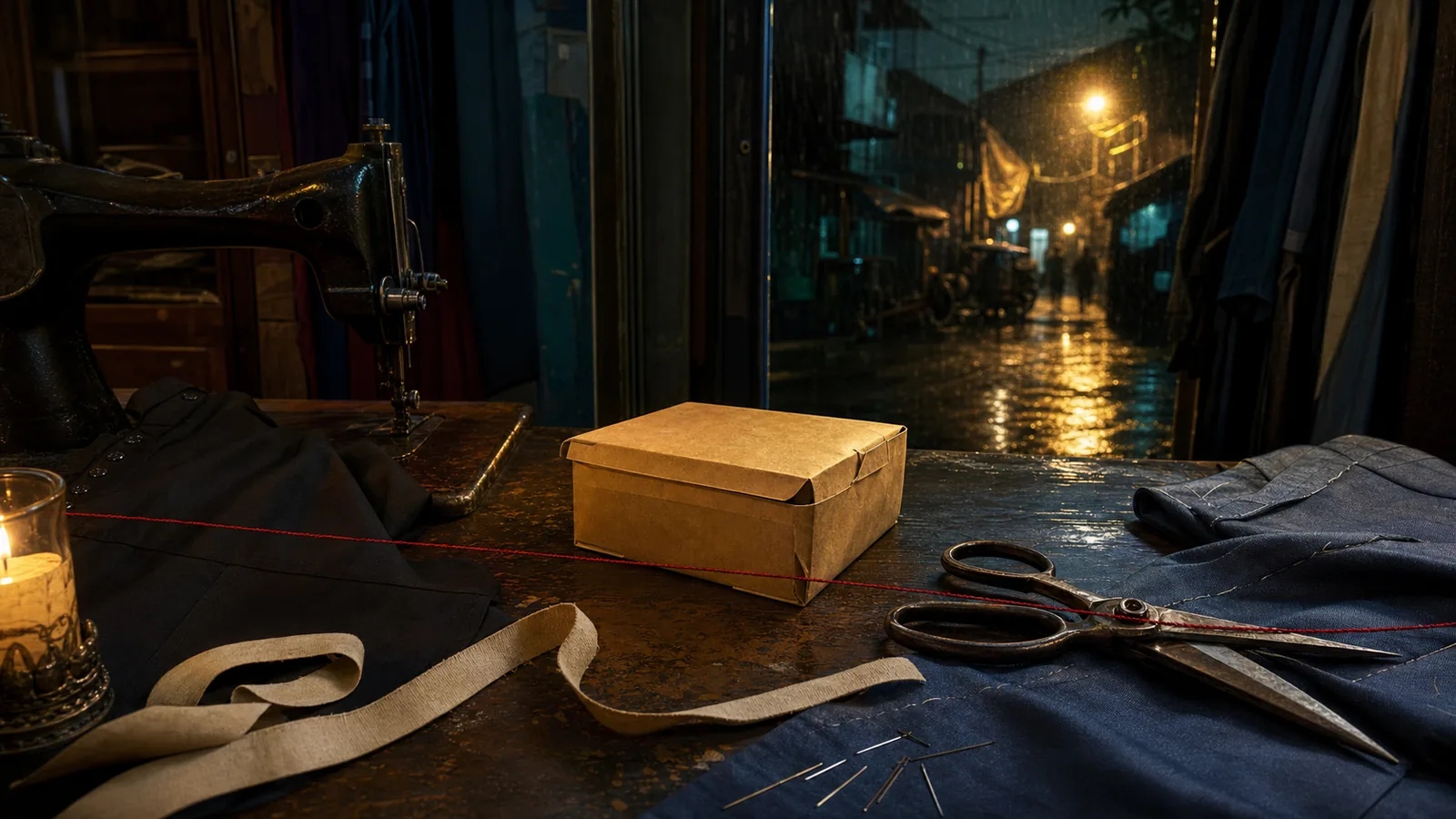
Father asks whether Atoy can find him. Atoy’s answer is pure Master Cutter: even if Raki hides in the eye of a needle, he will find him.
Tiny details worth clocking
- Cita still thinking Tonet’s confession is romantic makes the reveal funnier for about three seconds before it becomes painful.
- Emerson calling Tonet “young lady” while rejecting her imaginary crush is unbearable once we know he is talking to his sister.
- The lullaby finally explains why “Ili-Ili Tulog Anay” shut Tonet down at the bar.
- Atoy refusing to call Emerson an enemy is one of his better choices in a scene where everyone wants a fight.
- Emerson saying he raised Netchai keeps the anger tied to love, not simple cruelty.
- The missing-women profile makes Queenie and Mandy feel targeted, not random.
- Raki ignoring Tonet’s refusal at the bar is a sharp behavioral clue before Atoy even reaches him.
Final verdict
“Episode 28” is a raw family episode wrapped around a procedural breakthrough. The Tonet/Netchai reveal could have been a quick twist, but the show lets it hurt. Emerson’s anger is ugly, public, and sometimes unfair, yet the flashback makes it impossible to dismiss. He was a child trying to parent a younger child, and when she chose their mother, he felt erased.
That does not excuse how he treats Netchai now. It does make the mess human. Cita, Atoy, Karla, Ame, Ibyang, Paldo, and the whole neighborhood all react in their own flawed registers, which makes the reunion feel lived-in instead of sealed off in melodrama.
The Raki Roman turn gives the hour its hook for the finale stretch. Queenie’s last MatchTayo contact is not an abstract username. He is the same charismatic musician Karla just met and the same man we see pushing past Tonet’s boundary. The family wound is not healed, but the case finally has a face.
Rating: 8.9/10 - an emotionally bruising Tonet/Netchai reveal episode that still moves the Queenie case forward with a strong Raki Roman cliffhanger.
More episodes from The Master Cutter — Filipino action tailor drama, episode by episode. Jump to any episode in the season:
Where to go next
Reviewed by Mira Vance · QuizFandom Editor & Lead Reviewer. Every rating is an honest per-watch assessment from the desk that also writes the quizzes — not a press release rehash.