Monarch S1E10 Review: The Way Out Costs One More Shaw
Keiko walks back into 2015 because her granddaughter found her. Lee Shaw walks off the hopper because somebody has to lure the Titan, and the season ends with a curse only half broken.
For ten episodes this show has held two timelines apart and dared you to guess which generation pays the bill. “Beyond Logic” finally hands it over. Keiko Miura (Mari Yamamoto), missing since 1959, walks out of the gravity-warped underworld 56 years later because Cate Randa (Anna Sawai) fell through the same hole and found her. The exit costs Lee Shaw — both versions, young (Wyatt Russell) and old (Kurt Russell) folded into one act of arithmetic he does without telling anyone — and it costs Monarch its monopoly on the answer. The season closes on Hiroshi Randa holding his mother for the first time in half a century while alarms blare and something larger than the rift starts moving. Chris Black and Matt Fraction end the season the way the MonsterVerse rarely lets a story end: with the humans squarely in frame and the monster as weather.
The reunion is engineered to refuse closure
The opening twenty minutes are a slow-rolling family disaster, played out without softening the math. Keiko is helping Cate up from a fall — the same fall that took Keiko in 1959 — when she asks the question that breaks the episode open. How long has she been down here. By her estimation, 57 days. The voice that answers her isn’t Cate. It’s Lee, hiding behind a tree because he knows what his face will do to her, asking her not to come out until he can warn her first.
The blocking is precise. Wyatt Russell stays at the edge of frame while Kurt Russell’s voice does the work, and Keiko has to absorb a 56-year arithmetic problem from someone she still thinks is twenty-five. He tells her his recon mission was in 1962. He thought it took a week. It took twenty. He has been back on the surface for thirty-three years. The math lands and Keiko has to do it twice before she’ll say the year out loud. “Is it 2015?” Keiko (Mari Yamamoto) plays it as a low, near-physical sound — the noise a person makes when grief and disbelief refuse to take turns.
Then the next blow. Billy is dead. He died a long time ago, Lee says, and Kurt Russell delivers the line as if he has rehearsed it on the way down. The exchange that follows — Keiko sobbing for a husband she lost three years ago in her experience, Lee telling her Hiroshi is fine, Cate stepping out of the trees with “I’m your granddaughter” — does what the season has been building toward since the pilot. It collapses three timelines into one body. The show could have played this with the score crashing. Instead it lets Yamamoto and Sawai breathe through it.
Kentaro and Hiroshi finally have the argument the season has owed them
Cut to Tokyo, daylight, and the only confrontation that has been getting bigger every episode the writers refused to stage it. Kentaro (Ren Watabe) calls his father out for the Alaska gambit. Hiroshi Randa (Takehiro Hira) admits he was trying to draw a Titan to open a rift to prove the network exists — to prove his parents weren’t crazy, to prove G-Day didn’t have to happen. Kentaro’s verdict is the one the show has been earning. Cate isn’t dead because of Monarch. Cate is dead because of us. Because I believed in you.
Hiroshi’s reach for reconciliation is the clearest thing the writers have given Takehiro Hira to play. He offers Kentaro a working relationship — help me find a way for the human species to survive, help me solve the secret of co-existence — and Kentaro refuses on the only terms that scan. Our family doesn’t exist. Not anymore. The door closes on Hiroshi looking at the wall like a man who has finally heard a price he can’t argue down.
What makes this thread land at finale length is how the script keeps it asymmetric. Kentaro doesn’t get to be right and walk away. By the back half of the hour, Tim has arrived at Hiroshi’s door, with Kentaro behind him, telling Hiroshi about a coherent signal coming from inside the rift — a signal Monarch won’t chase because Hatch has seven billion people to worry about and won’t peel off resources for three. Tim quit. May is gathering them in a back room owned by Brenda Holland because, as she puts it later, somebody had to pay for all this. Kentaro’s “I’m in, but first help me find my sister” is the line that flips the season’s villain ledger. Monarch is not the only game in town. Apex Cybernetics was never going to let that be true forever.
Keiko chooses to stay, and Shaw makes the choice for her
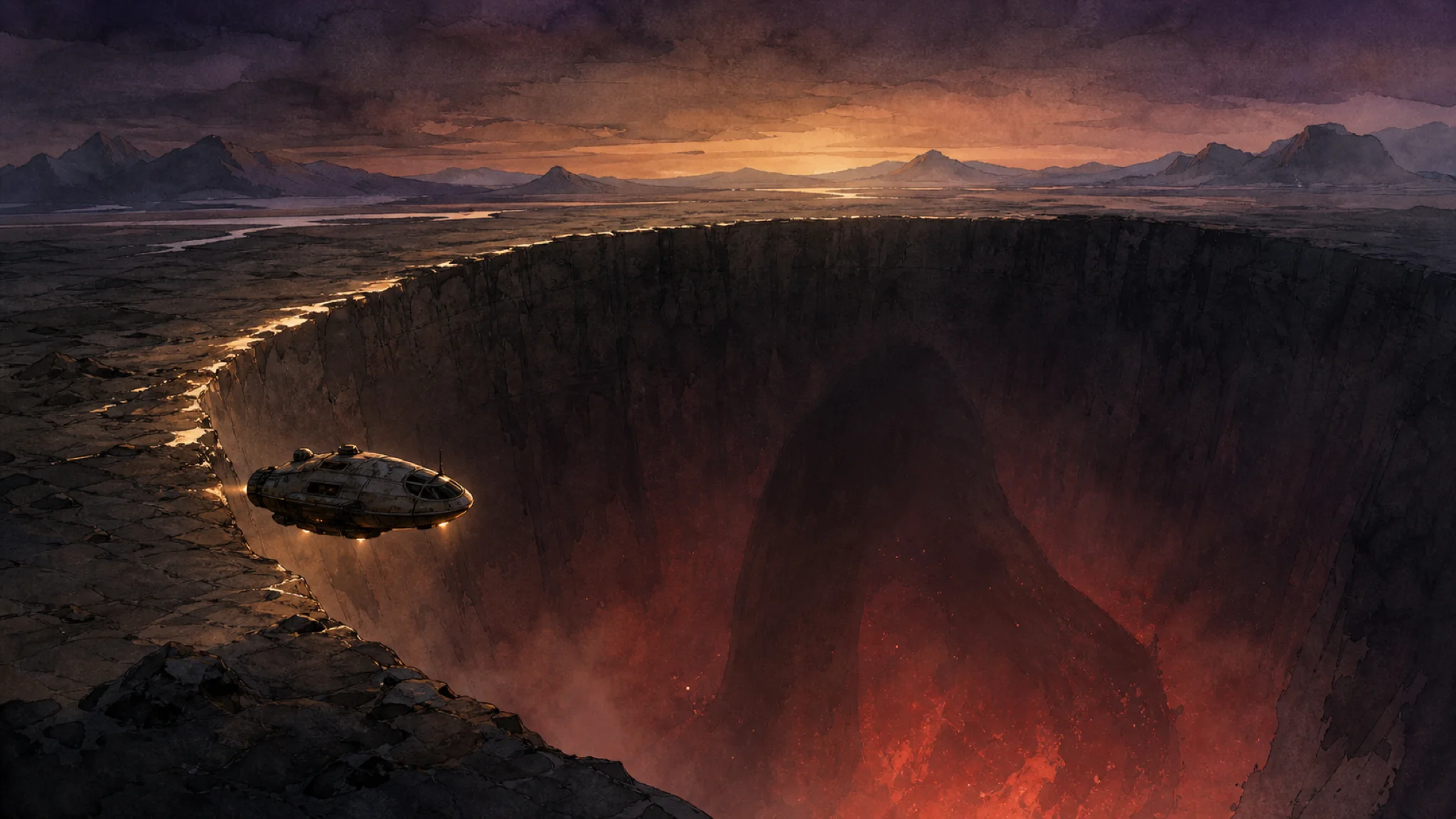
The rescue sequence has been telegraphed since Lee’s pod was hauled out of the desert in episode two. The hopper is where he left it. Fifty-three years and it still has juice. The plan is clean — wire it up, lure a Titan with the device, ride the rift the Titan opens on its retreat. The plan does not survive contact with a Titan that was already in Axis Mundi.
Before the launch, Keiko tells Lee she’s staying. The speech is the second-best scene in the episode and the one that justifies the whole 1959 timeline. Billy is gone. Hiroshi grew up without her. She is not going to reappear suddenly in the life of a son she lost and ruin it twice. The monsters have taken everything from her. This curse, she says, is broken. Mari Yamamoto plays it as resolution, not surrender — a woman who has done the audit and won’t let love be confused with cost.
Lee answers the only way the show could let him answer. You still have work to do up there. And we need you. Kurt Russell’s reading is small enough that it scans as practical advice and large enough to mean something else. He has already done the math she just refused. When the Titan that comes through the rift goes the wrong way — leaving instead of fleeing, taking the open rift with it — Lee unstraps and goes outside with the device. My job, he tells her, when she asks what he’s doing.
The hand-grab on the hopper skid is the season’s image. Keiko has him by the wrist. Lee tells her it’s too much weight. He thanks her for everything and lets go. Young Lee does the screaming. Older Lee does the goodbye. The show splits the character across two actors one last time and lets the older one take the exit. Whether Lee is dead or stranded in Axis Mundi again is the question the season is happy to leave open. What it makes definite is that he chose the same trade twice — Keiko’s life for his — and the second time he didn’t need a recon mission to make it.
What this episode argues
The MonsterVerse on film keeps telling you the Titans are weather. Humans run from them, build around them, occasionally pet one. Monarch’s series finale argues that the price the weather charges is generational, and that human institutions — Monarch in 1959, Monarch in 2015, Apex behind Brenda’s smile — keep restructuring the bill so the same families pay it. Billy paid. Lee paid twice. Keiko paid in years. Hiroshi paid in a son who finally said our family doesn’t exist. Cate is the one the show puts back in front of her father at the end because she is the only Randa who has been on both sides of the rift and survived.
The closing tableau is precise about this. Hiroshi holds Keiko for the first time since he was a boy and apologizes in Japanese, and the apology lands on a mother who has been gone long enough that her son is older than she is. Cate introduces Kentaro to their grandmother as her brother — not half-brother, not the word the season has been using. Then Brenda interrupts with medical and debriefing, alarms blare, the building shakes, and we cut to a Titan emerging from somewhere it shouldn’t be. The reunion gets ninety seconds. The next event has already started.
That is the season’s thesis as cleanly as it gets stated. The family question and the monster question are the same question. Monarch was built to keep both contained. It can no longer do either. Whoever is paying Brenda is in the room with the answer Hiroshi has spent his career chasing, and Hiroshi is now working for them because his daughter walked out of the rift.
Verdict
A finale that does the hardest version of what a season closer can do — it pays out the emotional debt the pilot opened and refuses to call the result a victory. The Keiko/Lee/Cate triangulation in the cold open is the best sustained scene Mari Yamamoto has been given on the show, and Kurt Russell’s vocal performance from behind a tree is a small clinic in how to use voice when a face would oversell the moment. The Kentaro/Hiroshi confrontation is the writing the season has been quietly underpricing. The hopper sequence is the right kind of action — physical, math-driven, paid for in a body.
What costs it the half-point is the Apex pivot. Brenda’s appearance at the rescue site lands as plot velocity rather than character, and Tim quitting Monarch happens in a single line of dialogue when the show has spent half the season making Monarch feel institutional. The signal-from-inside-the-rift threading is elegant in concept and rushed in execution; the audience is asked to absorb Apex as the new operating environment in the last fifteen minutes. If season two earns it, the finale will read better in hindsight. As shipped, it reads as a show clearing the deck for a chapter it isn’t writing yet.
Rating: 8.6/10
More episodes from Monarch: Legacy of Monsters — The MonsterVerse goes prestige — Godzilla and Kong meet the Randa family, episode by episode. Jump to any episode in the season:
Where to go next
Reviewed by Mira Vance · QuizFandom Editor & Lead Reviewer. Every rating is an honest per-watch assessment from the desk that also writes the quizzes — not a press release rehash.