Money Heist Season 2 Episode 1 Recap: Raquel Finds the Professor's Trap
Money Heist (La Casa de Papel), Season 2, Episode 1 Antena 3 / Netflix · Created by Álex Pina · 2017
Raquel reaches Toledo, the Mint crew fractures, and one missing phone call makes faith feel like a risk.
At the Toledo estate, Raquel Murillo has the kind of evidence board a police inspector dreams about: fingerprints, pharmacy records, a blackboard full of planning marks, and enough leftovers to make the house feel recently abandoned.
That is the problem.
The Royal Mint robbery resumes with abundance as the suspicious thing. The Professor has left Raquel too much. Anchovies, cigarette butts, gum, toothpicks, yogurt, stolen pharmacy files, Tokyo’s prints: every detail points somewhere, and every detail also feels like a hand shoving her toward the wrong door.
Inside the Mint, the crew has the opposite problem. They have no information at all. Berlin keeps calling. The Professor does not answer. Eighteen hours have passed without contact, and the rule from Toledo says they still have one call left before panic becomes procedure.
Tokyo is already there.
Raquel calls Alberto to the Toledo estate
Raquel’s first move is refusal.
The Toledo house should freeze the investigation for days. Tokyo’s voiceover says that was the Professor’s intention: leave enough DNA and false direction to waste time while the Mint keeps printing. Instead, Raquel looks at the mess and decides the mess is the clue.
She calls Alberto Vicuña, her ex-husband and a forensic inspector good enough to make the personal humiliation worth it. Suárez asks if she means her ex. She does. Raquel does not have room for pride when the house refuses to make sense.
Álvaro Morte’s Sergio is still standing beside Raquel as Salva, still smiling with soft concern, still pretending he is the civilian boyfriend caught in police weather. He has already seen how close she is. He has also found a message in her notebook from Paula’s teacher, a reminder that Raquel’s private life has been invaded from every direction: her daughter, her ex, Ángel in a coma, and this man beside her who knows more than anyone in the field.
Raquel asks Salva if she should quit the case.
It is a dangerous little scene because he cannot answer honestly without exposing himself. He needs her confident enough to keep making choices he can predict, but not confident enough to beat him. So he gives her encouragement that sounds loving and lands like sabotage. Nobody is better than her for the case, he says. She hears comfort. He is buying time.
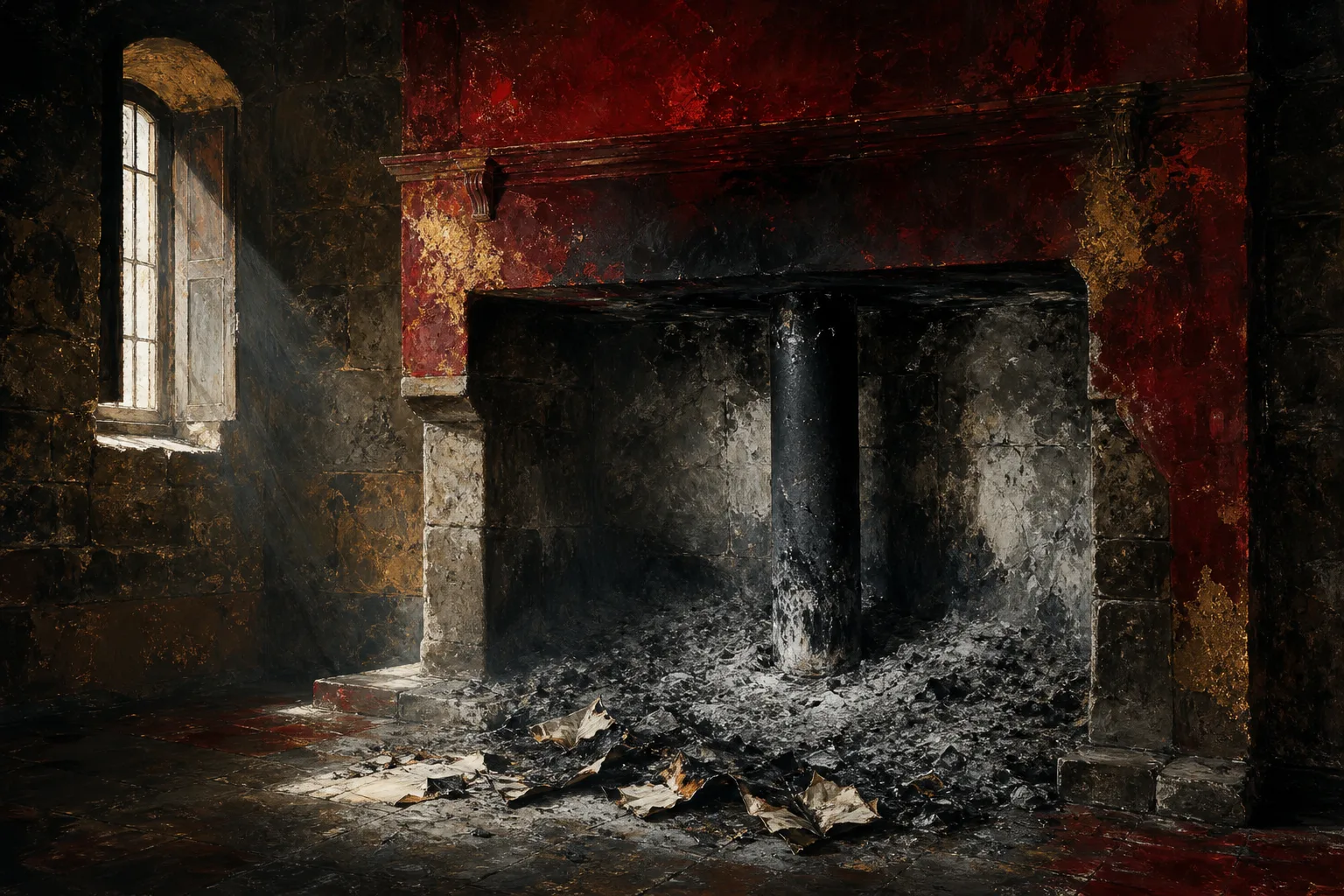
Then Alberto arrives and does the one thing Sergio cannot allow. He ignores most of the obvious evidence. A crew smart enough to enter the Royal Mint would not leave the whole robbery written out for the police. If anything mattered, Alberto says, it would be in the chimney, stuck in ash and brick after the burn.
The old Toledo fantasy starts to close around him.
Berlin and Tokyo split the crew over Plan Chernobyl
Inside the Mint, Berlin tries to keep fear on a timetable.
Pedro Alonso’s Berlin calls the Professor at the scheduled hour. No answer. Third failed call. Eighteen hours with no word. In Toledo, the Professor had told them to wait through a four-call cycle before assuming he had been arrested and interrogated. Berlin treats that rule as gospel because rules are the only thing keeping the room from turning on itself.
Tokyo hears the silence as proof.
Úrsula Corberó’s Tokyo has never trusted stillness. She can follow a plan while it moves. She can survive bullets, convoy raids, and bad odds. But waiting while the person outside may already be in police hands is torture for her, and Berlin’s calm makes it worse. When she throws his illness in his face, the line is cruel, but the fear behind it is honest: if Berlin has nothing left to lose, everyone else is stuck under his appetite for theater.
Berlin responds by naming the fallback none of them wanted to hear.
Plan Chernobyl.
Moscow asks what it means. Berlin declines to explain. That is almost worse than an answer. A secret emergency plan in Berlin’s mouth does not sound like rescue.
The news confirms enough to break the room. The crew sees the Toledo estate on television. They see the investigation closing in. Then the signal drops. Tokyo wants Plan Chernobyl now. Berlin says they wait. The vote splits fast: Helsinki and Moscow stay with Berlin, Rio and Denver move with Tokyo, and Nairobi has to choose which disaster she trusts.
Alba Flores’ Nairobi chooses Berlin because she still believes the Professor will call unless he is dead.
That vote hurts Tokyo because it is not only tactical. Rio picks her. Denver picks escape. Moscow picks the original promise. Helsinki picks the man who gave them the plan. Nairobi picks discipline over fear.
Berlin wins the room without calming it.
Denver tells Mónica she has Stockholm syndrome
The ugliest argument here starts as an accusation against Berlin and becomes a mirror for Denver.
Nairobi calls Berlin out for Ariadna. She says what everyone can see and what Berlin dresses up in velvet language: Ariadna is a hostage. Berlin insists on romance. Nairobi hears coercion. Then Denver admits that he is with Mónica Gaztambide too, and the room turns on him with a different kind of pity.
Moscow knows his son. Nairobi knows the name for what might be happening. Denver hears “Stockholm syndrome” and treats it like a fever they can beat together.
That would be funny if it did not cut him so badly.
Jaime Lorente’s Denver takes the fear to Moscow first. He swears he never forced Mónica. He brought her food. She kissed him. He danced for her. Moscow answers with class panic instead of comfort. Mónica is educated, pretty, refined, a civil servant, and previously with Arturo. Denver, in Moscow’s eyes, belongs to another life entirely.
Denver hears the old verdict: know your lane.
So when he checks Mónica’s wound, he ruins the tenderness before she can. He tells her she is his hostage, not his girlfriend. He says she has Stockholm syndrome. He asks whether she would have noticed him on the street if he had asked for change in a bar.
Mónica does not answer that question because the question is built to punish him.
Esther Acebo’s Mónica keeps asking the cleaner one: does he have feelings for her? Denver says yes, then steps away because he thinks refusing her is the decent thing. He is wrong and not entirely wrong. The situation is rotten. His feelings are real. Her choice matters. His guilt matters too.
She does not have the codename Stockholm yet, but the word enters the Mint here like a dare. Denver uses it as diagnosis. Mónica hears it as an insult to her agency.
Helsinki says goodbye to Oslo
Helsinki has carried Oslo’s body longer than anyone wants to say out loud.
The robbery keeps demanding motion: print bills, watch hostages, dig the tunnel, answer calls, hold formation. Grief does not fit that schedule. Oslo lies beyond recovery, and Helsinki has to make the decision nobody else can bear to frame as a decision.
Darko Perić’s Helsinki brings him to a storage room and puts him down gently. Tokyo’s narration asks for mercy on his behalf. Helsinki does not kill out of anger. He ends a suffering that the heist has been dragging from room to room.
There is no speech big enough for it.
He presses the pillow down, breaks afterward, and closes Oslo’s eyes. The Mint has had plenty of violence by now, but this death feels different because it is quiet and private. Oslo is already gone in every way that lets a person return. Helsinki still has to do the last human task.
That quiet sits beside Berlin’s scene with Ariadna and makes Berlin look smaller.
Berlin tells Ariadna about first times and last times. He says he has months to live and wants to remain inside her memory. Pedro Alonso’s Berlin can make doom sound elegant, but the room does not become less predatory because he speaks softly. Ariadna is still a hostage trying to survive him.
The contrast is brutal. Helsinki loses someone he loves and asks for nothing from him. Berlin faces death and tries to plant himself in someone else’s mind.
One man grieves.
The other performs.
Tokyo takes Berlin at gunpoint
Tokyo does not accept the vote as the final word.
She has already asked Rio for one impossible favor: when the blood starts, turn yourself in. Rio refuses and hides a private stash of cash behind a bathroom tile, as if a few hundred thousand euros can buy them a second life after prison. Tokyo knows better. She still wants him alive enough to make plans without her.
By the time the final call fails, patience sounds like surrender.
Tokyo, Rio, and Denver load weapons. Berlin is in his office. Helsinki has just ended Oslo’s suffering. The Professor is still silent. The crew’s original chain of command has stopped feeling like protection.
So Tokyo breaks it. She moves with Rio and Denver, catches Berlin in his office, and puts a gun on him. Berlin tries to resist, but the room has changed. Denver and Rio tie him up and drag him out, and Tokyo’s narration links her choice to Helsinki’s: not hatred, survival.
It is a grim comparison, and it tells you how far she has gone.
Tokyo is not wrong that the plan may be dead without the Professor. She is also not stable enough to lead from fear. That is the Money Heist problem in miniature: the person most willing to act may be the person least able to stop.
What works
Raquel’s Toledo material is excellent because it lets procedure carry emotion. She does not need to announce that something feels wrong. She calls Alberto, watches the evidence collapse into bait, and unknowingly puts Sergio next to the one place he needs untouched.
The Mint vote gives the crew clear fault lines. Berlin’s loyalty to the rules, Tokyo’s panic, Moscow’s faith, Denver’s need to run, Rio’s attachment, Nairobi’s discipline, and Helsinki’s silence all make sense at once.
Mónica and Denver’s scene works because it refuses the easy romance beat. Denver is frightened by the power he has over her. Mónica refuses to let him turn that fear into a verdict on her mind.
Helsinki’s goodbye to Oslo is handled with restraint. The moment does not ask for applause or forgiveness. It just lets him do the thing and break afterward.
What stumbles
Berlin and Ariadna remain difficult to watch in a way that is clearly intentional but still repetitive. His language keeps reaching for grandeur while her fear does the actual work. The point lands early.
The Toledo investigation occasionally benefits from people giving Sergio just enough space to keep moving around the perimeter. The tension is sharp, but the police presence around a fresh crime scene can feel conveniently porous when he needs another exit.
Plan Chernobyl works as a threat, but withholding every detail makes the argument slightly abstract. Tokyo and Berlin are fighting over a button the audience cannot picture yet.
What this sets up for Episode 02
The Professor’s false trail has failed faster than he expected, and Alberto has found the chimney route back to the one piece of evidence Sergio cannot explain away. Worse for Sergio, Alberto is now driving him away from Toledo, which puts Raquel’s ex-husband alone with the man she still knows as Salva.
Inside the Mint, the crew has crossed from dissent into mutiny. Tokyo, Rio, and Denver have Berlin tied up. Nairobi’s vote no longer holds the room together. Helsinki has lost Oslo. Mónica has heard the word that will follow her into the rest of the heist.
Two questions carry into Episode 02: whether Sergio can escape the police net, and whether anyone inside the Mint can still obey a plan they no longer trust.
Rating: 8.5/10
More episodes from Money Heist (La Casa de Papel) — Berlin's last stand, the tunnel escape, and Raquel's impossible choice — episode by episode. Jump to any episode in the season:
Where to go next
Reviewed by Mira Vance · QuizFandom Editor & Lead Reviewer. Every rating is an honest per-watch assessment from the desk that also writes the quizzes — not a press release rehash.