Money Heist Season 2 Episode 4 Recap: Berlin Takes the Cameras Inside
Money Heist (La Casa de Papel), Season 2, Episode 4 Antena 3 / Netflix · Created by Álex Pina · 2017
Nairobi steadies the Mint, Berlin sells surrender on live television, and Raquel uses Ángel’s hospital room as bait.
At the start of Money Heist Season 2 Episode 4, the robbery has lost the luxury of looking organized.
Tokyo is in police custody. Rio nearly deserted. Berlin nearly executed him. Helsinki has ended Oslo’s suffering. Ángel is in a coma with the Professor’s fingerprints and face waiting behind his eyelids. Inside the Mint, Nairobi has Berlin tied up and medicated, which counts as progress only because nobody else has a cleaner idea.
The Professor can still talk like a man holding the whole board in his head. He is also one bad call away from losing it.
That is the pressure here: everyone has to perform confidence while the plan is leaking from several places at once.
Nairobi tells the Professor how bad the Mint has become
Nairobi starts with a check-up call and gives the Professor an inventory of damage.
Berlin is “indisposed,” she says, and from now on she is in charge. Then she gives the Professor the report without sanding down the edges. Tokyo played Russian roulette with Berlin tied to a chair. Berlin handed Tokyo to the police. Rio tried to leave. Berlin almost shot him. Helsinki suffocated Oslo because his friend was already gone in every useful way.
“Let the matriarchy begin” sounded like a victory a few minutes earlier. By the time Nairobi finishes speaking, it sounds like emergency management.
Alba Flores’s Nairobi works because she does not pretend leadership means calm. She is angry, blunt, and practical. The money still has to be packed. The hostages still have to be managed. Berlin still has to be kept useful without letting him own the room again.
The Professor gives her the outside version of the same problem. Ángel Rubio knows who he is. Ángel is in a coma. If he wakes, Sergio Marquina becomes a face the police can hunt instead of a voice on the phone.
So Nairobi fixes the part she can reach.
She pushes the hostages back to work and shuts down Arturo’s latest speech with a threat coarse enough to land. Berlin watches from the sidelines and decides not to fight the coup yet. He tells her he is with her until the end, then makes submission sound indecent because Berlin can turn a demotion into flirtation before breakfast.
Nairobi does not blink.
She has his morphine.
Raquel brings Salva home after the phone call
Raquel and the Professor talk on the phone like enemies who have already crossed too many private lines.
She asks what to call him now: Professor, Sergio, or Mr. Marquina. He answers that he will always be the Professor to her, and she will always be Inspector Murillo to him, even if she becomes his executioner. It is a neat line. It is also a dodge, because names matter more when one of them is false.
Then he asks about her first time making love.
It should be ridiculous. It nearly is. Raquel lets the conversation drift into the tent, the countryside, and the experimental brevity of adolescence before she snaps back to business. Tokyo is going into provisional custody without bail. Raquel knows the group is breaking. Sergio knows she is right.
That should make him retreat.
Instead, Salva goes to Raquel’s house.
The domestic scenes are dangerous because they are small. Paula asks if they are dating. Marisa watches the bruised man in her daughter’s doorway. Raquel thanks him for hitting Alberto, then admits she is glad he did it. Salva says that sometimes what is wrong is the only choice.
He is talking about Alberto, the robbery, and himself. Raquel does not know enough yet to hear the whole confession.
Álvaro Morte’s Sergio looks most exposed when the lie starts sounding like a wish. In bed, he talks about cider because the cider story is the safest version of the Mint job: a father’s dream, years of study, one bad apple threatening the barrel. Raquel hears a man trapped by an inherited obsession and tells him to make half the cider, or half of half, then chase a dream that belongs to him.
So he says the reckless thing out loud.
Finish the “cider thing” in a few days. Take Raquel, Paula, and Marisa to the Caribbean. Keep this feeling from wearing off.
Raquel laughs because the offer is absurd. Then she says yes, if he finishes the heist first.
That is the cruelty of the scene. She thinks she is giving him permission to close a job. He hears a future.
Both of them leave the room with a deadline.
Arturo gets Mónica to steal Denver’s gun
Arturo reads weakness as an invitation and calls it courage.
Tokyo is gone. Berlin has been overthrown. Rio is wounded in pride and loyalty. Nairobi is trying to restart production. Arturo looks around the room and sees a chance to make himself the center of another uprising.
His speech to the hostages is pure Arturo: part true, part grievance, part self-promotion. The robbers are weakened. The fake promise of freedom has been exposed. Some hostages have been humiliated. His relationship and future paternity have been damaged. He says all of that as if the heist is mainly a personal attack on Arturo Román’s dignity.
Then he lands on the plan. Steal a fake gun from the office. Swap it for a real one. Give the hostages a loaded weapon.
Mónica becomes the person he needs because Denver still trusts her.
Arturo’s pitch to her is ugly and precise. Denver shot her. Denver hid her. Denver took advantage of her fear. Denver will never take a hostage with him when the crew escapes. The words work because they touch every doubt Mónica has been trying not to let Arturo own.
So she agrees.
Denver calls her in for treatment, and the wound dressing turns into a small betrayal with shaking hands. She asks him to turn around because they are not together anymore. He does. She takes his gun. When Arturo opens the bag and sees that it is loaded, the hostage revolt stops being fantasy.
Mónica’s choice is not clean. It hurts Denver. It arms Arturo. It risks everyone. But it also comes from a woman trying to decide whether the man who shot her can also be the man she trusts.
The answer is not ready yet.
The gun is.
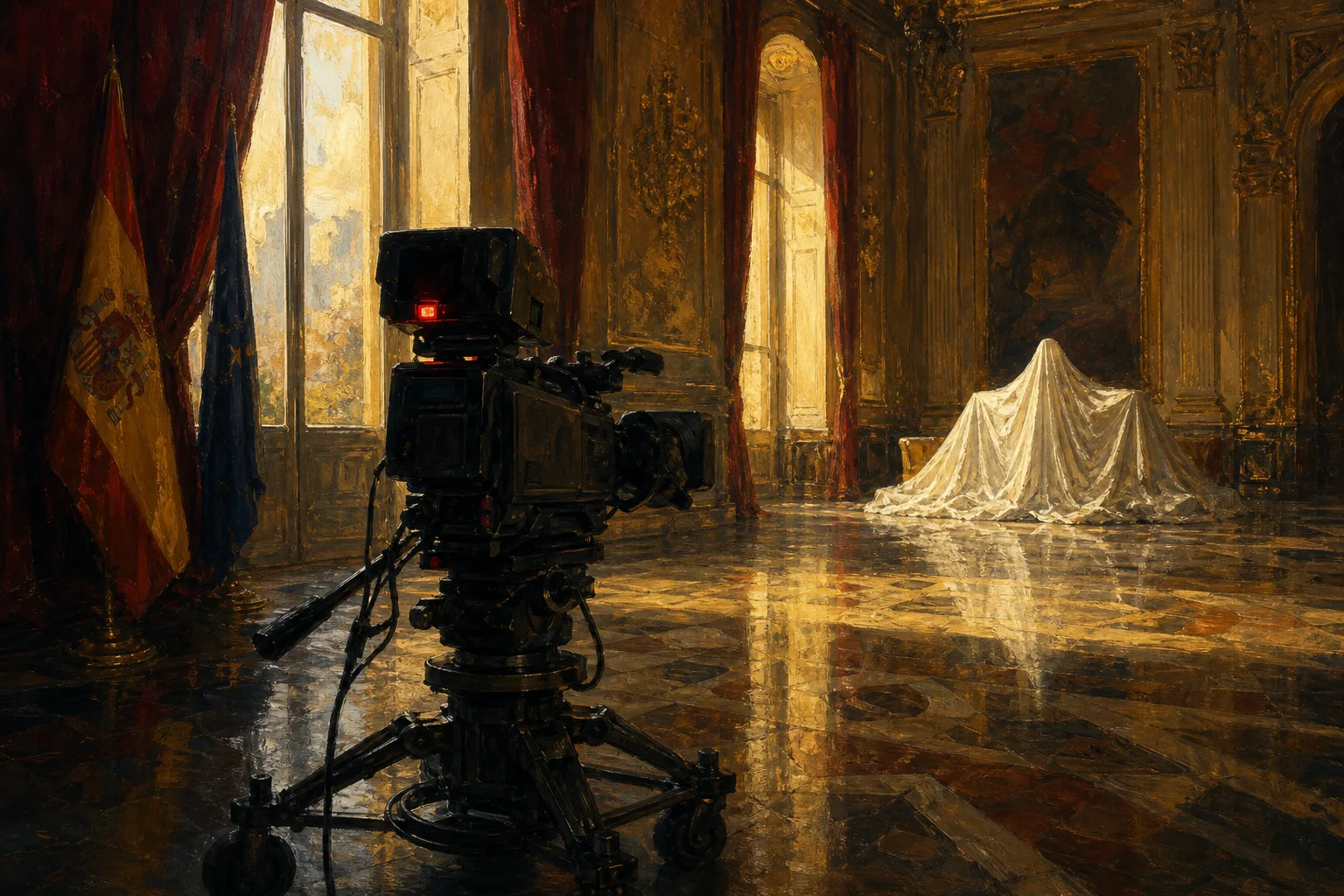
Berlin takes Plan Cameroon onto live television
The Professor needs public sympathy back, so he reaches for soccer.
Brazil plays Cameroon, he says. Brazil is expected to win. People root for Cameroon because people root for the smaller side. If the robbers look wounded, divided, and close to surrender, Spain might stop seeing them as faceless criminals and start seeing them as people cornered by police power.
Release hostages. Bring in a reporter and camera. Put pain on television.
Rio refuses to be the face of it. Tokyo is in custody, and he will not smile for Spain while she watches from a cell. Denver volunteers badly. Moscow offers with less fuss. Helsinki says he will do it with a mask, which Berlin correctly treats as a terrible idea. The interview needs a face.
So Berlin takes it.
Pedro Alonso’s Berlin walks the Channel 6 crew through the Mint as Andrés de Fonollosa, not a codename. He thanks the eleven hostages being released. He pauses over Mónica and her child. He tells the reporter the group has no option but surrender.
Then he brings the reporter to Oslo’s body.
Helsinki’s grief stays quiet beside him. Berlin’s grief does not. He uses it. He lets the reporter confirm that Oslo is dead, then talks about him as a companion and friend. He folds his terminal illness into the same appeal and denies the police smear about trafficking and minors.
Berlin does not become gentle here. He becomes useful.
His illness cannot wash anything clean. He is still the man who ordered Mónica’s death, handed Tokyo over, and enjoys the ceremony of his own suffering. But he also knows how to say the one thing the public will remember: he is a thief, and he has the right not to be defamed.
Outside, the news repeats his words. Inside, the crew watches the mood change.
The police get eleven hostages.
The robbers get breathing room.
Raquel leaks Ángel’s recovery and the Professor hears the trap
She wants the hospital set up before the leak goes out. Move Ángel to a safer room. Place agents in roles deep enough to pass as staff. Clear visible police from the area. Put Lobo in the room the Professor is supposed to enter. Give him a path that looks open and wait for him to take it.
Prieto resists because the evidence is thin and the hospital operation sounds absurd. Raquel pushes anyway. Ángel found the outside man. Ángel was found after a crash. If he wakes, the Professor has to act.
The news breaks during the aftershock of Berlin’s interview. Deputy Inspector Ángel Rubio may wake from his coma.
The Professor calls Berlin, and the mood shifts from public victory to private dread. Berlin hears the bait at once. A coma recovery leak is basic police work, he says. It is so obvious that it should not work.
Then he asks the question Sergio cannot ignore.
What if it is true?
There is a tiny chance Ángel wakes and identifies him. Berlin will not let him leave that chance alone. He tells Sergio to make sure, and if it is not a trap, finish Ángel off.
The ugly part is how quickly the Professor understands the logic. Berlin reminds him he spent half his childhood in hospitals. He knows rooms, corridors, routines, and the little ways panic moves through a place that cannot afford panic.
The heist has regained its public story, but Sergio has no time to enjoy it. Raquel has built a trap from the one loose end he cannot dismiss.
He has to walk toward it.
What works
Nairobi’s command stretch gives the Mint a different rhythm. She does not save the crew through charm or ideology. She counts the damage, moves the work forward, and keeps Berlin dependent on her long enough to matter.
Raquel and Sergio’s night together is sharp because the lie does not erase the tenderness. He is using her. He also wants the impossible future he describes. Raquel’s yes lands harder because she thinks she is choosing a bruised cider obsessive, not the man she is hunting.
Berlin’s interview lands without asking for forgiveness on his behalf. His pain is real. His performance is calculated. His illness explains some of his urgency, but it does not make him noble.
Mónica’s gun swap keeps her uncomfortable in the right way. She is not Denver’s prize, Arturo’s property, or a hostage waiting for a rescuer. She makes a dangerous choice before she knows what kind of life she wants.
What stumbles
Arturo’s hostage rally repeats a familiar pattern. His self-pity is meant to be exhausting, and it is, but the speech spends a long time circling wounds he will make somebody else’s problem.
The Professor’s soccer lesson also leans hard on explanation. Plan Cameroon is strong once it becomes action. The room chanting “Cameroon” gets the point across before everyone has finished underlining it.
What this sets up for Episode 05
Ángel’s hospital room is now the next battlefield. Raquel has a trap, the Professor knows it is probably a trap, and Berlin has pushed him toward it anyway because one percent is still too much risk.
Inside the Mint, Arturo has a loaded gun because Mónica stole it from Denver. Nairobi has public momentum, Berlin has the interview win, and Rio still has only the Professor’s promise that Tokyo will come back.
The robbery looks wounded on television by design. Away from the cameras, the wounds are real.
Rating: 8.6/10
More episodes from Money Heist (La Casa de Papel) — Berlin's last stand, the tunnel escape, and Raquel's impossible choice — episode by episode. Jump to any episode in the season:
Where to go next
Reviewed by Mira Vance · QuizFandom Editor & Lead Reviewer. Every rating is an honest per-watch assessment from the desk that also writes the quizzes — not a press release rehash.