Money Heist Season 2 Episode 9 Recap: Berlin Holds the Door
Money Heist (La Casa de Papel), Season 2, Episode 9 Antena 3 / Netflix · Created by Álex Pina · 2017
The Royal Mint escape finally begins, but the last door only opens because someone stays behind with a gun.
Money Heist Season 2 Episode 9 starts with the crew close enough to make everyone stupid.
There is still money on the presses. Nairobi wants the round number. Berlin wants the exit. The police are moving. The tunnel is close, but not close enough to feel like safety.
That is the useful cruelty here. The plan works, but it never feels clean.
Nairobi shuts down the final printing run
The first argument is about money, but it is really about command.
Nairobi looks at the last sheets and sees the billion-euro line within reach. After days of labor, gunfire, and panic, walking away before that number feels like leaving a tooth in the jaw. Mr. Torres says they need eleven minutes. Eleven minutes is nothing in a normal workplace. Inside the Royal Mint, it is an eternity with police on the stairs.
Berlin (Pedro Alonso) answers with the nastiest weapon he has: personal knowledge. He goes after Nairobi’s son, her old mistake, and the wound she has been carrying since before the robbery began. It is ugly because it works. Nairobi has been running on pride, exhaustion, and the dream of walking out with something huge enough to justify everything. Berlin drags her back to the only question that matters now.
Can they leave alive?
Nairobi shuts down the machines.
That decision starts the exit. The hard drives come out. The explosives go down. False doors, trapped routes, and masked hostages wait where the police expect robbers. The money is no longer an ambition. It is cargo.
The tunnel work supplies the pulse. Denver and Stockholm talk about tomorrow like tomorrow is a place they can decorate: curtains, couches, an island with rules, a life where nobody has to carry a gun. Denver is still Denver, so every domestic fantasy sounds assembled in a panic. Stockholm lets herself answer him.
Mónica has already chosen the crew by this point. Stockholm is not a nickname Denver gave her and then dragged her into. It is the name attached to a decision she keeps making under worse and worse conditions.
Helsinki’s version of the same dream is quieter. He asks Nairobi whether she will get her son when she gets out. She says no, not yet. She has no plan. Helsinki offers a shared flat like it is normal.
He has lost Oslo. He does not make a speech about that loss. He just keeps looking for somewhere to put care.
Raquel visits Ángel and refuses the hangar address
Raquel reaches Ángel before Prieto can turn him into a tool.
Ángel wakes from the coma bruised, weak, and still sharp enough to joke about Raquel calling him a clown. There is strange tenderness between two people who have done real damage to each other and still know where the friendship lives. Raquel apologizes. Ángel asks why she has been thrown off the case. She says the police think she is with the robbers.
Then he asks the question everyone else wants answered with a report: is she in love with the Professor?
Raquel does not have a clean answer, because there is no clean version of Sergio Marquina anymore. The Professor (Álvaro Morte) lied to her, slept beside her, listened to her fears, fed the investigation false trails, and left her exposed in front of the country. He also gave her enough that she cannot file the feeling under deception and walk away.
Ángel offers her the hangar location. It is the case. It is her reputation. It is the way back into the room that has just thrown her out.
Raquel already knows where it is.
She does not tell them.
Her reason lands harder than any romantic confession would. She no longer knows who the good guys are. That is not the same as joining the robbers. It is a police inspector looking at Prieto, Alberto, the custody threat forming around her daughter, and the whole machinery of the operation, then admitting the badge is no longer giving her a moral shortcut.
Prieto understands the pressure point immediately.
First, he leans on Ángel. Ángel keeps saying Raquel is his friend, even when Prieto threatens him with charges and a cell. It is a stubborn act from a man who spent much of the first season being pathetic in love and useful by accident. Here, he becomes useful on purpose.
Then Prieto turns to Raquel.
He does not argue ethics. He produces Alberto’s custody filing. If Raquel is convicted, Paula can end up with the man Raquel says abused her. Prieto offers to drop the charges if she gives him the address, and the offer has all the warmth of a knife placed flat on a table.
Raquel gives him 33 Alcántara.
The address is real. The choice is not simple. She is protecting her daughter, betraying Sergio, trying to survive the state closing around her, and still moving too late to stop the heist.
That delay is everything.
Arturo leads the police into the wrong tunnel
The police assault should be the moment the state retakes the Mint. Instead, it becomes another room in the Professor’s plan.
Tokyo (Úrsula Corberó) and Rio fight through the first wave with pure terror on their faces. The shields come in, the wounded go down, and the crew starts trading fire in corridors that have spent two seasons pretending to be controlled spaces. Rio tries to reach Tokyo when she is pinned. Tokyo gets arrested for a few seconds. Rio throws himself into the open anyway.
Naturally, Tokyo survives by creating more danger.
Denver heads for the Browning. Berlin orders the hostages mixed together in masks. The police enter and find frightened civilians where they expected targets. Alison Parker gets pulled out. Arturo Román also gets pulled out, which means the operation briefly depends on a terrible tour guide.
Arturo tells Prieto there is another tunnel.
He is right, which is infuriating because Arturo being useful always arrives wrapped in Arturo being Arturo. He points them toward vault three. Prieto double-checks the lead with Alison Parker before redirecting the assault. Arturo also tells them the tunnel leads to the hangar where the Professor works. He gives the police exactly enough truth to make them sprint toward the next trap.
Meanwhile, the sewer route produces a clean joke at Arturo’s expense. The police close in on movement underground, count bodies, prepare for robbers, and then find hostages led by Arturo. He has once again made himself the center of a rescue and still looks like a problem nobody ordered.
Inside the Mint, Berlin keeps Ariadna with him and talks as if their hostage relationship is a doomed love story. Ariadna’s face keeps refusing the fantasy. Nairobi has already told him the truth about what Ariadna thinks of him, and he heard enough of it to stop the presses. He still reaches for romance because Berlin would rather die inside a myth of his own making than sit quietly with what he has done.
That matters when he locks Ariadna away before the last stand.
For once, his theatricality does not drag someone else into the fire beside him. It does not clean him. It does not redeem him. At the final door, he understands the part he wants to play and chooses to play it alone.
Berlin stays in the trench
The escape becomes a countdown in three places at once.
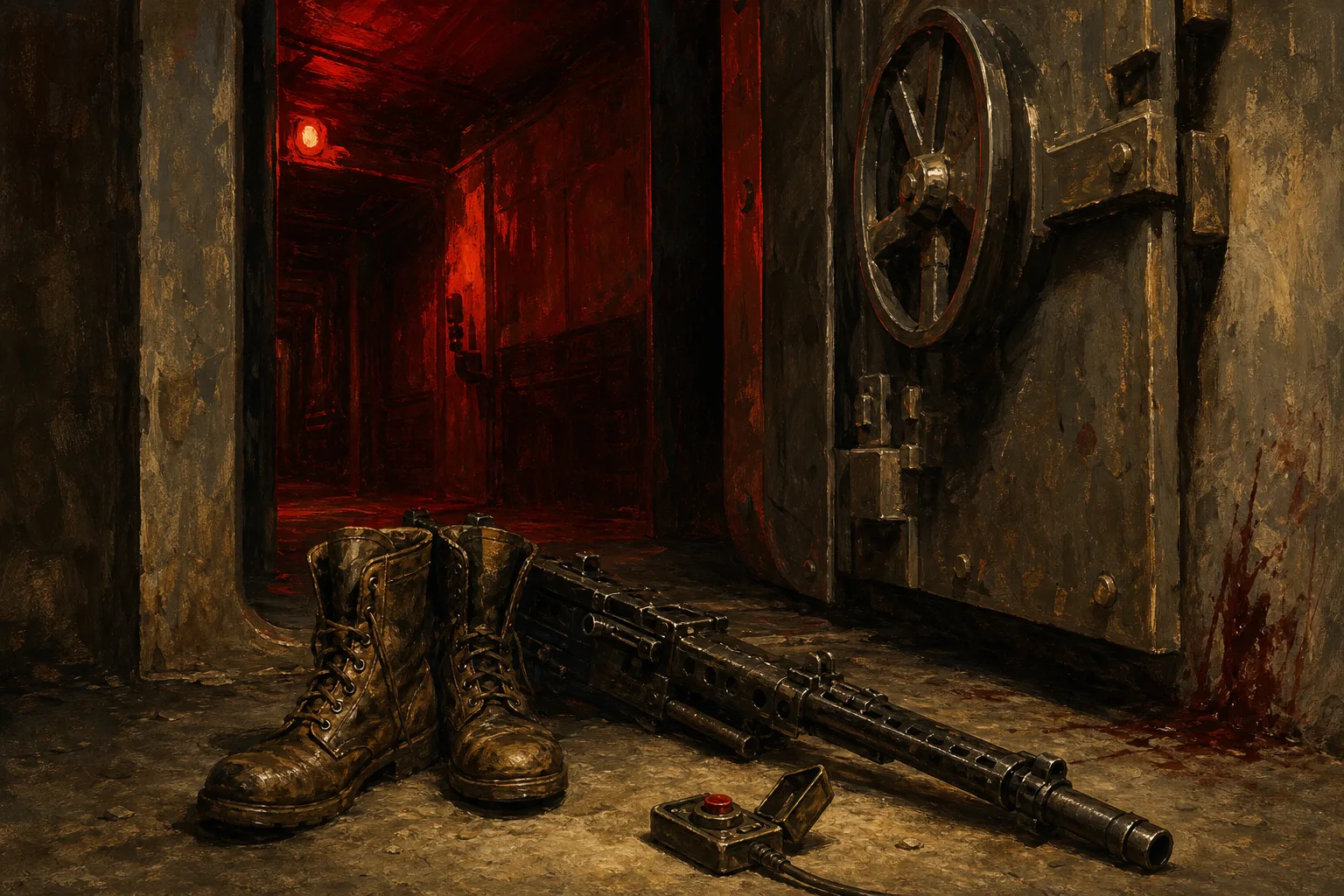
The crew reaches the hangar. The police race to 33 Alcántara. Berlin stays at the trench with the Browning while Suárez and the assault team push through the Mint. The Professor hears that Berlin has stayed behind and loses the one thing he has protected all season: distance.
Sergio calls him Andrés.
That name changes the temperature. Berlin stops being only a city codename barking orders from a balcony. He is Sergio’s brother, a dying man with an automatic weapon, a terminal illness, and a final chance to decide the shape of his exit.
The Professor begs him to enter the tunnel. Berlin refuses. He jokes about old age, his body failing, and how much courage it would take to live through the indignities waiting for him. It is awful, funny, vain, and completely Berlin. He gets consistency, not sainthood.
Then he orders Helsinki to blow the tunnel.
Helsinki does not want to do it. Of course he does not. He has already buried Oslo in this heist. Now Berlin calls him little brother and gives him one more impossible order. Helsinki obeys because the crew still has to move, because the police are close, because grief does not stop bullets.
Berlin dies holding the line.
The assault team reports Fonollosa down. Sergio folds for a moment, and Tokyo has to pull him back into motion. That beat is important because the Professor has spent two seasons making everyone else absorb the cost of his design. For a few seconds, he has to feel one cost with no clever exit attached.
Then the plan completes itself.
The hangar is empty when the police arrive. The money, the crew, and the Professor have vanished through the path prepared under everybody’s feet. The escape arrives in pieces: one minute earlier, two minutes earlier, five minutes earlier, seven minutes earlier. It is a magic trick after a massacre, and the trick only works because Berlin bought the seconds.
One year later, the robbery is still unsolved. The crew has over one billion euros. The public has turned the heist into protest folklore. Raquel has left the force after criticizing the National Intelligence Corps, and she follows the clue Sergio left inside their Palawan fantasy.
On the island, a phone rings.
If it is important, she can use his.
What works
Berlin’s death works because he does not become gentle first. He is still cruel to Nairobi, still delusional with Ariadna, still vain in the face of death. Then he stays because someone has to. The contradiction is the character.
Raquel’s final hour also lands. Her choice is not a love swoon. She withholds the hangar address, gives it up under a threat aimed at Paula, then reaches Palawan a year later on her own terms. Sergio used her. Prieto used her daughter. Raquel still makes the last move herself.
The heist mechanics pay off. The hostage masks, the false sewer escape, the explosives, the vault-three panic, the empty hangar, and the backwards reveal all connect. The plan feels clever without pretending the victory was bloodless.
Helsinki’s grief stays plain. He does not need a monologue about Oslo. His offer to share a flat with Nairobi and his face before the tunnel explosion say enough.
What stumbles
Ariadna’s place in Berlin’s last chapter remains difficult. She does not want the romance he has invented, and Berlin spares her from dying with him, but her terror still risks becoming decoration for his grand exit.
The police side gets compressed into yelling, maps, and movement. Prieto’s custody threat is sharp, Ángel’s refusal has weight, and Suárez’s assault has momentum, but the scramble sometimes turns into a blur of names and commands.
The one-year epilogue also moves fast. Raquel gets the Palawan payoff and the crew’s escape glows in legend, but anyone looking for emotional check-ins with Denver, Stockholm, Nairobi, Rio, Tokyo, or Helsinki gets a postcard instead of a reunion.
What this leaves behind
The Royal Mint heist ends as both robbery and public myth.
Berlin is dead. Moscow is gone. Oslo is gone. The survivors have money, new names, and a story the public wants to believe in because the people in suits looked worse under pressure than the people in masks.
Raquel leaves behind the police version of herself, but she does not become Sergio’s prize. She arrives at Palawan because she chooses to follow the clue. The next life starts with a phone, a beach, and a question neither of them can answer honestly yet: what happens after the plan works?
Rating: 9.1/10
More episodes from Money Heist (La Casa de Papel) — Berlin's last stand, the tunnel escape, and Raquel's impossible choice — episode by episode. Jump to any episode in the season:
Where to go next
Reviewed by Mira Vance · QuizFandom Editor & Lead Reviewer. Every rating is an honest per-watch assessment from the desk that also writes the quizzes — not a press release rehash.