Pachinko S2E3 Review: A kite goes up, a bomber drones in, and Sunja chooses neither man
Kogonada's third hour parallels a 1945 evacuation with a 1989 boardroom truce, and asks what dependence costs the people who accept it.
The third episode opens on a siren and Sunja calling for Noa in a crowd of evacuees, then resolves that panic by pushing the household into a car driven by Koh Hansu and out of Osaka before the Americans firebomb it. By the hour’s end, the family is in a country shed with a dirt floor, the boys are flying kites Hansu has brought as gifts, and bombers are passing overhead on their way north. The 1989 thread gives Solomon his own evacuation in a smaller key. He coaxes his exiled mentor into a real partnership, takes Naomi to dinner on his terms, and closes a property deal that fits inside a phone call. Two timelines, two relocations, and the same question underneath both: what do you owe the person who saves you when the saving is also a hold?
A car ride out of the city, a wife who will not be left behind
The cold open is the season’s most kinetic stretch. Sunja, played in this timeline by Minha Kim, has Noa by the hand and Kyunghee at her side when Hansu’s car pulls up. He tells them the shelters will not protect them. He has a place in the countryside ready. Kyunghee, the wife of Sunja’s brother-in-law Yoseb, hesitates on principle: she cannot leave without her husband’s permission. Hansu’s answer is direct. By the time you get it, you will be dead.
What Kogonada does in the next two minutes lays out the episode’s first argument plainly. Kyunghee refuses to abandon her family heirlooms. Mr. Kim Changho, Hansu’s man, tells her there is no time. She insists. Sunja, packing blankets with Mozasu, looks at her sister-in-law, takes the heirlooms herself, and tells her to go pack. The hierarchy of who serves whom in this household reorganizes itself in a single gesture. Kyunghee is now being carried by a debt she did not choose, and the show wants us to feel that without commentary.
The drive out of the city has the year’s most upsetting beat. A woman beats on the car window with a sick daughter in her arms. Mr. Kim tells the driver they cannot stop. Sunja looks at Kyunghee. Kyunghee looks away. The car moves. The bombs land behind them. Kogonada cuts to the family asleep in the back seat as the night sky strobes with explosions. The camera does not editorialize. The survivors look like survivors. That is the only judgment the show offers.
The shed, the offer, and the line Sunja draws
The country house Hansu has arranged is a shed with a dirt floor and no kitchen. Kyunghee, who grew up with servants, says aloud that living there makes her feel no better than an animal. Sunja, who grew up in a Yeongdo boarding house, says nothing for a long beat and then asks Hansu if there is really nowhere else. He tells her not for our kind of people. The line is doing two things at once. It locates the family on the Korean side of the colonial ledger, and it locates Hansu on the side that can still move freely across it.
Then the episode does the harder work. Hansu offers to make the place comfortable for her and the children. Sunja tells him she does not want that. Not because she is ungrateful, but because she is afraid. She is afraid Yoseb will find out. She is afraid Hansu’s care for her son is care he cannot resist showing. He tells her Yoseb will never suspect. He cannot even imagine it. The certainty is the threat. Sunja, looking at the man who fathered Noa fourteen years ago at a cove and has just driven her family out of a firebombing, tells him she is no longer that girl. She has changed. He should know this. She is a widow now. Like her mother.
It is the season’s most quietly devastating exchange. Lee Min-ho plays Hansu as a man who has spent fourteen years certain that his money makes him indispensable to a woman who has spent the same fourteen years certain his money is what disqualifies him. Sunja holds the scene without raising her voice. The widowhood line is a refusal of romance. She will accept the shed, the rations, Mr. Kim’s presence in the house, and nothing else. The audience hears the line before he does.
What dependence does to the people who feel it
The middle stretch tracks the household settling. The boys chase a runaway chicken into the woods. Mozasu, unbothered by anything, declares this more fun than school. Noa, older and more watchful, sees a different scene at the farm. Japanese workers complain about the fat Koreans getting more rations than they do. The pretty one needs to be put in her place, they say. Mr. Kim, who understands every word, tells Kyunghee not to engage. She engages anyway. The foreman breaks it up before it gets physical. Hansu’s protection has bought the family rations, not standing.
The kite sequence is the episode’s most generous scene. Hansu arrives with a radio, a sack of candy, Japanese newspapers for Noa, and two kites. He tells Noa to read the papers thoroughly, not to translate them but to learn to read between the lines. The instruction lands like coaching. Noa is being groomed in something he cannot yet name. Mozasu just wants to fly a kite. Both boys run, both kites go up, and the family briefly looks like a family.
Then the bombers come. The kite drops. Sunja gathers the boys. Mr. Kim, watching the planes track north, tells Kyunghee they are not headed for Nagasaki. Your husband isn’t in their path. Kyunghee weeps. The scene that follows, with Kyunghee folding a package for Yoseb and insisting on mailing it that same night, is the episode’s emotional center. Sunja tries to reassure her. Kyunghee will not be reassured. You cannot promise me he won’t be in harm’s way. It’s not guaranteed. All of us are here together. And to think of him alone. The injustice is not the bombing. The injustice is the survival.
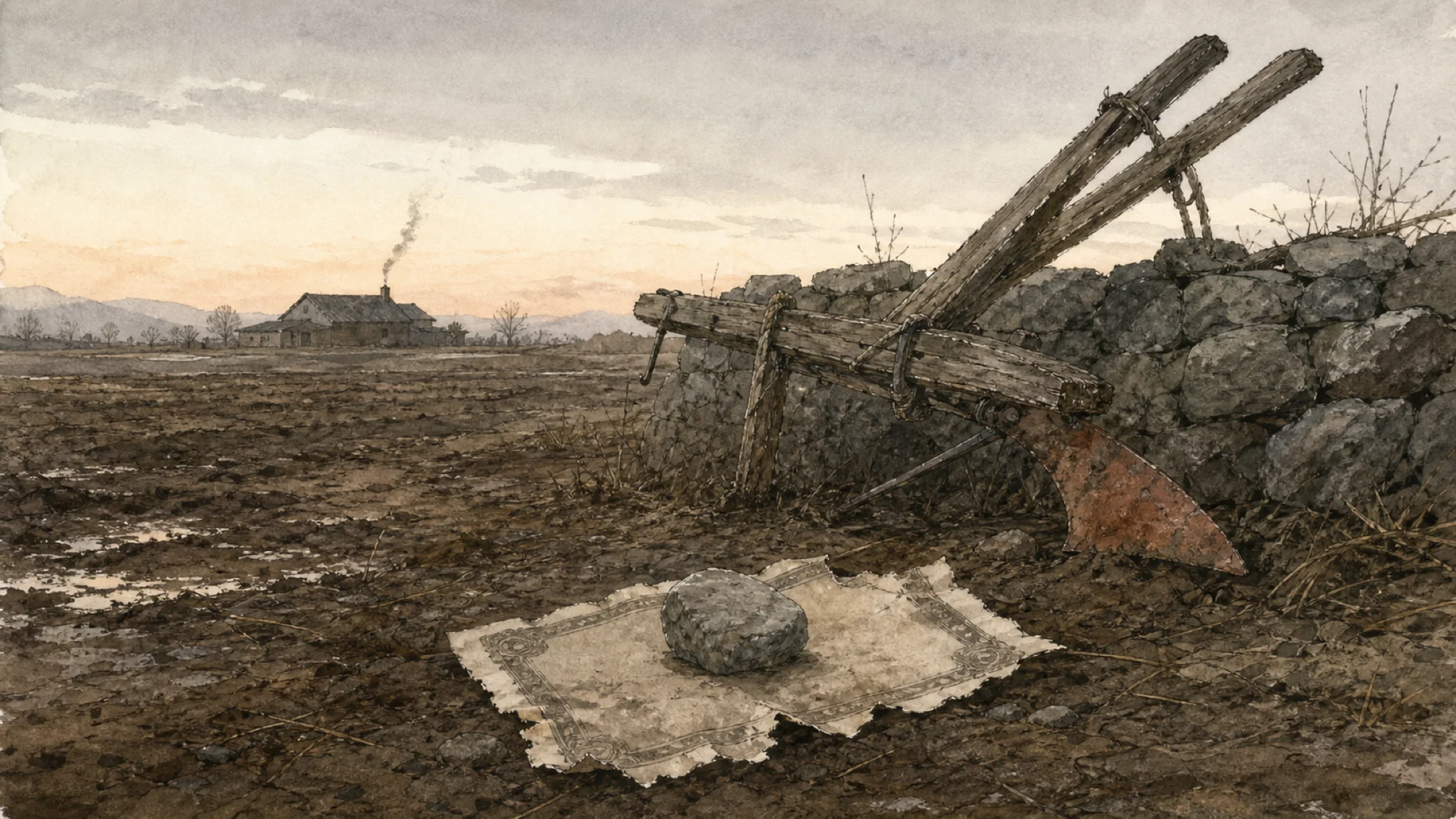
Solomon’s parallel evacuation
The 1989 thread, which Kogonada cross-cuts into the country story without forcing the metaphor, runs the same beat in a different register. Jin Ha’s Solomon walks into the office of Tom Andrews, the senior banker who has spent two episodes treating him like a problem. Tom has three months left in his bank account and a Tokyo posting that he is calling a prison sentence. Solomon has the landowner ready to sell. He tells Tom that Abe is the target, and that this time next year Tom could be home in New York, set up with his own fund, his reputation restored.
It is the season’s most morally legible scene yet. Tom, who has just confessed that one Baldwin United filing destroyed an eight-year leaderboard run, lets himself be persuaded. Solomon, two episodes ago the analyst getting passed over, has become the closer. The hand-off is finalized on a phone call from a yakitori counter. The property now belongs to Abe-san.
The yakitori dinner with Naomi is the 1989 thread’s emotional counterweight. Anna Sawai plays it perfectly, watching Solomon over a glass of beer as he tells her the dinner is on his terms because his terms are all he has left. I’m done pretending. If this doesn’t work for you, you’re free to walk away. The speech rhymes with Sunja’s at the shed. He is asking her to accept who he is becoming. She is choosing whether she can. The Cheers, when it arrives, is two people agreeing to keep watching each other.
A bullied boy is caught, and Noa does the harder thing
The episode closes on a stakeout. Eggs have been disappearing. Mozasu insists on catching the thief. Mr. Kim agrees, with Kyunghee tagging along, and the boys lie in wait outside the henhouse. The thief, when Mr. Kim grabs him, is Minoru, the Japanese boy who has been bullying Noa at school. He is an evacuee. He and nineteen others at the temple are starving. Mr. Kim asks Noa what he wants done. Noa lets him go. Mozasu, indignant, points out that this is the boy who has been making Noa’s life miserable. Noa hands Minoru an extra egg and tells him to share with the others.
Mr. Kim’s line on the walk back is the episode’s quiet capstone. You want your enemy to owe you, not the other way around. Kyunghee tells Mozasu his brother already knew that. The audience watches a young boy taught a lesson the family elders have been teaching themselves all hour. Mercy is a transaction. So is dependence. The trick is knowing which side of the ledger you are on.
What this episode argues
The episode argues that survival under empire is a series of debts you cannot refuse and cannot fully repay, and that the people who hand you those debts mean it when they say they mean well. Hansu is not a villain in this hour. He is a man who has spent fourteen years arranging the safety of a woman who does not want to be safe on his terms, and who is starting to understand, around the edges, that his arrangement is a cage. Sunja’s widowhood line is not a closing of the door. It is a renegotiation of the lease.
The 1989 thread does the same work in a register Solomon would recognize. The deal he has just closed with Tom is a transaction in which the senior man becomes the dependent one. Solomon is becoming the broker his father warned him about, and he is becoming him with full knowledge of what it costs. The yakitori speech is the same speech Sunja gives Hansu, recast in a vocabulary of leaderboards and ex-wives. I’m not always going to be this low. The price of climbing back will be paid by people who deserve it.
Verdict
The third episode is the season’s best so far and a case study in how Kogonada handles parallel structure. The cold-open evacuation is genuinely harrowing, the shed confrontation between Sunja and Hansu is the strongest two-hander Minha Kim and Lee Min-ho have played, and the kite sequence builds toward the bomber drone with a patience prestige drama rarely affords this kind of beat. Kyunghee’s package-mailing scene, which a less confident hour would frame as melodrama, lands as the cumulative grief of a woman who has run out of ways to feel useful from a distance.
The 1989 thread is doing more lifting than it has all season, and Jin Ha’s Solomon is finally being asked to make decisions that cost him something. Tom’s confession runs slightly long, and the yakitori dinner could afford one more beat of resistance from Naomi before the toast. Minor frictions in an hour that otherwise moves like a chamber piece. The kite goes up, the bomber drones in, and the show trusts its audience to feel the rhyme without underlining it.
Rating: 9.1/10
More episodes from Pachinko — Season 2 — Sunja's family enters the postwar reckoning, episode by episode. Jump to any episode in the season:
Where to go next
Reviewed by Mira Vance · QuizFandom Editor & Lead Reviewer. Every rating is an honest per-watch assessment from the desk that also writes the quizzes — not a press release rehash.