Pachinko S2E6 Review: A Waseda acceptance and a leveraged photograph
Kogonada's sixth hour holds two impossible bills side by side, a son's tuition and a grandson's compromised heart, and asks what a family is willing to spend to keep going.
The episode opens on a margarita in 1989 Osaka, an older Korean widow and a Japanese man named Kato laughing through a second drink they should not have ordered. By the time the hour closes, young Sunja has watched her son turn down Waseda University, and her grandson Solomon has been handed a photograph designed to break him. Between those two endpoints, with unusual patience, we get the ledger every Pachinko character keeps in their head. This is an hour about what you put down on the table when the price gets named, and what you do when someone else names it for you.
The margarita scene is the season’s quietest argument
The season has already established that the older Sunja is being courted, gently, by an elderly Japanese widower at her local grocery store. The sixth episode lets the courtship be a date. Sunja and Kato sit in a Mexican restaurant in Osaka, dipping tortilla chips in salsa, mispronouncing the word, laughing at themselves. A second margarita lands. Kato says he feels strange and that the room has gotten hot. Sunja, drunk for what plays as the first time in decades, tells him she may be a little drunk too. Kato pays with a credit card and asks for a receipt. Sunja insists the next adventure is on her.
Kogonada films the sequence with the same composure he gave to the fish-market haggle in the pilot. Nothing announces that anything important is happening. Sunja is being looked at, kindly, and being allowed to look back. Later we cut to her bringing leftover Japanese noodles to her son Mozasu at his pachinko parlor and lying, charmingly, about a friend she met feeding birds. Mozasu plays the suspicion as confusion. The later beat lands — when he writes the name Kato Tatsumi on a notepad and dials a private investigator — because we have already seen what the romance actually looks like from the inside.
A widow who has spent her life refusing softness because she could not afford it is being permitted to enjoy a margarita with a man who pays the bill without making her feel watched. Nothing needs to underline that this is the first negotiation of the hour in which Sunja is not the one bearing the cost.
The Waseda envelope is the trap Pachinko has been building toward
The 1949 thread is built around an acceptance list pinned to a wall at Waseda University, and the bill that follows it. Aunt Kyunghee tells Sunja she cannot decide whether she wants tomorrow to come sooner or never. Sunja, certain, says Noa has passed. He has. The list is found. The family gathers around a celebratory dinner. Noa unfolds the secondary sheet that lists the costs the family did not budget for: entrance fees, books, student activities, experimental practice, equipment. The total is roughly twenty-four hundred yen, in addition to tuition and board.
The scene is one of the cleanest Pachinko has done all season. Kyunghee offers, immediately, to ask Mr. Koh for the money. Noa refuses, immediately, to take it. The room goes quiet. Sunja tells him she has been planning a restaurant for years and can wait a couple more. The audience knows the restaurant has been Sunja’s only private dream and the only thing she has allowed herself to want for herself. The acceptance letter is asking her to put that dream away.
Later, Sunja and her mother Yangjin sit up melting sugar to make candies and talk about a second cart by the bus stop. Yangjin asks about the restaurant. Sunja, level, says they will wait a couple of years until Noa finishes school. She gets to keep the lie. The kitchen scene is shot with the same low light and shoulder framing the pilot gave Yangjin’s altar prayer, and the rhyme is the point. Two generations of Baek women recalibrating their lives in real time to fit a price tag named by someone else.
Noa’s refusal and the ghost of his father
Noa’s refusal plays as a small kitchen confrontation, without inflation. He tells his mother he is not going to Waseda. He tells her her restaurant is not a fool’s gamble and that he can feel her disappointment. Sunja corrects him with the simplest line of the hour. She is disappointed for him, not in him. The exchange clocks at maybe ninety seconds and contains everything we have ever learned about Noa: that he believes duty is a tax he pays in advance, and that his mother has been quietly trying to convince him, for years, that he does not owe what he thinks he owes.
The cross-cut that follows gives the scene its weight. Koh Hansu arrives at the boarding house and asks Sunja what is going on. She tells him Noa will not budge. Hansu, for the first time in the season, drops the businessman register. Going to Waseda is not a choice, he says. Make him understand. When Sunja answers that she has tried, Hansu says it is time for her to pry his eyes open. You must convince him, he says, or I will. The line lands with menace because we know what Hansu means. He means he will tell Noa who his real father is.
The hour does not pay off that threat. It does not have to. Sunja’s later scene at the tofu maker’s stall, where she brings Noa to meet the young woman whose hands he has been admiring and tells him quietly that her Heaven looks like Yeongdo and that she cannot let him stay here and let his memories burn in his soul, is the negotiation Hansu has demanded. She makes it without telling Hansu she has made it. The scene is staged like a courtship and plays like a release. The boy who refused Waseda in the kitchen has been quietly turned around without ever being told the truth about his blood. That is Pachinko at its sharpest. The mother bargains, the son submits, and the father in the background never has to break the silence he has been keeping for nineteen years.
Solomon’s photograph and the man named Sugihara
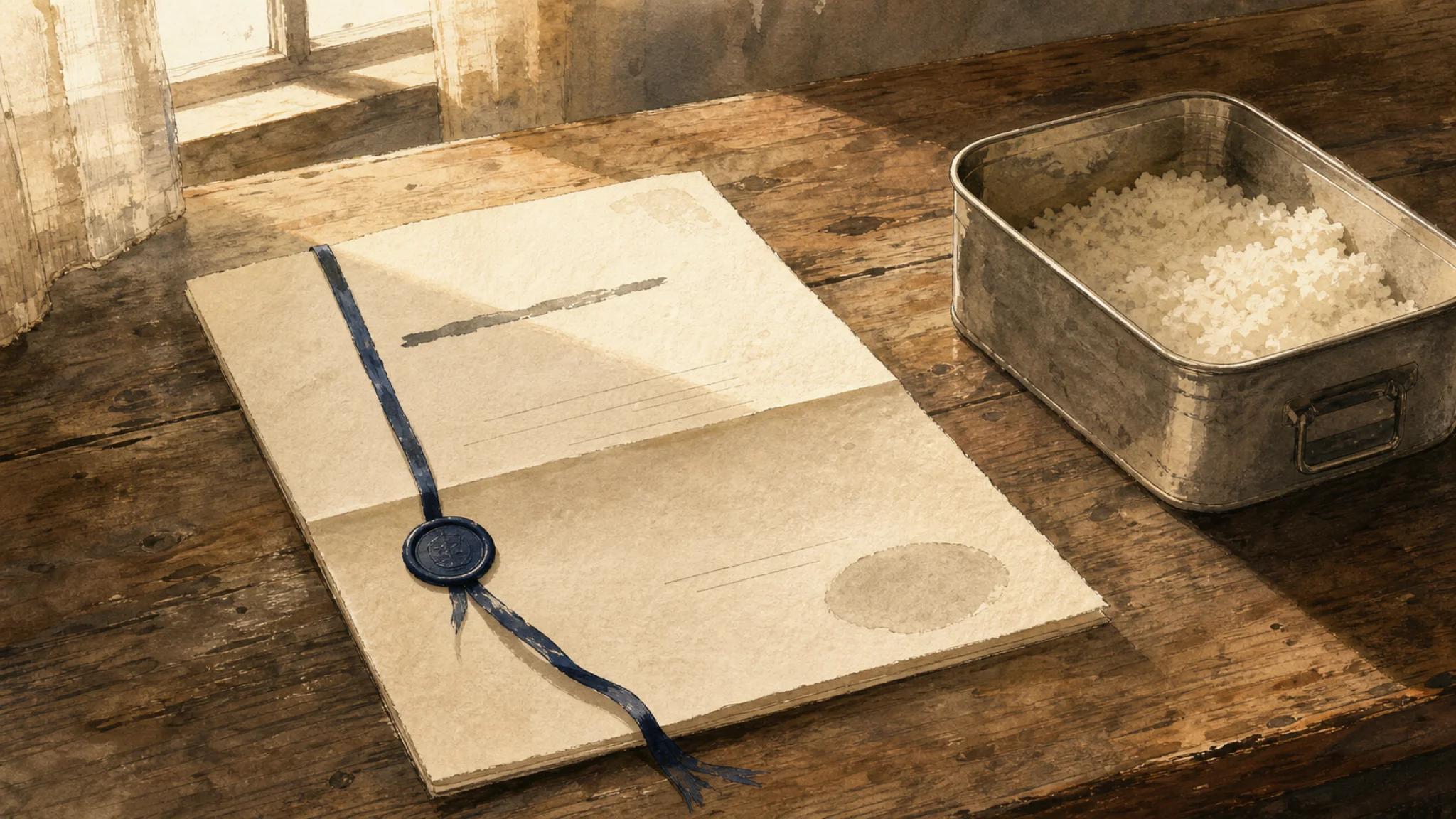
The 1989 thread closes on the hour’s coldest sequence. A man named Sugihara arrives at Solomon’s apartment with a sealed photograph and a message from Yoshii-san. The photograph shows Naomi, his girlfriend and a senior banker at the same firm, with a man named Kunizane Tsuyoshi, the eldest son of the Kunizane family, in a picture taken days ago. Solomon scoffs and calls Tsuyoshi a former boyfriend. He is corrected. Sugihara explains, in unhurried Japanese, that Yoshii-san wants the golf course deal, that he is neither fickle nor a gambler, and that if he feels compromised he will do much worse than cut Solomon loose. Then Sugihara reveals he is also Zainichi, that his grandparents came over before the war, and that this is the only thing he and Solomon share. The reveal is not solidarity. It is a warning. Sugihara has chosen which side of the leverage equation he sits on, and he is letting Solomon know the choice was available.
Solomon confronts Naomi. She does not deny the engagement. She tells him their families have known each other since they were small, that she tried for a while to convince herself, that she has been going along with it because they are her parents. Solomon asks her if she can promise never to look away again. She says she wants to try. He tells her that is not good enough. The scene, which could be a breakup, is filmed instead as a transaction. Two people who love each other are pricing the cost of staying together in a world that has set the terms against them. The hour gives them no embrace.
What follows is the episode’s actual hinge. Solomon meets Tom and instructs him to call in Abe-san’s loan. The story about the buried bones on the disputed site, the rumor that broke the deal Solomon was supposed to close last season, came from Solomon. He admits it. He needs Abe-san to know. He needs everyone to know that he is here. Tom refuses, calls the move financial impropriety, and pivots to Yotsuba Finance and the playbook for cutting Naomi out of the way. Solomon, his face still half in the photograph Sugihara left him, says yes. The hour’s title bill is the price he is paying to be in the world that handed him the photograph.
What this episode argues
The sixth episode argues that the family inheritance Pachinko has been tracking is not biological. It is a set of negotiations, conducted in shame, that each generation is asked to make on terms it did not write. Yangjin made hers at the altar in the pilot. Sunja makes hers in 1949 over melted sugar and in 1989 over a margarita she allows herself to enjoy. Noa makes his in the kitchen and again at the tofu stall when his mother quietly removes his refusal. Solomon makes his when he greenlights Tom’s playbook against the woman he has just told he loves. Hansu, watching, makes his by deciding not to make his yet.
The episode also clarifies what Yoshii-san is. Sugihara’s apartment visit makes plain that Yoshii is a Zainichi who has decided the leverage of his grandfather’s old world is a tool to use rather than a stain to outrun. The choice is offered to Solomon as a mirror. The episode does not let him refuse it. It lets him accept it and pretend, for one more hour, that he has not.
Verdict
This is the hour Season 2 has been pacing toward, and the patience pays. Sunja and Noa play the Waseda refusal as a single muscle moving in two bodies, and the tofu-stall scene is the season’s most quietly devastating piece of filmmaking. The older Sunja is given a margarita and a moment of unguarded laughter and finds the whole hidden room of her older self in it. Solomon, asked to be both the broken boy on Naomi’s couch and the executive who calls in a loan, holds the contradiction without flattening it.
The hour’s only minor friction is the speed of Sugihara’s identity reveal. The Zainichi disclosure lands with the force the script intends, but the figure has barely been introduced, and a viewer not yet steeped in the season’s golf-course politics may need a second to place him. By the time Solomon greenlights Tom’s playbook, the placement has snapped into focus, and the season’s central argument about inheritance has been restated, quietly, in three languages and across forty years.
Rating: 8.9/10
More episodes from Pachinko — Season 2 — Sunja's family enters the postwar reckoning, episode by episode. Jump to any episode in the season:
Where to go next
Reviewed by Mira Vance · QuizFandom Editor & Lead Reviewer. Every rating is an honest per-watch assessment from the desk that also writes the quizzes — not a press release rehash.