Pachinko S2E8 Review: A Son Walks Off the Page and a Mother Names the Shadow
Kogonada closes the second season on the cost of a lie that kept a family alive, and on the boy who refuses to carry it forward.
Season two has spent its hours arranging the dominoes. The finale knocks them over with the patience of a director who knows which one falls last. Noa learns that Hansu is his father, and the knowledge does not free him — it erases him. Sunja loses the son she sacrificed everything to send to Waseda, and in the same week loses her younger boy to the pachinko parlor she has spent fifteen years trying to keep him away from. Solomon signs onto the bubble everyone can see coming. Abe ends up at the foot of a cliff. In the closing minutes the older Sunja sits across a table from Mozasu and tells him about horses that ran so fast their shadows had to split off from their bodies.
Tolstoy in the lecture hall, kimchi at the loan window
The episode opens on Noa at Waseda demolishing a classmate’s reading of War and Peace for being too aristocratic. The novel fails, he tells the room, because it depicts the wheel of history without showing the labor that turns it. The professor commends him for piercing the veneer of the text. It is the most confident Noa Baek the show has let us see. Within thirty minutes he will be on a train under a new name.
The Osaka thread plays at the opposite end of the social scale in the same week. Mozasu, fifteen and bored, gets caught skimming pachinko balls at Goto-san’s parlor. Sunja walks into a bank the next morning to discover her loan has been paid off by wire from Tokyo, signed Solomon Baek. The editing puts the two events next to each other on purpose. One son saves the family from the outside. The other is about to be absorbed by its least respectable trade. Kyunghee sees it: Goto-san is not blood, and the war is over but the woods are not. I expected this kind of talk from my brother-in-law, Sunja tells her. But not from you. It is the closest the two women have ever come to a real fight, and the writers have the discipline not to resolve it before the scene ends.
Inji Jeong’s Yangjin gets her own register of the same argument when Mr. Kato sits across from her at the bench where they have been sharing weekly fruit and tells her he is a murderer. Kato describes a hillside in the Pacific, an order to kill, a soul that slipped out of his body so it could obey, and a second order no one obeys forever: forget everything. We were all fools, he tells her, to think the past could be forgotten. Spend the rest of our lives chained to it? Yangjin asks. The scene cuts before either of them answers. I wish you well, she tells him. The season’s largest argument — what the survivors owe the dead, and whether forgetting is mercy or cowardice — is staged between two old people and a strawberry.
The introduction at Hansu’s table
Hansu’s plan for Noa has always been the same: pay the tuition, place him at Waseda, introduce him at the right table, let nature do the rest. The plan fails in the moment it appears to succeed. Koh-san brings Kurogane into the suite to meet the boy he has been engineering all season. The handshake goes perfectly. Kurogane likes the kid, tells him his name will be in the papers soon enough, leaves. The next visitor is Akiko Nakazono, who has spent the season’s middle stretch sleeping with Noa and asking to meet the mysterious benefactor paying for his room. She has been told never. She arrives anyway.
The dinner is the episode’s pivot. Akiko, daughter of the Foreign Undersecretary, slots herself at Hansu’s table as if she belongs there. Hansu watches her the way a man watches an animal he has not yet decided to feed or shoot. Noa watches both of them and understands, slowly, that the woman he has been sleeping with is the same Nakazono his classmate praised for her bourgeois reading of Tolstoy. The fight afterward ends with Akiko on the floor and Noa with his hands at her throat. She tells him anyway. That man is your father. Koh Hansu is — The thunder outside the window does the punctuation.
The S2 finale is Noa’s episode in a way no previous Pachinko hour has been any one character’s. Noa (Tae Ju Kang) has been quiet and self-contained all season; here he builds the rage in increments so small the camera has to lean in to catch them. When Noa arrives at Hansu’s house and asks him to tell him it is not true, Hansu’s answer — it’s true, Noa — has the weight of a season and a half behind it. Lee Min-ho plays the scene without a single move he hasn’t earned. He does not apologize. He tells Noa his mother loved him, that the blood in his veins is Hansu’s blood, not the blood of that nitwit you called Father. He tells him to look forward, the way he did at the farm during the war. Then, fatally, he tells him to go home and sleep, because in the morning they will grovel at your feet. It is the line that ends Noa. Hansu thinks he is bestowing an inheritance. He is identifying himself, in the same breath, as the inheritance Noa will refuse.
The platform, the mother, and the new name
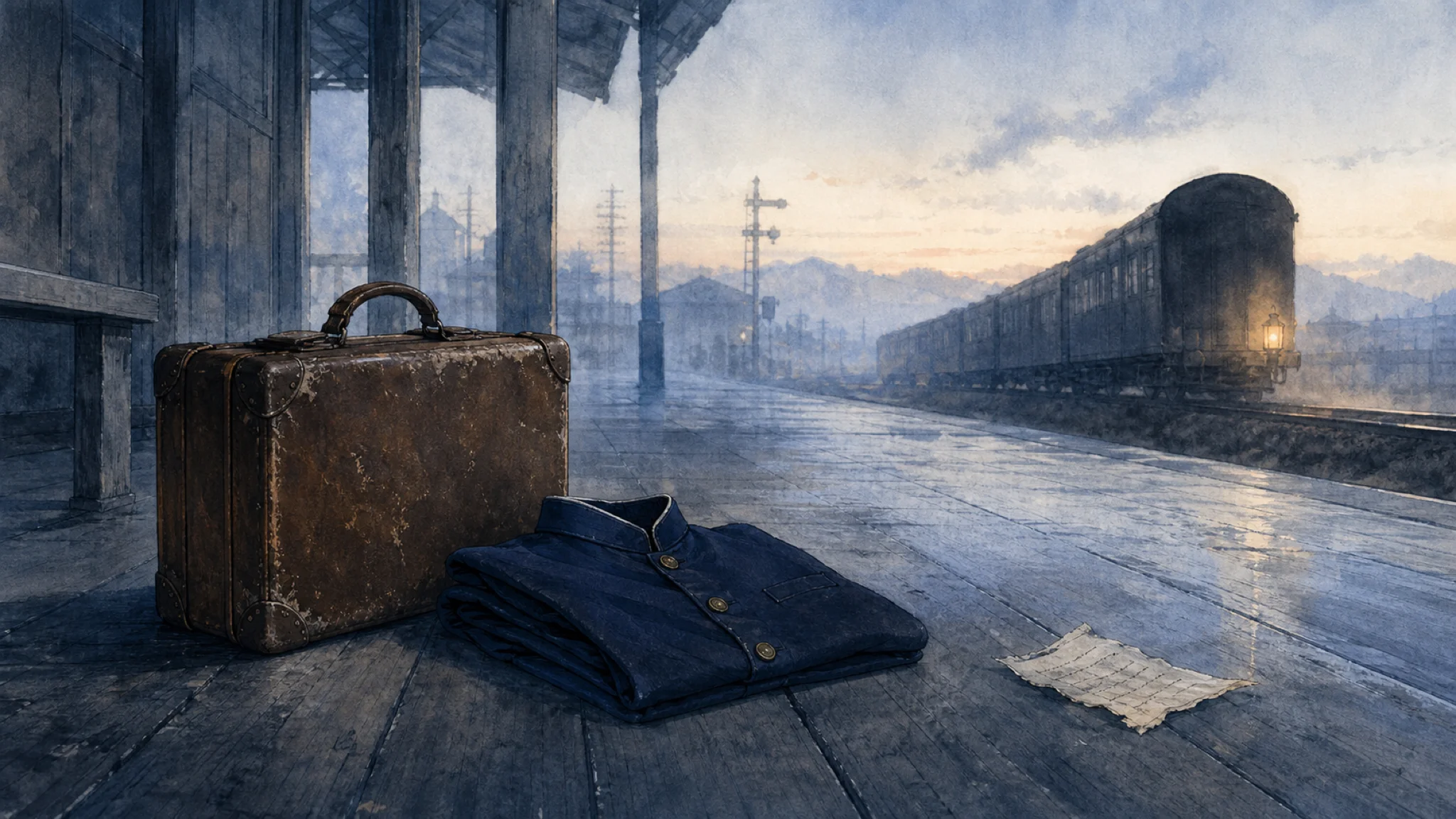
Noa goes home. Not to Tokyo. To Osaka. Sunja is at the kitchen table, the door opens, her son is standing there. She asks what is wrong. He tells her he just wanted to see her face. She lets him go without pressing, but walks him toward the train anyway because something in her cannot let him leave without one more block. He waves her off. She watches him go. The next sequence is the one the season has been building toward: Sunja running through the station, calling his name, asking strangers if they have seen her boy, watching the train pull away.
The rhyme with the S1 finale is precise and unforgiving. There, Sunja watched Isak taken from a platform by soldiers in a single long take on her face. Here, she watches Noa take himself off a platform by choice, and Kogonada lets the shot run the same length. The first time it was the state that took her son. The second time it is the lie she and Hansu kept between them. We are not allowed to read the second loss as smaller than the first.
The episode does not tell us where Noa goes. It tells us who he becomes. After Sunja accepts that he is gone, after she says the line that defines the season’s emotional weather — now I know it was his mercy — we cut to a small factory office. A man asks the applicant if he is one of those Koreans. The applicant says no. The man asks his name. The applicant says Ogawa Minato. Tae Ju Kang holds the camera one beat too long so we can see Noa choose to disappear into the Japanese name his father’s money paved the road toward. Hansu told him to look forward. Noa looks forward. He just does not bring Noa Baek with him.
Solomon takes the deal, Abe takes the cliff
The 1989 thread closes with the inverse motion. Where Noa walks away from the inheritance, Solomon walks straight into it. The pitch meeting for his golf-club venture is the most charming Jin Ha has been all season — five hundred memberships, 47 spots remaining, Italian marble in the spa — before the writers slip in the question from the back. Rumors of a real estate crash. Your view? Solomon’s view is the consensus view of every Japanese banker in 1989. Land prices have never fallen in this country. The line is delivered as a joke. The room laughs. The audience watching the show does not.
His farewell drinks with Tom Andrews put the same bet in plainer language. You and I know the market’s gonna bust here. Tom is going to Macau. Solomon is staying. He has decided the Baek family deserves to bleed the people who made it bleed, and he is going to be Yoshii’s angle to do it. Masaru Abe does not survive the season — body discovered in a national park, shoes at the edge of a cliff, no note. The writers make Abe’s death an offstage event because the season is no longer about him. The consequence of S1’s penultimate hour is now folded into the same week that takes Noa.
What this episode argues
Season one ended on documentary footage of eight real Korean grandmothers speaking directly to camera. Season two ends inside the fiction and trusts the fiction to do the same work. Sunja’s chollima monologue — they galloped so fast their shadows weren’t fast enough, and their bodies had to split away from their shadows — is a Korean folk image the writers have repurposed into a statement about survival. The people who make it through are the ones who keep their shadows. The people who don’t are the ones who outrun them.
Noa runs from his shadow on a train to a town we never learn the name of. Sunja keeps hers — the cart, the kimchi, the watch, the loan, the son who came back to say goodbye and the son who chose the parlor over the schoolbooks. The season’s argument is not that survival is heroic. It is that survival has a price, paid by whoever loved you enough to let you go.
Verdict
The finale lands the show’s hardest swing of the season without raising its voice. Minha Kim plays the train-platform sequence with the same unguarded grief she brought to the S1 finale’s market scene. Youn Yuh-jung anchors the closing dinner with the chollima monologue, which will be the season’s most replayed scene. Lee Min-ho’s Hansu finally gets the role the show has been holding in reserve — not the gangster, not the protector, but the father who has waited two seasons to tell his son the truth and discovers, in the telling, that he has lost him. Solomon’s pivot to the dark side lands with a precision the 1989 thread has not always afforded Jin Ha.
The small problems are real. The 1989 thread still cannot quite match the period thread, and Abe’s suicide arrives as a news item rather than a scene the season has earned. Akiko’s reveal is staged too neatly — a wildcard collapsed into a plot device. Soji Arai’s Mozasu is given less room than the writing implies he deserves. But the Hansu-Noa scene is the prestige scene of the season, the chollima monologue is the prestige image, and the cut from Sunja on the platform to the man calling himself Ogawa Minato is the prestige edit. Pachinko remains the most assured immigrant drama on television, and the second season has earned the third.
Rating: 9.0/10
More episodes from Pachinko — Season 2 — Sunja's family enters the postwar reckoning, episode by episode. Jump to any episode in the season:
Where to go next
Reviewed by Mira Vance · QuizFandom Editor & Lead Reviewer. Every rating is an honest per-watch assessment from the desk that also writes the quizzes — not a press release rehash.