Ted Lasso S2E7 Review: A Couch, a Boot Room, and Three Apologies Mishandled
Sharon refuses to let Ted run from his session, Keeley demands an inch of air, and Nate lashes out at the only teammate beneath him.
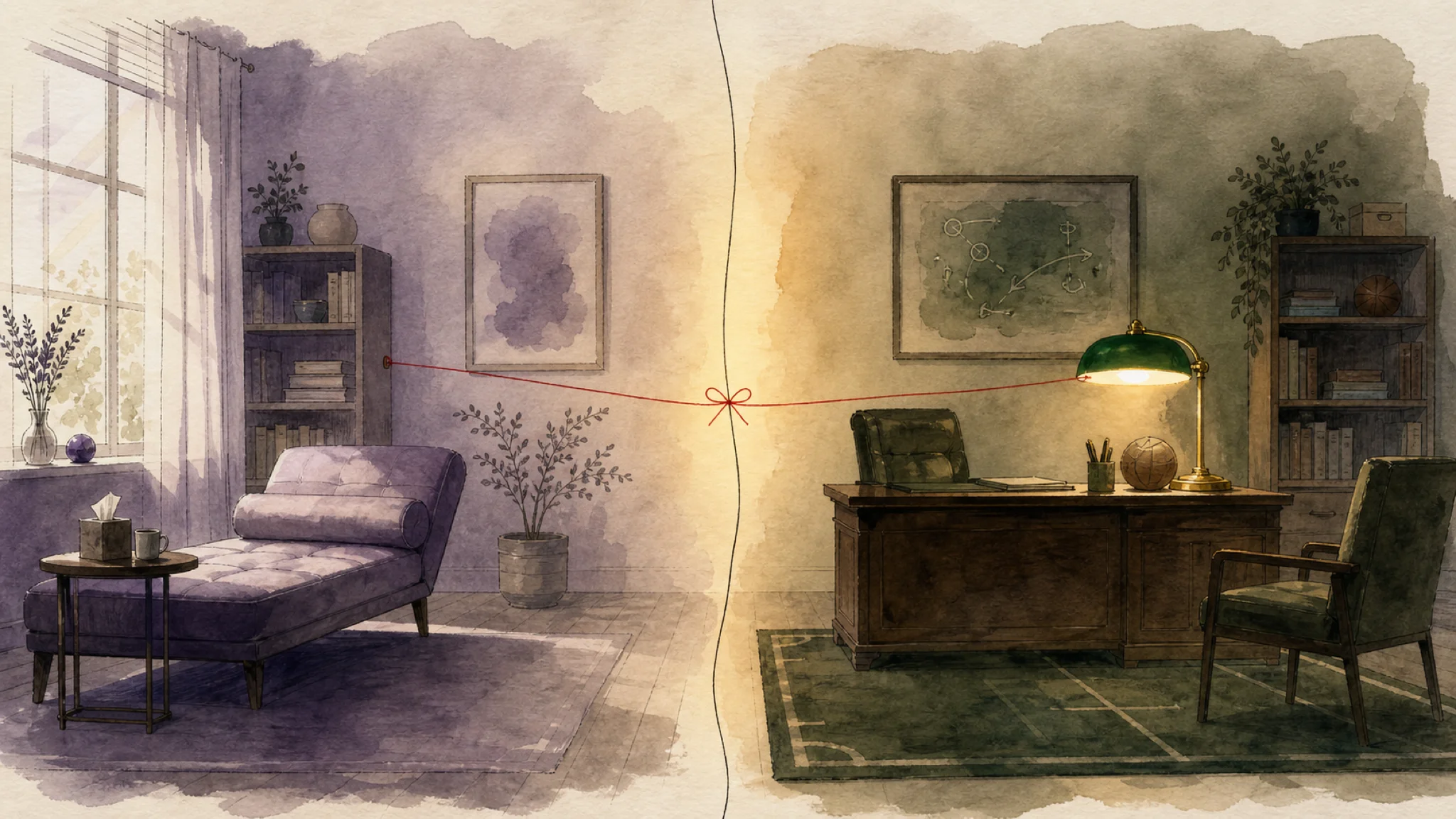
The seventh hour of season two sits down on a leather couch and refuses to get back up. Ted has fled a therapist’s office once already and is being marched into a second appointment by his own pride. Keeley is suffocating quietly in a backstage smoke break, trying to find a sentence honest enough to use on her boyfriend. Nate, freshly canonized by the press as Wonder Kid, is standing in a stranger’s house being told he is not the boy in the newspaper. Three rooms, three withdrawals, three ways the season’s question (what does it cost to be looked at) gets answered. The episode is small and patient and one of the year’s most quietly upsetting.
Ted on the couch, then off it, then back on it
The opening of Ted’s first session with Sarah Niles’s Dr. Sharon Fieldstone is the kind of sustained physical comedy Jason Sudeikis has been quietly hoarding since the pilot. Ted tries the chair, the couch (lying down, then sliding into water-slide position, then casket-position), then back to the chair. He name-checks Don Draper, The Sopranos, and the New Yorker cartoon-shrink. He inventories her tissues, her hay-fever neutrality, her accoutrements. None of it is stalling for time. All of it is stalling for time. Sudeikis plays it as a man who has been told he is in a safe room and has decided to repaint every wall before he sits down.
What breaks the bit is Sharon saying they have already started. Ted goes still. Then he says he does not want to do this. He walks out. He comes back. He walks out again, this time mid-tantrum, after a speech accusing Sharon of charging an hourly rate for fifty minutes of fake listening and of being paid to diagnose his tears. The speech is mean in a way Ted never is, and Sudeikis lets the meanness sit on his face like a sunburn afterwards. The episode’s funniest line is also its sharpest diagnosis. Sharon, when he comes back the next day, tells him fight or flight is a natural response and he managed to do both. Impressive range, really.
The session that finally works begins with Sharon admitting she was offended. That is the unlock. Ted has spent a season being the one who absorbs the blow and answers with a joke, and the show has been waiting for a scene in which someone returns serve. Sharon does. She asks if he would coach for free. He says yes. She asks if he does. He says no. She asks why he assumes she does not care about her players. Ted concedes the point with “consider me dunked on,” which is the closest he has come all year to saying he was wrong without softening it with a cornpone aside. Then he asks how long the sessions are. The truth, Sharon says, will set him free. But first it will piss him off.
Keeley auditioning her complaints
The episode’s other long thread belongs to Juno Temple’s Keeley, who has the kind of problem sitcoms usually solve in a B-plot and a hug. She loves Roy. She also cannot get a single quiet hour. He follows her to the café. He sits on her office couch reading The Da Vinci Code. He growls at her over her to-do list. He hides in the boot room next door, claiming the cigarette is for the smell. The writing here is careful enough that nothing he does is technically wrong. He is a retired man with no separate territory, and the woman he loves has become his weather system.
Keeley brings it to Rebecca and Higgins in scatting form, the two of them performing a vamp loud enough to cover their gossip, and Hannah Waddingham’s line lands like a closed door: stop auditioning your complaints, tell the person who can actually do something about it. The kitchen smoke-break that follows is the season’s most economical relationship scene. Keeley admits she has been complaining about Roy to everyone except Roy. Rebecca tells her, in the same breath, that her own marriage was the oxygen that gave her life, that Jeremy Swift’s Higgins has the marriage of a greeting card, and that Keeley and Roy are aggravatingly perfect. The fond exhaustion in Waddingham’s read tells you Rebecca is enjoying the gossip and warning herself off it at the same time.
The argument that follows is the episode’s best-shot scene. Keeley is watching Sex and the City, the Carrie-and-Aidan secret-single-behavior episode, which the show has chosen on purpose. Roy comes in narrating The Da Vinci Code at her like a small dog with a stick. She tells him to fuck off. She tells him she needs time without him reading or turning her on or fucking being there all the time. He goes still in exactly the way Ted went still on Sharon’s couch, then he leaves. Brett Goldstein plays the long silence between the door slam and the next scene as the funniest, saddest beat he has had all year. He returns, eventually, with stolen roses (ripped to shreds), Phoebe’s reading lamp, and a foot-scrubber the shop woman said would help with gross feet. Then he asks Siri to play the “Roy is sorry for not understanding Keeley” playlist. The playlist exists. Of course the playlist exists. He has thought about this.
Nate paints a portrait at the Holiday Inn
The Nate plot is the episode’s quiet horror movie. Nick Mohammed opens the hour at his parents’ kitchen table, presenting his mother with flowers for no occasion and his father with the newspaper feature lionizing Wonder Kid. His mother coos at the boy wonder. His father does not look up. He flips the paper, glances at the photo as if at a stranger, and says they will let anyone in the newspapers nowadays. Then, twisting a knife only Nate can feel, the man chooses the moment to share a worn aphorism: humility is not thinking less of yourself, it is thinking about yourself less. Mohammed plays Nate’s face going through three expressions in two seconds. Hurt. Recognition. A small swallow of something acid.
That swallow is what Colin walks into at training. Dani teases Nate. Jamie teases Nate. Toheeb Jimoh’s Sam is not in the lineup teasing him because Sam is never cruel. But Colin, the squad’s mid-table forward, makes one harmless gag about Nate being the Wonder Kid, and Nate sits him out for the drill. Later, in the boot room, Colin asks if he did something wrong. The speech Nate delivers in response is the most chilling thing Mohammed has done on the show. He explains, calmly, that Jamie and Dani are Picasso and Gauguin. Colin paints too. But his work does not hang in museums. His work hangs in a Holiday Inn. It is there to cover a bloodstain. It does not inspire. It does not move people. It does the job. So do the job.
The cruelty is not the speech alone. It is the choice of target. Colin cannot fight back without looking insecure. Nate has spent two seasons being on the bottom of every joke; the first thing he does with a foot of leverage is press it against the throat of the only person on the squad who is also on the bottom. Rebecca, in the season’s other plot, catches him standing too close to her desk, mirroring her line about being connected and never further apart, and Nate hears the echo of his own pretension in her voice and looks faintly nauseated. Later Keeley finds him alone in the equipment room and tells him he was rude. Not just rude, she says. Personal and weird. Do better. The door is behind you. Mohammed sells the apology the next morning at training (cocky, prickish, wounded-butterfly’s asshole, the squad supplies the adjectives) with what looks like sincerity. He even accepts the Wonder Kid jersey Will makes for him as a gag. The last frame of his story, in his own bedroom mirror, is him hissing at the locker-room version of himself: if you ever do anything to humiliate me again, I will make your life a fucking misery. The threat is to Colin and to the boy his father refused to read about. The episode does not separate the two.
What this episode argues
The Sharon scene gives the hour its thesis, and the script is honest enough to let three different characters live it out without making them rhyme. Self-care, Sharon tells Ted, can be scary. Fight or flight is a natural response. Ted does both. Keeley does both, lashing out at Roy after stewing for days and then waiting, alone, to see if he comes back. Nate flees too: he runs from his father’s silence by spilling its contents on Colin in the boot room, then runs from himself by apologizing in front of the team and rehearsing a different speech in the mirror that night.
The episode also keeps a quieter argument running underneath, about being seen. Ted is being looked at by a stranger paid to do it, and he resents the bill. Keeley is being looked at by a boyfriend who cannot look away, and she resents the warmth. Nate is being looked at by the British press in a way his father has never managed, and he resents how good it feels. All three answers are the same shape. Being known is a tax. The season’s question, then, is which of them will agree to pay it.
Verdict
Bill Lawrence’s writers room has been threading a quiet upgrade through season two: the show is willing to let people behave badly without flagging it as a redemption arc in waiting. Nate’s Holiday Inn speech is the cleanest example. It is shot from Colin’s eyeline, the camera stays on Mohammed’s face long after the cruelty would normally cut, and the script gives him no easy exit. Goldstein’s two beats (the door slam, the playlist) are doing the same trick from the other side, asking the audience to admire a man who is being too much without softening either fact. And Niles is the find of the year. The therapist’s office on most shows is shorthand for a montage. Here, Sharon’s stillness is doing as much storytelling as Sudeikis’s motormouth. The hour gives up some of the season’s plot momentum (no match, no Sam-and-Rebecca movement, no Jamie thread to speak of), but the trade is a deepening that the season has been promising since the truck arrived at the funeral.
A few seams show. The Sex and the City parallel is laid on with a brush rather than a feather. Higgins’s scat is funny once and once is enough. Sam is offscreen except for a single elevator beat with Rebecca that the season is saving for next week. Still, “Headspace” might be the best-written half-hour of the year.
Rating: 8.7/10
More episodes from Ted Lasso — Season 2 — Richmond after promotion: therapy, doubt, and Nate's slow turn. Jump to any episode in the season:
Where to go next
Reviewed by Mira Vance · QuizFandom Editor & Lead Reviewer. Every rating is an honest per-watch assessment from the desk that also writes the quizzes — not a press release rehash.