Bridgerton S04E8 Recap: "Dance in the Country" — Sophie Claims Her Name
What happens — the short version (spoilers)
- Benedict and Violet secure Sophie's release into Violet's custody after Araminta pressures her to confess.
- Sophie admits she hid being the Lady in Silver because she feared Benedict's disappointment.
- Sophie, Eloise, Alfie, and Irma search Penwood House and find Richard Gun's will.
- At Queen Charlotte's ball, Sophie confronts Araminta about the stolen stipend and equal dowries.
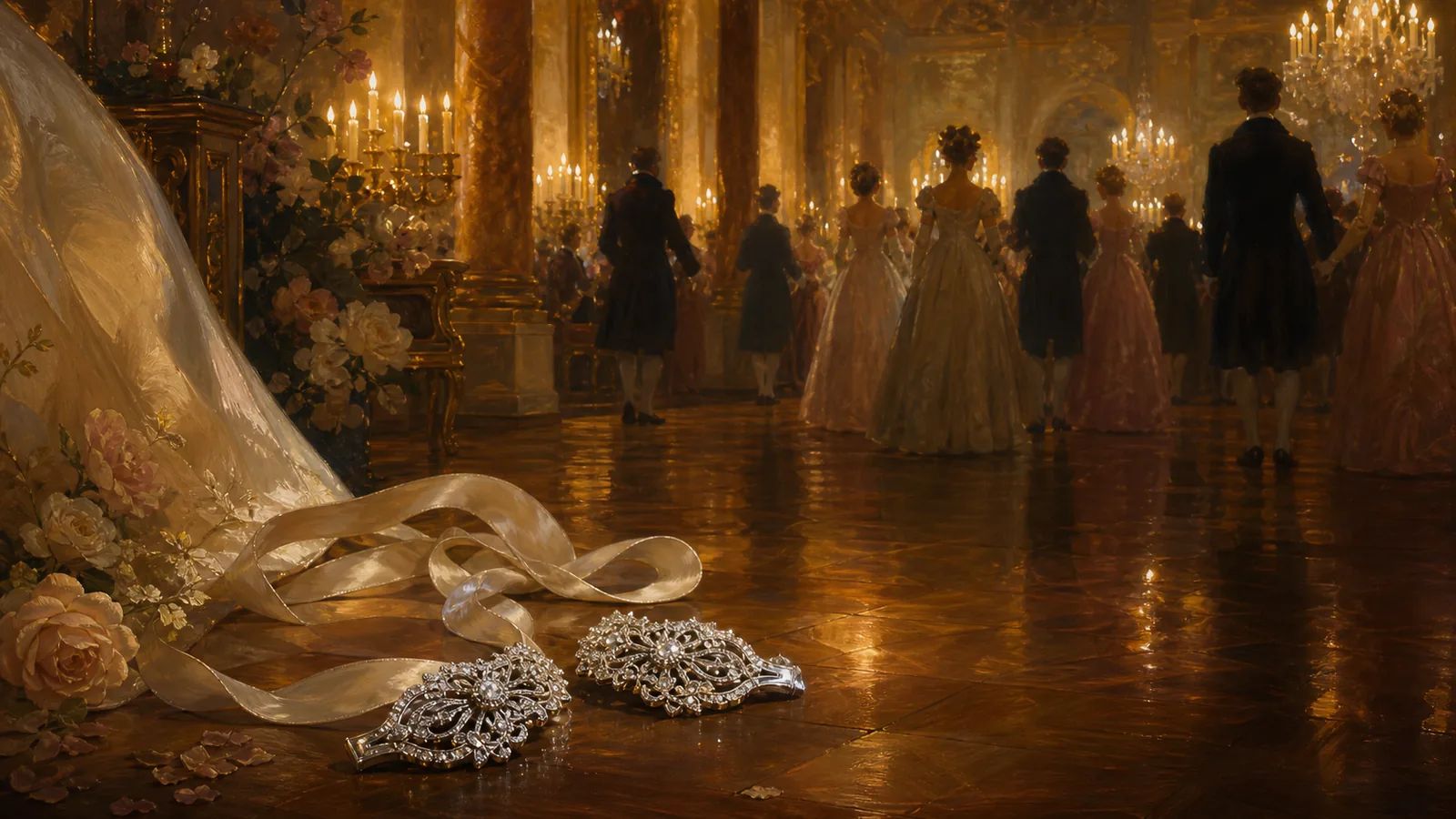
- Rosamund admits she stole the shoe clips, and Queen Charlotte publicly receives Sophie as Miss Sophie Gun.
- Benedict proposes, Sophie accepts, and their wedding makes her Sophie Bridgerton.
Sophie Baek begins the day with a jail blanket and ends it with a name London has to say out loud.
Bridgerton, Season 4, Episode 8 — “Dance in the Country” Netflix
Sophie Baek has spent years learning when not to ask for help.
That lesson nearly ruins her.
In “Dance in the Country,” the danger is not only that Araminta can put Sophie behind bars. It is that Sophie has been taught to believe she is not worth the trouble it would cost anyone to save her. A constable says any witness who speaks for her may face personal ruin. Sophie hears that and chooses silence. No Alfie. No Bridgertons. No one pulled into the wreckage after her.
London, naturally, is busy preparing for a ball.
Queen Charlotte sends out an invitation that doubles as a warning: attendance is requested, style is required, and absence will be noted. The ball is supposedly in honor of Lady Danbury’s departure, though the print is so small that even Violet can see the insult tucked inside it. Lady Danbury is leaving. Francesca is mourning. Benedict is trying to catch a woman who keeps slipping out of reach.
And Sophie is sitting in a cell because Araminta would rather destroy her than admit what Penwood House did.
Benedict and Violet bring Sophie home from jail
Araminta visits Sophie first and calls it generosity.
The offer is poison with gloves on. Sophie can confess, avoid a public trial, and spare the Bridgertons any damage for harboring her. All she has to do is say she stole, impersonated a lady, and deserved the shame.
Sophie refuses.
She tells Araminta that she has stolen everything from her already, and she will not give up what is left just to make Araminta’s life easier. For a woman who has apologized to survive, that refusal lands with real heat.
Then the magistrate nearly ends the matter before Sophie can speak for herself.
Benedict arrives in time, flanked by Violet and the Bridgerton name in full fighting dress. Araminta tries to reduce him to a second son. Benedict answers with the obvious question: is all this truly over a pair of shoe clips?
Violet handles the room with a colder skill. She offers to pay for the clips, then asks for Sophie to be released into her custody because Sophie is a ladies’ maid in her employ and Violet simply cannot manage without her services. It is polite. It is practical. It works.
The bail condition keeps Sophie inside Bridgerton House until the next hearing. Araminta leaves with one more threat: if the Queen learns Benedict is attached to a maid, the scandal could ruin the family’s standing and the younger Bridgertons’ prospects.
Sophie understands the cost immediately. Violet welcomes her home anyway.
That welcome matters. Sophie expects the servants’ quarters and finds a guest room waiting instead. Mrs. Wilson warns her that Benedict is not to cross the hall to her room and she is not to cross to his. “I have eyes everywhere,” she says, and honestly, one believes her.
The house is protecting Sophie. It is also chaperoning her within an inch of her life.
Sophie tells Benedict why she hid the Lady in Silver
Benedict already knows.
He found Sophie’s necklace in his bedroom, the same pendant worn by the Lady in Silver. Sophie explains the lie with the fear underneath it. She could not bear his disappointment if the enchanting lady he searched for turned out to be her.
Benedict gives the answer she needed much sooner: disappointment is the last thing he feels.
But his hurt is not false either. He fell for the woman at the masquerade because she saw him clearly. Sophie did not trust him to see her clearly in return. Perhaps, he says, her love for him is not what he thought it was.
That line cuts because both of them are partly right.
Sophie returns later and tells him about the father she trusted. Richard Gun, the sixth Earl of Penwood, promised he would always take care of her. After his death, Araminta told Sophie he had provided nothing in his will. Sophie never looked for herself. She believed her father had forgotten her, then carried that belief into every new love offered to her.
Benedict sees the opening at once. Why believe Araminta about the will at all?
Sophie’s answer is not logical. It is wounded. She had already accepted that love could be something she imagined wrong.
Then Benedict says the thing plainly: of course he loves her.
Sophie believes him, but she will not let him propose while a trial hangs over them. He apologizes for asking her to be his mistress. She tells him she loves him. They dance alone. When Sophie says she cannot risk more yet, Benedict stops.
That is the romance in its adult form.
Not the stolen night. The restraint after it.
Eloise helps Sophie find Lord Penwood’s will
Sophie does not wait for the trial to decide what her life has meant.
She asks Eloise for help getting into Penwood House, and Eloise proves an inspired choice for a mission that requires both nerve and awkward conversation. While Sophie, Alfie, and Irma search the study, Eloise keeps the new Lady Penwood occupied with praise for the pink drawing room and a discussion of marriage, liberty, and Mary Wollstonecraft.
Across the house, the search is much less delicate.
The will is locked away. Irma remembers a key in a drawer. Sophie finds the right one and finally reads what Araminta hid from her. Richard Gun left Araminta an additional 4,000 pounds for every year she housed Sophie. He also left dowries in three equal portions: one for Rosamund, one for Posy, and one for Sophie.
Araminta did not keep Sophie out of mercy.
She was paid to do it.
That discovery gives Sophie more than legal leverage. It gives her back the father Araminta tried to take from her. When Sophie returns to Benedict, the first thing she says is that her father kept his promise. He loved her.
The money proves theft. The love breaks a lie she has lived under for years.
Alice Mondrich brings Sophie to Queen Charlotte’s ball
Lady Danbury tries the proper route first.
She brings the story to Queen Charlotte as a romance: a maid, a gentleman, a rescue in the countryside, a man thought unable to commit moved by a woman of humble origins. Charlotte is interested until rank arrives. Benedict Bridgerton cannot marry a maid, and therefore the Queen’s wager on him becomes a loss.
Alice Mondrich hears the same problem and sees a different door.
Her life at court has become florals, Pomeranians, and saying yes or no while servants decorate. She tells Will she wants to do something with meaning. Helping Sophie may earn her the Queen’s confidence or ruin her family. She wants to do it either way. Will gives her his support.
Sophie must attend the Queen’s ball. The Bridgertons sneak her in with Violet’s party. Lady Danbury and Alice position the Queen. Araminta arrives ready to settle Sophie’s fate and discovers, too late, that she is the one being summoned.
Before that trap closes, the ball gives other women their own small openings. Eloise talks Francesca back toward debuting one day because fear should not make the choice for her. Posy accepts Lord Barnaby’s offer of a dance after encouragement from Eloise. Francesca asks Michaela to stay in London because Michaela is the only other person who truly understands what John left behind.
Everywhere, women are deciding which rooms they still want to enter.
Sophie is about to enter the most dangerous one.
Sophie confronts Araminta and Queen Charlotte names Miss Sophie Gun
Sophie faces Araminta with seven years in her mouth.
Seven years serving in her own home. Seven years being told she was lucky to have a place at all. Seven years of Araminta collecting money while turning the earl’s daughter into a maid.
Sophie lays out the will, the stipend, and the equal dowries. Then she names the likely fraud: Rosamund has been promised double what Posy was told she would receive, with Sophie’s portion folded into the sum. Rosamund finally hears what her mother thought she needed to make a match.
Then Rosamund admits she stole the shoe clips.
Araminta’s case collapses, but her pain finally comes out too. She says Sophie stole Richard’s love from her and from her girls. Sophie, with more grace than Araminta has earned, tells her Richard loved her too, and that she has the love of both daughters.
Araminta does not soften into goodness. She bargains. If they ruin her, she will ruin Sophie, and vice versa. So the room settles on a new version of events, one that can carry everyone out alive.
Alice still has to sell it to the Queen.
She does it by appealing to Charlotte’s favorite vice: amusement. Alice tells her she is missing the good gossip by ignoring the lower classes. A maid capable of making Benedict settle down must be full of vim and vigor. Charlotte resists, then lets curiosity win.
Benedict presents “Miss Sophie Gun.”
Araminta confirms that Sophie is related to the late Lord Penwood because she has no better option left. Sophie says, with perfect care, that she is by birth and education a daughter of Penwood House. Charlotte looks at her and says she would have made a wonderful diamond.
That is the public turn.
Not full justice. Not truth in every legal line. But enough truth to let Sophie stand under her own name.
Benedict proposes before a new Whistledown reaches London
Once Charlotte allows the matter to continue, the ball turns sweet enough to forgive its own madness.
Sophie and Posy call themselves sisters, not cousins. Benedict asks Sophie for her first dance as Miss Gun. Charlotte and Lady Danbury admit that the whole affair was ridiculous, then laugh because it was also fun.
Then Benedict asks Sophie how it feels to be officially recognized as a Penwood. She says it feels strange, but good. He asks if he may cut that short, because he would very much like to make her a Bridgerton.
The proposal is simple. “Will you marry me?” She says yes.
There are still farewells to make.
Violet cannot promise Marcus the marriage he wants. She cares for him, but she has only begun to meet the wild, carefree part of herself again. Marcus wants a shared life, not an arrangement that leaves them half in and half out. He walks away with dignity.
Francesca reaches for Michaela and finds an empty room. Michaela has packed her belongings and left.
Then the old voice returns with a new hand behind it. A Whistledown paper appears even though Penelope is working on her novel, and Colin asks the obvious question: who wrote it?
Benedict and Sophie, meanwhile, dance without music. At midnight, she does not have to flee. He says he hoped she might stay forever.
By the wedding, the family has caught up to the promise. Anthony tells Benedict that Edmund would be proud. Violet says she has had her great love and one time is enough. Sophie walks to Benedict, they say each other’s names, and the ceremony gives them the ending Araminta tried so hard to keep from happening.
Sophie Baek leaves the season as Sophie Bridgerton.
She gets the dance. She gets the name. She gets to stay.
Verdict
“Dance in the Country” is a generous finale, crowded in the usual Bridgerton way but emotionally sure where it counts. Sophie and Benedict’s resolution works because love alone cannot fix rank, money, law, or reputation. They need Violet’s nerve, Lady Danbury’s access, Alice’s audacity, Eloise’s distraction, Posy’s softness, Rosamund’s confession, and Sophie’s own willingness to stand in front of Araminta without shrinking.
The last stretch is occasionally overstuffed, especially once Whistledown returns and multiple future stories start tapping at the door. Still, Benedict and Sophie’s ending has the right sweep: private tenderness, public recognition, and a wedding that feels earned because Sophie had to claim herself before she could become a Bridgerton.
Rating: 8.8/10
More episodes from Bridgerton — Season 4 — Benedict and Sophie's masked-ball romance, episode by episode. Jump to any episode in the season:
Where to go next
Reviewed by Mira Vance · QuizFandom Editor & Lead Reviewer. Every rating is an honest per-watch assessment from the desk that also writes the quizzes — not a press release rehash.