For All Mankind S2E6 Review: A Soyuz Summit, a Shamrock Hotel, and a Wild Horse
A handshake-in-space summit collapses on day one while Ed names his old separation and Gordo walks into a $1,500 glass of wine to take his wife back.
For All Mankind has always treated geopolitics and marriage as the same instrument tuned to different pitches. “Best-Laid Plans” stops pretending the two plots are separate. The Apollo-Soyuz summit lands at Houston, freezes inside ten minutes of opening remarks, and has to be defrosted across a Russian restaurant, a jazz bar called 11:59, and a late-night brainstorm in Margo Madison’s wing of the docking module office. The Stevens-Baldwin households do the same thing in private — Ed confessing the Shamrock Hotel to Kelly, Tracy belting “Happy Birthday” from Jamestown into a mission console, Gordo walking into Sam Cleveland’s study to announce he is taking his wife back. By the time Ellen Wilson is telling Larry she wants a divorce, it is plain that every détente is being negotiated in the same currency. The Cold War is the family argument scaled up.
A docking handshake that cannot agree on which hand to use
The summit cold open plays as a sustained piece of comic theater. Sergei Nikulov arrives with Stepan Alekseev and a translator, refuses to be addressed as “Astronaut Three,” counter-proposes Soyuz-Apollo as the mission name “for the sake of convenience,” and stonewalls Molly Cobb’s wisecrack about RF encryption with a flat “you first.” Every line item collapses the same way. Apollo wants Soyuz passive; Sergei wants Apollo passive. Sergei wants the Soviet specs first; Margo wants the American specs second. Tom Paine takes the senator call in the hallway and tells himself the room got him four hours closer to the heat death of the universe.
After the docking-spec impasse, Krys Marshall’s Danielle Poole moves the diplomacy into her Houston living room. Dani brings borscht and piroshki “from the best Russian restaurant in town” and gets a hamburger order back. The boys ask for Jack Daniel’s instead of vodka. The toasts arrive in Soviet protocol order — fallen comrades first, women second — and Dani plays through the part where Stepan needles America about Apollo 1’s pure-oxygen cabin without flinching. She fires back about pressure suits on Soyuz 11 and lets the chill sit until somebody can say “shit happens” out loud. Marshall plays the dinner as a one-woman peace summit run on bourbon and patience. The summit lost the morning. Dani won the night.
A jazz bar called 11:59 buys a back-channel
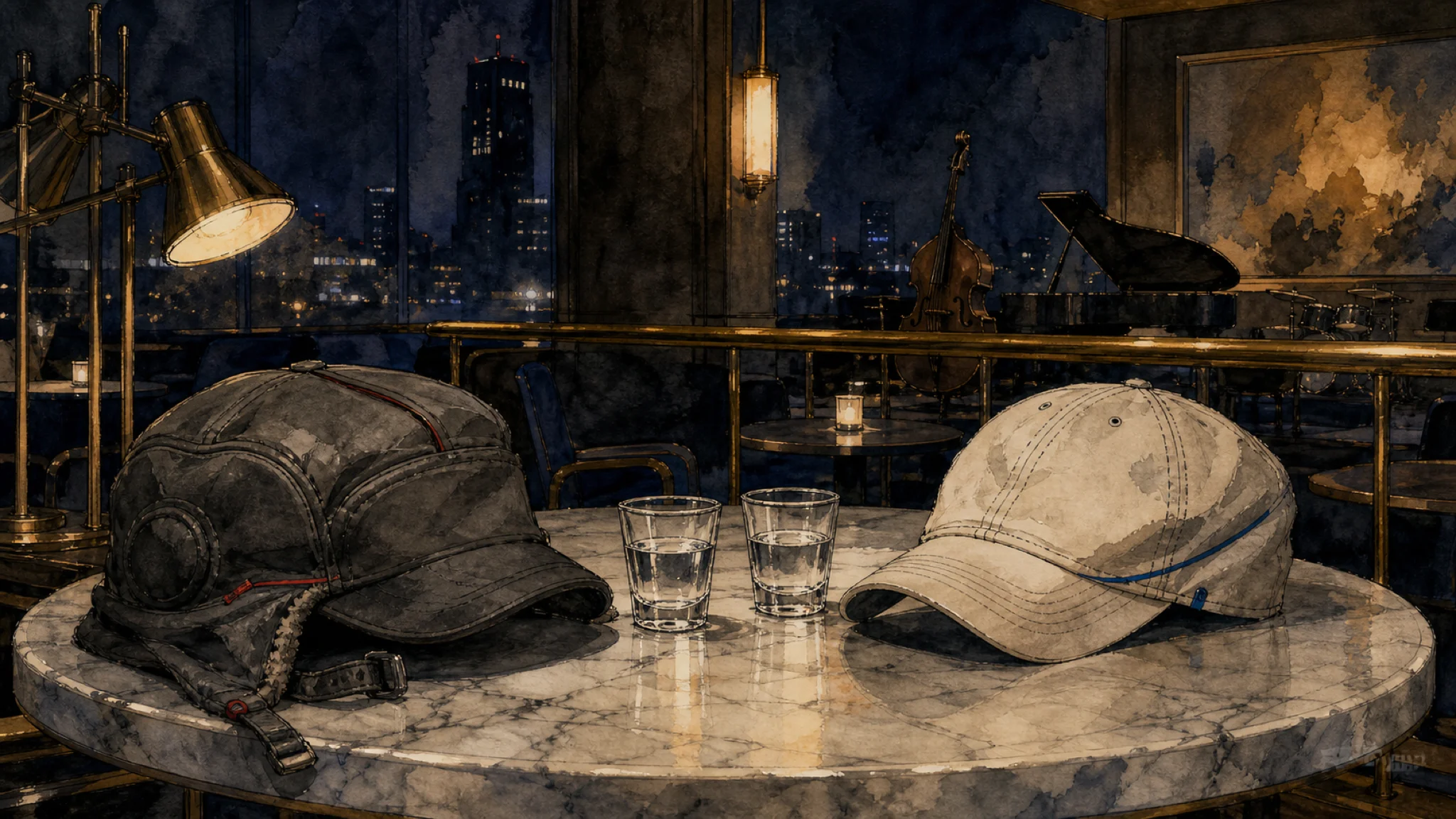
The middle of the hour belongs to Wrenn Schmidt’s Margo, who marches into Sergei’s NASA office past Russian opera he cannot turn off without political risk and dares him to pack his bags for Moscow if he really thinks Apollo-Soyuz is a CIA ruse. The scene plays like a door slam. The reconciliation is the episode’s quietest reversal. Margo invites Sergei to a jazz bar named for the Doomsday Clock. He shows up. He says it is a secret place for him. He says one minute to midnight feels very real to a country that just brought back civil defense drills. Margo confesses she used to lie in bed at night as a child trying to work out whether her teacher wanted her to stack the desks against the windows or hide under them. Two engineers swap a Cold War childhood across a martini glass and decide they have just enough trust to do the work.
The work happens late at night when Coral Peña’s Aleida Rosales lets herself into the office to crash on the couch and finds Margo and a drunk-ish Sergei sketching docking petals on a whiteboard. Sergei proposes an androgynous system — no active probes, no passive cones, three identical petals on each side latching simultaneously. Margo loves it. Aleida walks up to the board and says it will not work. There is nothing to disperse the energy of contact, and the hull will rupture on a hard dock. The shock absorber, a ring inside the petal array, is the missing piece. Sergei calls her good and tells Margo to keep her. Bill Strausser sent her to Ops because that was her “skill set.” She solves the design problem on a Saturday night because Sergei left the door open.
The Shamrock Hotel and the Bonanza board game
The two domestic plots carry the weight of the hour. Joel Kinnaman’s Ed is on the couch watching the plutonium resupply lift off from Guam when Kelly asks him what he wrote his college essay about. The conversation drifts to Operation Babylift, to the adoption center, to the puzzle she was helping a younger kid with when Ed and Karen walked in, and then to a question Kelly has been holding. Why did you adopt? Why not have another baby? Ed gives her his best version of the truth — medical issues, fertility doubts — and Kelly catches the next thread. The Shamrock Hotel is ten minutes from the house. He stayed there for a while. Ed admits the separation. He calls Kelly not a Band-Aid but a heart transplant. Shantel VanSanten’s Karen, listening from the kitchen doorway, lets the moment land without intercepting it. The episode does not give her a tear shot. It gives her a “It’s okay, Mom” from her daughter and lets that be the line.
The Stevens family runs the same scene at a different pitch. Sarah Jones’s Tracy calls down from Jamestown for the kids’ birthday, finds out Michael Dorman’s Gordo baked a cake so badly the family had to go buy another one, and slides into a memory about the Bonanza board game nobody could figure out the rules to. “Your father used to make me laugh.” Mmm, those were happy times. I miss those days. The mission cap cuts her off mid-sentence. Jones plays the truncation with a half-smile that telegraphs everything the show is going to do with Gordo for the rest of the season. The follow-up radio chat between them gets the line of the episode out of her. People change. Except for you. You’re all perfectly preserved down there. Permanent. Unchanging. Something that lasts. The line is a love letter and a pinned-butterfly diagnosis at once, and Dorman receives it with the face of a man about to make decisions.
Three handshakes and a divorce
The closing run alternates between three rooms. Ed walks the young pilot Gary Piscotty through a Pathfinder cloud-and-IMU-failure landing simulation — primary flight computers three and four out of sync, navigation unit two showing two kilometers right of the path, the runway invisible until the last thousand feet. Piscotty calls the math. Ed lands the orbiter “straight down the fucking middle” and pats him on the back. The simulation is the only pure win in the hour.
The next room is Gordo in Sam Cleveland’s study, drinking Thomas Jefferson’s wine and announcing he is going to the moon to take his wife back. Cleveland pours him a $1,500 glass and lets him say it. Then he disarms Gordo completely — Tracy is a wild horse, and a wild horse cannot be caught. She is not mine, she is not yours. She is hers. If she picks you, nothing on earth I can do about it. If she picks me, nothing up on that moon you can do about it. Dorman walks out of the office with the look of a man who has realized the second leg of the plan is the harder one.
The third is Jodi Balfour’s Ellen telling Larry the season has caught up with them. Pam Horton is back. The book of poems is real. The heart that stopped for ten years has started beating again. Larry plays the scene as a husband — hurt, surprise, an actual mention of the Mars and asteroid-belt life they were planning — and then as a friend, because that is who they have been to each other. He agrees to the divorce. He asks if she is coming out before her flight. She says no. Balfour and Nate Corddry’s Larry play the conversation as two people who built a shelter together and are now negotiating the rent after one of them walks out the front door.
What this episode argues
“Best-Laid Plans” makes a case about back channels. Every front-channel negotiation in the hour collapses. The summit fails. The first home-cooked dinner sours on a Soyuz 11 toast. Margo and Sergei’s first conference-room meeting ends with her telling him to pack his bags. The deals that close — the docking petals with the shock-absorber ring, the wife-and-husband talk in Larry’s foyer, the Gordo-and-Sam summit over Jefferson’s burgundy — happen at night, in living rooms, in jazz bars, in studies, with the conference-room paperwork put away. The official channels are theater; the actual diplomacy is what two people whisper across a martini glass while the regime opera plays in someone else’s office.
The other argument running underneath is about honesty as a delayed payment. Ed has been carrying the Shamrock Hotel for ten years and hands it to Kelly. Ellen has been carrying Pam and hands her to Larry. Tracy has been carrying the memory of who Gordo used to make her into and hands it back to him over a mission console. The Soviets have been carrying the lie about Laika’s peaceful sleep for twenty-six years, and Stepan hands the real story — three orbits, thermal control failure, a scared little thing dying alone — to Dani in her own living room. Every confession comes overdue, and the writing stays honest about what overdue confessions cost the people who receive them.
Verdict
“Best-Laid Plans” is the kind of mid-season hour For All Mankind earns the right to make once a season. The Apollo-Soyuz plot, which could have read as homework about a real 1975 mission rerouted by the alt-history premise, plays as a four-character chamber piece — Margo, Sergei, Dani, and Aleida all moving the same problem forward from different rooms. Schmidt’s civil-defense-drills confession at the bar is the unlock; Marshall’s borscht-for-hamburgers dinner is the bridge; Peña’s shock-absorber catch at the whiteboard is the payoff. The episode quietly puts the season’s central diplomatic plot in the hands of two women and a Latina junior engineer the male leadership keeps trying to confine to Ops.
The domestic plots are where the writers do their most disciplined work. Ed’s Shamrock confession is a scene the show has been building for a season and a half, and Ed delivers the admission without his usual stoic shield. Tracy’s belted birthday line over the console is one of those moments the season will replay back to itself. Sam Cleveland’s wild-horse speech to Gordo will read three different ways the next time the Stevens family is in the same room. Ellen’s foyer conversation with Larry — agreed-to divorce, no coming-out announcement, a flight to make — is a sharper depiction of a 1980s closeted political marriage than any of the bigger Ellen-Pam moments the season has staged so far. The hour gives every actor a scene to win.
Rating: 8.6/10
More episodes from For All Mankind — Season 2 — Cold War escalates to the lunar surface, episode by episode. Jump to any episode in the season:
Where to go next
Reviewed by Mira Vance · QuizFandom Editor & Lead Reviewer. Every rating is an honest per-watch assessment from the desk that also writes the quizzes — not a press release rehash.