If Wishes Could Kill S1E07 Review: Se-ah runs toward the curse and leaves safety behind
What happens — the short version (spoilers)
- Se-ah tries to reach the cursed Na-ri with compassion but cannot stop her from attacking; Ha-joon's arm is broken.
- At the hospital, Bangwool's eye injury lets him see spirits and confirms Haetsal is imprisoned by them.
- The group identifies Hye-ryung's original wish and discovers Si-won wished the curse continue forever, making it a chain.
- Haetsal directs them to the red phone at the rainbow-window building, which only Se-ah can remove.
- A car attack at Haeju Industrial Complex badly wounds Bangwool, who tells Se-ah to continue alone and gives Geon-woo the compass.
- Se-ah tells Geon-woo to stop being her hero, then makes the long jump using her athlete's training.
- Na-ri reappears in the cursed space and tries to drag Se-ah under as Geon-woo calls from the other side.
A late-season nightmare sends the kids hunting the red phone, while friendship becomes both shield and trap at once.
Episode 7 of If Wishes Could Kill opens like someone kicked the finale door halfway off its hinges. The kids are already moving, already bleeding, already trying to make sense of a curse that refuses to stay inside one phone or one body. That gives Episode 7 a frantic, breathless rhythm, but the writing is smarter than a simple chase. It keeps asking whether survival means being protected by someone else, or learning when to run into the dark by yourself.
Na-ri makes mercy feel dangerous
The cold open drops us back into immediate panic, with Yoo Se-ah and Kang Ha-joon trapped in the gym and the others scrambling to find them. The scene works because it does not treat Lim Na-ri as a monster switch that has been flipped off and on. Se-ah sees the wish video, understands the shape of Na-ri’s guilt, and tries to reach for the girl underneath the curse. She tells Na-ri that Girigo granting the wish was not something she could have known would happen. She names the loneliness and fear around her instead of treating her like a problem to be hit until it stops moving.
That is a very Se-ah move, and also a very dangerous one. Her bravery usually looks like an athletic reflex, a body moving before fear can finish its sentence. Here, bravery becomes emotional first aid. She keeps talking, keeps closing the distance, keeps insisting Na-ri is not alone. Then Na-ri goes for the weapon, Ha-joon is hurt, and the thing inside her shows itself as something that is not fully human anymore.
The best horror beat here is the pause after Se-ah says the right things and still cannot stop what is coming. K-drama friendship speeches often carry magic by default, but this show keeps poisoning that comfort. Love matters, but it does not delete a curse. Se-ah can recognize Na-ri’s pain and still be standing in front of something that wants to drag everyone else down with it.
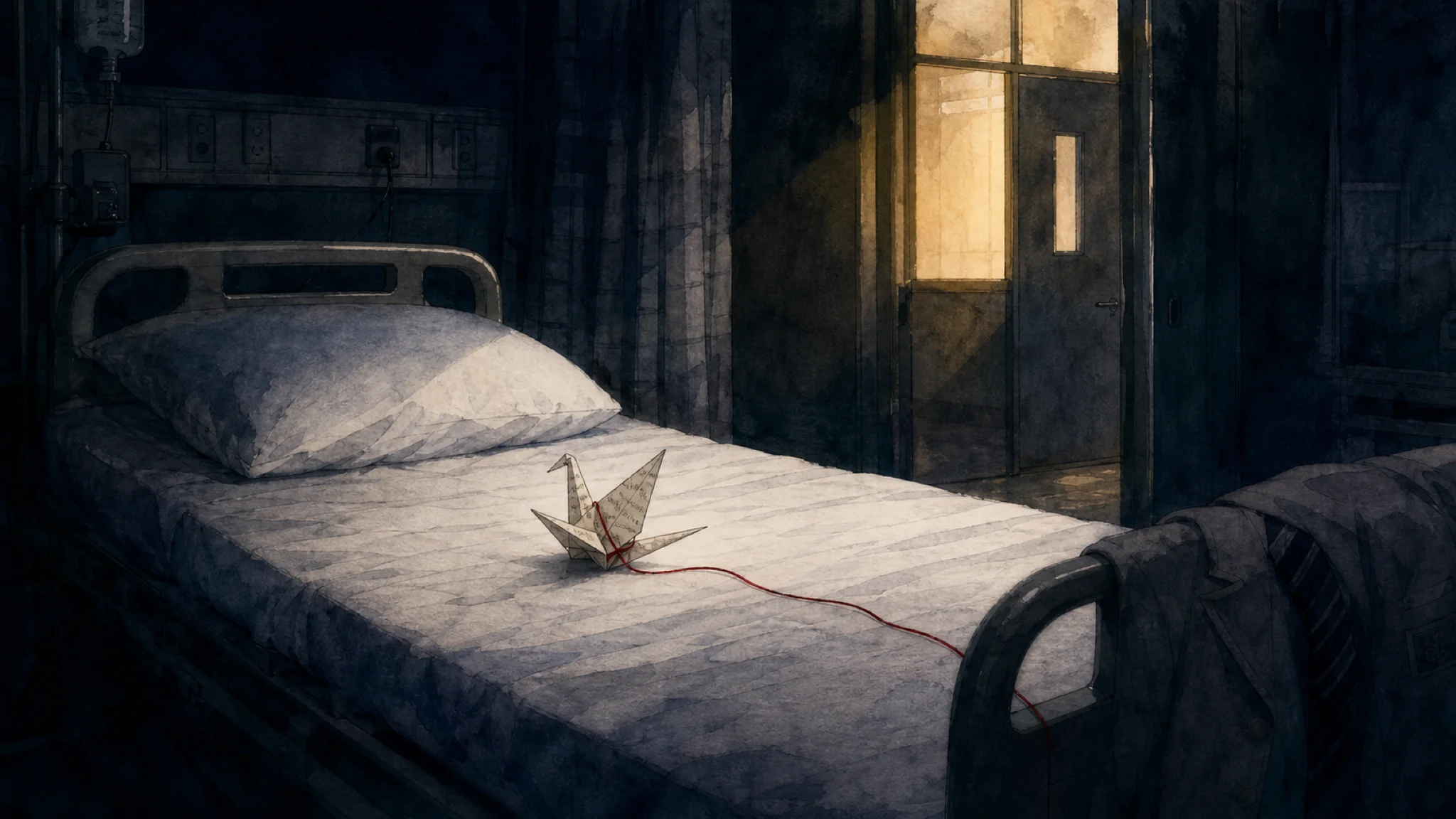
That tension follows the kids to Seorin Hospital, where the episode lets everyone breathe without lowering the stakes. Ha-joon’s broken arm needs treatment. Bangwool has neck sores and an injured eye, and the others are worried enough to keep pushing him toward care. His brother-in-law teasing could have felt tonally wrong after the gym, but the show uses it well: dumb teenage noise from people too scared to say they are scared.
It also reveals something huge: Bangwool can now see spirits. The injury to his eye has given him access to the same invisible threat Haetsal has been trapped inside. He can see the spirits draining her power and imprisoning her, and he believes that means they can get her outside again. He is still ridiculous. He is also no longer pretending the supernatural part of the story is someone else’s department.
The red phone draws a cruel map
The episode’s middle stretch is basically an investigation sprint, and it is one of the hour’s strongest sections because every clue feels nasty. Kim Geon-woo and the others gather the wish videos, then identify the first one: Do Hye-ryung’s video, filmed on the red phone. Her wish is blunt, ugly, and devastating. She wants all of them dead. She says it like someone daring the world to finally admit what it has already done to her.
The show does not soften that moment by making Hye-ryung polite in pain. Her rage is meant to be uncomfortable. She curses people by name and feeling, not by supernatural vocabulary. That is why the reveal about Hyeong-wook and Hye-ryung dying the same way has a queasy aftertaste. The curse carries the exact emotional shape of the first wish: humiliation, revenge, and the fantasy that everyone else should have to feel trapped too.
Then the episode adds Kwon Si-won, the shaman’s daughter from Baekun School, and the mythology gets meaner. The kids find her treatment note from the nurse’s office: laceration on the face. A later video shows her using Girigo to wish that Do Hye-ryung’s curse continue forever. That detail sharpens the whole season. Hye-ryung may have opened the wound, but Si-won keeps it from closing. The curse becomes a chain of teen cruelty, resentment, and spiritual backlash, which is much more frightening than one angry ghost with a phone.
Haetsal’s instructions give the quest its shape. The red phone should be at the location where Hye-ryung filmed the wish video, inside the building with the rainbow window seen in the Polaroid. Se-ah is the only person who can remove it because she is connected to the other side, the phone, and Haetsal. The silk bracelet protects her from being touched by the other side, at least in theory. Find the maehyung, Haetsal says, and everyone who has been cursed can be saved, including Na-ri and Geon-woo.
That plan sounds tidy until a haunted industrial complex gets involved. The trip to Haeju Industrial Complex has the right late-night field-trip dread: navigation failing, empty roads, headlights cutting across nothing helpful, the sense that the car is already inside the curse before anyone officially arrives. The show knows how to weaponize a place that looks abandoned but not empty.
The car attack is messy in the right way. It arrives after Bangwool sees the threat, after Se-ah remembers that only she can remove the phone, after he starts reciting a protective prayer and then everything falls apart. He has been goofy, devoted, and desperately attached to the idea of freeing Haetsal. When he is badly wounded protecting the kids, his sacrifice stings because we got to laugh with him first.
His final instructions are simple and brutal. Se-ah has to continue alone. She has to find the red phone so they can save Haetsal and give her freedom. He gives Geon-woo the compass, warning that spinning means spirits from the other side are nearby, and tells him to protect Se-ah. Ha-joon’s panic over him, still calling him brother-in-law, gives the hospital-bound half of the episode its emotional bruise. The joke has become an address. He is not teasing anymore. He is begging someone he has accepted as family to stay alive.
Se-ah chooses the jump
Once Se-ah and Geon-woo reach the industrial building, the episode becomes a focused survival puzzle. They search for the rainbow window, compare the Polaroid, and move through a structure that seems ready to collapse under them. Broken access points and unsafe floors keep forcing decisions. The red phone is close, but the route to it keeps making the kids declare who they think they are.
That is where Geon-woo’s protector role finally gets challenged in a way that matters. He keeps wanting to go first, test the path, take the risk, make the danger pass through him before it reaches Se-ah. On paper, that is sweet. In practice, it can also become another kind of cage. Se-ah is not rejecting him because she does not need anyone. She is rejecting the version of love that keeps trying to stand between her and the thing only she can do.
Her line, “Stop being my hero,” is the episode’s best character beat. It is tired, clear, and necessary. She needs to find her own way. The whole hour has been full of people trying to save each other: Se-ah trying to save Na-ri, Bangwool trying to save Haetsal, Ha-joon trying to save Bangwool, Geon-woo trying to save Se-ah. It is a real question: when does protection become a refusal to let someone else become brave in their own shape?
The jump sequence pays off Se-ah’s athlete identity without reducing it to a random skill check. As she faces the gap, she remembers coaching language: approach it as practice, make the whole world this moment, release like an arrow, and jump. Fear stays with her, managed through muscle, breath, and repetition.
Then Na-ri appears, and the episode folds friendship back into horror. The confrontation is painful because Na-ri is both victim and threat. She tells Se-ah she cannot leave. She calls her a dead soul. Se-ah begs her to come back to the light. When the curse seems to vanish, the old friendship flickers through: Na-ri remembers how close they used to be, and Se-ah answers that they still are best friends. The exchange is sweet, but the show has already taught us to fear sweetness when the curse is nearby.
Na-ri’s final turn is devastating because it sounds less like villainy than despair. She does not know if she will ever get out, and she wants to take Se-ah down too. That is the episode’s darkest Gen-Z horror idea: pain as a group chat you cannot leave. Se-ah says no, but the floor, the curse, and Na-ri’s grip are already moving faster than words.
The cliffhanger is cruel in the way penultimate episodes are allowed to be cruel. Geon-woo calls for Se-ah from the other side, telling her to come back, but he cannot reach her. Episode 7 ends on Se-ah caught between the living friend who wants to pull her out and the cursed friend who wants to drag her under. That image is a little melodramatic, sure. It is also the kind this show can support: glossy, teen, sincere, and mean enough to leave a mark.
What this hour costs
Episode 7 says that saving someone is not the same as owning their danger. Se-ah, Geon-woo, Ha-joon, and Bangwool all try to protect another person, but the hour keeps separating useful protection from control. Bangwool gives instructions and then lets the kids go. Geon-woo has to hear that his hero instinct can crowd Se-ah’s courage. Se-ah has to accept that Na-ri’s pain can be understood without being obeyed.
That gives the episode a strong emotional backbone under the curse lore. The red phone is scary because it records wishes, but the scarier thing is how easy it is for hurt kids to turn a wish into a weapon. Hye-ryung’s fury, Si-won’s continuation of the curse, Na-ri’s despair, and Se-ah’s refusal all belong to the same moral weather system. The show is at its best when it treats supernatural horror as teen emotion with teeth.
Verdict
S1E07 is a strong penultimate chapter: tense, character-driven, and packed with enough lore to move the finale into position without feeling like homework. The industrial-complex material is especially effective, and Bangwool’s injury gives the episode a real cost beyond the usual bruises and screams. Some mythology terms still arrive faster than the drama can fully texture them, but the character work keeps the momentum steady.
The real win is Se-ah. This episode lets her be scared, compassionate, reckless, stubborn, and capable in the same breath. By the time she tells Geon-woo to stop being her hero, the season has found a sharp late-game shape for her arc. If the finale can pay off Na-ri, Haetsal, and the red phone without sanding down the ugliness of those wishes, If Wishes Could Kill could land as one of Netflix’s more satisfying teen-horror K-dramas of the year.
Rating: 8.8/10
More episodes from If Wishes Could Kill — Five high school students, one supernatural arbiter, eight episodes that escalate fast. Jump to any episode in the season:
Where to go next
Reviewed by Mira Vance · QuizFandom Editor & Lead Reviewer. Every rating is an honest per-watch assessment from the desk that also writes the quizzes — not a press release rehash.