Mayor of Kingstown S3E6 Review: Mike Walks the Border Zone Where Predators Feed
A drive-by, a prison birth, and a raid at Cavo turn Kingstown's balance into another predator's feeding ground.
Mayor of Kingstown S3E6 moves its violence through institutions before anyone names the damage. Rhonda tries to push dealers away from her storefront. The emergency room takes a gunshot victim who begs not to die while staff scramble for a doctor. A drive-by follows. Bunny Washington arrives before the police can settle the scene, and Mike McLusky has to read the attack as both grief and provocation. By the time Merle Callahan starts talking about ecotones and predators, Kingstown is already the border zone he means: street, prison, club, hospital, and family home all feeding the same machine.
Bunny refuses to disappear after the bait is set
The drive-by is staged as public pressure. Rhonda’s block is already under strain before the shooting: she tells Digo to move the morning drug business away from her door because she does not need clients seeing it. Then the ER sequence and the gunfire collapse civilian space into gang warfare. When Ian Ferguson (Hugh Dillon) and Mike McLusky (Jeremy Renner) arrive, the scene is identified as Rhonda’s, and Mike immediately sees Bunny already standing there. Mike does not treat Bunny’s presence as grief alone. He treats it as a dangerous signal flare.
Bunny Washington (Tobi Bamtefa) knows that too. He tells Mike the shooters are baiting him and that he is “ten toes in” now. Mike’s advice is simple because he has no better tool: do not let them bait you, call if anything happens, stay smart. The exchange carries the usual Kingstown paradox. Mike is asking Bunny not to retaliate because restraint is the only way to keep the city from burning, but Bunny’s public survival also depends on being seen. If he hides, he loses stature. If he stands in the street, he invites the next round.
The episode makes that dilemma sharper when Bunny later speaks to Roe inside the prison. He tells her she should leave with Trey because there is no difference anymore between soldier and civilian. Roe answers with the ordinary problem beneath the war talk: Trey is in school, on the gifted track, taking an algebra test. Bunny asks her to tell the boy he is proud of him. Then officers break up the visit, accuse Roe and Raph of trading contraband, and drag Raph away while Roe pleads with them not to hurt him. The scene matters because it gives Bunny’s grief a domestic address. He is not protecting an abstract crew. He is trying to keep a child good at algebra alive in a city that keeps treating everybody as reachable.
Mike’s war-room conversation with Ian, Kyle, Robert, and Carney converts the attack to logistics. The Aryans are tied to the Russians. Kareem will isolate Callahan for forty-eight hours. Carney has to find the drugs coming into Anchor Bay. The police will get a warrant and hit Cavo, but Mike insists the raid cannot become a kill zone because they have people inside. Kyle McLusky (Taylor Handley) jokes about taking Noskov for pierogis; Mike shuts that down. Too many innocents are near the blast radius, and in this episode that phrase includes people the police barely know how to count.
Cherry’s labor exposes the prison’s favorite vocabulary
The strongest counterweight to the gang plot is Cherry’s labor. The sequence begins with pain and panic, but the argument is about language and policy. Tracy McLusky (Nishi Munshi) sees an inmate in active labor restrained in cuffs and pushes back. She asks for the cuffs to be removed because the woman could be hemorrhaging and because if she cannot bend her legs, the baby may not survive. The room answers through procedure: the restraints are a bad policy, but still a policy, designed to protect staff.
Tracy’s outrage is one of the few clean emotional responses in the hour. She does not want to hear that a woman in labor is a threat. She asks about the mother when the doctor tells her to worry about the baby. That line cuts through the institutional reflex to separate bodies into custody categories: inmate, patient, fetus, risk, liability. Tracy has spent enough time around corrections to know why the rule exists, but she has also just watched the rule make cruelty sound administrative.
The later meeting between Tracy and Warden Michaels keeps pushing on the same fault line. Tracy comes with the blunt fact nobody at the prison can easily absorb: Cherry has been incarcerated for three years, and she has just given birth. That means the pregnancy began inside the institution. Warden Michaels first reaches for less accusatory phrasing, suggesting inmates sometimes take guards as boyfriends. Tracy rejects that immediately. The power dynamic does not allow consent, which is why staff-prisoner sex is forbidden in the manuals. When the warden says “father,” Tracy corrects her to “assailant.”
That correction is the scene’s moral spine. The episode does not need a courtroom speech because the vocabulary is the conflict. “Father” makes the child the center and softens the violence. “Boyfriend” launders coercion through romance. “Anonymous tip line” shrinks a direct accusation to a bureaucratic whisper. Tracy sitting in that office and refusing each term gives the hour one of its clearest forms of resistance. She cannot fix the system, and the warden is already moving toward process, but she can stop the prison from naming rape as something smaller.
The domestic scene afterward with Kyle and baby Mitch quietly complicates Tracy’s day. Kyle comes home, asks about work, and she says med maintenance and stitches, mostly. She does not tell him what she brought to the warden. He mentions that his mother used to give Michaels trouble, and the line lands against Mariam’s absence without anyone pausing for memorial sentiment. Tracy and Kyle get twenty-four hours together, but even that feels like borrowed time from jobs that keep putting moral injury on the kitchen floor.
Cavo falls clean, but nothing gets clean
Mike’s plan for Cavo is built around restraint. He gets Evelyn to help streamline the warrant through Judge Pierce, warns Iris to take an early lunch, and tells Kareem to search Callahan properly after putting him in ad seg. Every call is an attempt to move pieces without letting the board tip. The problem is that Kingstown’s pieces are people, and people under surveillance cannot always move the way Mike wants.
Iris (Emma Laird) understands the danger better than Mike gives her credit for. When he calls Cavo and tells her to leave, she answers in front-desk code because she is being watched. Later, after the raid, she explains why she could not simply step out. To Konstantin, she is arm candy, fun, his drug buddy. If she suddenly disappears right before the police arrive, she burns the role keeping her alive. Mike contacts her because he wants to keep her out of crossfire; Iris stays because survival inside a trafficker’s orbit requires performance.
The raid itself follows Mike’s instructions on paper. Kingstown Police rush Cavo, put the Russians in cuffs, and Kyle later tells Mike there were no shots fired. But the clean tactical report has blood under it. Iris interferes when officers grab Konstantin Noskov, gets hit in the melee, and Kyle says he hauled her out after she played her part too well. Inside the interrogation room, Noskov gives Ian and Stevie almost nothing they can use. They press him about cocaine residue, bad visas, Tatiana, and the baby found alive in the dumpster. He turns the conversation toward Milo Sunter and Mike, then asks who the cops are and who the criminals are.
That line could be cheap in a lesser episode. Here, it lands because the hour keeps showing law and crime borrowing each other’s methods. Mike uses Evelyn to move a warrant, police muscle to raid a club, prison leverage to isolate Callahan, and inmate logic to balance Bunny against the Aryans. Noskov is vile, but he is not wrong that Kingstown’s categories keep bleeding into each other. His arrogance works because he can see the hypocrisy without caring about the victims inside it.
Carney’s beating makes the same point from inside Anchor Bay. He notices the auto body shop may be the drug route because bumpers are being pulled for an oil change, then tries to search Callahan in the hole. Jackson and the Aryans stop him, demand he say who he works for, and beat him badly enough that he calls Mike later with cracked ribs and a lead. The scene is ugly because it shows formal authority ending at the edge of a tier. Kareem can put Callahan in segregation. Mike can order a search. Carney can wear the uniform. None of that matters if the Aryans decide the prison’s real chain of command belongs to them.
What this episode argues
S3E6 is organized around borders that pretend to separate things. The hospital is supposed to be a place of treatment, but the wounded arrive from the street war. The prison is supposed to contain violence, but it produces a newborn, a rape accusation, and a drug pipeline through the auto shop. Cavo is supposed to be a club, but it is also a trafficking node, a Russian office, and Iris’s cover. Mike’s office is supposed to coordinate order, but every call he makes reveals how little direct control he has.
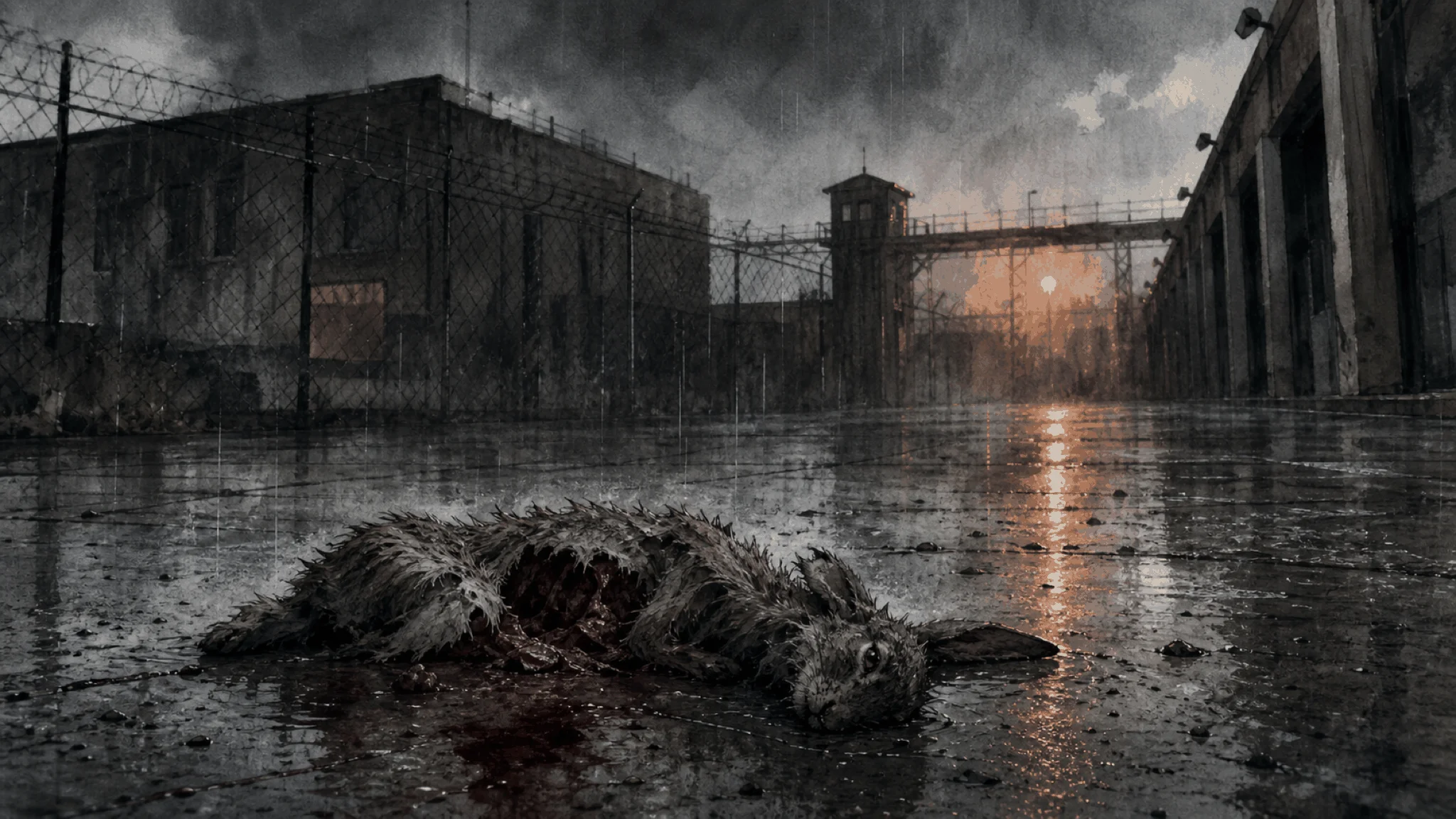
That is why Callahan’s final conversation with Mike works as more than villain poetry. Earlier, he studies a dead rabbit and talks about hawks; later, he tells Mike the prison is an ecotone, a transition region where predators feed. He insists Konstantin will not turn on him as long as the predator gets fed, then tells Mike to hit Bunny if he wants balance. The speech is theatrical, but it has earned its vocabulary. Kingstown really is a border zone. The question is whether Mike can keep calling his work balance when everyone he balances becomes bait.
Verdict
S3E6 is a strong midseason pressure episode because it refuses to let any plot stay in its lane. Bunny’s grief, Tracy’s fury, Iris’s cover, Carney’s injuries, and Mike’s containment strategy all describe the same city from different rooms. Nothing as explosive as the drive-by opening follows, but the best scenes are built from institutional language tightening around human bodies until someone has to say the harder word.
The episode’s weakness is familiar to Mayor of Kingstown: Callahan’s predator monologue and Noskov’s cop-criminal provocation underline ideas the drama has already made visible. Still, the performances keep the thesis from flattening the hour. Mike’s control is becoming indistinguishable from triage, Bunny carries a bruised stillness, and Tracy’s refusal to accept the prison’s euphemisms is the hour’s bravest moment.
Rating: 8.4/10
More episodes from Mayor of Kingstown — Season 3 — Mike's truce strategy collapses as a Russian mob bid reshapes the town. Jump to any episode in the season:
Where to go next
Reviewed by Mira Vance · QuizFandom Editor & Lead Reviewer. Every rating is an honest per-watch assessment from the desk that also writes the quizzes — not a press release rehash.