Mayor of Kingstown S3E7 Review: The River Takes Kingstown Past the Last Line
A massacre, a prison threat, and Bunny’s grief push Mike’s whole bargain toward a place without rules.
Mayor of Kingstown Season 3 Episode 7 begins with a border crossing and ends with a phone call from the hole, a grimly efficient map of the hour’s logic. Everything that moves through Kingstown is treated as inventory first: guns, drugs, women, favors, grief, even time. Mike McLusky (Jeremy Renner) tries to hold the old balance in place after the Russians, the Aryans, Bunny’s crew, and the police all start treating restraint as weakness. The result is one of the season’s bleakest chapters.
The bridge massacre forces trafficking into public view
The opening sequence is quiet before it becomes horrific. A group of young women crosses into the United States with a cover story about a bachelorette party in Dearborn and a planned return to Toronto. One of them complains in Russian about the lie, another asks when they will get their passports and phones back, and the man handling them answers with the bland control of someone moving freight. The confiscated passports, the locked gate, and the word “heartbeats” later used by Iris do the work.
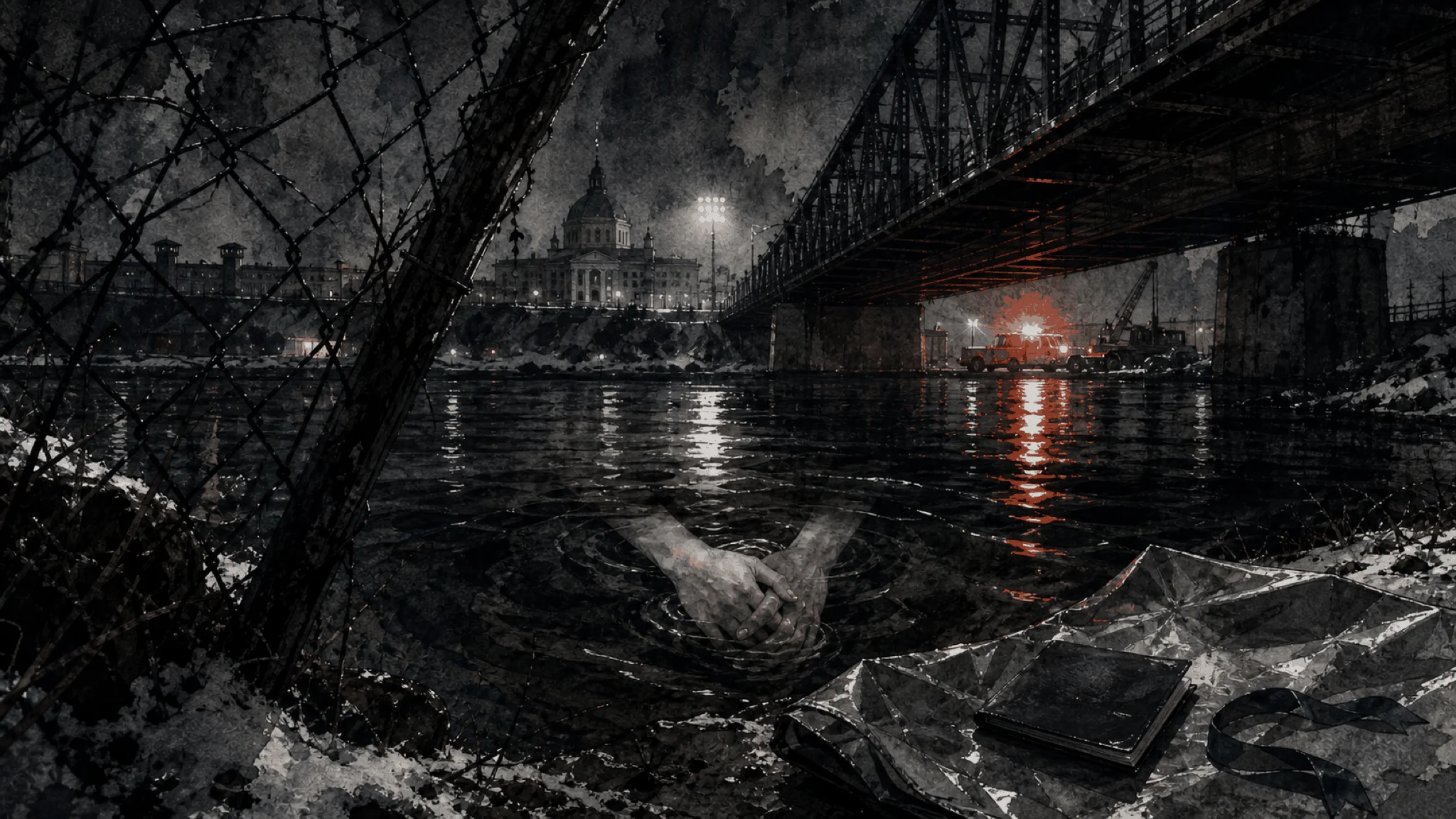
That makes the bridge attack land with a different kind of force. The vehicle is struck at a work site that, Ian Ferguson (Hugh Dillon) later says, was never registered with the city. The screams fade quickly, which is almost worse than a prolonged set piece. By the time Mike reaches the river, Stevie and Ian are already working a scene that official language wants to shrink. A jogger found bodies in the water. Two girls have been recovered so far. Mike looks at the river and knows there will be more.
The episode’s sharpest institutional move is Mike ordering people to call the massacre an accident. Ian says the evidence points to mass murder: stolen equipment, coordination, and a vehicle forced into the river. Mike does not dispute the facts. He asks for the label to be delayed because naming the crime too soon will start the next one. That is the Mayor of Kingstown bargain in its ugliest form: tell the truth later so fewer bodies appear by morning.
Iris becomes the hour’s witness. She tells Mike the shipment coming in is “heartbeats,” not horses, and notes that it is late after Alex said something to Konstantin. When Konstantin, Roman, and Iris arrive near the crash scene, Konstantin tries to turn the wreck into plausible misfortune, but Iris answers with the sentence that exposes the whole room: they do not believe in accidents. Later, as a TV report calls the deaths a tragic accident and mentions fourteen fatalities, Konstantin grows frantic at Iris for watching. Iris refuses him the mercy of her denial.
That refusal destabilizes Konstantin more than any threat. His courtly concern collapses into rage, then into self-pity. By night, he is asking who waits for Iris in the shadows and threatening to send her away if she does not look away. The line about giving her the one thing Milo did not give her is not generosity; it is another man’s attempt to define captivity as mercy.
Tracy and Charlie expose the prison’s private violence
The prison material gives the episode its second system of bodies: not the bodies pulled from the river, but the bodies Kingstown keeps behind doors, in cells, in infirmaries, and in stories no one wants recorded. Ian’s scene with Charlie begins like procedure. Charlie is trying to help locate another body, maybe more than one, and he gets caught on the kind of detail trauma preserves with useless precision: birch or beech, hickory, the father who made him whittle his own switch.
Then Charlie mentions “the man on the porch,” and Ian shuts the door fast. He tells Charlie not to worry about that and redirects him toward the tree. Ian can comfort Charlie through one confession while steering him away from another that threatens Ian.
Tracy McLusky (Nishi Munshi) gets the episode’s most frightening prison corridor. First she visits Cherry after delivery. Cherry has lost a lot of blood, refuses the comfort of the twenty-four-hour newborn rule, and answers questions about rape through a broken religious language that protects her from naming the men who hurt her. When Tracy presses for an identity, Cherry panics. She has already said too much by saying the guards, maybe more than one, maybe all of them, and her terror confirms the danger faster than any formal allegation could.
The later parking-lot encounter with Breen narrows that danger into one man. In the morning, Breen presents himself as a weary professional who says “service” is why he works there. By evening, the same word has curdled. He talks about underpaid staff, inmates making the same mistakes, and Cherry Maxwell as an example of who deserves what. He blocks Tracy’s exit with soft speech, asks why she talked to Cherry, grabs her when she tries to leave, then apologizes without surrendering control. His final warning, telling her to drive carefully because there was an accident by the river, makes the threat local, intimate, and perfectly deniable.
The bridge massacre is spectacular violence, the kind that brings cameras, helicopters, and public statements. Cherry’s assault and Tracy’s intimidation are workplace violence, hidden in shift changes and dead zones. Mayor of Kingstown places them side by side because both depend on the same rule: the people with access decide which bodies count as evidence and which bodies become problems to manage.
Bunny rejects Mike’s scale
Mike’s first problem of the day is already a contradiction. Kyle McLusky (Taylor Handley) calls after a clean raid on the Colombians, saying it went “clockwork” and warning that Bunny will come for Mike if he learns they hit his supply. Kyle names the whiplash plainly: Mike helps Bunny in one direction, then clips his supply in another. Mike calls it recalibration. Kyle hears a system that no longer works.
The prison proves Kyle right before Mike can pretend otherwise. Raphael is pulled from the yard under the lie that the warden wants him, searched, and attacked. The setup fails because Raphael fights back, but the Aryan officer has already made the real point. He knows Raphael’s kid’s school. He knows Roe is working two jobs. He threatens the family outside the wall while adding time to the man inside it. The prison is supposed to contain violence; here it exports leverage.
Mike meets Evelyn Foley at the morgue, where the dead girls have stripped even the officials of their professional masks. Evelyn says KPD is calling the river scene an accident and asks if that is Mike. He asks for time. She wants to know what he is really asking for, and he gives the honest version of his office: whoever killed those girls will be found, and they will never see a judge. The promise is meant as justice, but the scene is too sickened to let it sound clean.
That sickness follows Mike to Bunny Washington (Tobi Bamtefa). Bunny is surrounded by weapons when Mike finds him, including AT-4s, M4s, and ammunition stacked like a declaration. He is also coming from Rhonda’s wake, which makes Mike’s arrival feel obscene even before the accusation. Bunny has lost family, watched his people get hit, and learned that Mike hid the Russian-Aryan connection while asking him to trust a balance he can no longer see.
The confrontation is the episode’s central break. Mike insists he has been weighting the scales in Bunny’s favor. Bunny answers that his family is the thing dropping, so the scales can go to hell. When he says he is done and will become the monster now, the line could play as posturing, but Bunny carries the weight of a man making himself colder because grief has made warmth too expensive. Mike warns that if Bunny swings big, Mike will swing back. Neither man sounds like he believes the old friendship can survive the warning.
Then Mike asks whether Bunny killed the Russian girls. It is a necessary question inside the plot and a devastating one inside the relationship. Bunny’s face does the damage before the words do. He cannot believe Mike thinks that of him, and Mike cannot pretend Bunny is not on the list. Bunny refuses the old arrangement in public terms: he goes his way, Mike goes his, and if they cross again, only one walks away.
The bar scene with Mike and Ian gives that rupture its thesis without making it tidy. Ian cannot get the river out of his head: the girls were holding hands when rigor mortis set in, and the coroner needed a hammer. Mike says maybe there was no line, and Ian answers that maybe they made it up so they could hope. Two men who profit from the fiction finally say the fiction out loud.
What this episode argues
This chapter argues that Kingstown’s balance was never peace. It was a temporary agreement about whose suffering could be delayed, hidden, renamed, or redirected. Mike’s talent has always been keeping competing forms of violence from arriving at the same door on the same day. Season 3 Episode 7 shows the limit of that talent: once family, children, and civilians become pressure points, the mayor’s old arithmetic loses its units.
The repeated word is accident, and the episode treats it as a civic narcotic. Konstantin wants the crash to be an accident because his business needs plausible distance from the dead. KPD needs the word because retaliation may follow the truth. Breen uses the river accident as a threat to Tracy, turning a public catastrophe into private menace. In Kingstown, an accident is not the absence of intent. It is the label power reaches for when intent is too costly to admit.
Verdict
“S3E7” is a hard, effective episode because it keeps its violence connected to systems rather than spectacle alone. The river images are brutal, but the hour’s deeper chill comes from the way everyone immediately begins negotiating the meaning of the bodies. Mike asks for time, Ian asks whether Bunny is a psychopath, Evelyn asks what justice can mean if the dead are publicly misnamed, and Iris watches because looking away would make her complicit in Konstantin’s lie.
S3E7 is not flawless. Some of Konstantin’s unraveling leans theatrical, and the runtime is so packed with pressure points that Mariam’s absence is felt in a season where the moral counterweight still matters. But the Mike-Bunny fracture, Tracy’s corridor scene, and the final Raphael-to-Bunny call give the chapter a strong shape. By the time Bunny promises Raphael that he has his family, the next war’s terms are clear: not territory first, but the people each man can still claim to protect.
Rating: 8.7/10
More episodes from Mayor of Kingstown — Season 3 — Mike's truce strategy collapses as a Russian mob bid reshapes the town. Jump to any episode in the season:
Where to go next
Reviewed by Mira Vance · QuizFandom Editor & Lead Reviewer. Every rating is an honest per-watch assessment from the desk that also writes the quizzes — not a press release rehash.