Raakh Season 1 Episode 1 Review: A Family Night Collapses Into A Hunt
What happens — the short version (spoilers)
- Suman's Radio Night Becomes The Last Normal Hour
- Ashok And Mona Learn The Children Never Arrived
- Jayprakash Turns Panic Into Procedure
- Babu And Rajjo Show What Petty Violence Looks Like Up Close
- Raja Bhikhari Sends The Search Toward The Ridge
- Rain, Witnesses, And A Red Scooter Pull The Case Apart
Raakh opens with a missing-children case that starts in an ordinary home and quickly spreads through police procedure, street violence, bad leads, and a brutal glimpse of men willing to turn fear into money.
Suman’s Radio Night Becomes The Last Normal Hour
Suman’s Radio Night Becomes The Last Normal Hour
The episode understands that a crime story hurts more when the life before it feels specific. Suman and Sahil are not introduced as case files. They are children in motion: late, teasing each other, worried about a bus, trying to reach the Cantonment area. Before the dread lands, the house gives them shape. Sahil jokes about the freezer turning home into Kashmir. Suman is nervous about her radio performance and cannot find her earrings. Mona lends her own, proud enough to call her daughter a nightingale. Ashok is already telling people Suman will sing on the radio.
That domestic detail matters because the episode does not need to overstate the later panic. Suman has a slot on “Madhur Geet.” She worries that if she is late, Deepa will get it. Sahil is sent along despite protesting, with Mona framing it as moral support while Suman is technically his bodyguard. There is taxi fare, a promise that Papa will pick them up, and ice cream waiting for evening.
The first turn is quiet. On air, the last song goes to Deepa Dhanraj. Ashok and Mona try to explain it to themselves before fear takes over. Maybe Suman was late. Maybe she was held for the end. But Suman never misses a performance.
Ashok And Mona Learn The Children Never Arrived
Ashok goes to the radio station expecting to solve a misunderstanding. Instead, Deepa tells him Suman and Sahil never came. That is the moment the premiere stops being about a missed performance and becomes about time. The children left around 4:30 p.m. for a 7:00 p.m. program. By the time Ashok calls Mona, the station is closed, and no one has seen them.
The writing keeps the parents’ reactions clean. Mona calls friends and asks for Renuka. Ashok checks the station and then has to repeat the impossible fact over the phone. The fear is in the repetition. They never go anywhere without informing Mona. Suman would not skip the performance. The normal explanations are still being offered because the parents cannot yet afford the worse ones.
Mona’s anger later, when police ask whether anything is missing from the house, is one of the episode’s sharper beats. It is a mother hearing procedure as suspicion while her children are gone. Ashok steadies the room because he understands Jayprakash is working through required questions, but he is not calm in any meaningful sense.
Jayprakash Turns Panic Into Procedure
SI Jayprakash enters as a working officer rather than a miracle solver. The episode gives him a police station life before the case: books, exam questions, Javed’s cigarette, Ghanshyam ji bringing food, Mishra ji fasting, and the older man’s belief that hunger pushes people toward crime. It becomes an ugly bridge into the rest of the episode, where hunger, greed, humiliation, and violence keep crossing into one another.
At the Arora home, Jayprakash collects what he can. Ashok is Lt. Col. Ashok Arora, described by police as a high-ranking Army officer and a 1971 war hero. Mona teaches at the children’s school. There is no known trouble at home. Suman wore a light-purple salwar kameez and jhumkas. Sahil wore an orange T-shirt and blue denim shorts. Jayprakash asks for photographs, records statements, and has Javed arrange telephone tapping because a ransom demand is possible.
The episode respects the slow grind of investigation. Patrol the route to the radio station. Keep officers at the house. Stay by the phone. Follow the clues that exist, not the ones everyone wants. Ashok tells Jayprakash they are ready to fulfill any demand. The request beneath that is simpler: find the children.
Babu And Rajjo Show What Petty Violence Looks Like Up Close
The cut to Babu and Rajjo is deliberately nasty. Their world is coarse, sexual, bored, and performative. They watch a film and talk like men who have mistaken cruelty for confidence. Then they move from talk into street crime. A man in a coat becomes a target. Babu provokes, Rajjo follows, a fight spills out, and the payoff is only six rupees. The security guard sees them, which should scare them. Babu mostly turns it into another performance.
This section works because the crime is not glamorized. The men are pathetic and dangerous at the same time. Rajjo understands risk more clearly than Babu does. He knows they almost got caught, the guard saw their faces, and petty crime is getting them nowhere. His mention of Mannu, the rat-catcher who had offered him work, is grimly funny until it curdles.
Babu cannot tolerate that realism. He mocks Rajjo, then pulls him back with food, drink, and talk of one big hand. The moral rot is plain: Babu does not graduate from small crime to something worse because of a master plan. He does it because humiliation bruises his ego, poverty feeds his resentment, and control thrills him.
Raja Bhikhari Sends The Search Toward The Ridge
The police follow a different street current when they hunt for Raja Bhikhari during a ragged birthday gathering. Jayprakash, Javed, and Mishra ji chase him down and pressure him hard over the missing children. The boy is 14 and the girl is 16. Raja insists he has changed. Another man backs him, saying he fasts on Tuesdays. The scene is rough, not noble.
Raja’s interrogation produces Birju’s gang as a lead. According to the information, they kidnap children and send them to work as laborers in Gulf countries. Sometimes the children are kept in the nearby forest. Javed identifies that as the ridge area, not far from the radio station.
The lead gives the investigation movement, but not certainty. The episode does not let one tip become the answer just because everyone is desperate. Every lead has mud on it. Some of it may be useful. Some of it may only burn time.
Rain, Witnesses, And A Red Scooter Pull The Case Apart
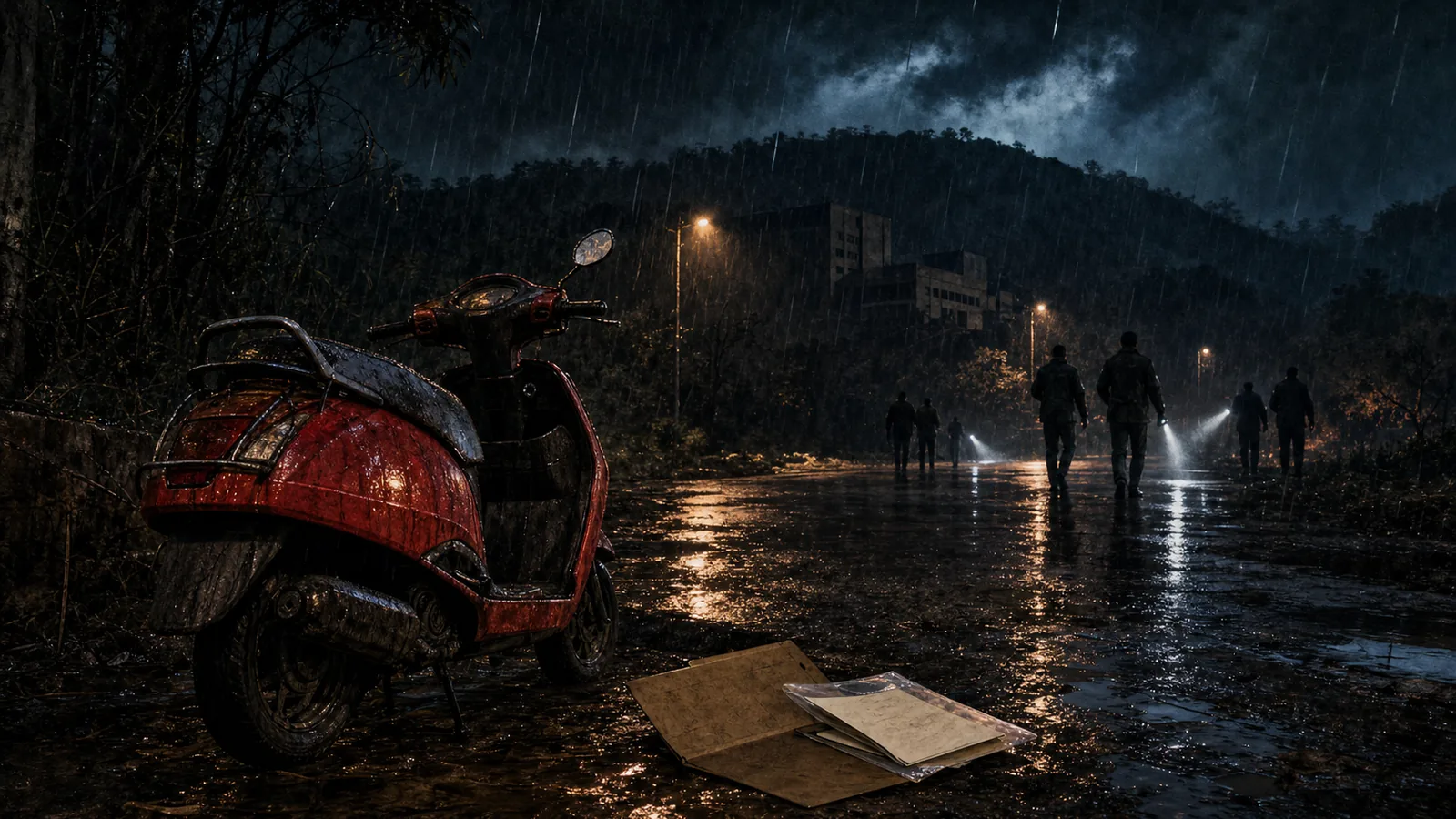
The ridge search is miserable. Delhi is under heavy rain, with a red alert for the next 24 hours. Guns are issued. Teams move out. The dog squad struggles because scent is hard to hold in the weather. Visibility is poor, the jungle is still not fully covered, and the police are stuck between urgency and bad conditions.
Then the case shifts again. Control Room reports that the children were seen near the Cantonment area hitching a ride with a Sikh man on a red scooter. There are two more witnesses. That detail matters because the episode showed Suman and Sahil asking an uncle for a ride early on. It also complicates Raja’s ridge tip. Jayprakash does not abandon the ridge completely; one team stays, and the search will resume when the rain lets up. But he tells Javed to call the witnesses to the station and find the scooter rider.
The investigation now has two pressures working against each other: the forest lead and the route lead. Neither one restores the children to Mona and Ashok. Both demand time. That is where the episode finds tension, not in speeches but in logistics. Rain is not atmosphere here. It is obstruction.
Babu Turns A Burglary Into A Ransom Idea
The episode’s ugliest reveal comes through Babu and Rajjo’s break-in. Babu claims the house is empty because a gardener tipped him off: everyone is away at a wedding in Nalasopara. Rajjo is frightened of jail, but Babu pushes ahead. Inside, they find an old man. Rajjo ties him up. Babu moves through the house with the same swagger he used in the street, only now the stakes are worse.
When the old man grabs Rajjo, Rajjo panics and blames Babu’s plan. Babu returns after the struggle with a child. The transcript does not name the child in that moment, and the scene’s power comes partly from that withholding. Rajjo immediately wants out. He does not want this mess. Babu sees money. The child, he says, has a father who will pay a fortune.
That is the moral center of the premiere: a man turning a child into leverage in real time. He quiets the child with the image of the child’s mother and keeps moving. There is no criminal code, no elaborate motive. There is just greed, and Babu stepping through it before anyone can pull him back.
Tiny details worth clocking
Suman’s borrowed jhumkas are not just decoration; they are part of the clothing description Mona later gives police. Sahil’s orange T-shirt and blue denim shorts serve the same purpose, turning family memory into evidence.
Deepa Dhanraj is not treated as a rival villain. Her name hurts because Suman worried Deepa would get the slot if she was late.
Jayprakash’s station scene does more than introduce police banter. His exam preparation, Javed’s smoking, Mishra ji’s fast, and Ghanshyam ji’s food build a working police room.
The “not them” false alarm gives the episode a brief, cruel release. It solves nothing, but for one second the worst fear is pushed back.
Rajjo’s fear is consistent. He complains after the six-rupee robbery, talks about Mannu’s rat-catching work, worries about jail before the burglary, and tries to take the child home once Babu escalates.
The red scooter sighting connects to what viewers have already seen, but the episode keeps it as a lead, not a completed answer.
Final verdict
Raakh begins with restraint and keeps tightening. The premiere does not rush to revenge yet; it builds the damage that will make revenge feel dangerous instead of clean. Mona and Ashok’s home is warm enough that its rupture hurts. Jayprakash’s investigation is active without being falsely brilliant. Babu and Rajjo bring the dirt: not masterminds, just men whose small violences are already big enough to destroy strangers.
The pressure is the point: phone calls, clothing descriptions, route patrol, rain on the ridge, and competing leads make the case feel heavy. Babu and Rajjo’s vulgar rhythm runs long, but it has a purpose. By the time Babu sees a child as ransom, his cruelty already feels casual.
As an opener, it is grim, controlled, and grounded. It leaves the family suspended, the police split between leads, and the crime rooted in neglect, appetite, and men choosing the worse thing.
Rating: 8.2/10 - A tense, grounded premiere that turns an ordinary family evening into a procedural nightmare while keeping its criminals ugly, human, and plausible.
More episodes from Raakh — Crime, grief, and payback, episode by episode. Jump to any episode in the season:
Where to go next
Reviewed by Mira Vance · QuizFandom Editor & Lead Reviewer. Every rating is an honest per-watch assessment from the desk that also writes the quizzes — not a press release rehash.