Raakh Season 1 Episode 2 Review: The Bodies Turn The Case Into A Reckoning
What happens — the short version (spoilers)
- The Ridge Gives Jayprakash Seventeen Wounds And No Clean Answer
- The Press Arrives Before The Case Can Breathe
- Bagga Clears The Scooter Lead And Reopens The Road
- Mona Refuses The Bodies Before Grief Can Name Them
- Kumar Plays Rich While Johnny Is Still A Ransom
- Johnny Runs, Rajjo Resists, And Babu Crosses The Line
Raakh tightens in Episode 2, moving from missing children to bodies in the rain, impossible grief, pressured police work, forensic evidence, and another ransom crime rotting from inside.
The Ridge Gives Jayprakash Seventeen Wounds And No Clean Answer
The Ridge Gives Jayprakash Seventeen Wounds And No Clean Answer
The episode opens with counting. Not theories, not speeches, just wounds being marked on bodies that have spent the night in the rain. On the neck and face. On the ribs. On a hand. By the time the count reaches seventeen, the missing-children case has become something colder and harder to survive.
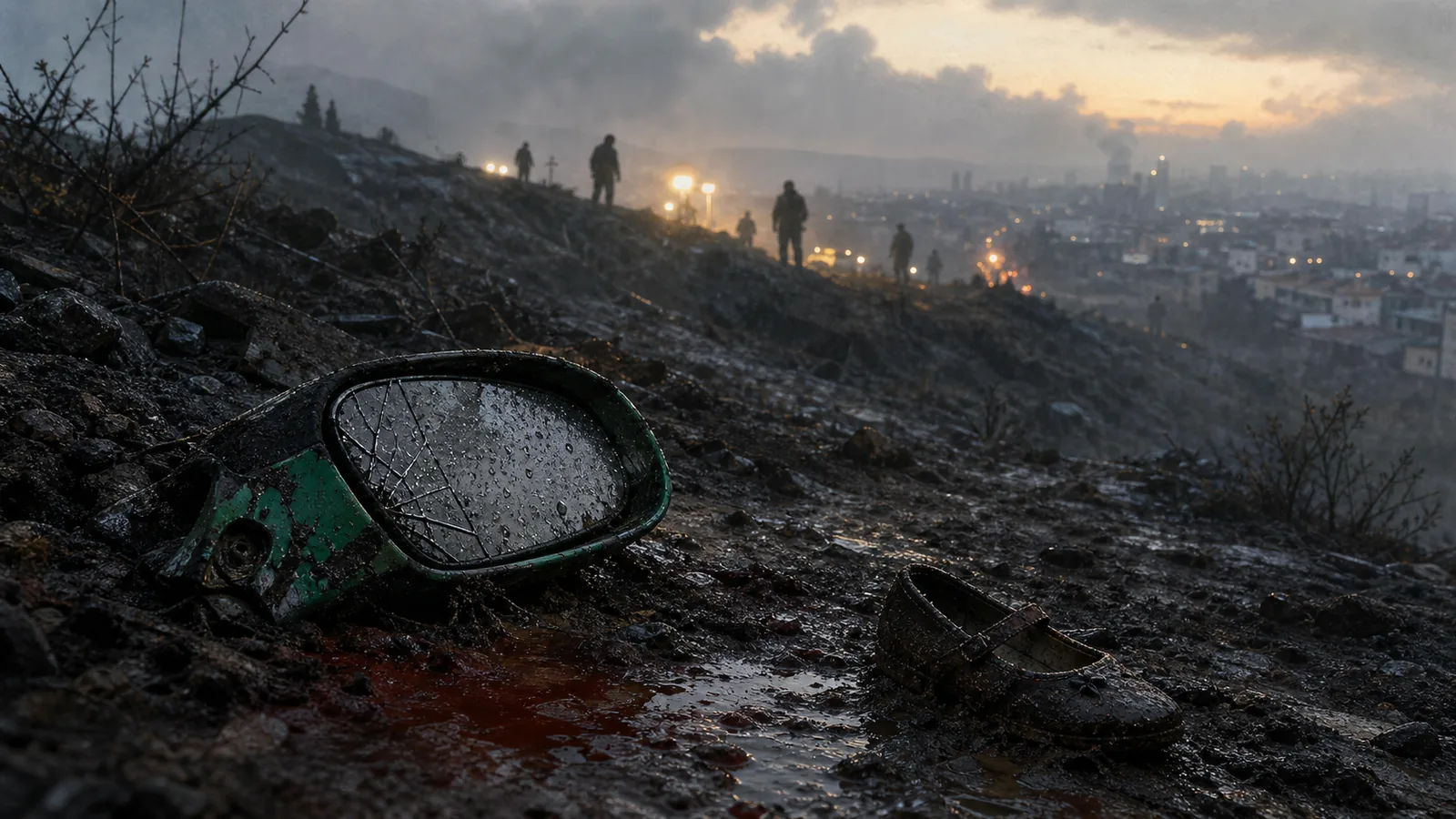
Jayprakash still has to function inside that horror. Mishra ji is told to keep the onlookers away. The entire area is treated as a crime scene. A bloodstained item that may belong to the girl is recovered, then the boy’s other shoe. The police were only 250 to 300 meters away when they called off the search the night before. That detail lands without decoration. Procedure failed by a few hundred meters, and now everyone has to stand in the gap.
The physical clues complicate the first version of the case. The children were last seen on a scooter, but Prakash finds a car’s side mirror. SP Hajra asks the basic questions: are these Suman and Sahil Arora, where is the murder weapon, how were the children brought there, and why kill them if ransom was possible? He also reads the scene correctly in one respect. Kidnapping two children, bringing them to the ridge, and killing them does not feel like a one-man job.
The Press Arrives Before The Case Can Breathe
Raakh does not treat the bodies as a private tragedy for long. Nisar Rizvi from Dilli Nama reaches the scene and pushes SP Hajra for confirmation. Hajra refuses to give the press more than the investigation can bear, telling them to wait for medical examination and not jump to conclusions. Nisar pushes back that the press has responsibilities. Hajra answers that the press does too: not to interfere.
It is a sharp scene because neither side is written as cartoonish. Nisar is doing her job in a city about to panic. Hajra is trying to keep a crime scene from becoming public property. Jayprakash stops photographs and tells people to show some respect. That line matters because the episode keeps returning to what institutions do with grief once it becomes news.
Hajra also brings in Dr. Baruah from Calcutta and his forensic team, who are setting up base in Delhi. It is an admission that this case has outgrown routine station work. Hajra wants whoever did this in custody as soon as possible. The pressure is official now, but the evidence is still lying wet in the mud.
Bagga Clears The Scooter Lead And Reopens The Road
The red scooter lead turns into a grim line-up of ordinary inconvenience. Men are dragged in because their vehicle matches a witness detail. One complains he was not even allowed to wear a shirt when police brought him. Javed reports that most claim they were home the previous evening. Meanwhile, the side mirror and tire marks point toward a new-model Premier Padmini, and the traffic police and garages are alerted.
Then Dr. Jaspreet Singh Bagga steps forward. He says he gave the children a lift after leaving his clinic late. They wanted the radio station, but he was headed to the Polo Club. He dropped them off around 5:00 to 5:15 p.m. and says there was a medical conference there until 10:00 p.m., which can be checked.
Bagga is not a breakthrough villain or a heroic witness. He is a man who made a small choice and now has to live beside it. He says the children looked happy, not scared or anxious, and that if he had known, he would have taken them to the radio station himself. For Jayprakash, it is back to square one, but with a narrower window: Bagga’s drop point, the ridge four kilometers away, three roads leading there, and a green car somewhere between them.
Mona Refuses The Bodies Before Grief Can Name Them
The mortuary scene is the episode’s rawest family moment. Mona demands that the sheets be opened because she wants to see her children’s faces. Ashok tries to stop her. Someone tells her not to insist. She does anyway, because a mother cannot be asked to accept covered shapes as final truth.
When she sees them, denial becomes the only shelter left. She says they are not her children. She tells Ashok he had gone to look for Sahil and Suman and should go find them. He promised. Ashok says they are Suman and Sahil, but she repeats that they are not.
Later, Ashok is outside in the dark, speaking of Suman and Sahil in the past tense and correcting himself when he says Suman is brave. Sahil, he says, has been scared of the dark since childhood. Now there is darkness all around, silence everywhere, and no one heard his children’s screams. Not even him. The episode makes Ashok’s military bearing irrelevant in that moment. Rank has no use against what he could not prevent.
Kumar Plays Rich While Johnny Is Still A Ransom
The parallel ransom plot is smaller than the Arora case, but it is just as rotten. The man addressed as Kumar at the hospital and Babu by Rajjo finds Morias-6532, calls the house at Reay Road, and demands 2,00,000 rupees for the man’s son. He orders the money brought to Parla Dhobi Ghat at 4:00 p.m.
Then he goes to the hospital to see Meena, where his performance turns sour in a different way. He brings a flower, talks about marriage, says he has sorted his business, and boasts that she will not have to clean old people’s filth anymore because her future husband is rich. Meena asks whether he is doing anything shady. He tells her to enjoy the fruit and not worry about the how and why.
The ransom money has not arrived, but Kumar is already spending its fantasy on status, marriage promises, control, and a life he has not earned. Meena’s suspicion is the only honest thing in the room.
Johnny Runs, Rajjo Resists, And Babu Crosses The Line
Rajjo’s handling of Johnny is rough, impatient, and still different from Babu’s. When Johnny says he needs to go, Rajjo takes him outside near the tracks. Johnny complains that it stinks and asks him to look away. Rajjo grumbles, then drifts into a memory of village life, simple meals, ponds, and a city where no one cares about anyone. It is not redemption. It is just enough softness for Johnny to run.
The escape fails. Men catch the child, and the ransom drop also collapses because Morias calls the police. Babu returns furious and empty-handed. Rajjo does not care about pride; he cares that they have made no money and brought police heat on themselves. Babu grabs a knife and says he will cut off the child’s foot first, then a hand. Rajjo blocks him.
That fight is one of the episode’s best ugly character turns. Rajjo says Babu made him a kidnapper from a thief and he does not want to be hanged. Babu mocks him, beats him, and backs off only after Rajjo nearly chokes him out. The promise lasts seconds. Johnny cries for his mother. Babu tries to silence him, says he will not kill him, and then something goes terribly wrong. He panics, saying it slipped from his hand. The excuse cleans nothing. A child is left on the floor because a violent man thought fear was control.
Forensics Gives JP A Direction Just As The Case Is Taken Away
Jayprakash’s visit to Dr. Biswajit Baruah changes the investigation’s texture. The forensic room is practical, strange, and new enough that JP jokes he may have come to the wrong place. Baruah’s team uses photographs, measurements, and chemical tests rather than instinct. JP comes in skeptical and leaves reassured.
The report is grim. Sahil was attacked with a sharp-edged object heavier and sharper than a knife, something like a sword. Fractures in his hands and ribs were probably caused by dragging the body, though rain makes the scene uncertain. Suman had multiple wounds, but the cause of death was a hard blow to the head with a rod. Baruah is also still examining whether Suman was physically assaulted or worse.
The rear-view mirror gives the most usable lead: paint residue, which sends JP to issue a lookout for a green car. But just as he has color, make, weapon profile, and a direction, SP Hajra tells him the case will go to Inspector Chauhan in the morning. The reason is pressure: an army officer’s children have been murdered, the administration and the public want results, and Hajra says the case is now too big for JP. Jayprakash argues for more time. He does not get it.
Tiny details worth clocking
The side mirror matters twice: proof the scooter story is incomplete, then paint evidence for the green-car lead.
Bagga places the children alive and happy at about 5:00 to 5:15 p.m., narrowing the gap between the Polo Club drop and the ridge.
Ghanshyam ji’s dinner scene is gentle until it is not. His mutton curry briefly returns Jayprakash to being someone’s son before Hajra strips the case away.
The radio keeps widening the case into public fear: official meetings, commissioner assurances, appeals for witnesses, and one repeated question about how this could happen.
Rajjo is not innocent, but he is consistent. He wanted out before the ransom, stopped Babu from mutilating Johnny, and understood hanging before Babu understood consequence.
Final verdict
Episode 2 refuses easy release. The Arora case becomes more concrete and more unbearable at the same time: bodies, wounds, recovered items, car evidence, medical language, and parents who can no longer bargain with possibility.
The police track works because it is built from pressure. Jayprakash is capable, but capability does not protect him from hierarchy, public outrage, or politics. Baruah’s forensic work gives the episode a procedural spine, while Hajra’s decision to replace JP gives it institutional bite.
The Johnny thread is uglier and messier, but it serves the same argument. Raakh is watching men escalate because pride, hunger, and cruelty keep passing for plans. By the end, one case has destroyed a family, another child has been left on the floor, and Jayprakash has one night left.
Rating: 8.4/10 - A grim, focused episode that deepens the investigation, sharpens family damage, and keeps its violence grounded in human failure.
More episodes from Raakh — Crime, grief, and payback, episode by episode. Jump to any episode in the season:
Where to go next
Reviewed by Mira Vance · QuizFandom Editor & Lead Reviewer. Every rating is an honest per-watch assessment from the desk that also writes the quizzes — not a press release rehash.