Raakh Season 1 Episode 7 Review: Agra Turns The Manhunt Into A Public Trap
What happens — the short version (spoilers)
- Jayprakash Learns What A People's Hero Means
- Agra Station Gives The Police One Clean Look
- The Public Warning Becomes Jayprakash's Best Weapon
- Rajjo Turns A Bungalow Into A Hostage Room
- Solanki Has To Decide Which Rule Matters
- The Taj Mahal Scene Shows Babu And Rajjo's Fantasy
Raakh Episode 7 sends Jayprakash to Agra, where his suspension, Solanki's caution, Babu and Rajjo's panic, and a citywide warning system all collide before the fugitives finally run out of road.
Jayprakash Learns What A People’s Hero Means
Jayprakash Learns What A People’s Hero Means
The episode opens with young Jayprakash listening to a speech and asking his father what “loknayak” means. His father explains it as a hero of the people, not a film hero, but someone who stands against poverty, discrimination, denied rights, and injustice. The scene could have been simple backstory. Instead, it gives the hour its argument.
Jayprakash is not introduced here as a born savior. He is a child who wants the word explained and then decides heroism sounds like too much studying. That small joke keeps the memory human. His father does not sell heroism as glory. He frames it as choosing to stand up for people who cannot fight for themselves.
By the time the story returns to Agra, the lesson has become practical. Jayprakash is suspended, disobeying orders, and using a lie to stay near the case. The question is not whether he looks heroic. It is whether he will keep standing in the way of two men who are still moving.
Agra Station Gives The Police One Clean Look
Babu and Rajjo arrive in Agra under pressure. The newspaper already names them, and Babu’s shaved head is meant to keep him ahead of recognition. It nearly works until Havildar Ansari spots them at the station. He recognizes Rajjo, calls out his name, and confirms that the other man is Babu.
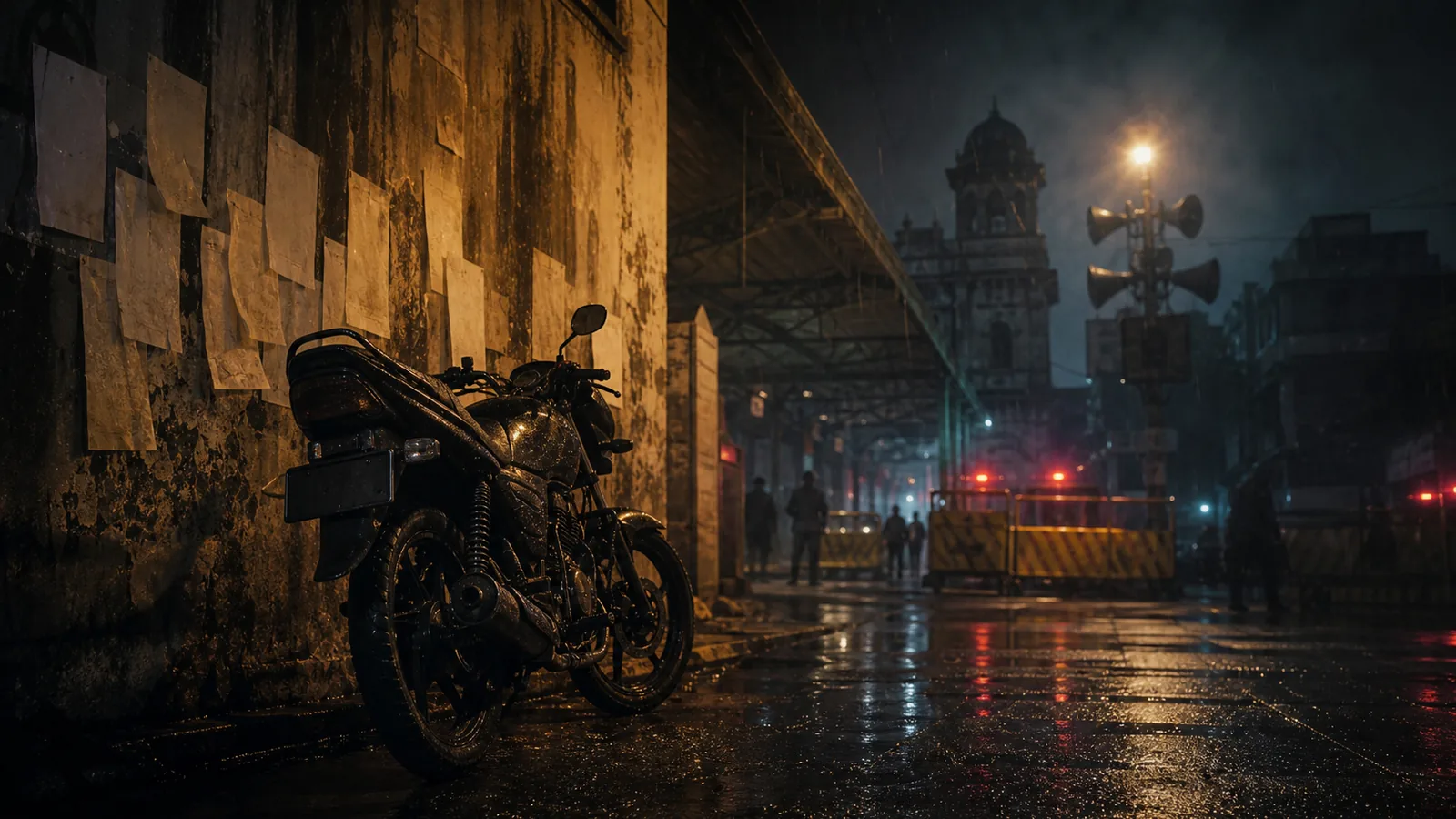
The chase does not produce an arrest. They escape on a black motorcycle with no number plate. Still, the sighting changes the hunt. It confirms the Agra lead from Jimmy’s honeymoon tickets and gives local police a fresh description: Rajjo, Babu, shaved head, motorcycle.
Jayprakash reaches Solanki and immediately starts bending the truth again. He claims he is working with Chauhan, that the rest of the team will arrive soon, and that duty brought him here. Solanki is polite at first, but the episode lets us feel how thin the lie is. JP is useful, but he is no longer clean inside the chain of command.
The Public Warning Becomes Jayprakash’s Best Weapon
Jayprakash’s first strong idea in Agra is not a door-to-door raid. He wants the city warned. Solanki worries it will spread fear. JP argues that this is the point: Babu and Rajjo can hide from 40 or 50 policemen, but not from thousands of residents who know their faces.
The announcement system changes the texture of the episode. Wanted posters go up. The broadcast tells residents not to let strangers into homes and shops, to stay indoors at night, and to keep children accompanied. The city becomes alert, and the manhunt stops being only a police operation.
That matters because Raakh has always been about missed alarms. A child seen in a room. A witness who hesitates. A hospital visit that almost slips by. Here, Jayprakash tries to make alarm itself impossible to ignore. It is blunt, frightening, and probably the only tactic that fits the men they are chasing.
Rajjo Turns A Bungalow Into A Hostage Room
Babu and Rajjo are already inside a home by the time the warnings spread. Rajjo has attacked the old man who opened the door, and the family is trapped: an older woman, her son, and a child. Babu praises him for finally becoming useful, even calling him his trump card.
The scene is important for Rajjo. He has spent much of the season afraid, resentful, and reactive. Episode 7 refuses to let that fear become an excuse. He finds the bungalow, strikes the old man, gathers valuables, and brings Babu a gun without bullets. Babu may be the dominating force, but Rajjo keeps choosing harm.
The neighbor’s visit raises the tension because the household has to pretend nothing is wrong. The motorcycle outside is noticed. The radio keeps repeating the warning. The captives know exactly how close help is and how far away it remains.
Solanki Has To Decide Which Rule Matters
Once Solanki learns the truth about Jayprakash’s suspension, the case becomes a fight over authority. He says Delhi has ordered JP’s arrest. Dangi is told to keep him at the station until the Delhi team arrives. Jayprakash argues that arresting him is less urgent than arresting the fugitives.
The bullet lead forces the issue. Babu and Rajjo take the old gun to the iron market and ask for ammunition under a clumsy story about quails in a field. The maker says three homemade 8mm bullets will take an hour. A local source gets word to the police, but the telephone lines are unreliable and the command structure is still tangled.
Jayprakash pushes Solanki hard. He does not ask for permission as a personal favor. He tells him the men now have a gun and that delay can cost lives. Solanki is not wrong to worry about law, orders, and liability. The episode’s pressure comes from the fact that every correct concern is too slow for the actual danger.
The Taj Mahal Scene Shows Babu And Rajjo’s Fantasy
Babu takes Rajjo to the Taj Mahal while the city searches for them. The scene is quiet in a way that feels sick rather than peaceful. Rajjo calls the monument a huge rasgulla in syrup. Babu wants them to remember that while police hunted them, they sat there like emperors.
For a moment, they tell themselves a different story. No police, no people, just Rajjo and Babu. Babu says Rajjo is the only one he has, after his mother and Meena both “bailed.” Rajjo says he was like an empty matchbox until Babu taught him not to cry and to be a man.
That confession is not redemption. It is dependency laid bare. Babu gave Rajjo a language for masculinity built from humiliation and violence. Rajjo accepted it because it gave shape to his emptiness. Their plan for Kanyakumari sounds like escape, but it is only the same rot looking for a cleaner sea.
The Chase Ends By Breaking Their Loyalty
The citywide pressure finally closes around them. A guard interrupts them near the Taj Mahal. They run, return to the motorcycle, and hit a dead end during the chase. Solanki’s team and Jayprakash keep after them until they try to escape through a train.
The train sequence works because the episode has stripped away their swagger. Rajjo cries, Babu snaps at him, and the police close in. When Babu grabs a little girl and threatens to kill her unless Rajjo is released, Jayprakash refuses to play along. He names the limit of Babu’s threat: kill her, then what? Kill everyone on the train? Kill the police too?
Rajjo breaks first. He tells police it was Babu, that he did nothing, that Babu would have killed him too. Babu immediately turns on him. The loyalty they toasted at the Taj Mahal lasts only until survival is at stake. By the end, their partnership is exposed as fear, control, and cowardice wearing the costume of brotherhood.
Tiny details worth clocking
The horoscope warning about legal tangles lands just before Rajjo and Babu are spotted at Agra station.
Babu’s shaved head is practical, but the public announcement still makes it part of his wanted description.
The black motorcycle having no number plate keeps the first chase from becoming too easy for local police.
The hostage family’s radio keeps the official warning inside the room where the criminals are hiding.
The gun has no bullets until the iron-market trip, which makes the hour’s timing sharper.
Rajjo’s “empty matchbox” line connects directly to Babu’s language of fire, manhood, and ignition.
Final verdict
Episode 7 is built like a tightening grid. Agra is not just a backdrop; it becomes the mechanism that exposes Babu and Rajjo. Posters, broadcasts, station sightings, neighbors, vendors, officers, and ordinary vigilance all matter because Jayprakash understands that these men cannot be caught by procedure alone.
The episode also keeps Jayprakash morally complicated. He lies, disobeys, and pressures Solanki, but the case keeps proving why delay is dangerous. By the time Babu threatens a child on the train and Rajjo betrays him, the show has turned capture into a collapse of every story the two fugitives told about themselves.
Rating: 8.7/10 - A tense chase episode that turns Agra into a public dragnet and lets Babu and Rajjo’s bond rot in the open.
More episodes from Raakh — Crime, grief, and payback, episode by episode. Jump to any episode in the season:
Where to go next
Reviewed by Mira Vance · QuizFandom Editor & Lead Reviewer. Every rating is an honest per-watch assessment from the desk that also writes the quizzes — not a press release rehash.