Spider-Noir Episode 2 Review: A Singer, a Soldier, and Sand
What happens — the short version (spoilers)
- Cat Hardy lays out the job at her club, admitting she only knows Flint's address and brushing off the sand-monster transformation, while Ben senses she's holding something back.
- Ben bluffs his way into Flint's too-expensive apartment, hides in the closet when Winston and Silvermane's goons arrive, and pockets a war photograph while overhearing the thugs wonder if Flint has 'a new lady.'
- At the Bureau of Criminal Records, Ben and Janet read Flint Marko's rap sheet and recognize the little man in the photo as Addison, realizing the two served together at Meuse-Argonne and the case is tangled up with Silvermane.
- Robbie tracks down Addison's friend and then his widow Vera at the Geoffrey Hotel, leveraging her into talking; she admits she already knew James was dead, says he 'dug his own grave,' and won't name who hired him.
- Silvermane's men Perry and Pudge grab Ben over Donegal's scheme, but he wrecks the car and escapes; meanwhile goons ransack the office and hold a gun to Janet's head, and she tells Ben she's quitting because she cares but 'not enough to die for you.'
- The Spider ambushes Silvermane at the docks, warns him to lay off Reilly by claiming he owes Ben a favor, and the delay keeps Silvermane out of a police ambush that nets a dozen of his men, leaving Ben to ask 'What the hell did I just do?'
A missing-person job leads Ben Reilly into a war photograph, a hotel-room shakedown, and the one rescue he swore he'd never make again.
The first hour ended with Cat Hardy hiring a man she barely knew to find a bodyguard who’d melted into sand. “Tread Lightly” puts that flirtation on hold and asks the harder question underneath it: what does Ben Reilly do when the case stops being a paycheck and starts being a noose? The answer takes the whole episode to arrive, and when it does, it costs him the one person who kept the agency upright.
The title is a warning Robbie passes along. Almost everyone here is moving carefully around a man who can have you killed for being in the wrong photograph — and almost nobody manages it.
The job starts at Flint’s apartment and ends in a closet
Cat lays out the terms first. Flint protects her, he’s loyal, and that’s hard to find these days — though, as she dryly adds, she didn’t marry her husband for his looks either. She doesn’t know anything about his personal life, only his address. When Ben presses about the sand monster they both watched the night before, she shrugs it off like a weather report: it started six months ago, slow at first, getting worse, and Flint always remembers it happening “unless he gets clubbed in the head with an iron girder.” It’s the episode’s first quiet tell that Cat knows more than she’s selling, and Ben clocks it. He floats the painter analogy — an artist needs a canvas, brushes, paint — and asks if she’s withholding. Li and Cage play the scene as a fencing match where both fencers are enjoying the touches, and Cat ends it by telling him to “get to painting, Mr. Reilly.”
So he paints. Ben tries the delivery-man bluff at Flint’s door, lets himself in, and finds an apartment too fancy for an enforcer’s salary. The spider-sense kicks in — that familiar muffled warble — just as Winston arrives with goons in tow, and Ben does the only thing a broke PI can do: he hides in the closet. The detail that lands is who he overhears. The thugs gossip that Flint’s been skipping poker, joke that maybe he’s got “a new lady,” and the misread hangs in the air. Ben’s spent the morning sniffing for a romance angle, and the show has quietly planted a different relationship entirely.
A war photograph rewrites the case
The hour’s pivot is small and physical: a photograph Ben pockets at the apartment, then runs past the Bureau of Criminal Records with Janet. The two of them sort through Marko’s rap sheet — Brooklyn, working class, small crimes that grew into bigger ones, arrest after arrest, now an enforcer for Silvermane. Then Ben notices the unit stamped on the picture. Meuse-Argonne. Janet fought there too; so did a million other men. But the little guy standing next to a younger Flint is Addison — the human matchstick from the premiere — and suddenly the cheating-spouse logic of the whole investigation collapses into something older and sadder. Flint and Addison were in the war together.
Cat’s evasions read differently now. As Janet figures it, Cat probably knew Flint had a friend with powers and kept it back because she guessed Ben would never touch a case tangled up with Silvermane. “She would’ve been right,” Ben admits. Karen Rodriguez keeps Janet sharp and unsentimental, the partner doing the deductive work while her boss broods — two professionals reading a clue instead of one detective monologuing at the audience.
The follow-up visit to The Alcove is the episode’s best two-hander. Ben shows Cat the photo; she claims she’s never seen the little man, then doesn’t flinch when Ben names Addison as the dead arsonist and adds that the PI who shot him is dead too. “The world’s a dangerous place,” she says, cool to the point of glacial. Ben tells her she’s good under pressure. “I wasn’t aware I was under any.” She finally gives him something real — Silvermane owns the club, the deed’s just in her name, and Flint protects the investment and her along with it — and dares Ben to keep the retainer or admit he’s misjudged her. He keeps working the case, he says, not because he’s brave. Why, then? “A singer’s got to know all the numbers. Maybe a detective has just got to know all the answers.” Cage lands it without winking too hard.
Robbie chases the widow while Silvermane shops for clothes
Robbie’s thread is the episode’s other engine, and Lamorne Morris gets to play both the comic and the steel. Still freelancing, still begging an old editor’s secretary to let him sit with the boss, he sells his Addison scoop as “the biggest story in years” — nothing this big since The Spider. He talks his way past a very large, very angry man by being honest about how large and angry the man is, and learns Addison was “sick,” that “these days call for men to use their sicknesses to get by, until their sicknesses eat them alive.” The friend points him to the Geoffrey Hotel and Addison’s widow, Vera.
The hotel confrontation is where Morris turns the warmth off. Vera threatens to scream about a Black man forcing his way into her room — a real and ugly weapon in 1930s New York — and Robbie out-leverages it, betting she’d rather not have the city’s most ruthless gangster learn her dead husband’s blood money went to lobster and designer clothes. “Go ahead and scream, honey. Unless you want me to do it. I got a pretty deep voice.” Vera doesn’t cry when he says Jimmy’s dead, because she already knew; James wasn’t the type to cut and run, so when he didn’t come home, she figured he never would. She won’t name who hired him. As far as she’s concerned, James dug his own grave.
Cut against all this is Silvermane, who spends the episode being measured for menace and for a suit. Gleeson plays him picking out clothes for Cat like a man arranging flowers, asking his lieutenant Winston’s opinion and then steamrolling it — “there’s fashion and there’s taste” — while making clear the whole conversation is a loyalty test. His read on the burned mansion isn’t fear; it’s offense. The problem isn’t that the arsonist is still out there, it’s that someone thought they could take him out at all, that he’d gone soft since The Spider vanished. He muses about controlling Addison’s kind of power, notes that Flint went missing “right after,” and sends Winston ahead to scout a docks meet with new Canadian suppliers because, as Winston puts it, the boss doesn’t trust anyone — himself included — and that’s why he still runs the town.
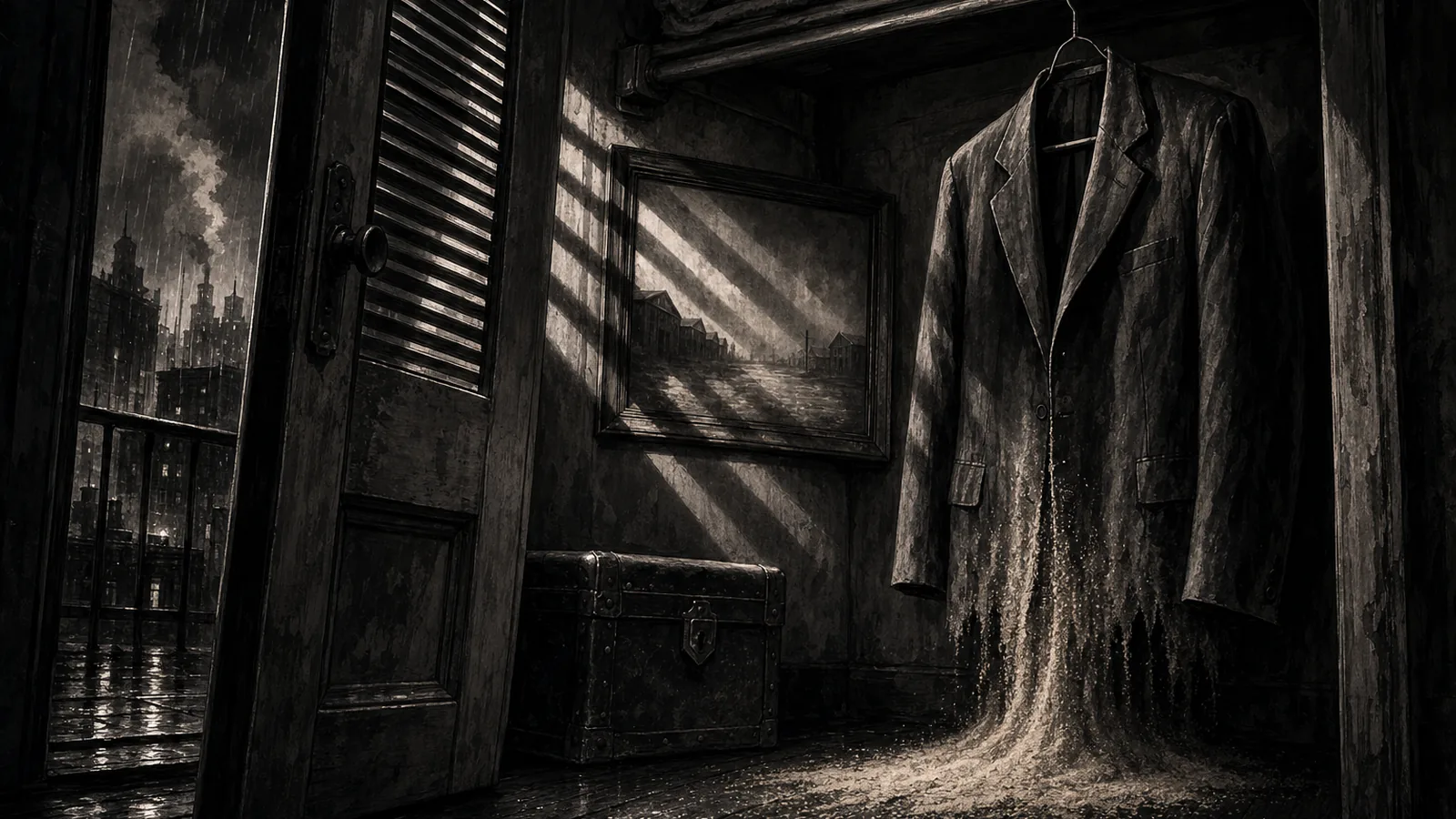
The Spider suits up against his better judgment
Two of Silvermane’s men grab Ben off the street — Perry and Pudge, the self-described “not really the why guys” — to bring him in over Donegal’s shakedown. Ben talks the whole ride, half wisecrack and half misdirection, until the spider-sense flares and he wrecks the car in traffic and bolts. Robbie, comparing the mayor’s hollow re-election speech to “a different brand of snake oil,” tells Ben plainly that he’s “in it with Silvermane now,” that if the choice is “suit up or die,” it might be time to tango again — and maybe do the city a favor in the process. Ben waves it off.
Then the night forces the decision. While Flint reunites with the friend he thought he’d lost — confessing he changed completely this time and didn’t change all the way back, that “our clocks are ticking, faster and faster now” — Silvermane heads to the docks. And The Spider is waiting on the rooftop above the warehouse. The fight is fast and almost playful, Cage tossing off “Hello,” and “Tai chi,” and “Don’t you ever run out of bullets?” between throws, before he gets Silvermane alone in the car. The reveal he hands the old man is the hour’s quiet shock: nobody hired The Spider. He’s there because of Ben Reilly, to whom he owes a favor. Lay off the gumshoe and the secretary, this is the only warning — “if you mess with Reilly or any of his people, I will kill you.”
It’s a lie Ben tells to protect his own name, and it works, but it has a price he doesn’t see coming. The threat keeps Silvermane from the docks just long enough to walk him out of a police ambush that a tipster had set up around the Canadian booze exchange. A dozen of Silvermane’s men get rounded up; the man himself never shows, because The Spider stopped him. Robbie phones to deliver the bad news — the cops don’t know it was Ben, but Ben knows, and the line he ends the episode on lands harder than any quip: “What the hell did I just do?” His first night back in the mask kept the most dangerous man in the city out of a cage.
It sits next to a second blow. Earlier, Janet came back to the office to find it tossed and herself with a gun to her head, the goons promising she and Donegal would cross the River Styx together if she didn’t give Ben up. She makes it out unhurt “this time,” but she’s done. Five years she waited for the man buried inside Ben to climb back out, and the night he finally does, she’s the one who has to leave: she cares about him deeply, she tells him, “but not enough to die for you.” Ben gets his old self back in the same hours he loses the person who kept the lights on.
Tiny details worth clocking
- The closet eavesdrop plants the Flint-Addison bond before the photograph confirms it — the goons’ “new lady” joke is the show letting the audience misread the clue exactly the way Ben does.
- Janet’s history at Meuse-Argonne is dropped almost as an aside, but it’s the second time the war turns out to be the thing connecting these men, and it quietly deepens a character who’s mostly played for deadpan.
- Robbie pitches two competing tabloid headlines for the mayor’s speech — “Desperate Morris Delivers Dud” versus the quadruple-M “Mayor’s Missive Misses Mark” — the same dime-store wordplay reflex Ben showed with Boris Karloff last week.
- Silvermane dressing Cat up like a doll while testing Winston’s loyalty does more to define his control of the club than any threat could; the menace is in how casually he overrides everyone’s opinion of the suit.
- Vera not crying is the tell Robbie catches — “people grieve in different ways” is the line of someone who stopped grieving a while ago.
- The mayor’s re-election promise to kill Prohibition (“you’ll never go thirsty again”) is a sharp little jab at how a desperate city gets bought.
Verdict
“Tread Lightly” is the episode where the premiere’s case-of-the-week machinery starts paying real dramatic interest. The Flint-Addison war connection gives the supernatural plot a human spine, Robbie’s hotel scene lets Morris play something far past comic relief, and the closing reversal — The Spider’s first heroic act handing Silvermane an alibi — is the kind of cruel irony noir lives on. It’s a busier, less self-contained hour than the opener, and the docks fight leans on the same rooftop-and-quips beats E01 already established, but the two final blows land clean: Ben gets the mask back and loses Janet in the same night, and his good deed walks the city’s worst man free.
Rating: 8.0/10
More episodes from Spider-Noir — Nicolas Cage's 1930s Spider, episode by episode. Jump to any episode in the season:
Where to go next
Reviewed by Mira Vance · QuizFandom Editor & Lead Reviewer. Every rating is an honest per-watch assessment from the desk that also writes the quizzes — not a press release rehash.