Last Samurai Standing Episode 02 Recap: Shujiro Draws the Blade Again
What happens — the short version (spoilers)
- A flashback shows Futaba losing her father to cholera and watching her mother collapse, explaining why she refuses to abandon the contest.
- Bukotsu corners Shujiro demanding he prove Kokushu still exists, and Shujiro draws his sword and kills him in a quick, brutal fight.
- A smiling stranger proposes an alliance, openly admitting he wants Futaba as leverage so Shujiro can't betray him, and names a meeting spot in Yokkaichi.
- Tokyo's Home Ministry seizes the forged notices and worries Kodoku could spark a shizoku rebellion and another civil war.
- Kikuomi Ukyo stops Bukotsu from terrorizing bystanders, and a flashback reveals Ukyo's own ruin and his vow to restore his household.
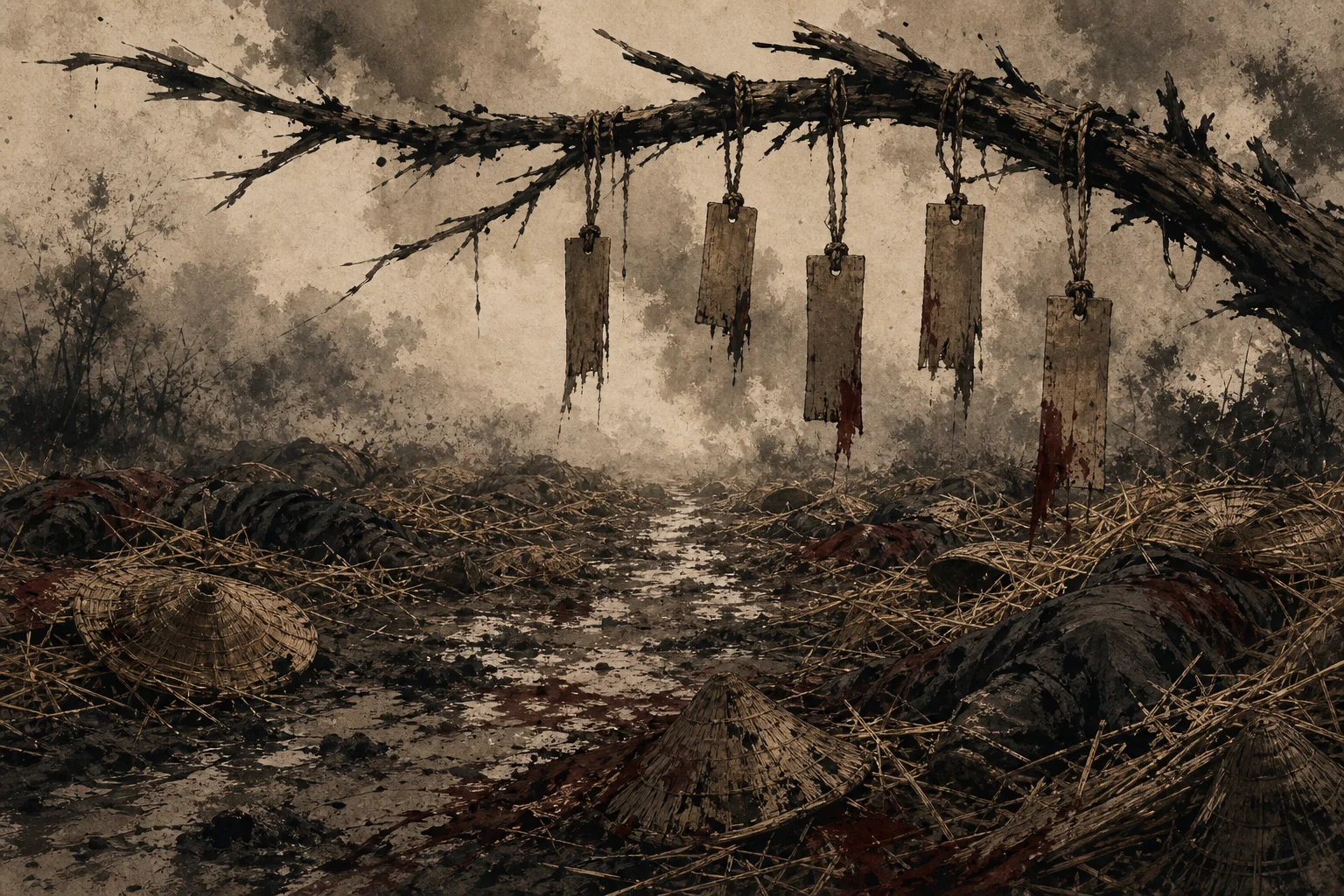
- Exhausted participants ignore Shujiro's warning and remove their tags, and the organizers kill them for it under Sakura's watch.
- Shujiro slaughters the enforcers, tells Futaba 'This is who I once was,' and the count drops to 117.
Last Samurai Standing, Season 1, Episode 02 Netflix · 2025
Futaba gets a reason to stay, Shujiro gets forced back into Kokushu, and the organizers punish retreat in public.
In Episode 02, Kodoku’s last comfort disappears: the idea that anyone can refuse once fear becomes too much. Futaba begins in a village where cholera has taken her father and cornered her mother. Shujiro Saga (Junichi Okada) survives Kanjiya Bukotsu (Hideaki Ito) only to hear another stranger name the truth he fights. Kikuomi Ukyo takes his rage into the road, while frightened men learn that removing a tag is not escape.
Futaba remembers cholera before Bukotsu corners Shujiro
Before Tenryuji, Futaba cares for Kotaro and tries to believe what her mother taught her. Her mother says that war, disease, and every other disaster belong to the gods’ design, and that prayer is the only answer left to ordinary people. Futaba is old enough to notice the contradiction. Her father is gone. People in town are dying one after another.
Then her mother collapses.
That memory changes Futaba immediately. In Episode 1, she was the child Shujiro chose to protect in the temple. Here, she becomes someone carrying adult terror before anyone gave her a tag. Cholera is not backstory for her. It is the reason she looks at Kodoku and still cannot walk away.
The present returns to Bukotsu in the rain, calling Shujiro by the old name he hates. Bukotsu does not want Futaba. He wants Kokushu. He taunts Shujiro for going soft, says powerful men used them when killing was useful, then ordered them to throw away their swords when the new government had no need for them. Bukotsu is grateful for Kodoku because it takes him back to what he calls “the good old days.”
That line is ugly because he means it.
Bukotsu is not mourning the dead. He misses permission. He wants Shujiro to admit that both of them were made for a life where skill with a blade still mattered more than mercy, law, or hunger. When he says, “Draw it,” he is asking for proof that Kokushu is still inside the man protecting a child.
Shujiro draws.
The fight is quick, wet, and punishing, but the important beat comes after Futaba calls for him and the two escape. Yahei shelters them and thanks Shujiro for something old enough that Shujiro brushes it aside. He also looks at Shujiro’s sword and says it was not rusted after all. Shujiro spent the first episode insisting he would not return to killing. His hand has already moved.
A stranger offers an alliance and uses Futaba as leverage
Inside Yahei’s place, Shujiro tries to do the reasonable thing. He tells Futaba he will take her to the edge of the Tokaido Road in the morning, then she must remove her tag and run. She refuses. Shujiro says a child cannot survive this. Futaba answers with the part he cannot ignore: if she gives up, countless lives will be lost.
He understands before she explains the word. Cholera.
The interruption arrives through the front door with raised hands and a smile. The man says he has no intention of fighting, and that if he wanted to kill Shujiro, he would not come through the front door. He knows the name Kokushu too, but he is more interested in the unanswered questions around Kodoku than in fighting immediately.
His offer is practical and poisonous at the same time. He asks Shujiro and Futaba to form an alliance because the contest is too mysterious. Why gather trained swordsmen and make them kill one another? Why force everyone down the Tokaido Road to Tokyo? Is the 100,000 yen real?
He has heard the same rumors already circling the road: a government sword hunt, shogunate survivors looking for revenge, foreigners trying to spark civil war and break Japan open. None of those rumors fully explains the contest. The only sure thing is power. Whoever built Kodoku can spread forged newspapers across the country and hide bodies at Tenryuji by morning.
The stranger does the arithmetic too. There were 292 participants. Thirty tags are required at Shinagawa. By his count, no more than nine people can reach Tokyo, so a three-person alliance could still fit inside the numbers. It sounds almost sensible until Shujiro asks why he wants them.
Because Shujiro will not turn on him while Futaba is there.
He says it plainly enough for the room to go cold. Futaba is leverage. A hostage, if needed. If Shujiro betrays him, the stranger knows where to press. Then he leaves a meeting place, Uzuya in Yokkaichi, three nights away, and cuts Shujiro one last time: “It’s not that you’re unable to kill. You’re just choosing not to.”
Once a manslayer, always a manslayer.
Futaba’s plea afterward is gentler and harder. She explains the ritual dance she performs, a prayer for people to fulfill their lives and find solace beyond in heaven. Her mother taught it to her while caring for children who had lost their parents. Now her mother is bedridden, the village is trapped between disease and poverty, and Futaba knows she cannot survive alone.
She asks Shujiro to take her to the end even if, one day, he has to draw his blade against her.
Shujiro does not promise a clean answer. He says he has a family to save too. Then he tells her they will get through it. For a man terrified of becoming Kokushu again, it is a dangerous promise. It is also the only human one he has left.
Tokyo notices the forged notices and Ukyo meets Bukotsu
Yahei sends Shujiro and Futaba away with supplies, still speaking as a man who believes Shujiro’s sword helped make a safer era possible. Shujiro answers with the simplest correction: the times have changed. Yahei sees debt. Shujiro sees the cost of the life that created it.
Tokyo enters through the Home Ministry. Officials have seized the “Participants Wanted” notices, and the money attached to them is too large to dismiss. Kawaji reports that many shizoku were seen gathering at Tenryuji Temple and that Ando Jinbe, sent to infiltrate the meeting, has not been heard from.
The fear in that room is political, not sentimental. Officials speak of shizoku resentment, possible rebellion, forged newspapers, last year’s uprising, and the danger of another civil war leaving Japan exposed to the West. One man calls the shizoku “toothless tigers.” Maejima knows better than to relax around men who still remember war.
That scene matters because Kodoku is no longer only a private nightmare on the road. It has become a state problem, even if the state still misunderstands what it is chasing.
Out on the road, Bukotsu hunts Shujiro and Futaba by terrorizing bystanders. Kikuomi Ukyo stops him and tells the victims to take shelter. Bukotsu recognizes the famous Guardian of the Nobility and needles him for being thrown away after years of loyal service. Ukyo refuses the comparison.
Their fight is another collision between men discarded by the same age. Bukotsu is loose, mocking, hungry for the old violence. Ukyo is controlled until the insult reaches the wound underneath him. A flashback fills in that wound. Lord Kazanin says samurai without swords are not worth much anymore and offers to hire him as a servant if he bows. Later, Ukyo’s household faces ruin so complete that seppuku looks like the last way to keep pride intact.
Ukyo promises restoration instead.
He is not a pure contrast to Bukotsu. He is cleaner in manner, but he is driven by the same humiliation that Kodoku keeps feeding. Bukotsu wants proof that he was right to love blood. Ukyo wants a future no official, noble, or new law will grant him.
The tag-removal revolt ends under Sakura’s watch
The last movement begins with exhausted participants who have lost whatever confidence Tenryuji gave them. They say they were tricked, that everyone else is too strong, and that the tags they risked their necks for were taken from them. Most painfully, one man says he only wanted his children to eat until they were full.
This is where the road turns colder than the temple. At Tenryuji, panic looked like chaos. Here, panic has language. These men know why they came and why they cannot continue. They gather around Shujiro and Futaba because numbers feel like protection.
Shujiro knows they are wrong. He warns them not to remove their tags. He says they are being watched. He tells them to stop.
They do it anyway.
For a few seconds, relief spreads through the group. A man says everything is fine. Others tell Shujiro and Futaba to take their tags off too. Then the punishment arrives: anyone who removes a wooden tag will be punished.
Shujiro snaps after that. He calls the watchers sick cowards and asks whether they think they are gods. He cuts down the men sent to enforce the penalty, and Sakura tells a subordinate to inform the organizer. Somewhere beyond the road, the name Kokushu starts traveling again.
Shujiro knows what happened before anyone else can explain it. He looks at the bodies and tells Futaba, “This is who I once was.” All he knew was how to kill and nothing else.
Bukotsu’s final reaction is almost childlike in its disappointment. He finds the aftermath and complains that it is “no fun.” For him, other people’s collapse is missed entertainment. For Shujiro, it is evidence that saving Futaba may require the self he has been trying to bury.
The count drops to 117 remaining.
What works
- Futaba becomes more than a child to rescue. Her village, her mother’s prayer, Kotaro’s sickness, and the ritual dance give her a reason to keep moving that matches Shujiro’s urgency.
- The alliance offer is tense because it is rational and cruel at once. The stranger asks smart questions, then uses Futaba as a chain around Shujiro.
- The Home Ministry scene widens the stakes without overexplaining the conspiracy. Kawaji and Maejima understand enough to worry, but not enough to control what has already started.
- Ukyo’s flashback gives another shape to post-samurai ruin. He is not Bukotsu, but pride and hunger have cornered him too.
- The failed tag-removal revolt hurts because the men are not cowards in a simple way. They are fathers, poor men, frightened men, and then bodies.
What stumbles
- The unnamed alliance broker is compelling, but his personal motive is still mostly a pose.
- Bukotsu’s pursuit of Shujiro is effective, yet his scenes lean on the same taunt more than once: Kokushu is still inside you.
- The Home Ministry material is useful, but it arrives in a dense block of names and offices after a long run of road-level survival.
What this sets up for Episode 03
Shujiro and Futaba now have a destination inside the destination: Uzuya in Yokkaichi, where the alliance waits. Tokyo has started investigating the forged notices, which means Kodoku may soon face pressure from outside the road. Shujiro has killed in front of Futaba, and the organizers have a fresh reason to watch number 108.
Rating: 8.6/10
More episodes from Last Samurai Standing — Netflix's Japanese kodoku elegy, episode by episode. Jump to any episode in the season:
Where to go next
Reviewed by Mira Vance · QuizFandom Editor & Lead Reviewer. Every rating is an honest per-watch assessment from the desk that also writes the quizzes — not a press release rehash.