Last Samurai Standing Episode 03 Recap: Iroha Carries the Mountain With Her
What happens — the short version (spoilers)
- A flashback reveals the Kyohachi-ryu school, where eight siblings were ordered to fight to the death for one seat of succession, and young Shujiro ran.
- On Suzuka Pass, the Yoshida twins attack, and Iroha appears trying to kill Shujiro for abandoning the family to their fate.
- The archer Kamuykocha scatters the attackers, refusing to harm a child, and promises his arrows won't strike Futaba while she stays with Shujiro.
- At Seki checkpoint, Iroha is given a red tag worth three points, and the clerk Tsurubami hints Shujiro and Iroha already survived a Kodoku once.
- Kyojin Tsuge explains Kodoku means bugs in a jar killing each other until one survivor becomes a god, then forms an alliance with Shujiro.
- Iroha tells Shujiro that after he fled, their master wanted them all dead, and Shujiro apologizes without asking forgiveness.
- Officials trace smuggled British rifles to money from the four zaibatsu backing the Meiji government, and Gentosai appears on the road as the count hits 95.
Last Samurai Standing, Season 1, Episode 03 Netflix · 2025
Shujiro finds an ally, a sister, and a second Kodoku waiting on the road to Tokyo.
The third chapter centers Iroha Kinugasa (Kaya Kiyohara) without letting Shujiro Saga (Junichi Okada) off the hook. Their Kyohachi-ryu past turns Kodoku from a road contest into an old wound reopened under worse terms. Shujiro protects Futaba, Kyojin Tsuge (Masahiro Higashide) gets his alliance, and officials trace the slaughter back toward the moneyed men beside the Meiji state.
Iroha and Shujiro remember the Kyohachi-ryu mountain
Episode 03 opens before Kodoku, before Tenryuji, before the name Kokushu has settled over Shujiro like a sentence. The Kyohachi-ryu School’s public legend supposedly ended long ago, while eight successors kept training in silence. They spar, eat, tease each other, and talk about Satsuma, Choshu, the shogunate, and the war they expect will give their years of discipline a purpose.
That early warmth matters because it is gone almost immediately. Their master gathers them and says the school has only one heir. The seat of succession remains empty. They will fight for it.
“To the death.”
No one is allowed to run. No one is allowed to keep calling the others family. Sansuke wants to flee, but the others fear Gentosai, a figure so unnerving that one of them says he once saw him speaking with Master and that “was no man.” Shujiro is there, young and trapped, while Iroha asks the question she will carry for years: “What are we supposed to do?”
The answer, for Shujiro, was to run. The chapter does not excuse that, but it does not flatten it into cowardice either. Shujiro survived the mountain, then Kyoto, then war, and every survival left someone behind. Iroha is one of them.
Shujiro, Futaba, and Iroha fight through Suzuka Pass
Back in the present, Kodoku has already eaten 192 participants. Enju’s gambling room treats that number like useful information. Kokushu the Manslayer has killed fifteen men, Kikuomi Ukyo has fallen to Kanjiya Bukotsu, and the first wager is placed on who will reach Seki after crossing Suzuka Pass. One patron picks Bukotsu. Another picks the Yoshida spear twins. Another picks Kyojin. Enju chooses Shujiro.
On the pass, Shujiro and Katsuki Futaba move carefully because everyone still alive understands what the road means. Futaba asks what in his life led him to being called Manslayer, and Shujiro gives her the plain version: he grew up in the mountains with siblings who shared no blood, trained only to master killing, took lives in Kyoto for the Satsuma clan, and kept killing when war came.
Then the road answers him.
The Yoshida twins attack. One of them goes for Futaba, and Shujiro has to protect her while the fight opens around them. Iroha appears with her own grievance and calls for Shujiro by name. He says he does not want to fight his little sister. She rejects that immediately: “Do you have any idea what we have all suffered through because of you?”
That charge gives the fight more bite than another tag grab. Iroha is not only another blade in the trees. She is Shujiro’s past with a voice, a body, and a right to anger. When more participants surround them, Shujiro has to command her like an old partner even as she is trying to kill him. He sends her to the front, pulls Futaba away from danger, and tells the girl something harsh because he has no gentler truth left: “Defend yourself or perish.”
Kamuykocha (Shota Sometani) changes the shape of the ambush. His arrows scatter the attackers, but he does not join Shujiro out of sentiment. He says it is “the old way of our kin” that shedding a child’s blood is one of the greatest evils. As long as Futaba stays with Shujiro, his arrows will not strike them. Kodoku rewards collection, speed, and betrayal. Kamuykocha draws one line and leaves.
Seki gives Iroha a red tag and Kyojin offers a plan
At Seki-juku, the checkpoint clerk Tsurubami confirms the count: Shujiro has three tags, Futaba has three, and Iroha has five. Iroha receives a red tag worth three points, exchanged for ordinary tags not marked with her number. It looks like a reward, but no one in Kodoku gives anything away without a reason.
Shujiro asks what Tsurubami’s purpose is. He receives no answer. When he asks who created the contest, Tsurubami refuses again, then offers something worse than silence. He says Shujiro and Iroha have “experienced Kodoku once already.”
“Three bugs, right?”
The line lands because Iroha’s flashback has already shown the jar before anyone names it. Eight successors raised as siblings. One master trying to keep the school’s secrets from outside hands. One seat of succession. One survivor intended. Kyohachi-ryu taught Shujiro and Iroha that family could be renamed as competition the moment power needed an heir.
The gambling room confirms Kyojin reached Seki first. The patrons laugh, lose money, and place the next wager for Chiryu. Down on the road, everyone counts scars and bodies. In the room above the contest, men count outcomes.
Kyojin waits for Shujiro at Yokkaichi because he knows the road better than he lets on. He expected Shujiro to come. He also expected that the Suzuka Pass would be harder with a child who cannot fight. That is Kyojin’s gift and his danger: he sees pressure points before everyone else admits they exist.
The alliance scene gives Episode 03 its clearest explanation of the title. Kyojin writes Kodoku and describes hundreds of insects trapped in a jar, forced to kill each other until the last survivor becomes a god strong enough to conquer everything. Shujiro answers with the truth of the mountain: he and Iroha were once “like bugs in a jar.”
Kyojin hears the implication fast. If that is what Kodoku means, then only one survivor may be possible. He asks Shujiro whether he is prepared to kill everyone at his side.
Shujiro’s answer is the line that separates him from the contest without pretending he can step outside it. He has someone he must save before it is too late, but he says, “I won’t be playing this Kodoku the way they want to play.”
Kyojin loves that answer because it gives him a better problem to solve. He proposes an alliance and introduces the handshake as a foreign custom: two people grab hands to show they hold nothing and trust each other. In a room full of swords, tags, and hidden motives, the gesture is almost absurd.
Futaba asks the right question afterward. Why force them to kill each other? Why offer 100,000 yen? Kyojin says they need to understand the purpose or they may play into someone else’s hands. He has tests in mind, but he saves the details for morning.
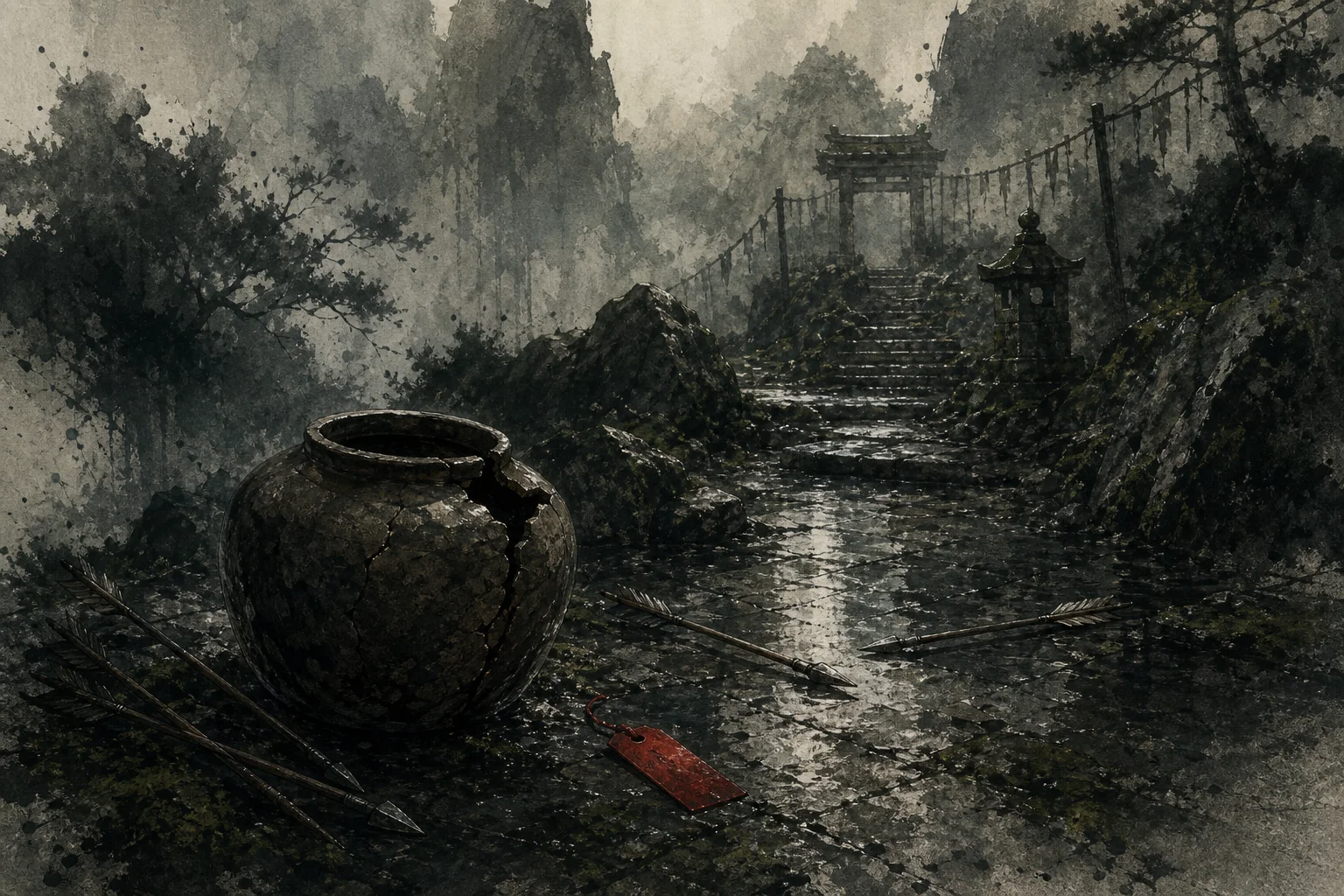
Iroha tells Shujiro what happened as Okubo follows the guns
Night brings the focus back to Iroha. Shujiro follows her outside after she leaves, and she asks why he is traveling with Futaba. When he says he met the child at Tenryuji and stayed with her, Iroha cuts through the explanation. Does he really believe Futaba will survive? Is protecting the girl his way of seeking atonement after abandoning everyone on the mountain?
Then Shujiro asks what happened after he ran.
Iroha says Master was afraid the school’s secrets would fall into outside hands, so he wanted them all dead. Ikkan turned his sword on Master, and that gave the others their escape. They found their way off the mountain and scattered. Iroha was not even allowed to wield a sword as a woman, but Gentosai did not care. He haunted every shadow she saw.
The confession gives Iroha more than anger. She has been carrying fear, exile, gendered dismissal, and the knowledge that Shujiro’s absence became part of everyone else’s punishment. When Shujiro apologizes, he does not ask her to forgive him. He admits he ran and that he made her suffer. He says she can hate him for it.
Then he says seeing her alive and standing strong “means the world” to him.
It works because the apology stays small. Shujiro cannot repair the mountain with one conversation. Iroha does not suddenly become warm. She only has to hear him say the thing he should have said years ago.
Morning removes any comfort. Kyojin starts discussing the tags needed for Chiryu and the ferry at Miya. Then a man with a strange face interrupts, studies Shujiro, and decides he is “not him either.” When Iroha sees him clearly, she knows the name.
Gentosai.
The official response widens too. Reports from Kyoto describe blood, human remains, sword fights, shizoku moving through Shiga and Mie, and gunshots at Tenryuji. One official argues that discontented shizoku must be advancing toward the capital as a planned insurrection. Lord Okubo rejects that theory because rebels would not be killing each other while they traveled.
That does not make the situation smaller. It makes it stranger. Okubo orders Kawaji to find the guns and Maejima to search the telegraph records.
By the end, the rifle trail leads to Yokohama and a shipment from Britain: more than 100 Snider rifles. A smuggler could not have paid for that alone. The money came from Mitsui, Sumitomo, Yasuda, and Mitsubishi, the four zaibatsu supporting the Meiji government.
That reveal gives Kodoku a colder edge. Guns, telegraphs, checkpoints, and zaibatsu money are now part of the same trail. The men on the road are being told to tear each other apart with swords, but modern Japan is already moving around them with rifles and ledgers.
Ninety-five remain.
What works
- Iroha’s backstory gives Shujiro’s guilt a specific shape. He did not simply survive a hard childhood; he left siblings inside a death sentence.
- The Suzuka Pass fight keeps Futaba vulnerable without making her useless. Shujiro protects her, but she also has to learn that standing near him is not the same thing as being safe.
- Kamuykocha makes a strong entrance because his refusal has a clear moral reason. He does not join the group, but his line about children gives him immediate weight.
- Kyojin’s explanation of Kodoku ties the present contest to the Kyohachi-ryu flashback without overexplaining it.
- The Okubo material keeps the Meiji politics alive. The zaibatsu rifle trail suggests a plot larger than one sadistic tournament.
What stumbles
- Kyojin withholding his plan until morning feels like a delay device, even if the character’s smugness makes it believable.
- Gentosai has presence and fear, but the actual mechanics of what he is remain vague.
- The gambling patrons remain thin. Their reactions are useful, but they mostly function as a chorus of appetite.
What this sets up for Episode 04
Shujiro now has Futaba, Iroha, and Kyojin beside him, which makes his refusal to play Kodoku properly much harder to sustain. Gentosai’s return puts the Kyohachi-ryu past on the road with them, and Okubo’s investigation points toward sponsors who are too powerful to dismiss as bored spectators. Episode 04 has to test whether this new alliance can hunt for answers while the contest keeps demanding tags.
Rating: 8.8/10
More episodes from Last Samurai Standing — Netflix's Japanese kodoku elegy, episode by episode. Jump to any episode in the season:
Where to go next
Reviewed by Mira Vance · QuizFandom Editor & Lead Reviewer. Every rating is an honest per-watch assessment from the desk that also writes the quizzes — not a press release rehash.